
Gesamtpreis (1 Artikel Artikel):
Versandziel:

michael brownfield (7 Ergebnisse)
Direkt zu den wichtigsten Suchergebnissen
Suchfilter
Produktart
- Alle Product Types
- Bücher (7)
- Magazine & Zeitschriften (Keine weiteren Ergebnisse entsprechen dieser Verfeinerung)
- Comics (Keine weiteren Ergebnisse entsprechen dieser Verfeinerung)
- Noten (Keine weiteren Ergebnisse entsprechen dieser Verfeinerung)
- Kunst, Grafik & Poster (Keine weiteren Ergebnisse entsprechen dieser Verfeinerung)
- Fotografien (Keine weiteren Ergebnisse entsprechen dieser Verfeinerung)
- Karten (Keine weiteren Ergebnisse entsprechen dieser Verfeinerung)
- Manuskripte & Papierantiquitäten (Keine weiteren Ergebnisse entsprechen dieser Verfeinerung)
Zustand Mehr dazu
- Neu (5)
- Wie Neu, Sehr Gut oder Gut Bis Sehr Gut (1)
- Gut oder Befriedigend (1)
- Ausreichend oder Schlecht (Keine weiteren Ergebnisse entsprechen dieser Verfeinerung)
- Wie beschrieben (Keine weiteren Ergebnisse entsprechen dieser Verfeinerung)
Einband
Weitere Eigenschaften
- Erstausgabe (Keine weiteren Ergebnisse entsprechen dieser Verfeinerung)
- Signiert (Keine weiteren Ergebnisse entsprechen dieser Verfeinerung)
- Schutzumschlag (Keine weiteren Ergebnisse entsprechen dieser Verfeinerung)
- Angebotsfoto (4)
Sprache (2)
Preis
- Beliebiger Preis
- Weniger als EUR 20
- EUR 20 bis EUR 40
- Mehr als EUR 40 (Keine weiteren Ergebnisse entsprechen dieser Verfeinerung)
Gratisversand
- Kostenloser Versand nach USA (Keine weiteren Ergebnisse entsprechen dieser Verfeinerung)
Land des Verkäufers
Verkäuferbewertung
-

Melodramatic Mayhem and Many Murderous Mishaps
Anbieter: Revaluation Books, Exeter, Vereinigtes Königreich
Verkäuferbewertung 5 von 5 Sternen

EUR 16,73
EUR 11,52 Versand
Versand von Vereinigtes Königreich nach USAAnzahl: 1 verfügbar
In den WarenkorbPaperback. Zustand: Brand New. 137 pages. 9.00x6.00x0.31 inches. In Stock.
-
Melodramatic Mayhem and Many Murderous Mishaps
Anbieter: Revaluation Books, Exeter, Vereinigtes Königreich
Verkäuferbewertung 5 von 5 Sternen
EUR 16,85
EUR 11,52 Versand
Versand von Vereinigtes Königreich nach USAAnzahl: 1 verfügbar
In den WarenkorbPaperback. Zustand: Brand New. 137 pages. 9.00x6.00x0.31 inches. In Stock.
-

Selected References on the Geology and Coal Resources of Central and Western Colorado Coal Fields and Regions (Information Series 25)
Verlag: Colorado Geological Survey, 1988
Soft cover. Zustand: Fine. 141 pp. 0.0.
-
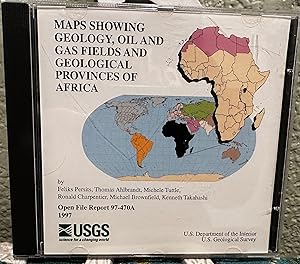
Maps Showing Geology, Oil and Gas Fields and Geological Provinces of Africa; Open File Report 97-470A
Verlag: USGS, 1997
Zustand: very good. MacOS 7.0 or greater or Intel based personal computer 386 or better The goal is to produce an assessment of the undiscovered, technically recoverable oil and gas resources of the world. Compact Disc Data Storage in Jewel Case.
-

Assessment of the undiscovered oil and gas of the Senegal province, Mauritania, Senegal, the Gambia, and Guinea-Bissau, northwest Africa: USGS Bulletin 2207-A
Sprache: Englisch
Verlag: Books on Demand|BiblioGov, 2013
ISBN 10: 1288884400 ISBN 13: 9781288884407
EUR 18,91
EUR 48,99 Versand
Versand von Deutschland nach USAAnzahl: Mehr als 20 verfügbar
In den WarenkorbZustand: New. Undiscovered, conventional oil and gas resources were assessed in the Senegal Province as part of the U.S. Geological Survey World Petroleum Assessment 2000 (U.S. Geological Survey World Energy Assessment Team, 2000). Although several total petroleum system.
-

Assessment of the undiscovered oil and gas of the Senegal province, Mauritania, Senegal, the Gambia, and Guinea-Bissau, northwest Africa: USGS Bulletin 2207-A
Sprache: Englisch
Verlag: Books On Demand, Bibliogov, 2013
ISBN 10: 1288884400 ISBN 13: 9781288884407
Anbieter: AHA-BUCH GmbH, Einbeck, Deutschland
Verkäuferbewertung 5 von 5 Sternen
Taschenbuch. Zustand: Neu. Neuware - Undiscovered, conventional oil and gas resources were assessed in the Senegal Province as part of the U.S. Geological Survey World Petroleum Assessment 2000 (U.S. Geological Survey World Energy Assessment Team, 2000). Although several total petroleum systems may exist in the province, only one composite total petroleum system, the Cretaceous-Tertiary Composite Total Petroleum System, was defined with one assessment unit, the Coastal Plain and Offshore Assessment Unit, having sufficient data to allow quantitative assessment. The primary source rocks for the Cretaceous-Tertiary Composite Total Petroleum System are the Cenomanian-Turonian marine shales. The Turonian shales can be as much as 150 meters thick and contain Type II organic carbon ranging from 3 to 10 weight percent. In the Senegal Province, source rocks are mature even when situated at depths relatively shallow for continental passive margin basins. Reservoir rocks consist of Upper Cretaceous sandstones and lower Tertiary clastic and carbonate rocks. The Lower Cretaceous platform carbonate rocks (sealed by Cenomanian shales) have porosities ranging from 10 to 23 percent. Oligocene carbonate rock reservoirs exist, such as the Dome Flore field, which contains as much as 1 billion barrels of heavy oil (10 API, 1.6 percent sulfur) in place. The traps are a combination of structural closures and stratigraphic pinch-outs. Hydrocarbon production in the Senegal Province to date has been limited to several small oil and gas fields around Cape Verde (also known as the Dakar Peninsula) from Upper Cretaceous sandstone reservoirs bounded by normal faults, of which three fields (two gas and one oil) exceed the minimum size assessed in this study (1 MMBO; 6 BCFG). Discovered known oil resources in the Senegal Province are 10 MMBO, with known gas resources of 49 BCFG (Petroconsultants, 1996). This study estimates that 10 percent of the total number of potential oil and gas fields (both discovered and undiscovered) of at least the minimum size have been discovered. The estimated mean size and number of assessed, undiscovered oil fields are 13 MMBO and 13 fields, respectively, whereas the mean size and number of undiscovered gas fields are estimated to be 50 BCFG and 11 fields. The mean estimates for undiscovered conventional petroleum resources are 157 MMBO, 856 BCFG, and 43 MMBNGL (table 2). The mean sizes of the largest anticipated undiscovered oil and gas fields are 66 MMBO and 208 BCFG, respectively. The Senegal Province is underexplored considering its large size. The province has hydrocarbon potential in both the offshore and onshore, and undiscovered gas resources may be significant and accessible in areas where the zone of oil generation is relatively shallow.
-

Assessment of the Undiscovered oil and gas of the Senegal Province, Mauritania, Senegal, the Gambia, and Guinea-Bissau, Northwest Africa
Sprache: Englisch
Verlag: Creative Media Partners, LLC Mai 2025, 2025
ISBN 10: 1025151585 ISBN 13: 9781025151588
Anbieter: AHA-BUCH GmbH, Einbeck, Deutschland
Verkäuferbewertung 5 von 5 Sternen
Buch. Zustand: Neu. Neuware - Undiscovered, conventional oil and gas resources were assessed in the Senegal Province as part of the U.S. Geological Survey World Petroleum Assessment 2000 (U.S. Geological Survey World Energy Assessment Team, 2000). Although several total petroleum systems may exist in the province, only one composite total petroleum system, the Cretaceous-Tertiary Composite Total Petroleum System, was defined with one assessment unit, the Coastal Plain and Offshore Assessment Unit, having sufficient data to allow quantitative assessment. The primary source rocks for the Cretaceous-Tertiary Composite Total Petroleum System are the Cenomanian-Turonian marine shales. The Turonian shales can be as much as 150 meters thick and contain Type II organic carbon ranging from 3 to 10 weight percent. In the Senegal Province, source rocks are mature even when situated at depths relatively shallow for continental passive margin basins. Reservoir rocks consist of Upper Cretaceous sandstones and lower Tertiary clastic and carbonate rocks. The Lower Cretaceous platform carbonate rocks (sealed by Cenomanian shales) have porosities ranging from 10 to 23 percent. Oligocene carbonate rock reservoirs exist, such as the Dome Flore field, which contains as much as 1 billion barrels of heavy oil (10 API, 1.6 percent sulfur) in place. The traps are a combination of structural closures and stratigraphic pinch-outs. Hydrocarbon production in the Senegal Province to date has been limited to several small oil and gas fields around Cape Verde (also known as the Dakar Peninsula) from Upper Cretaceous sandstone reservoirs bounded by normal faults, of which three fields (two gas and one oil) exceed the minimum size assessed in this study (1 MMBO; 6 BCFG). Discovered known oil resources in the Senegal Province are 10 MMBO, with known gas resources of 49 BCFG (Petroconsultants, 1996). This study estimates that 10 percent of the total number of potential oil and gas fields (both discovered and undiscovered) of at least the minimum size have been discovered. The estimated mean size and number of assessed, undiscovered oil fields are 13 MMBO and 13 fields, respectively, whereas the mean size and number of undiscovered gas fields are estimated to be 50 BCFG and 11 fields. The mean estimates for undiscovered conventional petroleum resources are 157 MMBO, 856 BCFG, and 43 MMBNGL (table 2). The mean sizes of the largest anticipated undiscovered oil and gas fields are 66 MMBO and 208 BCFG, respectively. The Senegal Province is underexplored considering its large size. The province has hydrocarbon potential in both the offshore and onshore, and undiscovered gas resources may be significant and accessible in areas where the zone of oil generation is relatively shallow.

