
Macdougall carla (14 Ergebnisse)

Sprache: Englisch
Verlag: Berghahn Books 01 A, 2012
- Softcover
Anbieter: AwesomeBooks, Wallingford, Vereinigtes KönigreichAwesomeBooks
Verkäufer/-in kontaktierenVerkäufer/-in mit 5 SternenZustand: Gebraucht - Gut
EUR 25,80
EUR 4,81 VersandVersand von Vereinigtes Königreich nach USAAnzahl: 1 verfügbar
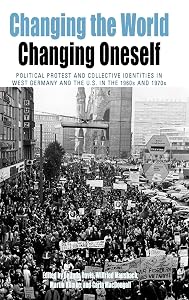
Paperback. Zustand: Very Good. Changing the World, Changing Oneself: Political Protest and Collective Identitites in West Germany and the U.S. in the 1960s and 1970s: 3 (Protest, Culture & Society, 3) This book is in very good condition and will be shipped within 24 hours of ordering. The cover may have some limited signs of wear but the pages are clean, intact and the spine remains undamaged. This book has clearly been well maintained and looked after thus far. Money back guarantee if you are not satisfied. See all our books here, order more than 1 book and get discounted shipping. .…
Sprache: Englisch
Verlag: Berghahn Books 01/g /01 A, 2012
- Softcover
Anbieter: Bahamut Media, Reading, Vereinigtes KönigreichBahamut Media
Verkäufer/-in kontaktierenVerkäufer/-in mit 5 SternenZustand: Gebraucht - Gut
EUR 25,80
EUR 8,14 VersandVersand von Vereinigtes Königreich nach USAAnzahl: 1 verfügbar
Paperback. Zustand: Very Good. Shipped within 24 hours from our UK warehouse. Clean, undamaged book with no damage to pages and minimal wear to the cover. Spine still tight, in very good condition. Remember if you are not happy, you are covered by our 100% money back guarantee.
Sprache: Englisch
Verlag: Berghahn Books, 2012
- Softcover
Anbieter: PBShop.store US, Wood Dale, IL, USAPBShop.store US
Verkäufer/-in kontaktierenVerkäufer/-in mit 5 SternenZustand: Neu
EUR 40,22
Versand gratisVersand innerhalb von USAAnzahl: 15 verfügbar
PAP. Zustand: New. New Book. Shipped from UK. Established seller since 2000.
Sprache: Englisch
Verlag: Berghahn Books, 2012
- Softcover
Anbieter: PBShop.store UK, Fairford, GLOS, Vereinigtes KönigreichPBShop.store UK
Verkäufer/-in kontaktierenVerkäufer/-in mit 5 SternenZustand: Neu
EUR 34,05
EUR 5,86 VersandVersand von Vereinigtes Königreich nach USAAnzahl: 15 verfügbar
PAP. Zustand: New. New Book. Shipped from UK. Established seller since 2000.

Sprache: Englisch
Verlag: Berghahn Books, 2010
- Hardcover
Anbieter: Optimon Books, Gravesend, KENT, Vereinigtes KönigreichOptimon Books
Verkäufer/-in kontaktierenVerkäufer/-in mit 5 SternenZustand: Gebraucht - Befriedigend
EUR 37,25
EUR 21,00 VersandVersand von Vereinigtes Königreich nach USAAnzahl: 1 verfügbar
Hardcover. Zustand: Good. Changing the World, Changing Oneself: Political Protest and Collective Identities in West Germany and the U.S. in the 1960s and 1970s A captivating time, the 60s and 70s now draw more attention than ever. The first substantial work by historians has appeared only in the last few years, and this volume offers an important contribution. These meticulously researched essays offer new perspectives on the Cold War and global relations in the 1960s and 70s through the perspective of the youth movements that shook the U.S., Western Europe, and beyond. These movements led to the transformation of diplomatic relations and domestic political cultures, as well as ideas about democracy and who best unde.…
Sprache: Englisch
Verlag: Berghahn Books, 2012
- Softcover
Anbieter: Revaluation Books, Exeter, Vereinigtes KönigreichRevaluation Books
Verkäufer/-in kontaktierenVerkäufer/-in mit 5 SternenZustand: Neu
EUR 48,23
EUR 11,67 VersandVersand von Vereinigtes Königreich nach USAAnzahl: 2 verfügbar
Paperback. Zustand: Brand New. reprint edition. 334 pages. 8.75x6.00x0.75 inches. In Stock.

Changing the World Changing Oneself Politcal Protest and Collective Identities in West Germany and the U.S. in the 1960s and 1970s,
DAVIS, Belinda, MAUSBACH, Wilfried, KLIMKE, Martin und MacDougall, Carla (Hrsg.):
Sprache: Englisch
Verlag: Berghahn, New York, 2010
- Hardcover
Anbieter: Antiquariat Mackensen & Niemann, Berlin, DeutschlandAntiquariat Mackensen & Niemann
Verkäufer/-in kontaktierenVerkäufer/-in mit 4 SternenZustand: Gebraucht
EUR 13,00
EUR 52,00 VersandVersand von Deutschland nach USAAnzahl: 1 verfügbar
In den Warenkorb1. Auflage, 334 S., Groß-Oktav, Einband leicht unfrisch, innen sehr gutes Exemplar, illustrierter Original-Pappband.

Sprache: Englisch
Verlag: BERGHAHN BOOKS INC, 2010
Anbieter: Versandbuchhandlung Kisch & Co., Fürstenberg OT Blumenow, DeutschlandVersandbuchhandlung Kisch & Co.
Verkäufer/-in kontaktierenVerkäufer/-in mit 5 SternenZustand: Gebraucht - Sehr gut
EUR 14,96
EUR 35,00 VersandVersand von Deutschland nach USAAnzahl: 1 verfügbar
Gebundene Ausgabe. Zustand: Sehr gut. Gebraucht - Sehr gut ungelesen, sehr guter Zustand; Rechnung mit MwSt.; unused/unread, very good condition; -'The collection addresses several issues that are currently very important growth areas in scholarship: protest movements, their transnational connections, the question of Americanization/Westernization in Europe, and the 1960s/1970s in general as an important watershed in postwar history.There have been other recent works that have focused on these issues, but this collection has the advantage of being truly transatlantic in its approach and in the inclusion of some of the most interesting younger scholars working in the field.' Ronald Granieri, University of Pennsylvania 'This tantalizing volume explores the neglected impact of intercultural exchanges during the 1968 generational rebellion by focusing on German-American transfers of critical ideas, protest practices and feelings of solidarity. It especially emphasizes the close connection between freeing personal life-styles and liberating politics at home and abroad.' Konrad Jarausch, University of North Carolina at Chapel Hill and the Zentrum fuer Zeithistorische Forschung in Potsdam 'This wonderfully innovative compilation of scholarly articles and participant recollections tackles the multifaceted transfer of ideas and people between West Germany and the United States to shed new light on 1960s protests and their long afterlife.' Uta G. Poiger, University of Washington A captivating time, the 60s and 70s now draw more attention than ever. The first substantial work by historians has appeared only in the last few years, and this volume offers an important contribution. These meticulously researched essays offer new perspectives on the Cold War and global relations in the 1960s and 70s through the perspective of the youth movements that shook the U.S., Western Europe, and beyond. These movements led to the transformation of diplomatic relations and domestic political cultures, as well as ideas about democracy and who best understood and promoted it. Bringing together scholars of several countries and many disciplines, this volume also uniquely features the reflections of former activists. Belinda Davis is Associate Professor of History at Rutgers University. Wilfried Mausbach is the Executive Director of the Heidelberg Center for American Studies (HCA) at the University of Heidelberg. Martin Klimke is a postdoctoral fellow at the German Historical Institute in Washington, D.C. Carla MacDougall is a doctoral student at Rutgers University. 358 pp. Englisch.…

Sprache: Englisch
Verlag: BERGHAHN BOOKS INC, 2010
Anbieter: Che & Chandler Versandbuchhandlung, Fürstenberg OT Blumenow, DeutschlandChe & Chandler Versandbuchhandlung
Verkäufer/-in kontaktierenVerkäufer/-in mit 5 SternenZustand: Gebraucht - Sehr gut
EUR 19,95
EUR 45,00 VersandVersand von Deutschland nach USAAnzahl: 1 verfügbar
Gebundene Ausgabe. Zustand: Sehr gut. Gebraucht - Sehr gut ungelesen, sehr guter Zustand; Rechnung mit MwSt.; unused/unread, very good condition; -'The collection addresses several issues that are currently very important growth areas in scholarship: protest movements, their transnational connections, the question of Americanization/Westernization in Europe, and the 1960s/1970s in general as an important watershed in postwar history.There have been other recent works that have focused on these issues, but this collection has the advantage of being truly transatlantic in its approach and in the inclusion of some of the most interesting younger scholars working in the field.' Ronald Granieri, University of Pennsylvania 'This tantalizing volume explores the neglected impact of intercultural exchanges during the 1968 generational rebellion by focusing on German-American transfers of critical ideas, protest practices and feelings of solidarity. It especially emphasizes the close connection between freeing personal life-styles and liberating politics at home and abroad.' Konrad Jarausch, University of North Carolina at Chapel Hill and the Zentrum fuer Zeithistorische Forschung in Potsdam 'This wonderfully innovative compilation of scholarly articles and participant recollections tackles the multifaceted transfer of ideas and people between West Germany and the United States to shed new light on 1960s protests and their long afterlife.' Uta G. Poiger, University of Washington A captivating time, the 60s and 70s now draw more attention than ever. The first substantial work by historians has appeared only in the last few years, and this volume offers an important contribution. These meticulously researched essays offer new perspectives on the Cold War and global relations in the 1960s and 70s through the perspective of the youth movements that shook the U.S., Western Europe, and beyond. These movements led to the transformation of diplomatic relations and domestic political cultures, as well as ideas about democracy and who best understood and promoted it. Bringing together scholars of several countries and many disciplines, this volume also uniquely features the reflections of former activists. Belinda Davis is Associate Professor of History at Rutgers University. Wilfried Mausbach is the Executive Director of the Heidelberg Center for American Studies (HCA) at the University of Heidelberg. Martin Klimke is a postdoctoral fellow at the German Historical Institute in Washington, D.C. Carla MacDougall is a doctoral student at Rutgers University. 358 pp. Englisch.…
Sprache: Englisch
Verlag: BERGHAHN BOOKS INC, 2010
- Hardcover
Anbieter: moluna, Greven, Deutschlandmoluna
Verkäufer/-in kontaktierenVerkäufer/-in mit 5 SternenZustand: Neu
EUR 120,96
EUR 48,99 VersandVersand von Deutschland nach USAAnzahl: Mehr als 20 verfügbar
Gebunden. Zustand: New. A captivating time, the 60s and 70s now draw more attention than ever. The first substantial work by historians has appeared only in the last few years, and this volume offers an important contribution. These meticulously researched essays offer new perspec.

Sprache: Englisch
Verlag: Berghahn Books, 2010
- Hardcover
Anbieter: Revaluation Books, Exeter, Vereinigtes KönigreichRevaluation Books
Verkäufer/-in kontaktierenVerkäufer/-in mit 5 SternenZustand: Neu
EUR 200,37
EUR 14,59 VersandVersand von Vereinigtes Königreich nach USAAnzahl: 2 verfügbar
Hardcover. Zustand: Brand New. 334 pages. 9.25x6.25x0.75 inches. In Stock.
Sprache: Englisch
Verlag: Berghahn Books, 2010
Anbieter: PBShop.store US, Wood Dale, IL, USAPBShop.store US
Verkäufer/-in kontaktierenVerkäufer/-in mit 5 SternenZustand: Neu
EUR 116,55
Versand gratisVersand innerhalb von USAAnzahl: 15 verfügbar
HRD. Zustand: New. New Book. Shipped from UK. Established seller since 2000.
Sprache: Englisch
Verlag: Berghahn Books, 2010
Anbieter: PBShop.store UK, Fairford, GLOS, Vereinigtes KönigreichPBShop.store UK
Verkäufer/-in kontaktierenVerkäufer/-in mit 5 SternenZustand: Neu
EUR 123,04
EUR 5,86 VersandVersand von Vereinigtes Königreich nach USAAnzahl: 15 verfügbar
HRD. Zustand: New. New Book. Shipped from UK. Established seller since 2000.
Sprache: Englisch
Verlag: Berghahn Books, 2010
Anbieter: Ria Christie Collections, Uxbridge, Vereinigtes KönigreichRia Christie Collections
Verkäufer/-in kontaktierenVerkäufer/-in mit 5 SternenZustand: Neu
EUR 149,68
EUR 13,17 VersandVersand von Vereinigtes Königreich nach USAAnzahl: Mehr als 20 verfügbar
Zustand: New. In English.


