
Gesamtpreis (1 Artikel Artikel):
Versandziel:

lambin denis (9 Ergebnisse)
Direkt zu den wichtigsten Suchergebnissen
Suchfilter
Produktart
- Alle Product Types
- Bücher (8)
- Magazine & Zeitschriften (Keine weiteren Ergebnisse entsprechen dieser Verfeinerung)
- Comics (Keine weiteren Ergebnisse entsprechen dieser Verfeinerung)
- Noten (Keine weiteren Ergebnisse entsprechen dieser Verfeinerung)
- Kunst, Grafik & Poster (Keine weiteren Ergebnisse entsprechen dieser Verfeinerung)
- Fotografien (Keine weiteren Ergebnisse entsprechen dieser Verfeinerung)
- Karten (Keine weiteren Ergebnisse entsprechen dieser Verfeinerung)
- Manuskripte & Papierantiquitäten (1)
Zustand Mehr dazu
- Neu (Keine weiteren Ergebnisse entsprechen dieser Verfeinerung)
- Wie Neu, Sehr Gut oder Gut Bis Sehr Gut (1)
- Gut oder Befriedigend (2)
- Ausreichend oder Schlecht (Keine weiteren Ergebnisse entsprechen dieser Verfeinerung)
- Wie beschrieben (6)
Einband
- alle Einbände
- Hardcover (7)
- Softcover (Keine weiteren Ergebnisse entsprechen dieser Verfeinerung)
Weitere Eigenschaften
- Erstausgabe (Keine weiteren Ergebnisse entsprechen dieser Verfeinerung)
- Signiert (Keine weiteren Ergebnisse entsprechen dieser Verfeinerung)
- Schutzumschlag (Keine weiteren Ergebnisse entsprechen dieser Verfeinerung)
- Angebotsfoto (7)
Sprache (3)
Preis
- Beliebiger Preis
- Weniger als EUR 20 (Keine weiteren Ergebnisse entsprechen dieser Verfeinerung)
- EUR 20 bis EUR 40 (Keine weiteren Ergebnisse entsprechen dieser Verfeinerung)
- Mehr als EUR 40
Gratisversand
- Kostenloser Versand nach USA (Keine weiteren Ergebnisse entsprechen dieser Verfeinerung)
Land des Verkäufers
Verkäuferbewertung
-
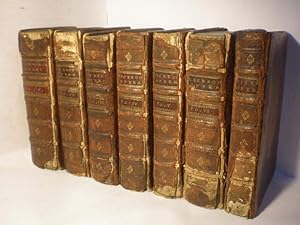
M. Tullii Ciceronis Opera Omnia, quae exstant, a Dionysio Lambino Monstroliensi ex codicibus manuscriptis enmendata ( 7 volúmenes)
Sprache: Spanisch
Verlag: Ioannem Bene natum, Lutetiae Parisiorum, 1573
Anbieter: Librería Antonio Azorín, San Lorenzo de El Escorial, M, Spanien
Verkäuferbewertung 5 von 5 Sternen

Encuadernación de tapa dura. Zustand: Bien. Idioma latín. Siete volúmenes ( falto del tomo VII). Encuadernación de tapa dura, en plena piel de la editorial ( abundantes pérdidas en lomeras). Tomo I ( 30 hh.+859 pp. ) Tomo II (860-1542 pp. ) Tomo III (1551 - 2202 pp. ) Tomo IV (2205-2841 pp. ) Tomo V ( 2847-3427 pp. ) Tomo VI ( 3431-4131 pp. ) Tomo VIII ( 4663-5132 pp.).
-
Marcus Accius Plautus, ex fide atque auctoritate complurium librorum manuscriptorum opera emendatus, ab eodemque commentariis explicatus, nunc denuo plurimis, quae in praecedentibus editionibus irrepserant, mendis, repurgatus.
Verlag: Apud haeredes Eustathij Vignon, 1595
Anbieter: Symonds Rare Books Ltd, London, Vereinigtes Königreich
Verkäuferbewertung 2 von 5 Sternen

EUR 355,43
EUR 34,51 Versand
Versand von Vereinigtes Königreich nach USAAnzahl: 1 verfügbar
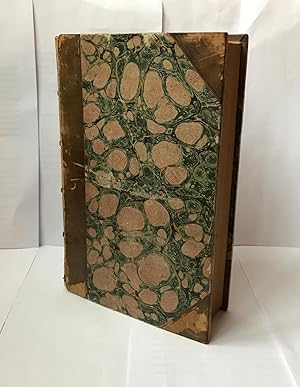
In den WarenkorbHardcover. Zustand: Fine. PLAUTUS, Titus Maccius (Lambin, Denis, Ed.) Marcus Accius Plautus, ex fide atque auctoritate complurium librorum manuscriptorum opera emendatus, ab eodemque commentariis explicatus, nunc denuo plurimis, quae in praecedentibus editionibus irrepserant, mendis, repurgatus. [Geneva], Apud haeredes Eustathij Vignon, 1595. £300 4to, (viii) 920 (lii), ¶4 A-Zz8 2A-2K8 2L4 2M-2P8 2Q2. Roman and Italic letter, some Greek. Printer s device on title page, decorated initials, head- and tailpieces. Ms. annotations and autographs on t-p (Laurentius Burnell? Fraudir Rindaid?), occasional marginalia. Light age yellowing, some waterstaining affecting outer foot margins and lower gutters. In C19th half calf over wooden boards covered in marbled paper, gilt title to spine. This is the unequalled Lambin s (Lambinus) edition of the works of Plautus, which originally appeared in 1576. The celebrity of Lambinus in almost every classical work which he edited, has already been frequently noticed. Of this admirable edition, Lambinus lived to finish only the first twelve comedies; but his colleague, Helius, professor of Greek, completed the work, partly by transcribing what remained in Lambinus s hand-writing on the subsequent comedies, and partly by the insertion of his own notes, and emendations of the text. In forming the edition, many MSS. And ancient publications were consulted . In this excellent edition of Plautus , says Harwood, Lambinus hath manifested great learning and critical sagacity T. F. Dibdin, An Introduction to the Knowledge of Rare and Valuable Editions of the Greek and Latin Classics, 1804, pp. 299-300. Denys Lambin, or Dionysius Lambinus (1520-1572), won a wide reputation by his great editions of Latin authorsHis knowledge of Cicero and the older Latin writers, as well as the Augustan poets, has never been surpassed and rarely equalled J. E. Sandys, A Short History of Classical Scholarship, 1915, pp. 220-21. GLN-3810; Adams P1512. CDM, p. 145; Drummond, Aberdeen, n° 3235; Girard-Le Bouteiller, Basse-Normandie, t. 3, n° 2225 ; Malicki, BJ 16, n° P-842; Shaaber, Univ. of Pennsylvania, P 408; Shaw, Cathedral Libr., 2, P 1140; Verhelst, Limburg, n° 324.
-

Horatius, Flaccus, Quintus. Q. Horatium Flaccum ex Fide atque Auctoritate Complurum Librorum manuscriptorum a se emendatum ./Q. Horatii Flacci Sermonvm, Sev Satyrarvm, ?
Verlag: Frankfurt am Main: Andreas Wechel Erben Claude de Marne u Johann Aubry, 1596
Anbieter: Gloria Mortzeck, Karlsdorf, Deutschland
Verkäuferbewertung 3 von 5 Sternen

464 S.; 550 S. [1014 S.]. Gr. 8°, HLdr., goldgepräg. Rücken, Farbschnitt. Ldr. beschabt, kl. Risse an Kapitale, Rückenetik.; Deckenbez. berieben, Fehlst., an d. Kanten aufgeplatzt. Buchschnitt stark berieben, Tintenfleck. Vereinzelt Knickecken u. Einrisse am Pap. Druckermarken in Holzschnitt auf den Titelblättern und am Schlussblatt verso. In Vorsatz u. Texträndern zahlreiche ausführliche hs. Notizen von G. Järges, Berlin, 1826. Bibliotheksexemplar mit den üblichen Kennz. in Vorsatz u. Titel. Lateinischer Text. 1700 gr.
-
M. Accius Plautus ex fide, atque auctoritate complurium librorum manuscriptorum opera
Verlag: Published by Aureliae Allobrogum : Ex typis Vignonianis, Geneva, 1605
Anbieter: Keoghs Books, Skipton, Vereinigtes Königreich
Verbandsmitglied: PBFA
Verkäuferbewertung 5 von 5 Sternen
Manuskript / Papierantiquität
EUR 414,67
EUR 32,21 Versand
Versand von Vereinigtes Königreich nach USAAnzahl: 1 verfügbar
In den Warenkorb, [6], 920, [52] pages, contains 20 plays: Amphitrvo [Amphitryon], Asinaria, Avlvlaria [Aulularia], Capteivei [Captivi], Cvrcvlio [Curculio], Casina, Cistellaria, Epidicvs [Epidicus], Bacchides, Mostellaria, Menaechmi, Miles Gloriosvs [Miles Gloriosus], Mercator, Psevdolvs [Pseudolus], Poenvlvs [Poenulus], Persa, Rvdens [Rudens], Stichvs [Stichus], Trinvmmvs [Trinummus], Trvcvlentvs [Truculentus]. Decorated head and tailpieces and illlustrated capitals throughout, indeces to rear Later edition , light rubbing to corners and edges, boards and spine marked, manuscript title to spine, missing the title page, inked inscriptions to prelims, p871 misnumbered p178 with incorrect page head, pages lightly marked in places with some cockling, binding firm, very good condition , full vellum with yapped edges, inked title to spine, red edges , large octavo, 24.5 cm x 17 cm Hardback ISBN:
-
Trium disertissimorum virorum praefationes ac Epistolæ familiares aliquot: Mureti, Lambini & Regij. Quibus, propter argumenti similitudinem, doctissimi viri Pauli Manutij praefationes adiunximus, cum indice copiosissimo
Verlag: Paris, Gilles Maugier, Paris, 1579
Anbieter: Govi Rare Books LLC, Woodside, New York City, NY, USA
Verkäuferbewertung 4 von 5 Sternen

Zustand: Buono (Good). Small 8vo. (26), 3-549, (1), (2 blank) pp. ?8, A-Z8, AaMm8 (Mm8 is a blank). With the printer's device on the title-page. Contemporary overlapping vellum, with the bookplate of the Orléans Seminary, gift of D. de Fourcroy, Decanus Aureliensis.E. Boeuf, La bibliothèque parisienne de Gabriel Naudé en 1630: les lectures d'un libertin érudit, (Genève, 2007), p. 123, no. 225; H. Busson, Le rationalisme dans la litérature française de la Renaissance, 1533-1601, (Paris, 1971), p. 622; W.L. Gundersheimer, The life and works of Louis Le Roy, (Genève, 1966), p. 147, no. XI; E. Pastorello, L'epistolario Manuziano. Inventario cronologico-analitico, 1483-1597, (Firenze, 1957), p. 15, no. 274 (1578 ed.). SECOND EDITION. The first edition, shared between the printers Gilles Maugier and Jean de Heuqueville, was issued in 1578 in two different formats: in octavo with a separate pagination for Manuzio's Praefationes and in small octavo with the same collation as the present edition, of which are also extant copies with Heuqueville's address.This collection assembles numerous prefatory and ?familiar' letters of three great French scholars: Marc-Antoine Muret (1526-1575), Denis Lambin (ca. 1520-1572), and Louis Le Roy (ca. 1510-1577). Some of the Muret-Lambin correspondence had already been published in the letter collection edited by Giovanni Michele Bruto at Lyon in 1561. The letters by Le Roy were first printed at Paris in 1559.Added are the prefatory letters by Paolo Manuzio (1512-1574), which had already been printed in Venice in 1558 MURET:SECOND EDITION. In this anthology is printed for the first time a choice of 22 letters (some prefatory) by Muret, which were not included in the volume issued a year later by Muret himself at Paris.The volume opens with a series of letters that Muret wrote to Denis Lambin in 1558/9. ?Cette année là, il [Muret] publie son Horace, ne s'en prenant directement à Muret à aucun moment dans son texte, comme si de rien n'était. Mais en parallèle, il transmet à Giovanni Michele Bruto (1515-1594) onze lettres peu glorieuses que le Limousin lui avait envoyeées à la fin des années 1550. Elles seront publiées en 1561 dans un recueil de correspondances édité par Sébastien Gryphe, a Lyon: Epistolae clarorum virorum, quibus veterum autorum loci complures explicantur, tribus libris a Joanne Michaele Bruto comprehensae: atque nunc primum in lucem editae. Ces documents évoquent les évènements fâcheux qui ont poussé Muret à fuir la France, puis les mauvaises rumeurs qui ont mis à mal ses tractations auprès du cardinal d'Este. Le Limousin était loin de souhaiter leur publication. Voir ses petits ennuis exposés aux yeux de toute la communauté lettrée de l'époque le met dès lors en rage. Lambin s'est bien vengé, deux ans après avoir été lui-même lésé. Et cette fois-ci, il prend a parti toute la Republique des lettres? (M. Roux, Les ?Variae lectiones' de Marc-Antoine Muret: l'esprit d'un homme, l'esprit d'un siècle, Thesis, Lyon, 2011, p. 216). from Manuzio, Paolo. [end of 1559] (leaf Aiiiv)id. [Venezia, August 25?, 1558] (leaf Avr).Lambin, Denis. Padova, February 4, 1558 (p. 3)id. Padova, February 4, 1558 (p. 5)from id. Corneliano, February 20, [1558] (p. 6)id. Padova, February 23, [1558] (p.11)id. Padova, February 25, [1558] (p. 13)id. Padova, February 29, [1558] (p. 15)id. Padova, March 15, [1558] (p. 17)id. Padova, April 13, [1558] (p. 18)id. Padova, July, [1558] (p. 19)id. Treviso, November 28, [1558] (p. 20)from id. Corneliano, August 12, 1558 (p. 22)id. Padova, August 27, [1558] (p. 26)from id. August 18, [1558] (p. 27)id. Ferrara, July 17, 1559 (p. 31)from id. Lucca, August 1, 1559 (p. 34)Brinon, Jean de. Paris, November 24, 1552 (p. 48)Gonzaga, Scipione. Rome, May 1, 1571 (p. 54)Este, Ippolito d'. [1559] (p. 58)Suriano, Jacopo. [1555] (p. 65)Avanson, Jean de. Venezia, October 1, 1555 (p. 71)Studiosis. [1554] (p. 76)Loredan, Bernardino. Venezia, October 15, 1554 (p. 77)Bembo, Torquat. Book.
-
Rhetoricorum ad C. Herennium libri IIII (with) De Oratore libri III Cum annotationibus Dionysii Lambini.
Verlag: Venice, ex Bibliotheca Aldina, 1569
Anbieter: Sokol Books Ltd. ABA ILAB, London, Vereinigtes Königreich
Verkäuferbewertung 5 von 5 Sternen
EUR 3.850,50
EUR 48,31 Versand
Versand von Vereinigtes Königreich nach USAAnzahl: 1 verfügbar
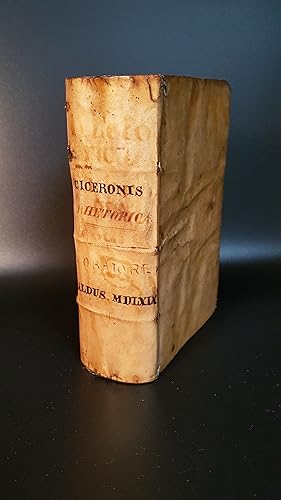
In den WarenkorbHardcover. Zustand: Very Good. 8vo. 2 works in 1 vol., each in 2 parts with separate t-p. ff. (xxiv) 184, 38 (ii); 240, 48. Italic letter, little Roman. Woodcut Aldine device to all four t-ps, penultimate of first work and last of second. Light waterstaining to upper and outer margin of first and last few ll., intermittent slight marginal foxing or toning, lower outer blank corner of P3 torn. A good copy in slightly later vellum, superimposed on original vellum, traces of ties, title inked to spine, small loss to lower cover, C19 bookplate of John Wyndham Bruce to front pastedown, inscription 'Ad usum D. Mauri Archinti' to recto and casemark to verso of fep. Very good copy of two Aldine editions, intended as companion volumes, of Cicero's rhetorical works, here issued for the first time with a commentary by the humanist Denis Lambin. Despite the imprimatur 'Ex Bibliotheca Aldina', these works were printed by the Torresani, heirs to Andrea, Aldus's 'socerus' and associate; these were also their first Ciceronian editions. The Torresani editions have been praised as 'handsome, almost all rare, andkept in much esteem' (Renouard, 'Notice', 72). Due to their excellence, they were either attributed to Aldus and his heirs or mistaken for counterfeits even by notable bibliographers until the mid-C19 (Bernoni, 'Dei Torresani', 128). One of the most influential figures of classical antiquity, Marcus Tullius Cicero (106-43BC) put his legal skills to the service of politics with speeches which became landmarks of forensic oratory. Defined by Quintilian as 'eloquence itself', his copious prose production occupied a fundamental place in medieval syllabi. Subsequent to the rediscovery of further texts, including the letters, by scholars like Petrarch, Cicero contributed to forging the Latin style of the Renaissance and its ideas on political theory (e.g., Republicanism), rhetoric (e.g., the principles of argument, eloquence and invention) and philosophy (e.g., Stoicism). The first work in this sammelband includes his greatly influential 'ad Herennium', by then presented as probably spurious ('incerto auctore'), as well as 'De inventione' and 'Topica' (how to construct arguments in structure and content), and 'De partitione oratoria' on oratory techniques. The second work begins with 'De oratore', an immensely influential analysis of how a good orator should construct persuasive arguments which should however be driven by sound ethical principles. There follow 'Orator', a description of the perfect orator integrating observations in previous works, and 'De claris oratoribus', a history of eloquence through individual figures including Pericles and Solon. Denis Lambin's commentariesto 'Rhetorica' and to the first book of 'De oratore'appended to each part bear a separate t-p, pagination and collation, but were not intended for separate publication. Lambin (1520-72) was a French humanist who taught Latin and Greek at the Collège de France. He was praised for his philological precision but also criticised for being 'too concerned with trivialities of language at the expense not only of philosophical issues but also of practical matters of politics and individual conduct' (Salmon, 'Renaissance and Revolt', 50). I) Renouard 207:13; BM STC It., p. 176; Ahmanson-Murphy 579. Not in Brunet. II) Renouard 207:14; BM STC It., p. 176; Ahmanson-Murphy 580. Not in Brunet. Adams C1689, both works, one complete copy only.
-
Aristotelis Aristotelis Ethicorvm, sive De Moribvs, ad Nicomachvm, libri decem. Adiecta ad contextum Græcum interpretatione latina Dionysii LAMBINI [---]. Studio & opera Matthiae BERGII. Hanoviae. Claudii Marnii. 1601. Suivi de : Aristotelis politica a Petro Ramo regio professore latina facta et dialecticis summis breviter exposita & illustrata (---) Francofvrti. Claudium Marnium & heredes. 1601.
Anbieter: Mesnard - Comptoir du Livre Ancien, Ruelle-sur-Touvre, Frankreich
Verkäuferbewertung 5 von 5 Sternen
1 volume in-8° relié plein vélin d'époque, taches sur le vélin ce dernier en très bon état. 496 p. + 537 p. + 49 f. (index), petite galerie de vers en page de garde.
-
De Rerum Natura Libri Sex
Verlag: in Gulielmi Rouillij, et Philippi G. Rouillij Nep. aedibus, via Iacobaea sub Concordia (Rouillé), Parisiis, et Lugduni, 1563
Anbieter: Studio Bibliografico Orfeo (ALAI - ILAB), Bologna, BO, Italien
Verkäuferbewertung 3 von 5 Sternen
Prima edizione lambiniana. Molto buono.
-
![Bild des Verkäufers für M. Tullii Ciceronis Opera omnia. Praeter hactenus vulgatam Dion. Lambini editionem, accesserunt D. Gothofredi I. C. Notae: in queis Varie lectiones, propè infinitae: Synopses generales & speciales singulis vel libris vel paginis adiectae: Ciceronis loca praecipua & difficiliora, inter se primò, aliis deinde authoribus Grammaticis, Rhetoribus, Poëtis, Historicis, Iurisconsultis maximè collata: vt & Formulae quae ad ius, leges, senatusconsulta & actiones pertinent, explicatae. Index generalis breuitate & arte summa compositus praeter superiora adiectus est. [Vignette, umlaufend Rahmenwerk] zum Verkauf von Heinrich Heine Antiquariat oHG](https://pictures.abebooks.com/inventory/md/md31066385953.jpg)
M. Tullii Ciceronis Opera omnia. Praeter hactenus vulgatam Dion. Lambini editionem, accesserunt D. Gothofredi I. C. Notae: in queis Varie lectiones, propè infinitae: Synopses generales & speciales singulis vel libris vel paginis adiectae: Ciceronis loca praecipua & difficiliora, inter se primò, aliis deinde authoribus Grammaticis, Rhetoribus, Poëtis, Historicis, Iurisconsultis maximè collata: vt & Formulae quae ad ius, leges, senatusconsulta & actiones pertinent, explicatae. Index generalis breuitate & arte summa compositus praeter superiora adiectus est. [Vignette, umlaufend Rahmenwerk]
Sprache: Deutsch
Verlag: Genf Chouet, 1606
Anbieter: Heinrich Heine Antiquariat oHG, Düsseldorf, NRW, Deutschland
Verbandsmitglied: GIAQ ILAB VDA
Verkäuferbewertung 5 von 5 Sternen
EUR 1.200,00
EUR 28,00 Versand
Versand von Deutschland nach USAAnzahl: 1 verfügbar
In den WarenkorbTomus I - IV in einem Band: 1 Blatt (Titel); 3 Blätter (Widmung, Vorrede); 436 Spalten auf 109 Blättern; 1 (weißes) Blatt; 958 Spalten auf 240 Blättern; 1 Blatt (Zwischentitel); 1 (weißes) Blatt; 636 Spalten auf 159 Blättern; 1 (weißes) Blatt; 1 Blatt (Zwischentitel); 1 (weißes) Blatt; 714 Spalten auf 179 Blättern; 1 (weißes) Blatt; 39 Blätter (Indices); 1 (weißes) Blatt. Blindgeprägter Schweinslederband der Zeit über Pappdeckeln mit mongrammierten heraldischen Platten und reicher Blindprägung auf beiden Deckeln. (24,5 x 18 cm) Gr.8°. - Geprägter Wittenberger Renaissance-Schweinslederband mit zwei von "G.B." (Gregor Bernutz; w007747) signierten Wappen-Platten auf den Deckeln, die später dessen Schwager Benediktus Wilde, oder eine der Werkstätten der Kammerbergers (Michael oder Christoph?) weiterverwendete - Schweiger II, 106 und Graesse II, 157 (kennen nur die Ausgabe Vignon, 1606). Es gab auch noch eine weitere Ausgabe in diesem Jahr bei Petrus de la Rouiere in Genf [Coloniae Allobrogum, i.e., Geneva, 1606], vergl. hierzu OCLC 963860146 mit dieser Kollation bei identischem Titel: "[8] pages, 436, 928 columns, [2] pages, columns 929-958, [3] pages, 608 columns, [2] pages, columns 609-635, [4] pages, 714 columns, [83] pages ; 24 cm (4to)". Zu Gregor Bernutz vergl. Werkstatt w007747 in der Einbanddatenbank. CERL cni00085346 (zu Bernutz). Seltsamerweise besitzt die französische "Bibliothèque du Musée Nationale de la Marine" gleich zwei Exemplare unserer bei Chouet erschienenen Ausgabe unter den Siglen MNM000000005402 und MNM000000005403. In einem zeitgenössischen Schweinslederband über vier Bünden, mit reicher Blindprägung auf beiden Deckeln, in der Mitte jeweils ein anderes großes Wappensupralibros, die beiden Säulen in der Wappenprägung auf dem Vorderdeckel mit dem Motto "PLVS" und "VLTRA", weiter oben die Initialen "G B" (d.i. wohl Gregor Bernutz, wenn man sie als Signatur des ursprünglich die Platte verwendenden Buchbinders deutet), verso recht berieben, oben ebenfalls die zuvor genannten Initialen, am unteren Rand, soeben noch lesbar "VON" "G[ottes]" und "GEN[aden = Gnaden]" und "AVGVSTVS". Beide blindgeprägte Wappen-Platten sind in der Einbanddatenbank nicht nachweisbar, das Wappen auf dem Vorderdeckel ist durch die Säulen und ihr Motto, den Doppeladler und das Goldene Vlies klar als das des Heiligen Römischen Reiches zu Zeiten der Habsburger zu identifizieren, das auf der Rückseite ähnelt sehr dem Territorialwappen 963860146von Sachsen, aber sie lassen sich so wie uns vorliegend online nur exakt in einem bereits verkauften Druck eines Trierer Kollegen nachweisen, der allerdings nicht beschrieb, daß auch die Verso-Platte (Sachsen) bei ihm - wie bei uns - mit den Initialen "GB" signiert war. Erläuterungen und Abbildungen zu Einbänden mit dem Monogramm "GB" finden sich auch in der herausragenden, leider ungedruckten, jedoch online einsehbaren Dissertation von Christine Porr "Lehrhafte Buchgewänder. Die Historische Bibliothek in Quedlinburg und ihre Sammlung lutherisch geprägter Bucheinbände des 16. Jahrhunderts" aus dem Jahre 2017. Insgesamt etwas fleckig und berieben, der Vorderdeckel mit größeren Flecken, der hintere mit stärkeren Abnutzungsspuren. Besonders die Stehkanten und Ecken sind verschlissen, wie auch die Innenspiegel und fliegenden Vorsätze. Auf dem alt hinterlegten Titelblatt zahlreiche getilgte Voreigentümervermerke und ein lesbarer, sowie kleinere Tintenkritzeleien, außerdem Einrisse, Knickspuren und Fehlstellen. Im Text zeitgenössische Anmerkungen und Hervorhebungen von mehreren älteren Händen. Auf dem letzten Blatt, verso blank, wurde eine Art Tabelle als privater Index skizziert, die auch über das letzte weiße Blatt und das fliegende Nachsatzblatt fortgeführt wurde. Darin einige handschriftliche Einträge als Anfang, jedoch nicht fortgeführt. Unser Einband wurde mit diesen bereits vorhandenen älteren Wappenplatten geprägt, vielleicht um den Besitz der Kurfürstlichen Bibliothek, der 1556 von Kurfürst August I. gegründeten Sächsischen Landesbibliothek zu Dresden und damit einer der ältesten Bibliotheken in Deutschland nachzuweisen, denn der vorliegende Cicero-Band wurde ja erst 1606 in Genf gedruckt und nach einer Remboitage sieht es nicht aus. Die wikipedia kennt die zeitgenössischen Leiter der Bibliothek die für uns interessant sind: "Die Bibliotheksverwaltung oblag im 17. Jahrhundert den Oberhofpredigern am sächsischen Hof, darunter u.a. Polykarp Leyser der Ältere (Leitung 1593 - 1610), Paul Jenisch (Leitung 1610 - 1612), Matthias Hoe von Hoenegg (Leitung 1613 - 1645), Jakob Weller (Leitung 1645 - 1664) und Martin Geier (Leitung 1664 - 1680). Ab 1640 übernahmen Dichter und Poeten die Betreuung der Bibliothek, darunter u.a. Christian Brehme und der Barocklyriker David Schirmer. Die Sammlung umfasste Ende des 17. Jahrhunderts weniger als 7.000 Bände. Ab 1680 wechselte die Bibliotheksleitung von geistliche in weltliche Hände, von nun an übernahmen verschiedene Personen, welche der Elite des Adels am sächsischen Hof angehörten, die Leitung der Bibliothek." Denkbar wäre aber auch ein anderer adeliger Auftraggeber aus Sachsen, dessen Buchbinder die alten Platten aus dekorativen oder repräsentativen Gründen verwendete. Wie auch immer, ein sehr schönes Beispiel meisterlicher, sächsischer Buchbinderkunst. In Deutschland besitzt die Bibliothek Otto Schäfer einen Einband mit signierten Platten ("G B") von Gregor Bernutz "(Signatur: OS 0586 II/110 (Blindgepr. Schweinslederbd. des Wittenberger Buchbinders Gregor Bernutz mit dem herzogl. Supralibros Augusts von Sachsen auf der hinteren Decke und dem Reichswappen auf der vorderen Decke))", in England die British Library, "shelfmark Davis628". Zur Provenienz: Auf dem vorderen Innendeckel ein großer handschriftlicher Eintrag mit Tinte in Versalien des "Michael Bodo Mertten Anno 1735"., sowie weitere zeitgenössische Einträge, die teils getilgt wurden, lesbar ". 1662 : IV:Non:Jun:" (= 2. Juni 1662), "constati '' 30 gl", wohl als zeitgenö.



![Bild des Verkäufers für Aristotelis Aristotelis Ethicorvm, sive De Moribvs, ad Nicomachvm, libri decem. Adiecta ad contextum Græcum interpretatione latina Dionysii LAMBINI [---]. Studio & opera Matthiae BERGII. Hanoviae. Claudii Marnii. 1601. Suivi de : Aristotelis politica a Petro Ramo regio professore latina facta et dialecticis summis breviter exposita & illustrata (---) Francofvrti. Claudium Marnium & heredes. 1601. zum Verkauf von Mesnard - Comptoir du Livre Ancien](https://pictures.abebooks.com/inventory/md/md12611051674.jpg)