
Gesamtpreis (1 Artikel Artikel):
Versandziel:

lamb willis (20 Ergebnisse)
Direkt zu den wichtigsten Suchergebnissen
Suchfilter
Produktart
- Alle Product Types
- Bücher (14)
- Magazine & Zeitschriften (Keine weiteren Ergebnisse entsprechen dieser Verfeinerung)
- Comics (Keine weiteren Ergebnisse entsprechen dieser Verfeinerung)
- Noten (Keine weiteren Ergebnisse entsprechen dieser Verfeinerung)
- Kunst, Grafik & Poster (Keine weiteren Ergebnisse entsprechen dieser Verfeinerung)
- Fotografien (2)
- Karten (Keine weiteren Ergebnisse entsprechen dieser Verfeinerung)
- Manuskripte & Papierantiquitäten (4)
Zustand Mehr dazu
- Neu (3)
- Wie Neu, Sehr Gut oder Gut Bis Sehr Gut (1)
- Gut oder Befriedigend (5)
- Ausreichend oder Schlecht (Keine weiteren Ergebnisse entsprechen dieser Verfeinerung)
- Wie beschrieben (11)
Einband
Weitere Eigenschaften
- Erstausgabe (5)
- Signiert (5)
- Schutzumschlag (Keine weiteren Ergebnisse entsprechen dieser Verfeinerung)
- Angebotsfoto (12)
Sprache (2)
Preis
- Beliebiger Preis
- Weniger als EUR 20 (Keine weiteren Ergebnisse entsprechen dieser Verfeinerung)
- EUR 20 bis EUR 40
- Mehr als EUR 40
Gratisversand
Land des Verkäufers
Verkäuferbewertung
-
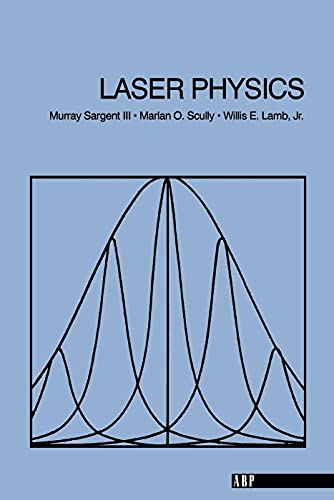
Laser Physics
Sprache: Englisch
Verlag: Westview Press (edition 1), 1978
ISBN 10: 0201069032 ISBN 13: 9780201069037
Paperback. Zustand: Good. 1. It's a preowned item in good condition and includes all the pages. It may have some general signs of wear and tear, such as markings, highlighting, slight damage to the cover, minimal wear to the binding, etc., but they will not affect the overall reading experience.
-
paperback. Zustand: Befriedigend. 468 Seiten; 9780201069037.4 Gewicht in Gramm: 1.
-
Laser Physics
Anbieter: Majestic Books, Hounslow, Vereinigtes Königreich
Verkäuferbewertung 4 von 5 Sternen

EUR 132,21
EUR 7,49 Versand
Versand von Vereinigtes Königreich nach USAAnzahl: 3 verfügbar
In den WarenkorbZustand: New.
-
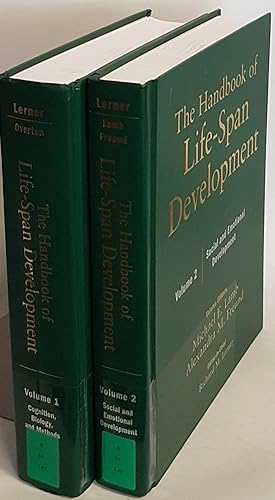
The Handbook of Life-Span Development (2 vols.set/ 2 Bände KOMPLETT) - Vol.1: Cognition, Biology and Methods/ Vol.2: Social and Emotional Development.
Anbieter: books4less (Versandantiquariat Petra Gros GmbH & Co. KG), Welling, Deutschland
Verkäuferbewertung 5 von 5 Sternen

Erstausgabe
gebundene Ausgabe. Zustand: Gut. 1., Auflage. 1014/ 749 Seiten; Der Erhaltungszustand des hier angebotenen Werks ist trotz seiner Bibliotheksnutzung sauber. Es befindet sich neben dem Rückenschild lediglich ein Bibliotheksstempel im Buch; ordnungsgemäß entwidmet. KOMPLETTPREIS für 2 Bände; In ENGLISCHER Sprache. Bei Versand außerhalb der EU erfragen Sie bitte zuerst die Versandkosten; Sprache: Englisch Gewicht in Gramm: 4700.
-

Ode to a Quantum Physicist: A Festschrift in Honor of Marlan O. Scully
Anbieter: Revaluation Books, Exeter, Vereinigtes Königreich
Verkäuferbewertung 5 von 5 Sternen
EUR 136,64
EUR 23,03 Versand
Versand von Vereinigtes Königreich nach USAAnzahl: 2 verfügbar
In den WarenkorbHardcover. Zustand: Brand New. 700 pages. 10.50x8.00x1.00 inches. In Stock.
-
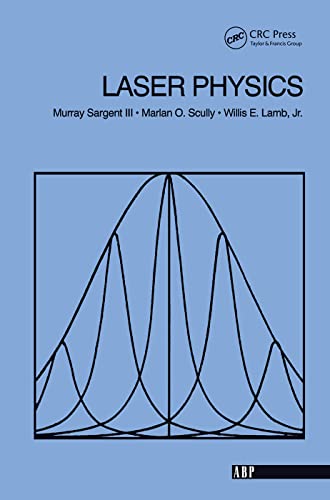
Laser Physics
Anbieter: Majestic Books, Hounslow, Vereinigtes Königreich
Verkäuferbewertung 4 von 5 Sternen
EUR 195,37
EUR 7,49 Versand
Versand von Vereinigtes Königreich nach USAAnzahl: 3 verfügbar
In den WarenkorbZustand: New.
-

Anomalous fine structure of hydrogen and singly ionized helium.
Sprache: Englisch
Verlag: (London) Physical Society, 1951
Anbieter: Antiquariat Gerhard Gruber, Heilbronn, Deutschland
Verkäuferbewertung 5 von 5 Sternen
Erstausgabe
(26 x 18 cm). SS. (19)-63. Mit 39 Abbildungen. Original-Broschur. (Sonderdruck aus: Reports on Progress in Physics). Erste Ausgabe im seltenen Sonderdruck. - "An account is given of theoretical and spectroscopic studies of the fine structure of the n=2 levels of atomic hydrogen and singly ionized helium, and of the work of Lamb, Rutherford and Skinner in which microwave methods are used to establish deviations from the Dirac theory. A qualitative description of the theoretical explanation in terms of quantum electrodynamic level shifts is followed by comparison with observations" (Abstract). - Name auf Einband, sonst gut erhalten.
-

Passage of uranium fission fragments through matter.
Sprache: Englisch
Verlag: (Lancaster), 1940
Anbieter: Antiquariat Gerhard Gruber, Heilbronn, Deutschland
Verkäuferbewertung 5 von 5 Sternen
Erstausgabe
(27 x 20 cm). SS. 696-702. Original-Broschur. (Sonderdruck aus: The Physical Review). Erste Ausgabe im seltenen Sonderdruck. - "The ranges and rates of energy loss of the fission fragments of uranium are calculated on the basis of a model in which the charge of the fragment is obtained from its energy and its successive ionization potentials" (Abstract). - Wohlerhalten.
-
Proceedings Of The Lorentz Kamerlingh Onnes Memorial Conference, Leiden University 22-26 June 1953 (Reprinted From Physica Xix, 1953)
Sprache: Englisch
Verlag: Stichting Physica, Amsterdam, 1953
Anbieter: Arroyo Seco Books, Pasadena, Member IOBA, Pasadena, CA, USA
Verbandsmitglied: IOBA
Verkäuferbewertung 5 von 5 Sternen
Erstausgabe
Soft cover. Zustand: Near Fine. Frontispiece Group Photograph (illustrator). First Separate Edition. Pp 745-908. Publisher's Wrappers, Printed In Gray. Photographic Plate Of Group Participants At Front, With Each Identified. Text In English, Including Extensive Comments By Participants On Each Of The Papers. First Printing. The Personal Copy Of Conference Participant Jan Korringa, Not Marked As Such But With His Marker At His Article.Just A Touch Of Wear, Browning To Spine.
-
![Bild des Verkäufers für On the Self-Energy of a Bound Electron. [Offprint from: The Physical Review, Vol. 75, No. 3, pp. 388- 398, February 1, 1949]. zum Verkauf von Jeff Weber Rare Books](https://pictures.abebooks.com/inventory/md/md30936386795.jpg)
On the Self-Energy of a Bound Electron. [Offprint from: The Physical Review, Vol. 75, No. 3, pp. 388- 398, February 1, 1949].
Verlag: Physical Review, 1949., [College Park, MD]:, 1949
Anbieter: Jeff Weber Rare Books, Neuchatel, NEUCH, Schweiz
Verkäuferbewertung 5 von 5 Sternen
Offprint. Originnal Wrappers. Includes Errata slip with 7 corrections. Very good. "[In 1948] Kroll and Lamb and, right thereafter, French and Weisskopf submitted their papers on the Lamb shift. Deftly these authors had managed to obtain correct answers by non-covariant methods. . . With the successful completion of the magnetic momemnt and Lamb shift calculations, a solid beachhead had been established in uncharted terrain, the physics of radiative corrections" :: Abraham Pais, Inward Bound, pp.460-461. This paper represents a significant step in the research which would, 6 years later, result in Lamb winning the Nobel Prize in Physics. Willis E. Lamb was an American physicist who won the Nobel Prize in Physics in 1955 for research related to his discovery of the Lamb Shift. Norman M. Kroll was an American theoretical physicist known for his pioneering research in Quantum Electrodynamics, at the Institute for Advanced Study, went on to become a professor of physics at Columbia and later head of the physics department at UCSD.
-

[Three offprints] [1]: "A Note on the Capture of Slow Neutrons in Hydrogenous Substance" [from] Physical Review, Vol. 51, Iss. 3.
Verlag: American Physical Society], 1937., [Minneapolis:, 1937
Anbieter: Jeff Weber Rare Books, Neuchatel, NEUCH, Schweiz
Verkäuferbewertung 5 von 5 Sternen
Offprint. 8vo. 187-90 pp. Self-wrappers. Fine. [See below for the following]: [2]: "Passage of Uranium Fission Fragments Through Matter" [from] Physical Review, Vol. 58, No. 8. [Minneapolis: American Physical Society], 1940. [with] [3]: "The Propagation of Order in Crystal Lattices" [from] Physical Review, Vol. 64, Nos. 5 & 6. [Minneapolis: American Physical Society], 1943. [with:] "Passage of Uranium Fission Fragments Through Matter" [from] Physical Review, Vol. 58, No. 8. [Minneapolis: American Physical Society], 1940. Offprint. 8vo. 696-702 pp. Original self-wrappers. Fine. [with:] LAMB, Willis E., Jr. (1913-2008). & J. ASHKIN. "The Propagation of Order in Crystal Lattices" [from] Physical Review, Vol. 64, Nos. 5 & 6. [Minneapolis: American Physical Society], 1943. Offprint. 8vo. 159-78 pp. Original green wrappers. Fine. Lamb attended the University of California at Berkeley for both his undergraduate and post-graduate studies. "For theoretical work on scattering of neutrons by a crystal, guided by J. Robert Oppenheimer, he received the Ph.D. in physics in 1938. Because of limited computational methods available at the time, this research narrowly missed revealing the Mossbauer Effect, 19 years before its recognition by Mossbauer" (Wikip.). "A Note on the Capture of Slow Neutrons. . . ," presented on November 9, 1936 and published in Physical Review in 1937, contributed to the first part of Lamb's thesis dissertation. The title of the dissertation was "I. On the capture of slow neutrons in hydrogenous substances. II. Electromagnetic properties of nuclear systems." "At Ann Arbor, I had heard Fermi lecture on the effect of chemical binding of a hydrogen atom on its scattering of slow neutrons. This interested me, and I began to work on related problems. It seemed that there might also be an effect of the binding of a hydrogen atom on the capture cross section for slow neutrons. At first I thought the effect would be large, but finally had to settle for a very rough estimate of the cross section for a very unlikely process: the radiationless capture of neutrons by bound protons to form deuterons, with the excess energy and momentum going into vibrational motion of the deuteron instead of a gamma ray. The normal capture process was very little affected by the chemical binding. Even today, this radiationless capture has never been seen, but I am still hoping that someday it may be. This work formed part of my doctoral thesis. The other part dealt with electromagnetic properties of nuclear matter" (Lamb, p. 136). "There is no greater tribute to Oppenheimer than the list of Ph.D.s he delivered, which includes Carlson, Christy, Dancoff, Kusaka, Lamb, Morrison, Snyder, and Volkoff" (Pais, p. 369). "Lamb was an American physicist who received the Nobel Prize for Physics in 1955 for his precision measurements of details of the spectrum of hydrogen. These included studies of fine structure and measurements of the Lamb shift, a key observational step on the road to the development of the theory of quantum electrodynamics (p. 203). Gribbin, John. "Lamb, Willis Eugene, Jr. (1913-)." Q Is for Quantum: An Encyclopedia of Particle Physics. New York: Free Press, 1998; Lamb, Willis E., Jr. "Five Encounters with Felix Bloch." Rice University Studies. 66.3 (1980): 133-45; Pais, Abraham. Inward Bound: Of Matter and Forces in the Physical World. Oxford: Clarendon Press, 1986. LAMB, Willis E., Jr. (1913-2008). "Passage of Uranium Fission Fragments Through Matter" [from] Physical Review, Vol. 58, No. 8. [Minneapolis: American Physical Society], 1940. Offprint. 8vo. 696-702 pp. Original self-wrappers. Fine. "Early theoretical efforts on heavy-ion stopping date back to Bohr (1940) who pointed out the importance of screening due to projectile electrons in the slowing-down of fission fragments, and to Lamb (1940) and Knipp and Teller (1941) who studied the problem of charge equilibrium for penetrating heavy particles" (Sigmund, p. 19). Niels Bohr (1885-.
-

Portraitpostkarte mit eigenh. Unterschrift.Lamb, Willis Eugene
Verlag: ohne Ort und Datum
Anbieter: Kotte Autographs GmbH, Roßhaupten, Deutschland
Verkäuferbewertung 5 von 5 Sternen
Manuskript / Papierantiquität
148 : 218 mm. Brustbild im Profil. W. E. Lamb hatte 1955 einen halben Nobelpreis für Physik erhalten für seine Entdeckungen über die Feinstruktur des Wasserstoffspektrums" (Lamb-Verschiebung); die andere Hälfte war an Polykarp Kusch ergangen für seine genaue Bestimmung des magnetischen Moments im Elektron".
-

Portraitphotographie mit eigenh. Unterschrift.
Verlag: ohne Ort und Datum
Anbieter: Kotte Autographs GmbH, Roßhaupten, Deutschland
Verkäuferbewertung 5 von 5 Sternen
Manuskript / Papierantiquität
90 : 125 mm. Brustbild von vorn. W. E. Lamb hatte 1955 einen halben Nobelpreis für Physik erhalten für seine Entdeckungen über die Feinstruktur des Wasserstoffspektrums" (Lamb-Verschiebung); die andere Hälfte war an Polykarp Kusch ergangen für seine genaue Bestimmung des magnetischen Moments im Elektron".
-

Physical Review. Second Series. Volume 70, Numbers 5 and 6. September 1 and 15, 1946
Verlag: American Institute of Physics / American Physical Society, 1946
Anbieter: Zubal-Books, Since 1961, Cleveland, OH, USA
Verkäuferbewertung 5 von 5 Sternen
Zustand: Very Good. 216 pp., softcover, FAINT wear and age-toning to spine else very good. - If you are reading this, this item is actually (physically) in our stock and ready for shipment once ordered. We are not bookjackers. Buyer is responsible for any additional duties, taxes, or fees required by recipient's country. Photos available upon request.
-
Eigenh. Unterschrift auf gedr. Brochüre.
Verlag: Stockholm, 1956, 1956
Anbieter: Kotte Autographs GmbH, Roßhaupten, Deutschland
Verkäuferbewertung 5 von 5 Sternen
Manuskript / Papierantiquität Signiert
8vo. Eigenh. Unterschrift auf gedr. Brochüre Fine Structure of the Hydrogen Atom". - 1955 wurde ihm der Nobelpreis für Physik verliehen.
-
Fine structure of the hydrogen atom by a microwave method. Offprint from: The Physical Review, Vol. 72, No. 3, 1 August 1947
Verlag: American Institute of Physics, [Lancaster, PA and New York, NY, 1947
Anbieter: SOPHIA RARE BOOKS, Koebenhavn V, Dänemark
Verkäuferbewertung 5 von 5 Sternen
Erstausgabe Signiert
First edition. THE LAMB SHIFT NOBEL PRIZE IN PHYSICS 1955. First edition, very rare offprint, signed by Lamb, who received a half-share of the 1955 Nobel Prize in Physics for this work. The Lamb-Retherford experiment of 1947 was the first to measure what is now known as the Lamb shiftthe difference in energy between two energy levels 2S½ and 2P½ of the hydrogen atomwhich had not been correctly predicted by the Dirac relativistic wave equation. "The Lamb shift experiment was a landmark in 20th-century physics" (Biographical Memoir, National Academy of Sciences). "After it was reported at Shelter Island, [the Lamb-Retherford experiment] became the point of departure for the renormalization program" (Silvan Schweber). Lamb (1913-2008) received his doctorate at Berkeley in 1938 under the guidance of J. Robert Oppenheimer. "Unlike many of his generation of physicists, Lamb did not follow Oppenheimer into the wartime atom-bomb project. Instead, he concentrated on his specialisms microwaves and radar at Columbia University in New York, performing the experiments that culminated in the observation of the Lamb shift. This shift is a tiny difference in energy between two atomic orbitals in hydrogen, denoted 2S and 2P, distinguished only by their angular momenta. Quantum theories of the time predicted that these levels should have identical energies. The discovery that they did not demanded a fundamental theoretical rethink one that was initiated almost immediately by Hans Bethe. The Lamb shift thus became a cornerstone of the modern edifice of quantum electrodynamics (QED). This, the quantum field theory of the electromagnetic interaction, explains the shift as resulting from energy fluctuations in the vacuum that smear out the position of the electron in a hydrogen atom. This process has a greater effect on the Coulomb energy of the electron's binding to the central proton at smaller radii (where the 2S state is most likely) than at larger radii (where the 2P state dominates). Today, precise measurements of the Lamb shift have tested QED to an accuracy of better than one part in a million" (Sargent). On Lamb's 65th birthday, Freeman Dyson wrote, "those years, when the lamb shift was the central theme of physics, were golden years for all the physicists of my generation. You were the first to see that this tiny shift, so elusive and hard to measure, would clarify in a fundamental way our thinking about particles and fields." Not on OCLC or RBH. Provenance: Willis Lamb (signature on front wrapper). Lamb was born in Los Angeles, the son of a telephone engineer. He entered the University of California at Berkeley in 1930, where he earned a bachelor's degree in chemistry (1934). Lamb continued at Berkeley as a graduate student in theoretical physics directed by J. Robert Oppenheimer, receiving his doctorate in 1938. In that year Lamb joined the faculty at Columbia University, New York, where he carried out research in microwaves and radar. His defence-related investigations focused on the problem of how to make shorter, higher frequency microwave sources for radar. It was this that would eventually lead to a Nobel prize in 1955. Lamb continued working in atomic spectroscopy and laser physics at Stanford University (1951-56), where he devised microwave techniques for examining the hyperfine structure of the spectral lines of helium, and then as professor at Oxford (1956-62). He returned to the US in 1962 as Henry Ford II professor of physics at Yale, joining the University of Arizona in 1974 until his retirement in 2002. "In the second quarter of the 20th century, quantum theory faced some serious challenges, including unexplained details of atomic spectra and difficulties in calculating basic properties of charged particles. In 1947 Willis Lamb and Robert Retherford of Columbia University discovered an unexpected detail in the hydrogen spectrum, later called the Lamb shift, that became an essential clue in solving both problems. The measurement agreed with new calculations and was the first indication that the theoretical approach called renormalization could resolve the mathematical infinities that had threatened to derail the progress of quantum mechanics. "By the 1940s, theorists understood a variety of phenomena that had small effects on the energies of atomic electrons, such as relativistic corrections and interactions between spin and orbital angular momentum. These effects showed themselves in the so-called fine structure of atomic spectrathe way that many spectral lines, corresponding to jumps between electron energy levels, are seen on close examination to split into groups of closely spaced lines. "Lamb and graduate student Retherford wanted to measure the hydrogen fine structure by investigating two specific electron states. One was a relatively long-livedSstate, with a spherically symmetric orbital, and the other was a shorter-livedPstate, with less symmetry. Standard theory predicted that the two states should have equal energy but that applying a magnetic field should influence the states in different ways and induce an energy difference between them. "The team sent a stream of electrons at right angles into a beam of hydrogen atoms, exciting a few of them into theS state and also deflecting them slightly from the main beam direction. The excited atoms passed through a region containing both microwave radiation and an adjustable magnetic field and then hit a metal target. The excited atoms would then drop back to the ground state, emitting electrons that the team could detect as a current. The key to the experiment was that if the magnetic-field-induced energy difference between the two states was equal to the energy of the microwave photons, then the long-livedSstate would absorb a photon and turn into the short-livedP state. These atoms would drop back to their ground state before reaching the target, and the current in the detector would essentially vanish. "By plotting the critical magne.
-
MICROWAVE TECHNIQUE FOR DETERMINING THE FINE STRUCTURE OF THE HELIUM ATOM
Erscheinungsdatum: 1957
Anbieter: Xerxes Fine and Rare Books and Documents, Glen Head, NY, USA
Verkäuferbewertung 5 von 5 Sternen
Zustand: VG. Article on pp. 559-572 in single complete issue of The Physical Review. volume 105 second series. number 2, January 15, 1957. first edition. 4to. Green printed wraps. Complete issue paginated pp. 347-764. VG , Text clean and binding secure. Light wear on backstrip; owner name stamp on front cover. Lamb won Nobel in Physics in 1955. Pictures available on request.
-

Willis Lamb Autograph
Anbieter: Markus Brandes Autographs GmbH, Kesswil, TG, Schweiz
Verkäuferbewertung 3 von 5 Sternen

Fotografie Signiert
Signed vintage glossy photograph, shows Willis Lamb at an event, 5,75 x 4 inch, signed and dated in red felt tip "WE Lamb - 30/6/1979", in very fine condition.
-

Willis E. Lamb Autograph
Anbieter: Markus Brandes Autographs GmbH, Kesswil, TG, Schweiz
Verkäuferbewertung 3 von 5 Sternen
Manuskript / Papierantiquität Signiert
Printed scientific article signed, four pages (stapled together), 8,25 x 11,75 inch, scientific article entitled `Fine Structure of the Hydrogen Atom` by Willis E. Lamb, Jr. - reprint from `Science` (March 16, 1956, Vol. 123, No. 3194), signed in dark ink "W. E. Lamb, Jr.", in very fine condition.
-

Willis Lamb Autograph
Anbieter: Markus Brandes Autographs GmbH, Kesswil, TG, Schweiz
Verkäuferbewertung 3 von 5 Sternen
Fotografie Signiert
Signed vintage glossy photograph, shows Willis Lamb in a half length portrait, 4 x 5,75 inch, signed and dated in red felt tip "WE Lamb, Jr - 1979", in very fine condition.


