
Gesamtpreis (1 Artikel Artikel):
Versandziel:

kroplick howard velocci (8 Ergebnisse)
Direkt zu den wichtigsten Suchergebnissen
Suchfilter
Produktart
- Alle Product Types
- Bücher (8)
- Magazine & Zeitschriften (Keine weiteren Ergebnisse entsprechen dieser Verfeinerung)
- Comics (Keine weiteren Ergebnisse entsprechen dieser Verfeinerung)
- Noten (Keine weiteren Ergebnisse entsprechen dieser Verfeinerung)
- Kunst, Grafik & Poster (Keine weiteren Ergebnisse entsprechen dieser Verfeinerung)
- Fotografien (Keine weiteren Ergebnisse entsprechen dieser Verfeinerung)
- Karten (Keine weiteren Ergebnisse entsprechen dieser Verfeinerung)
- Manuskripte & Papierantiquitäten (Keine weiteren Ergebnisse entsprechen dieser Verfeinerung)
Zustand Mehr dazu
- Neu (4)
- Wie Neu, Sehr Gut oder Gut Bis Sehr Gut (1)
- Gut oder Befriedigend (3)
- Ausreichend oder Schlecht (Keine weiteren Ergebnisse entsprechen dieser Verfeinerung)
- Wie beschrieben (Keine weiteren Ergebnisse entsprechen dieser Verfeinerung)
Einband
Weitere Eigenschaften
- Erstausgabe (Keine weiteren Ergebnisse entsprechen dieser Verfeinerung)
- Signiert (Keine weiteren Ergebnisse entsprechen dieser Verfeinerung)
- Schutzumschlag (Keine weiteren Ergebnisse entsprechen dieser Verfeinerung)
- Angebotsfoto (2)
Sprache (1)
Preis
- Beliebiger Preis
- Weniger als EUR 20
- EUR 20 bis EUR 45
- Mehr als EUR 45 (Keine weiteren Ergebnisse entsprechen dieser Verfeinerung)
Gratisversand
Land des Verkäufers
Verkäuferbewertung
-

The Long Island Motor Parkway
Anbieter: Better World Books, Mishawaka, IN, USA
Verkäuferbewertung 5 von 5 Sternen

Zustand: Good. Used book that is in clean, average condition without any missing pages.
-
The Long Island Motor Parkway
Anbieter: Better World Books, Mishawaka, IN, USA
Verkäuferbewertung 5 von 5 Sternen
Zustand: Very Good. Used book that is in excellent condition. May show signs of wear or have minor defects.
-
The Long Island Motor Parkway
Anbieter: Better World Books, Mishawaka, IN, USA
Verkäuferbewertung 5 von 5 Sternen
Zustand: Good. Former library book; may include library markings. Used book that is in clean, average condition without any missing pages.
-
The Long Island Motor Parkway
Anbieter: Revaluation Books, Exeter, Vereinigtes Königreich
Verkäuferbewertung 5 von 5 Sternen
EUR 25,45
EUR 11,41 für den Versand von Vereinigtes Königreich nach USAAnzahl: 1 verfügbar
In den WarenkorbPaperback. Zustand: Brand New. 128 pages. 9.00x6.25x0.25 inches. In Stock.
-
The Long Island Motor Parkway
Anbieter: Revaluation Books, Exeter, Vereinigtes Königreich
Verkäuferbewertung 5 von 5 Sternen
EUR 42,70
EUR 11,41 für den Versand von Vereinigtes Königreich nach USAAnzahl: 1 verfügbar
In den WarenkorbPaperback. Zustand: Brand New. 128 pages. 9.00x6.25x0.25 inches. In Stock.
-

EUR 28,11
EUR 48,99 für den Versand von Deutschland nach USAAnzahl: Mehr als 20 verfügbar
In den WarenkorbZustand: New. Über den AutorHoward Kroplick is the author of Vanderbilt Cup Races of Long Island. He is a lecturer, research volunteer at the Suffolk County Vanderbilt Museum, and member of the Vanderbilt Cup Race Centennial Committee and Long Is.
-
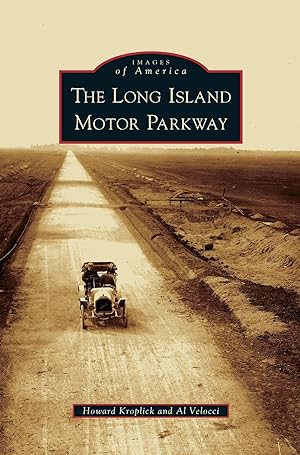
Long Island Motor Parkway
Verlag: Arcadia Publishing Library Editions, 2008
ISBN 10: 1531637175 ISBN 13: 9781531637170
Sprache: Englisch
EUR 29,20
EUR 48,99 für den Versand von Deutschland nach USAAnzahl: Mehr als 20 verfügbar
In den WarenkorbZustand: New. KlappentextrnrnA forerunner of the modern highway system, the Long Island Motor Parkway was constructed during the advent of the automobile and at a pivotal time in American history. Following a spectator death during the 1906 Vanderbilt Cup Rac.
-
Zustand: Sehr gut. Zustand: Sehr gut | Sprache: Englisch | Produktart: Bücher | A forerunner of the modern highway system, the Long Island Motor Parkway was constructed during the advent of the automobile and at a pivotal time in American history. Following a spectator death during the 1906 Vanderbilt Cup Race, the concept for a privately owned speedway on Long Island was developed by William K. Vanderbilt Jr. and his business associates. It would be the first highway built exclusively for the automobile. Vanderbilt's dream was to build a safe, smooth, police-free road without speed limits where he could conduct his beloved automobile races without spectators running onto the course. Features such as the use of reinforced concrete, bridges to eliminate grade crossings, banked curves, guardrails, and landscaping were all pioneered for the parkway. Reflecting its poor profitability and the availability of free state-built public parkways, the historic 48-mile Long Island Motor Parkway closed on Easter Sunday, April 17, 1938.

