

Gesamtpreis (1 Artikel Artikel):
Versandziel:

kapp leon and hiroko (4 Ergebnisse)
Direkt zu den wichtigsten Suchergebnissen
Suchfilter
Produktart
- Alle Product Types
- Bücher (4)
- Magazine & Zeitschriften (Keine weiteren Ergebnisse entsprechen dieser Verfeinerung)
- Comics (Keine weiteren Ergebnisse entsprechen dieser Verfeinerung)
- Noten (Keine weiteren Ergebnisse entsprechen dieser Verfeinerung)
- Kunst, Grafik & Poster (Keine weiteren Ergebnisse entsprechen dieser Verfeinerung)
- Fotografien (Keine weiteren Ergebnisse entsprechen dieser Verfeinerung)
- Karten (Keine weiteren Ergebnisse entsprechen dieser Verfeinerung)
- Manuskripte & Papierantiquitäten (Keine weiteren Ergebnisse entsprechen dieser Verfeinerung)
Zustand Mehr dazu
- Neu (Keine weiteren Ergebnisse entsprechen dieser Verfeinerung)
- Wie Neu, Sehr Gut oder Gut Bis Sehr Gut (Keine weiteren Ergebnisse entsprechen dieser Verfeinerung)
- Gut oder Befriedigend (2)
- Ausreichend oder Schlecht (Keine weiteren Ergebnisse entsprechen dieser Verfeinerung)
- Wie beschrieben (2)
Einband
- alle Einbände
- Hardcover (4)
- Softcover (Keine weiteren Ergebnisse entsprechen dieser Verfeinerung)
Weitere Eigenschaften
- Erstausgabe (1)
- Signiert (Keine weiteren Ergebnisse entsprechen dieser Verfeinerung)
- Schutzumschlag (3)
- Angebotsfoto (3)
Sprache (3)
Gratisversand
- Kostenloser Versand nach USA (Keine weiteren Ergebnisse entsprechen dieser Verfeinerung)
Land des Verkäufers
Verkäuferbewertung
-

THE CRAFT OF THE JAPANESE SWORD
Anbieter: Easton's Books, Inc., Mount Vernon, WA, USA
Verkäuferbewertung 5 von 5 Sternen

Hardcover. Zustand: NF. Hardback in Near Fine condition with Near Fine dust jacket. 10.2 X 0.8 X 7.1 inches. 168 pages. Quick shipping, excellent customer service. All books carefully packaged and ship with tracking information. Book is solid and straight. Ink ownership inscription on front endpaper.
-
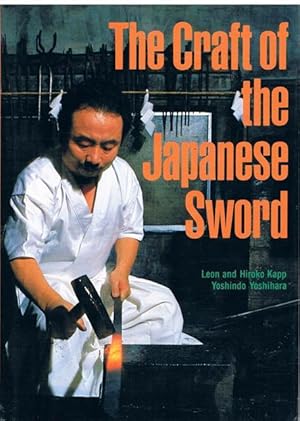
The craft of the japanese sword. With photographs by Tom Kishida.
Verlag: Kodansha, Tokyo, 1987
Anbieter: terrahe.oswald, Gangkofen, Deutschland
Verkäuferbewertung 5 von 5 Sternen
4°. 167,(1) S., mit zahlreichen Abbildungen. Orig.-Leinen mit Umschlag. Umschlag etwas berieben und mit kleineren Randläsuren; Ecken etwas bestoßen.
-
The Craft of the Japanese Sword
Sprache: Englisch
Verlag: Kodansha International Ltd, Tokyo, New York, San Francisco, 1987
ISBN 10: 087011798X ISBN 13: 9780870117985
Anbieter: Jorge Welsh Books, Lisboa, Portugal
Verkäuferbewertung 5 von 5 Sternen
Erstausgabe
Hardcover. Zustand: Very Good. Dust Jacket Included. 1st Edition. English text; Hardcover (cloth with dust jacket); 19.5 x 25.5 cm; 0.8 kg; 168 pages with black and white illustrations.; Used with minor signs of wear on the exterior and interior. The exterior shows minor edge wear, scuffs and scratches on the front cover, spine and back cover. The spine is slightly faded. Interior with dedication to previous owner and signature on front free endpaper. Remaining interior with minor signs of wear.; Well over a thousand years old, the tradition of swordmaking in Japan is one of the most highly regarded metal crafts in the world. When all sword manufacture was prohibited in Japan for seven years after World War II, the age-old techniques were in danger of being lost forever. Today, in the hands of a new generation of practitioners, the craft is making a startling comeback. Connoisseurs say that the swords being produced now are the equal of any thing made in Japan in the past few hundred years. This book takes the reader into the workshops of four of Japan's leading sword craftsmen. Each crafts- man has a different role in the manufacture of a blade. Yoshindo Yoshihara, the swordsmith, begins with raw steel made in a traditional charcoal-fueled smelter and refines it by folding and forging, gradual- ly shaping it into a sword with a hardened edge. Okisato Fujishiro then sharpens and polishes the sword with fine stones to reveal the color and texture of the steel. Metalworker Hiroshi Miyajima makes the small copper-and-gold habaki collar that fits between the blade and the scabbard. Finally, Kazuyuki Takayama carves the hilt and the scabbard out of a single piece of wood. Black-and-white photographs show every stage of the manufacture, while important information on history, metallurgy, and modern-day appraisal is presented in an extensive introduction. The swords made in Japan today are not, of course, intended for actual use. But their design, the quality of their steel, and the techniques used to create them still derive from the sword's historical function as a lethal hand-held weapon. A sword must be razor sharp, light, well balanced, and strong, but not so brittle it will break. In the perfect resolution of these qualities lie the beauty of the blade and the challenge of the craft. This book demonstrates how brilliantly Japan's sword craftsmen today have met this technological challenge. The impulse of the craft now is to preserve the utilitarian object and yet create an enduring art for the modern age. While many fine books on sword appreciation exist, these deal primarily with older blades or problems of appraisal. The Craft of the Japanese Sword is the first book in English devoted entirely to contemporary sword manufacture, and will thus be of enormous value to metal artists everywhere, as well as to collectors and students of weaponry.
-
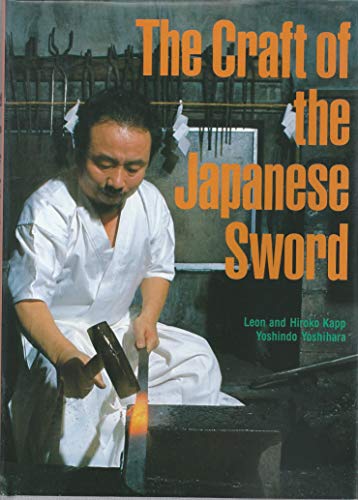
the-craft-of-the-japanese-sword
Anbieter: Reuseabook, Gloucester, GLOS, Vereinigtes Königreich
Verkäuferbewertung 5 von 5 Sternen
EUR 45,65
EUR 11,58 Versand
Versand von Vereinigtes Königreich nach USAAnzahl: 1 verfügbar
In den Warenkorbhardcover. Zustand: Used; Good. Dispatched, from the UK, within 48 hours of ordering. This book is in good condition but will show signs of previous ownership. Please expect some creasing to the spine and/or minor damage to the cover.

