
Gesamtpreis (1 Artikel Artikel):
Versandziel:

jost kenneth (15 Ergebnisse)
Direkt zu den wichtigsten Suchergebnissen
Suchfilter
Produktart
- Alle Product Types
- Bücher (15)
- Magazine & Zeitschriften (Keine weiteren Ergebnisse entsprechen dieser Verfeinerung)
- Comics (Keine weiteren Ergebnisse entsprechen dieser Verfeinerung)
- Noten (Keine weiteren Ergebnisse entsprechen dieser Verfeinerung)
- Kunst, Grafik & Poster (Keine weiteren Ergebnisse entsprechen dieser Verfeinerung)
- Fotografien (Keine weiteren Ergebnisse entsprechen dieser Verfeinerung)
- Karten (Keine weiteren Ergebnisse entsprechen dieser Verfeinerung)
- Manuskripte & Papierantiquitäten (Keine weiteren Ergebnisse entsprechen dieser Verfeinerung)
Zustand Mehr dazu
- Neu (4)
- Wie Neu, Sehr Gut oder Gut Bis Sehr Gut (1)
- Gut oder Befriedigend (10)
- Ausreichend oder Schlecht (Keine weiteren Ergebnisse entsprechen dieser Verfeinerung)
- Wie beschrieben (Keine weiteren Ergebnisse entsprechen dieser Verfeinerung)
Einband
Weitere Eigenschaften
- Erstausgabe (1)
- Signiert (Keine weiteren Ergebnisse entsprechen dieser Verfeinerung)
- Schutzumschlag (1)
- Angebotsfoto (2)
Sprache (3)
Gratisversand
Land des Verkäufers
Verkäuferbewertung
-

The Supreme Court A to Z (American Government A to Z)
Anbieter: ThriftBooks-Dallas, Dallas, TX, USA
Verkäuferbewertung 5 von 5 Sternen

Hardcover. Zustand: Very Good. No Jacket. May have limited writing in cover pages. Pages are unmarked. ~ ThriftBooks: Read More, Spend Less.
-

The Supreme Court a to Z
Anbieter: Better World Books, Mishawaka, IN, USA
Verkäuferbewertung 5 von 5 Sternen
Zustand: Very Good. 5th Edition. Former library book; may include library markings. Used book that is in excellent condition. May show signs of wear or have minor defects.
-
The Supreme Court a to Z
Anbieter: Better World Books, Mishawaka, IN, USA
Verkäuferbewertung 5 von 5 Sternen
Zustand: Good. 5th Edition. Former library book; may include library markings. Used book that is in clean, average condition without any missing pages.
-

The Harvard Strike
Verlag: Houghton Mifflin
Anbieter: ThriftBooks-Dallas, Dallas, TX, USA
Verkäuferbewertung 5 von 5 Sternen
Hardcover. Zustand: Good. No Jacket. Pages can have notes/highlighting. Spine may show signs of wear. ~ ThriftBooks: Read More, Spend Less.
-
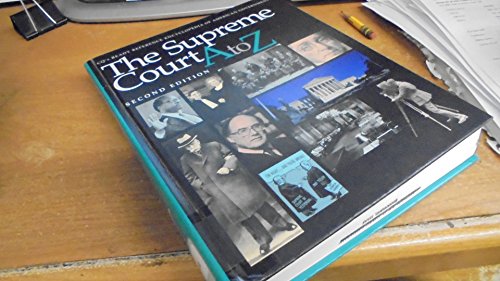
The Supreme Court A to Z
Anbieter: Wonder Book, Frederick, MD, USA
Verkäuferbewertung 5 von 5 Sternen
Zustand: Very Good. Very Good condition. 2nd edition. A copy that may have a few cosmetic defects. May also contain light spine creasing or a few markings such as an owner's name, short gifter's inscription or light stamp.
-
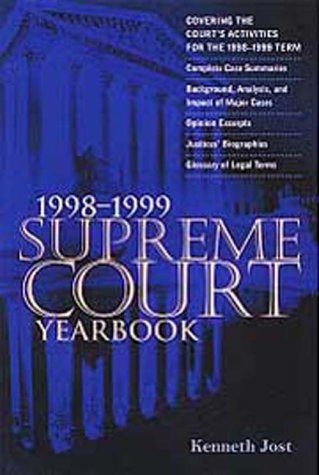
The Supreme Court Yearbook 1998-1999 : Covering the Court's Activities for the Entire Term
Anbieter: Better World Books, Mishawaka, IN, USA
Verkäuferbewertung 5 von 5 Sternen
Zustand: Very Good. Used book that is in excellent condition. May show signs of wear or have minor defects.
-

CQ's American Government A to Z Series: The Supreme Court a to Z
Anbieter: Anybook.com, Lincoln, Vereinigtes Königreich
Verkäuferbewertung 5 von 5 Sternen
EUR 29,31
EUR 15,38 shipping
Versand von Vereinigtes Königreich nach USAAnzahl: 1 verfügbar
In den WarenkorbZustand: Good. This is an ex-library book and may have the usual library/used-book markings inside.This book has hardback covers. In good all round condition. No dust jacket. Please note the Image in this listing is a stock photo and may not match the covers of the actual item,1300grams, ISBN:9781568028026.
-

Electromagnetic Compatibility EMC Pocket Guide: Key EMC Facts, Equations and Data
Anbieter: Revaluation Books, Exeter, Vereinigtes Königreich
Verkäuferbewertung 5 von 5 Sternen
EUR 42,02
EUR 11,48 shipping
Versand von Vereinigtes Königreich nach USAAnzahl: 2 verfügbar
In den WarenkorbSpiral-bound. Zustand: Brand New. spiral-bound edition. 64 pages. 5.50x3.00x0.50 inches. In Stock.
-

The Supreme Court Yearbook, 1992-1993
Anbieter: NEPO UG, Rüsselsheim am Main, Deutschland
Verkäuferbewertung 5 von 5 Sternen
Gebundene Ausgabe. Zustand: Gut. 298 Seiten ex Library aus einer wissentschaftlichen Bibliothek Sprache: Englisch Gewicht in Gramm: 545.
-

Ordinary Language Criticism : Literary Thinking after Cavell after Wittgenstein
Sprache: Englisch
Verlag: Northwestern University Press, 2003
ISBN 10: 0810119579 ISBN 13: 9780810119574
Anbieter: Mooney's bookstore, Den Helder, Niederlande
Verkäuferbewertung 4 von 5 Sternen

Zustand: Very good.
-

EUR 35,12
EUR 48,99 shipping
Versand von Deutschland nach USAAnzahl: Mehr als 20 verfügbar
In den WarenkorbZustand: New. Über den AutorrnrnKenneth Wyatt has worked as an EMC engineer for over 20 years for Hewlett-Packard and Agilent Technologies in Colorado Springs. A prolific author and presenter, he has generated extensive content on: design of comb gene.
-
The Supreme Court Yearbook, 1996-1997 (Supreme Court Yearbooks)
Anbieter: NEPO UG, Rüsselsheim am Main, Deutschland
Verkäuferbewertung 5 von 5 Sternen
Taschenbuch. Zustand: Sehr gut. 355 Seiten Sofort verfügbar Versand am folgenden Arbeitstag Rechnung mit ausgewiesener MwSt. liegt bei daily shipping worldwide with invoice ex library Sprache: Deutsch Gewicht in Gramm: 550.
-

Ordinary Language Criticism
Sprache: Englisch
Verlag: Northwestern University Press, 2003
ISBN 10: 0810119579 ISBN 13: 9780810119574
EUR 97,33
EUR 48,99 shipping
Versand von Deutschland nach USAAnzahl: Mehr als 20 verfügbar
In den WarenkorbGebunden. Zustand: New. Über den AutorKENNETH DAUBER is a professor of English at the State University of New York at Buffalo. He is the author of The Idea of Authorship in America (University of Wisconsin Press, 1990). WALTER JOST is an associate professo.
-
The Supreme Court a to Z
Anbieter: Revaluation Books, Exeter, Vereinigtes Königreich
Verkäuferbewertung 5 von 5 Sternen
EUR 279,97
EUR 17,22 shipping
Versand von Vereinigtes Königreich nach USAAnzahl: 2 verfügbar
In den WarenkorbHardcover. Zustand: Brand New. 5th edition. 668 pages. 9.50x7.75x1.50 inches. In Stock.
-
The Harvard Strike
Verlag: Houghton Mifflin Company, Boston, MA, 1970
Anbieter: Ground Zero Books, Ltd., Silver Spring, MD, USA
Verkäuferbewertung 4 von 5 Sternen
Erstausgabe
Hardcover. Zustand: Very good. Zustand des Schutzumschlags: Good. Daniel Alexander (Authors photograph) (illustrator). First Printing [Stated]. xvi, [2], 381, [1] pages. Illustrated endpapers. Illustrations. Appendix. Index. The DJ has some wear and soiling. The surprise take over of a university building by the SDS brought to light the conflicts and differences between students, between students and faculty and the administration and the demands of the black students on campus. The police came in and ended the takeover but the analysis of the differing positions shows that the struggle is not over. It couldn't happen here, almost everyone said about the oldest and most renowned university in the country. Then, on April 9, 1969, a band of students led by the SDS seized University Hall and disproved the conventional wisdom that put Harvard above such violence. The authors probe the confusion of inflamed and contradictory reports. They identify forces set in motion many months before the event, and follow the gradual hardening of attitudes on issues that divided students, faculty, and administration. The account of the seventeen-hour period during which students occupied University Hall produces striking vignettes--a senior adviser being carried out of the building over the shoulder of a student, the orderly procedures of the insurgents for providing food and supplies, the president of the university watching the police action through field glasses from his house, cops congratulating themselves on a job well done. In the wake of the bust, the story follows the forging of new policies by each faction under the pressures of passionate concern, tight deadlines, and the glare of publicity. As part of the wider anti-war movement of the 1960s, student organizations such as the Harvard chapter of the Students for a Democratic Society (SDS) ran anti-war activities on campus. In November 1966 for instance, Secretary of Defense Robert McNamara was prevented from leaving the campus by a group of about 800 students. Forced from his car, he was hoisted up on the hood of a convertible, where he agreed to answer questions from the crowd on the Vietnam War. A letter signed by 2,700 Harvard undergraduates apologizing to McNamara was sent to him a few days after. A year later, in October 1967, a recruitment visit by Dow Chemicals, which supplied napalm to the military, was interrupted by protests. The Harvard Reserve Officer Training Corps (ROTC) programs drew particular attention, with sit-ins disrupting their meetings. Although the faculty was willing to reduce the programs' privileges, the Harvard Corporation refused to terminate it. These developments, alongside the creation of a degree program in Afro-American studies, led to the events of April 1969. On the night of April 8 to 9, a group of about 300 students, led by the SDS, tacked a list of demands on the door of the home of Nathan Pusey, then President of Harvard. Not only did it call for the abolition of ROTC, but also for lower rent and student involvement in designing the curriculum for the Afro-American studies degree. The demands were later rejected by Pusey as baseless. At noon on April 9, a group of 30 to 70 students entered University Hall, ejecting administrative staff and faculty. While most left the building peacefully, some faculty like assistant dean Archie Epps were forcefully expelled. At 4:15 pm Harvard Yard was closed off by the administration, citing safety concerns. The occupiers were threatened with criminal prosecution and disciplinary action if they did not leave by 4:30. The Boston Globe estimated the number of students inside University Hall to now be about 500, with at least 3000 onlookers in the Yard. At 5 pm, a meeting between moderate students and Dean Fred Glimp was convened at Lowell Lecture Hall, both agreeing on a peaceful resolution of the conflict. In the aftermath of the occupation, a series of reforms began. The ROTC lost the privileges not held by other extracurricular activities by a vote of the faculty later endorsed by the Harvard Corporation. Student representatives got a role in the appointment of faculty for Afro-American studies. A special "Committee of Fifteen" was formed to deal with the participants of the occupation. Unusual for a faculty board, it was not appointed, but elected by the Faculty of Arts and Sciences, consisting of ten of its members and augmented by five students, three from the College and one each of Radcliffe College and the Graduate School. Harvard President Nathan Pusey estimated the damage from the occupation to amount to approximately two professors' annual salaries.


