
Gesamtpreis (1 Artikel Artikel):
Versandziel:

hamilton milo (16 Ergebnisse)
Direkt zu den wichtigsten Suchergebnissen
Suchfilter
Produktart
- Alle Product Types
- Bücher (16)
- Magazine & Zeitschriften (Keine weiteren Ergebnisse entsprechen dieser Verfeinerung)
- Comics (Keine weiteren Ergebnisse entsprechen dieser Verfeinerung)
- Noten (Keine weiteren Ergebnisse entsprechen dieser Verfeinerung)
- Kunst, Grafik & Poster (Keine weiteren Ergebnisse entsprechen dieser Verfeinerung)
- Fotografien (Keine weiteren Ergebnisse entsprechen dieser Verfeinerung)
- Karten (Keine weiteren Ergebnisse entsprechen dieser Verfeinerung)
- Manuskripte & Papierantiquitäten (Keine weiteren Ergebnisse entsprechen dieser Verfeinerung)
Zustand Mehr dazu
- Neu (4)
- Wie Neu, Sehr Gut oder Gut Bis Sehr Gut (1)
- Gut oder Befriedigend (8)
- Ausreichend oder Schlecht (3)
- Wie beschrieben (Keine weiteren Ergebnisse entsprechen dieser Verfeinerung)
Einband
Weitere Eigenschaften
Sprache (2)
Gratisversand
Land des Verkäufers
Verkäuferbewertung
-
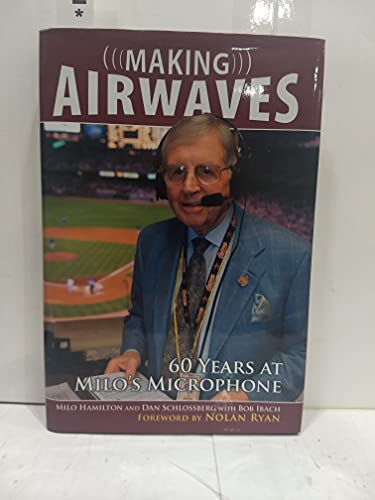
Making Airwaves: 60 Years at Milo's Microphone
Anbieter: ThriftBooks-Atlanta, AUSTELL, GA, USA
Verkäuferbewertung 5 von 5 Sternen

Hardcover. Zustand: As New. No Jacket. Pages are clean and are not marred by notes or folds of any kind. ~ ThriftBooks: Read More, Spend Less.
-
Making Airwaves: 60 Years at Milo's Microphone
Anbieter: ThriftBooks-Atlanta, AUSTELL, GA, USA
Verkäuferbewertung 5 von 5 Sternen
Hardcover. Zustand: Good. No Jacket. Pages can have notes/highlighting. Spine may show signs of wear. ~ ThriftBooks: Read More, Spend Less.
-
Making Airwaves: 60 Years at Milo's Microphone
Anbieter: ThriftBooks-Atlanta, AUSTELL, GA, USA
Verkäuferbewertung 5 von 5 Sternen
Hardcover. Zustand: Very Good. No Jacket. Missing dust jacket; May have limited writing in cover pages. Pages are unmarked. ~ ThriftBooks: Read More, Spend Less.
-
Making Airwaves: 60 Years at Milo's Microphone
Anbieter: ThriftBooks-Dallas, Dallas, TX, USA
Verkäuferbewertung 5 von 5 Sternen
Hardcover. Zustand: Very Good. No Jacket. May have limited writing in cover pages. Pages are unmarked. ~ ThriftBooks: Read More, Spend Less.
-
Making Airwaves : 60 Years at Milo's Microphone
Anbieter: Better World Books, Mishawaka, IN, USA
Verkäuferbewertung 5 von 5 Sternen
Zustand: Good. Pages intact with minimal writing/highlighting. The binding may be loose and creased. Dust jackets/supplements are not included. Stock photo provided. Product includes identifying sticker. Better World Books: Buy Books. Do Good.
-
Making Airwaves : 60 Years at Milo's Microphone
Anbieter: Better World Books, Mishawaka, IN, USA
Verkäuferbewertung 5 von 5 Sternen
Zustand: Very Good. Pages intact with possible writing/highlighting. Binding strong with minor wear. Dust jackets/supplements may not be included. Stock photo provided. Product includes identifying sticker. Better World Books: Buy Books. Do Good.
-
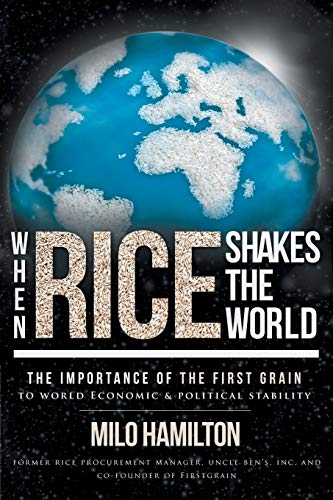
When Rice Shakes the World: The Importance of the First Grain to World Economic & Political Stability
Anbieter: ThriftBooks-Atlanta, AUSTELL, GA, USA
Verkäuferbewertung 5 von 5 Sternen
Paperback. Zustand: Very Good. No Jacket. May have limited writing in cover pages. Pages are unmarked. ~ ThriftBooks: Read More, Spend Less.
-
When Rice Shakes the World The Importance of the First Grain to World Economic & Political Stability
Anbieter: True Oak Books, Highland, NY, USA
Verbandsmitglied: IOBA
Verkäuferbewertung 5 von 5 Sternen
Signiert
Paperback. Zustand: Very Good. - Book is in great overall condition. No writing or major blemishes. Minor wear. Brief dedication on first page. Signed by author! ; - We offer free returns for any reason and respond promptly to all inquiries. Your order will be packaged with care and ship on the same or next business day. Buy with confidence.
-
When Rice Shakes The World
Anbieter: Majestic Books, Hounslow, Vereinigtes Königreich
Verkäuferbewertung 4 von 5 Sternen

EUR 18,90
EUR 7,48 Versand
Versand von Vereinigtes Königreich nach USAAnzahl: 1 verfügbar
In den WarenkorbZustand: New. pp. 170.
-
When Rice Shakes the World: The Importance of the First Grain: to World Economic & Political Stability
Anbieter: Revaluation Books, Exeter, Vereinigtes Königreich
Verkäuferbewertung 5 von 5 Sternen
EUR 15,92
EUR 11,51 Versand
Versand von Vereinigtes Königreich nach USAAnzahl: 2 verfügbar
In den WarenkorbPaperback. Zustand: Brand New. 168 pages. 9.00x6.00x0.36 inches. In Stock.
-

EUR 19,45
EUR 48,99 Versand
Versand von Deutschland nach USAAnzahl: Mehr als 20 verfügbar
In den WarenkorbZustand: New. Über den AutorrnrnStarting about three years ago, the author of this book grew concerned about the global impact of change from the rural rice markets in Asia. His concern as a world expert on rice led him to write this book so others.
-

When Rice Shakes the World : The Importance of the First Grain to World Economic & Political Stability
Sprache: Englisch
Verlag: Advantage Media Group, Inc. Dez 2013, 2013
ISBN 10: 1599323982 ISBN 13: 9781599323985
Anbieter: AHA-BUCH GmbH, Einbeck, Deutschland
Verkäuferbewertung 5 von 5 Sternen
Taschenbuch. Zustand: Neu. Neuware - For millennia, rice has sealed the fate of dynasties and kingdoms in Asia but has only remained a cultural curiosity to Western financial markets. Today the food and agricultural markets of India and China are in motion. The history of agricultural change is littered with hunger, poverty and failure. Will that curse pass itself on to this Asian generation Or is there a brighter future ahead of us Now China is rapidly becoming the wealthiest country in the world. China's water shortages and its rice market are fault lines that finger their way beneath the surface of the world economy. These fault lines are sending out tremors that could shake the entire world in the next few years. Rice is a little grain but a big deal in Asia. The Great Wall of China is cemented together with sticky rice. It uses up to 70% of the water resources of China. Rice's 200,000,000 farms feed 3,000,000,000 people. Yet it is grown on an area the size of France. Rice is the social cement of Asia and the rice farms of Asia may crack that ancient cement. This book explains the ancient yet curiously modern story of rice that binds feudal farms to the new super cities across China. At the center of this story is the rice farmer, whose backbreaking labor feeds millions. In the next 15 years, millions of farmers must transition from landless serfs into modern business people skilled in all the technologies and versed in market risk. The rice world lies on the dark side of this digital earth. But that world is turning rapidly towards the light.
-
Knuckler: The Phil Niekro Story
Anbieter: Singing Saw Books, Portland, OR, USA
Verkäuferbewertung 5 von 5 Sternen
Hardcover. Zustand: Very Good. SIGNED BY PHIL NIEKRO. Atlanta: Hallux, 1970. First edition, first printing. Very Good+ hardcover in Good dust jacket. Signed by Niekro on the front end paper in blue ink with the inscription: Good luck to you all. Clean pages. Jacket trimmed at edges, price-clipped, small tear at top right corner. Gift inscription on ffep as well. Good condition overall. Ships fast!
-

The Capture of Old Vincennes: The Original Narratives of George Rogers Clark and of his opponent Gov. Henry Hamilton
Verlag: The Bobbs-Merrill Company, Indianapolis, IN, 1927
Anbieter: Ground Zero Books, Ltd., Silver Spring, MD, USA
Verkäuferbewertung 4 von 5 Sternen
Erstausgabe
Hardcover. Zustand: Fair. Zustand des Schutzumschlags: No DJ present. xxii, 23-231 p. 2 port. (incl. front. ) maps, facsimiles. Footnotes. Index. Cover has some wear and soiling, edges worn through cloth in places. Spine frayed. Ink marks at top of fep Quaife was born in Nashua, Iowa. He received his education at Grinnell College, the University of Missouri and the University of Chicago. He was head of the Wisconsin Historical Society and later secretary-editor at the Detroit Public Library's Burton Collection. He was also a lecturer at Wayne State University and the University of Detroit. He served as editor of the Lakeside Classics historical series from 1916 to 1957. The siege of Fort Vincennes (also known as the siege of Fort Sackville or the Battle of Vincennes) was a Revolutionary War frontier battle fought in present-day Vincennes, Indiana won by a militia led by American commander George Rogers Clark over a British garrison led by Lieutenant Governor Henry Hamilton. Roughly half of Clark's militia were Canadien volunteers sympathetic to the American cause. After a daring wintertime march, the small American force was able to force the British to surrender the fort and in a larger frame the Illinois territory. Hamilton had kept a journal from 1778-1779 as Lieutenant Governor at Fort Detroit during the American Revolution; this was published posthumously and addressed his and George Rogers Clark's roles in the war. George Rogers Clark (November 19, 1752 - February 13, 1818) was an American surveyor, soldier, and militia officer from Virginia who became the highest-ranking American patriot military officer on the northwestern frontier during the American Revolutionary War. He served as leader of the militia in Kentucky (then part of Virginia) throughout much of the war. He is best known for his captures of Kaskaskia (1778) and Vincennes (1779) during the Illinois Campaign, which greatly weakened British influence in the Northwest Territory. The British ceded the entire Northwest Territory to the United States in the 1783 Treaty of Paris, and Clark has often been hailed as the "Conqueror of the Old Northwest". Clark's major military achievements occurred before his thirtieth birthday. Afterward, he led militia in the opening engagements of the Northwest Indian War. He was involved in two failed attempts to open the Spanish-controlled Mississippi River to American traffic. He was aided in his final years by family members, including his younger brother William, one of the leaders of the Lewis and Clark Expedition. Henry Hamilton (c. 1734 - 29 September 1796) was an Anglo-Irish military officer and later government official of the British Empire. He served in North America as Lieutenant Governor of the Province of Quebec and later as Deputy Governor after the American Revolutionary War. He later served as Governor of Bermuda and lastly, as Governor of Dominica. In 1779, Hamilton was captured during the Revolutionary War by rebel forces at Fort Sackville in present-day Indiana, while serving as the Lieutenant Governor and Superintendent of Indian Affairs, at the British outpost of Fort Detroit. He was transported to Virginia, where he was held by Governor Thomas Jefferson's rebel government until October 1780. He was sent to New York and gained freedom in a prisoner exchange in 1781, being allowed to depart for London, England. In 1778, Patriot Colonel George Rogers Clark, commanding Virginia state forces, captured several undermanned British posts in the Illinois Country, including Fort Sackville at Vincennes (then in Virginia-claimed land, now in present-day Indiana). Hamilton led an armed party from Detroit on 7 October 1778 to recapture the British post, 600 miles away. His small force gathered Indian warriors along the way, and entered Vincennes on 17 December 1778. They captured Fort Sackville and the American commandant, Captain Leonard Helm. In February 1779, however, Colonel Clark returned to Vincennes in a surprise march, recapturing the outpost and taking Hamilton prisoner. Presumed first edition/first printing thus.
-
The Capture of Old Vincennes: The Original Narratives of George Rogers Clark and of his opponent Gov. Henry Hamilton
Verlag: The Bobbs-Merrill Company, Indianapolis, IN, 1927
Anbieter: Ground Zero Books, Ltd., Silver Spring, MD, USA
Verkäuferbewertung 4 von 5 Sternen
Erstausgabe
Hardcover. Zustand: Fair. Zustand des Schutzumschlags: No DJ present. xxii, 23-231 p. 2 port. (incl. front. ) maps, facsimiles. 23 cm. Index. Cover has significant wear and soiling, edges worn through cloth in places. Spine label removed (personal library? ) Small holes in cloth at spine. Name of Robert Corsser on front cover. This may have been the copy of Robert Crosser, Member of Congress from Ohio from 1915 to 1919, and again from 1923 to 1955. Quaife was born in Nashua, Iowa. He received his education at Grinnell College, the University of Missouri and the University of Chicago. He was head of the Wisconsin Historical Society and later secretary-editor at the Detroit Public Library's Burton Collection. He was also a lecturer at Wayne State University and the University of Detroit. He served as editor of the Lakeside Classics historical series from 1916 to 1957. The siege of Fort Vincennes (also known as the siege of Fort Sackville or the Battle of Vincennes) was a Revolutionary War frontier battle fought in present-day Vincennes, Indiana won by a militia led by American commander George Rogers Clark over a British garrison led by Lieutenant Governor Henry Hamilton. Roughly half of Clark's militia were Canadien volunteers sympathetic to the American cause. After a daring wintertime march, the small American force was able to force the British to surrender the fort and in a larger frame the Illinois territory. Hamilton had kept a journal from 1778-1779 as Lieutenant Governor at Fort Detroit during the American Revolution; this was published posthumously and addressed his and George Rogers Clark's roles in the war. George Rogers Clark (November 19, 1752 - February 13, 1818) was an American surveyor, soldier, and militia officer from Virginia who became the highest-ranking American patriot military officer on the northwestern frontier during the American Revolutionary War. He served as leader of the militia in Kentucky (then part of Virginia) throughout much of the war. He is best known for his captures of Kaskaskia (1778) and Vincennes (1779) during the Illinois Campaign, which greatly weakened British influence in the Northwest Territory. The British ceded the entire Northwest Territory to the United States in the 1783 Treaty of Paris, and Clark has often been hailed as the "Conqueror of the Old Northwest". Clark's major military achievements occurred before his thirtieth birthday. Afterward, he led militia in the opening engagements of the Northwest Indian War. He was involved in two failed attempts to open the Spanish-controlled Mississippi River to American traffic. He was aided in his final years by family members, including his younger brother William, one of the leaders of the Lewis and Clark Expedition. Henry Hamilton (c. 1734 - 29 September 1796) was an Anglo-Irish military officer and later government official of the British Empire. He served in North America as Lieutenant Governor of the Province of Quebec and later as Deputy Governor after the American Revolutionary War. He later served as Governor of Bermuda and lastly, as Governor of Dominica. In 1779, Hamilton was captured during the Revolutionary War by rebel forces at Fort Sackville in present-day Indiana, while serving as the Lieutenant Governor and Superintendent of Indian Affairs, at the British outpost of Fort Detroit. He was transported to Virginia, where he was held by Governor Thomas Jefferson's rebel government until October 1780. He was sent to New York and gained freedom in a prisoner exchange in 1781, being allowed to depart for London, England. In 1778, Patriot Colonel George Rogers Clark, commanding Virginia state forces, captured several undermanned British posts in the Illinois Country, including Fort Sackville at Vincennes (then in Virginia-claimed land, now in present-day Indiana). Hamilton led an armed party from Detroit on 7 October 1778 to recapture the British post, 600 miles away. His small force gathered Indian warriors along the way, and entered Vincennes on 17 December 1778. They captured Fort Sackville and the American commandant, Captain Leonard Helm. In February 1779, however, Colonel Clark returned to Vincennes in a surprise march, recapturing the outpost and taking Hamilton prisoner. Presumed first edition/first printing thus.
-
The Capture of Old Vincennes; The Original Narratives of George Rogers Clark and of His Opponent Gov. Henry Hamilton
Verlag: The Bobbs-Merrill Company, Indianapolis, IN, 1927
Anbieter: Ground Zero Books, Ltd., Silver Spring, MD, USA
Verkäuferbewertung 4 von 5 Sternen
Erstausgabe
Hardcover. Zustand: Fair. Presumed First Edition, First printing. xxii, [2], 25-231, [1] pages. Frontis. Index. Name of [Chief Justice of the Supreme Court] Fred M. Vinson in gold lettering at bottom right corner of front cover. Cover torn, worn and soiled. Rear board weak and has been restrengthened with glue. Some pages roughly cut. Some page foxing. This is a classic study of George Rogers Clark's great victory. Milo Milton Quaife (1880-1959) was a historian of Michigan and the Great Lakes region. He was head of the Wisconsin Historical Society. George Rogers Clark (November 19, 1752 - February 13, 1818) was an American surveyor, soldier, and militia officer from Virginia who became the highest ranking American military officer on the northwestern frontier during the American Revolutionary War. He is best known for his celebrated captures of Kaskaskia (1778) and Vincennes (1779) during the Illinois Campaign, which weakened British influence in the Northwest Territory. Frederick "Fred" Moore Vinson (January 22, 1890 - September 8, 1953) was a politician who served the United States in all three branches of government. He was the 53rd United States Secretary of the Treasury and the 13th Chief Justice of the United States. He won election to the United States House of Representatives in 1924. He lost re-election in 1928 but regained his seat in 1930 and served in Congress until 1937. President Franklin D. Roosevelt appointed Vinson to the United States Court of Appeals for the District of Columbia. Vinson resigned from the court in 1943, to become the Director of the Office of Economic Stabilization. Truman appointed Vinson to the position of Secretary of the Treasury. Vinson presided over the establishment of post-war organizations, including the International Bank for Reconstruction and Development. In 1946, Truman appointed Vinson to the Supreme Court.


