

Gesamtpreis (1 Artikel Artikel):
Versandziel:

griffith daniel robert haining (3 Ergebnisse)
Direkt zu den wichtigsten Suchergebnissen
Suchfilter
Produktart
- Alle Product Types
- Bücher (3)
- Magazine & Zeitschriften (Keine weiteren Ergebnisse entsprechen dieser Verfeinerung)
- Comics (Keine weiteren Ergebnisse entsprechen dieser Verfeinerung)
- Noten (Keine weiteren Ergebnisse entsprechen dieser Verfeinerung)
- Kunst, Grafik & Poster (Keine weiteren Ergebnisse entsprechen dieser Verfeinerung)
- Fotografien (Keine weiteren Ergebnisse entsprechen dieser Verfeinerung)
- Karten (Keine weiteren Ergebnisse entsprechen dieser Verfeinerung)
- Manuskripte & Papierantiquitäten (Keine weiteren Ergebnisse entsprechen dieser Verfeinerung)
Zustand Mehr dazu
- Neu (2)
- Wie Neu, Sehr Gut oder Gut Bis Sehr Gut (Keine weiteren Ergebnisse entsprechen dieser Verfeinerung)
- Gut oder Befriedigend (1)
- Ausreichend oder Schlecht (Keine weiteren Ergebnisse entsprechen dieser Verfeinerung)
- Wie beschrieben (Keine weiteren Ergebnisse entsprechen dieser Verfeinerung)
Einband
Weitere Eigenschaften
- Erstausgabe (Keine weiteren Ergebnisse entsprechen dieser Verfeinerung)
- Signiert (Keine weiteren Ergebnisse entsprechen dieser Verfeinerung)
- Schutzumschlag (Keine weiteren Ergebnisse entsprechen dieser Verfeinerung)
- Angebotsfoto (1)
Sprache (1)
Preis
- Beliebiger Preis
- Weniger als EUR 20 (Keine weiteren Ergebnisse entsprechen dieser Verfeinerung)
- EUR 20 bis EUR 45
- Mehr als EUR 45
Gratisversand
- Kostenloser Versand nach USA (Keine weiteren Ergebnisse entsprechen dieser Verfeinerung)
Land des Verkäufers
Verkäuferbewertung
-
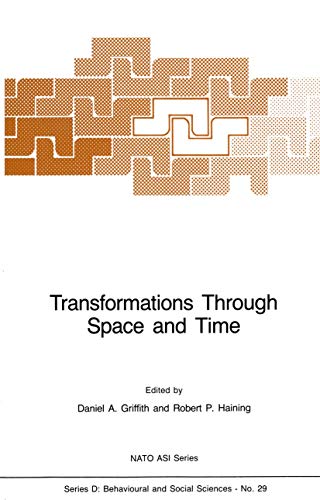
Transformations Through Space and Time. An Analysis of Nonlinear Structures, Bifurcation Points and Autoregressive Dependencies.
Anbieter: Plurabelle Books Ltd, Cambridge, Vereinigtes Königreich
Verbandsmitglied: GIAQ
Verkäuferbewertung 5 von 5 Sternen

EUR 42,73
EUR 9,22 Versand
Versand von Vereinigtes Königreich nach USAAnzahl: 3 verfügbar
In den WarenkorbHardcover. Zustand: Very Good. Series: NATO Advanced Study Institutes, Series D: Behavioural and Social Sciences x 327p hardback, white laminated boards with tesselated design in orange, excellent condition, almost as new Language: English.
-

Transformations Through Space and Time: An Analysis of Nonlinear Structures, Bifurcation Points and Autoregressive Dependencies
Sprache: Englisch
Verlag: Martinus Nijhoff Publishers, 2013
ISBN 10: 9401084726 ISBN 13: 9789401084727
Anbieter: Revaluation Books, Exeter, Vereinigtes Königreich
Verkäuferbewertung 5 von 5 Sternen
EUR 79,50
EUR 14,41 Versand
Versand von Vereinigtes Königreich nach USAAnzahl: 2 verfügbar
In den WarenkorbPaperback. Zustand: Brand New. 340 pages. 9.25x6.10x0.77 inches. In Stock.
-

Transformations Through Space and Time : An Analysis of Nonlinear Structures, Bifurcation Points and Autoregressive Dependencies
Anbieter: AHA-BUCH GmbH, Einbeck, Deutschland
Verkäuferbewertung 5 von 5 Sternen
Taschenbuch. Zustand: Neu. Druck auf Anfrage Neuware - Printed after ordering - In recent years there has been a growing concern for the development of both efficient and effective ways to handle space-time problems. Such developments should be theoretically as well as empirically oriented. Regardless of which of these two arenas one enters. the impression is quickly gained that contemporary wO,rk on dynamic and evolutionary models has not proved to be as illuminating and rewarding as first anticipated. Historically speaking. the single. most important lesson this avenue of research has provided. is that linear models are woefully inadequate when dominant non-linear trends and relationships prevail. and that independent activities and actions are all but non-existent in the real-world. Meanwhile. one prominent imp 1 ication stemming from this 1 iterature is that the easiest modelling tasks are those of specifying good dynamic space-time models. Somewhat more problematic are the statistical questions of model specification. parameter estimation. and model validation. whereas even more problematic is the operationalization of evolutionary conceptual models. A timely next step in spatial analysis would seem to be a return to basics. with a pronounced focus both on specific problems (and data) and on the mechanisms that transform phenomena through space and/or time'. It appears that these transformation mechanisms must embrace both non-linear and autoregressive formalisms. Given. also. the variety of geographic forms. they must allow for bifurcation points to emerge. too.
