
Gresswell robert (8 Ergebnisse)

- Softcover
Anbieter: Wonder Book, Frederick, MD, USAWonder Book
Verkäufer/-in kontaktierenVerkäufer/-in mit 5 SternenZustand: Gebraucht - Gut
EUR 25,66
Versand nach gratisVersand innerhalb von USAAnzahl: 6 verfügbar
Zustand: Very Good. Very Good condition.

The 2005 Coastal Cutthroat Trout Symposium, Status, Management, Biology, and Conservation.
Connolly, PatrickJ; Williams, Thomas H; Gresswell, Robert E.
Sprache: Englisch
Verlag: Oregon Chapter American Fisheries Society, Portland, OR., 2008
- Softcover
Anbieter: Doss-Haus Books, Redondo Beach, CA, USADoss-Haus Books
Verkäufer/-in kontaktierenVerkäufer/-in mit 5 SternenZustand: Gebraucht - Gut bis sehr gut
EUR 30,43
EUR 5,25 VersandVersand innerhalb von USAAnzahl: 1 verfügbar
Soft cover. Zustand: Near Fine. Softcover 2008 edition. Covers and text in near fine condition. Binding firm. Pages unmarked and clean. {170 pages}.
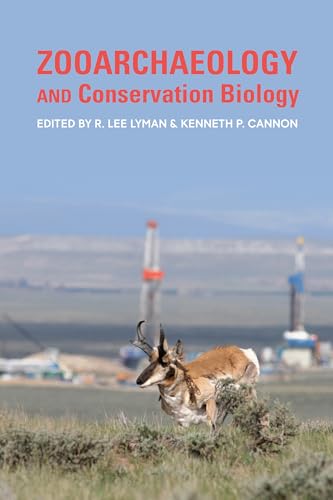
Zooarchaeology and Conservation Biology
Lyman, Richard Lee (Editor)/ Cannon, Kenneth P. (Editor)/ Gresswell, Robert E. (Foreward By)
- Softcover
Anbieter: Revaluation Books, Exeter, Vereinigtes KönigreichRevaluation Books
Verkäufer/-in kontaktierenVerkäufer/-in mit 5 SternenZustand: Neu
EUR 29,51
EUR 11,61 VersandVersand von Vereinigtes Königreich nach USAAnzahl: 2 verfügbar
Paperback. Zustand: Brand New. reprint edition. 266 pages. 9.00x6.25x0.75 inches. In Stock.

Verlag: American Fisheries Society
Anbieter: Wonder Book, Frederick, MD, USAWonder Book
Verkäufer/-in kontaktierenVerkäufer/-in mit 5 SternenZustand: Gebraucht - Gut
EUR 25,66
Versand nach gratisVersand innerhalb von USAAnzahl: 2 verfügbar
Zustand: Very Good. Very Good condition.

- Hardcover
Anbieter: Ria Christie Collections, Uxbridge, Vereinigtes KönigreichRia Christie Collections
Verkäufer/-in kontaktierenVerkäufer/-in mit 5 SternenZustand: Neu
EUR 274,95
EUR 13,90 VersandVersand von Vereinigtes Königreich nach USAAnzahl: Mehr als 20 verfügbar
Zustand: New. In.

- Softcover
Anbieter: preigu, Osnabrück, Deutschlandpreigu
Verkäufer/-in kontaktierenVerkäufer/-in mit 5 SternenZustand: Neu
EUR 256,60
EUR 70,00 VersandVersand von Deutschland nach USAAnzahl: 5 verfügbar
Taschenbuch. Zustand: Neu. Advances in the Ecology of Stream-Dwelling Salmonids | Javier Lobon-Cervia (u. a.) | Taschenbuch | Fish & Fisheries Series | xi | Englisch | 2025 | Springer | EAN 9783031443916 | Verantwortliche Person für die EU: Springer Verlag GmbH, Tiergartenstr. 17, 69121 Heidelberg, juergen[dot]hartmann[at]spring…er[dot]com | Anbieter: preigu.

- Softcover
Anbieter: AHA-BUCH GmbH, Einbeck, DeutschlandAHA-BUCH GmbH
Verkäufer/-in kontaktierenVerkäufer/-in mit 5 SternenZustand: Neu
EUR 299,59
EUR 65,59 VersandVersand von Deutschland nach USAAnzahl: 1 verfügbar
Taschenbuch. Zustand: Neu. Druck auf Anfrage Neuware - Printed after ordering - Many salmonids inhabit streams during the whole, or a substantial part of their lifetime. Streams, as networks of cold waters running over rifles, pools and tables of gravel, pebble and stony substratum, are fed by rainfall and snowmelt and may be su…bject to spates and droughts. Hence, these lotic systems are heterogeneous by nature and vary substantially in temperature and discharge along their environmental gradients. In these habitats, salmonids encounter suitable reproductive and feeding habitats where they exhibit a dizzying array of life-history traits and an overwhelming variability in size, growth and density. Essentially predators upon organisms drifting across the water column, they become apex piscivores at large sizes. They may also serve as prey for aquatic macroinvertebrates at the youngest stages, and as they grow, they may become prey for birds and mammals. In addition, many populations play a major role in the recycling of biogeochemical elements critical for the trophic dynamics of their home streams. Empirical assessment of the ecological functioning of stream salmonids has been a tireless endeavor since the pioneer studies by Allen (1951), Chapman (1966), McFadden (1964) and Northcote (1966) further enhanced by the IBP (1964-1974; Gerking 1967) and extended to experimental approaches during the last decades (Northcote Lobon-Cervia2010, Lobon-Cervia & Sanz 2017, Kershner et al. 2019). It has become increasingly apparent that streams are severely threatened by human abuse and misuse, including over-extraction, diversion, damming and pollution, in addition to the more recent threat of global warming. Furthermore, salmonids themselves are threatened by genetic introgressions, diseases, and parasites related to uncontrolled introductions of individuals from aquaculture, and over-exploitation by angling. These threats have triggered important social and political concerns, to the extent of becoming research priorities for major agenciesand institutions. In this context, we attempt to add an overview to this endeavor by updating and summarizing the documented ecology of stream-living salmonids, with reference to the factors and mechanisms underlying the growth, density and life history that interact to determine the size, number, and distribution of individuals encountered in any wild population.
Advances in the Ecology of Stream-Dwelling Salmonids
Lobon-CerviA, Javier (Editor)/ Budy, Phaedra (Editor)/ Gresswell, Robert (Editor)
- Hardcover
Anbieter: Revaluation Books, Exeter, Vereinigtes KönigreichRevaluation Books
Verkäufer/-in kontaktierenVerkäufer/-in mit 5 SternenZustand: Neu
EUR 423,84
EUR 17,41 VersandVersand von Vereinigtes Königreich nach USAAnzahl: 2 verfügbar
Hardcover. Zustand: Brand New. 751 pages. 9.25x6.10x1.75 inches. In Stock.


