
Gorris jean (9 Ergebnisse)

Discours de l'origine, des moeurs, fraudes et impostures des ciarlatans, avec leur descouverte (French Edition)
Mercurio, Girolamo; De Gorris, Jean; Duret, Jean; Tabarin; Descombes, Desiderio
- Softcover
Anbieter: Ria Christie Collections, Uxbridge, Vereinigtes KönigreichRia Christie Collections
Verkäufer/-in kontaktierenVerkäufer/-in mit 5 SternenZustand: Neu
EUR 18,10
EUR 14,11 VersandVersand von Vereinigtes Königreich nach USAAnzahl: Mehr als 20 verfügbar
Zustand: New. In.

- Softcover
Anbieter: moluna, Greven, Deutschlandmoluna
Verkäufer/-in kontaktierenVerkäufer/-in mit 5 SternenZustand: Neu
EUR 24,51
EUR 48,99 VersandVersand von Deutschland nach USAAnzahl: Mehr als 20 verfügbar
Zustand: New.

- Softcover
Anbieter: moluna, Greven, Deutschlandmoluna
Verkäufer/-in kontaktierenVerkäufer/-in mit 5 SternenZustand: Neu
EUR 41,24
EUR 48,99 VersandVersand von Deutschland nach USAAnzahl: Mehr als 20 verfügbar
Zustand: New. KlappentextrnrnThis scarce antiquarian book is a facsimile reprint of the original. Due to its age, it may contain imperfections such as marks, notations, marginalia and flawed pages. Because we believe this work is culturally important, we have.
 Weitere Bilder
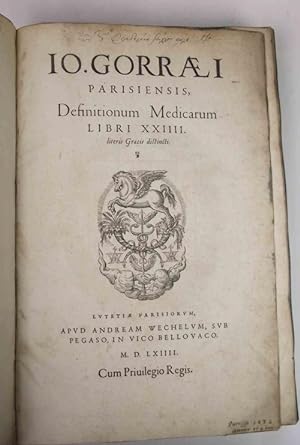
Verlag: apud Andeam Wechelum,, Lutetiae Parisiorum, 1564
- Softcover
- Erstausgabe
Anbieter: Studio Bibliografico Benacense, riva del garda, TN, ItalienStudio Bibliografico Benacense
Verkäufer/-in kontaktierenVerkäufer/-in mit 5 SternenZustand: Gebraucht
EUR 1.210,00
EUR 44,00 VersandVersand von Italien nach USAAnzahl: 1 verfügbar
In-folio (cm. 33,5), cc. (4) 382 (2). Bel marchio tipografico al frontespizio (ripetuto in fine), grande stemma al verso del frontespizio (del dedicatario François de Montmorency), ritratto dell'autore a piena pagina ed alcune interessanti figure nel testo. Legatura coeva in piena pergamena rigida con titoli manoscritti al dorso…. Ex libris ed un'antica firma di possesso, verosimilmente appartenente alla stessa persona che ha apportato alcune interessanti glosse manoscritte a margine del testo. Esemplare con qualche lieve fioritura, perlopiù marginale e poche tracce d'uso. Complessivamente molto genuino e ben conservato. Rara edizione originale. Cfr. Garrison and Morton (6792): "This dictionary arranges in order of the Greek alphabet all Greek medical terms and carefully explains them in Latin. It was widely used and excerted much influence on modern medical terminology".

- Softcover
Anbieter: AHA-BUCH GmbH, Einbeck, DeutschlandAHA-BUCH GmbH
Verkäufer/-in kontaktierenVerkäufer/-in mit 5 SternenZustand: Neu
EUR 52,62
EUR 62,82 VersandVersand von Deutschland nach USAAnzahl: 2 verfügbar
Taschenbuch. Zustand: Neu. Neuware - This scarce antiquarian book is a facsimile reprint of the original. Due to its age, it may contain imperfections such as marks, notations, marginalia and flawed pages. Because we believe this work is culturally important, we have made it available as part of our commitment for protecting, pr…eserving, and promoting the world's literature in affordable, high quality, modern editions that are true to the original work.

Sprache: Französisch
- Hardcover
Anbieter: Librairie Trois Plumes, Angers, FrankreichLibrairie Trois Plumes
Verkäufer/-in kontaktierenVerkäufer/-in mit 4 SternenZustand: Gebraucht - Gut bis sehr gut
EUR 375,00
EUR 18,00 VersandVersand von Frankreich nach USAAnzahl: 1 verfügbar
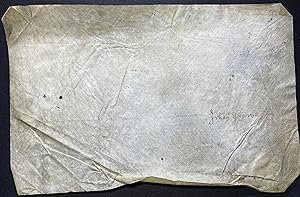
Couverture rigide. Zustand: Bon. Jean de Gorris (158.-1662), médecin ordinaire du Roy, médecin de Louis XIII, certainement le fils de Jean de Gorris (ca.1550-ap.1622) et le petit-fils de Jean de Gorris (1505-1577). P.A.S., 14 février 1655, 1p in-4 oblong. Sur parchemin. Quittance pour le paiement d'une rente constituée par l'hôt…el de ville de Paris. Coins du bas coupés à l'origine. [281-2].
 Weitere Bilder
Sprache: Französisch
- Hardcover
Anbieter: Librairie Trois Plumes, Angers, FrankreichLibrairie Trois Plumes
Verkäufer/-in kontaktierenVerkäufer/-in mit 4 SternenZustand: Gebraucht - Gut bis sehr gut
EUR 375,00
EUR 18,00 VersandVersand von Frankreich nach USAAnzahl: 1 verfügbar
Couverture rigide. Zustand: Bon. Jean de Gorris (ca.1550-ap.1622), médecin ordinaire du Roy, médecin de Louis XIII, fils de Jean de Gorris (1505-1577). Il avait d'abord été refusé par la faculté de Paris en 1572, refusant de prêter le serment rédigé par le légat du pape. P.S., 1615, 1p in-4 oblong. Sur parchemin. Document pré-si…gné, pour un reçu pour ses gages pour les trois premiers mois de 1615. Le recto n'a que la signature « Jehan de Gorris ». Au verso, une note autographe : « Pour servir de Reçu… ». Le document a donc été préparé mais n'a jamais été rempli. [281-2].
 Weitere Bilder
Verlag: Michel de Vascosan,, Paris,, 1549
Anbieter: ASHER Rare Books, t Goy Houten, NiederlandeASHER Rare Books
Verkäufer/-in kontaktierenVerkäufer/-in mit 5 SternenZustand: Gebraucht
EUR 5.000,00
EUR 25,00 VersandVersand von Niederlande nach USAAnzahl: 1 verfügbar
First Paris edition of a work on antidotes, by the Greek poet and physician Nicander of Colophon, (fl. second century BC). "Nicander wrote at least 20 works, of which two survive: Theriaca on poisonous creatures, with remedies against their stings and bites, and Alexipharmaca on antidotes to poisons. Both are indebted to Apollod…orus" (Wilson). The present edition gives the text in Greek with the Latin translation, along with annotations by the Parisian pharmacist Jean de Gorris (1505-1577). "After a poem addressed to Protagoras of Cyzicus, [the Alexipharmaca] presents 22 substances and entities - animal, vegetable, and mineral - that are fatal or harmful to human beings. Some of the more notorious toxic substances known to antiquity are included: hemlock, aconite, opium, henbane and blister beetle. In each case, the poet first describes the symptoms produced by the poison, and then the antidotes" (Wilson).With the late 18th-century armorial bookplate of the Trotter family of Mortonhall on pastedown, with the motto "in promptu", the red morocco bookplate of the incunabula collector F.B. Lorch on flyleaf, an owner's inscription on the title page (Dr. Ramsay), and an auction inscription on flyleaf, dated January 1714. Bookblock almost completely detached from binding, with a large waterstain in the upper right corner and slightly smudged margins, otherwise in good condition. Binding soiled, with remnants of leather ties.l Bird 1727; Durling 3338; cf. N. Wilson, Encyclopedia of Ancient Greece (2006), pp. 503-505. Contemporary sheepskin parchment. Pages: 70, [1] ll.

Sprache: Deutsch
- Kunst / Grafik / Poster
Anbieter: Antiquariat Clemens Paulusch GmbH, Berlin, DeutschlandAntiquariat Clemens Paulusch GmbH
Verkäufer/-in kontaktierenVerkäufer/-in mit 5 SternenZustand: Gebraucht
EUR 40,00
EUR 45,00 VersandVersand von Deutschland nach USAAnzahl: 1 verfügbar
Kupferstich ( anonym ) aus Abbildungen berühmter . Gelehrten, 1805, 14 x 11,5 (H) Er übersetzte Werke von Hippokrates ins Lateinische und verfasste "Definitionum medicarum libri xxiii" (Paris 1564), ein damals für Mediziner unentbehrliches Wörterbuch (Griech.-Latein), das die medizinische Terminologie prägte.


