

Gesamtpreis (1 Artikel Artikel):
Versandziel:

giannini james (12 Ergebnisse)
Direkt zu den wichtigsten Suchergebnissen
Suchfilter
Produktart
- Alle Product Types
- Bücher (12)
- Magazine & Zeitschriften (Keine weiteren Ergebnisse entsprechen dieser Verfeinerung)
- Comics (Keine weiteren Ergebnisse entsprechen dieser Verfeinerung)
- Noten (Keine weiteren Ergebnisse entsprechen dieser Verfeinerung)
- Kunst, Grafik & Poster (Keine weiteren Ergebnisse entsprechen dieser Verfeinerung)
- Fotografien (Keine weiteren Ergebnisse entsprechen dieser Verfeinerung)
- Karten (Keine weiteren Ergebnisse entsprechen dieser Verfeinerung)
- Manuskripte & Papierantiquitäten (Keine weiteren Ergebnisse entsprechen dieser Verfeinerung)
Zustand Mehr dazu
- Neu (4)
- Wie Neu, Sehr Gut oder Gut Bis Sehr Gut (1)
- Gut oder Befriedigend (4)
- Ausreichend oder Schlecht (Keine weiteren Ergebnisse entsprechen dieser Verfeinerung)
- Wie beschrieben (3)
Einband
Weitere Eigenschaften
- Erstausgabe (1)
- Signiert (Keine weiteren Ergebnisse entsprechen dieser Verfeinerung)
- Schutzumschlag (Keine weiteren Ergebnisse entsprechen dieser Verfeinerung)
- Angebotsfoto (5)
Sprache (2)
Gratisversand
Land des Verkäufers
Verkäuferbewertung
-

Psychiatric, Psychogenic, and Somatopsychic Disorders Handbook
Anbieter: Better World Books, Mishawaka, IN, USA
Verkäuferbewertung 5 von 5 Sternen

Zustand: Good. 0th Edition. Pages intact with minimal writing/highlighting. The binding may be loose and creased. Dust jackets/supplements are not included. Stock photo provided. Product includes identifying sticker. Better World Books: Buy Books. Do Good.
-
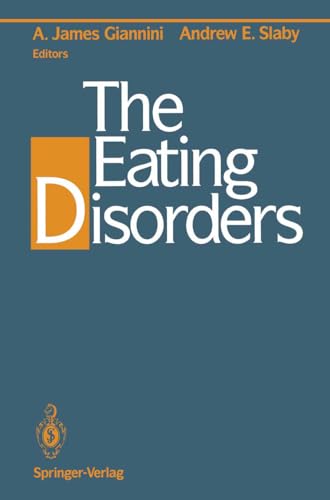
Zustand: Bueno. : Este libro de A. James Giannini y Andrew Edmund Slaby, publicado en 1993 por Springer, aborda los trastornos alimentarios desde una perspectiva médica y psiquiátrica. Discute la anorexia, la bulimia y la obesidad, presentando tanto las etiologías médicas como las psiquiátricas. Trata el manejo médico general, así como los enfoques de tratamiento auxiliares desde una perspectiva dietética y terapéutica ocupacional. Explora el uso del laboratorio clínico y el examen neurológico, y trata con grupos especiales como el hombre, el adicto y el paciente geriátrico. EAN: 9780387940021 Tipo: Libros Categoría: Salud y Bienestar Título: The Eating Disorders Autor: A. James Giannini| Andrew Edmund Slaby Editorial: Springer-Verlag New York Inc. Idioma: en Páginas: 303 Formato: tapa dura.
-

Synap
Anbieter: Revaluation Books, Exeter, Vereinigtes Königreich
Verkäuferbewertung 5 von 5 Sternen
EUR 15,41
EUR 11,71 Versand
Versand von Vereinigtes Königreich nach USAAnzahl: 2 verfügbar
In den WarenkorbPaperback. Zustand: Brand New. Giannini, Andrea (illustrator). 120 pages. 10.00x6.50x0.25 inches. In Stock.
-

Frank Herbert's Dune DVD 3 Disc Special Edition Set Director's Cut
Verlag: Artisan Home Entertainment, 2002
Anbieter: Bookshop Baltimore, Baltimore, MD, USA
Verkäuferbewertung 5 von 5 Sternen
DVD. Zustand: F. As new in shrinkwrap. Special Edition 3-Disc DVD Set ; Special Edition, Director's Cut; DVD;
-

Drugs of Abuse
Anbieter: Roland Antiquariat UG haftungsbeschränkt, Weinheim, Deutschland
Verkäuferbewertung 5 von 5 Sternen
Hardcover. 466 pages Very good condition. Retired library exemplar with usual stamps/ stickers. Reading pages are very clean. Slight traces of storage. Otherwise very good condition. 9780874894998 Sprache: Englisch Gewicht in Gramm: 789.
-
The Eating Disorders.
Anbieter: Wissenschaftl. Antiquariat Th. Haker e.K, Klettgau, Deutschland
Verkäuferbewertung 5 von 5 Sternen
Zustand: Sehr gut. 303 p. In very good condition. ISBN: 9780387940021 Sprache: Englisch Gewicht in Gramm: 540 16,5 x 1,9 x 24,1 cm, hardcover.
-

The Eating Disorders
Anbieter: Ria Christie Collections, Uxbridge, Vereinigtes Königreich
Verkäuferbewertung 5 von 5 Sternen
EUR 61,25
EUR 14,02 Versand
Versand von Vereinigtes Königreich nach USAAnzahl: Mehr als 20 verfügbar
In den WarenkorbZustand: New. In.
-

The Neurologic, Neurogenic, and Neuropsychiatric Disorders Handbook
Anbieter: Better World Books, Mishawaka, IN, USA
Verkäuferbewertung 5 von 5 Sternen
Zustand: Good. Pages intact with minimal writing/highlighting. The binding may be loose and creased. Dust jackets/supplements are not included. Stock photo provided. Product includes identifying sticker. Better World Books: Buy Books. Do Good.
-
The Eating Disorders
Anbieter: Revaluation Books, Exeter, Vereinigtes Königreich
Verkäuferbewertung 5 von 5 Sternen
EUR 80,19
EUR 11,71 Versand
Versand von Vereinigtes Königreich nach USAAnzahl: 2 verfügbar
In den WarenkorbPaperback. Zustand: Brand New. reprint edition. 303 pages. 9.25x6.10x0.70 inches. In Stock.
-

James Turrell: Into the Light (First Edition)
Sprache: Englisch
Verlag: The Mattress Factory, Pittsburgh, 2002
ISBN 10: 0962329010 ISBN 13: 9780962329012
Anbieter: Royal Books, Inc., ABAA, Baltimore, MD, USA
Verkäuferbewertung 5 von 5 Sternen
Erstausgabe
First Edition. Softcover. First Edition. Catalog for an exhibition held at the Mattress Factory in Pittsburgh from June 2, 2002, through April 30, 2003. Near Fine in perfect-bound wrappers. Small scratch on the spine.
-
The Eating Disorders
Anbieter: AHA-BUCH GmbH, Einbeck, Deutschland
Verkäuferbewertung 5 von 5 Sternen
Taschenbuch. Zustand: Neu. Druck auf Anfrage Neuware - Printed after ordering - As fish must swim so must man drink and eat Titus Petronius Arbiter Examine thy customs of diet Francis Bacon For John eat & drank to drive away Loves pain But all he could do he grew thinner & thinner Tho he eat & drank as much as Ten men for dinner Some said he had a Wolf in his stomach day and night William Blake To paraphrase and cast in contemporary speech observations of the Gothic-era monk Bernard of Clairvaux, the eating disorders may be viewed as a corruption of the social process, a distortion of the body image, and a perversion of bodily processes. It is this multifactorial etiology that makes the diagnosis and treatment of dietary -disorders so difficult and frustrating. Because of social demands and a distorted (body) image, men and women have perverted the simple act of eating into always painful, sometimes tragic, and occasionally deadly outcomes. The eating disorders fall into three categories. There is obesity-the overconsumption of food, and its antithesis, anorexia-the act of vol untary starvation. In true Hegelian fashion, there follows the synthesis, bulimia-the voluntary purging of overconsumed amounts of food to produce an anorectic-like countenance. As the contributing authors em phasize in their chapters, these diseases are not unique to contemporary culture. Rather they are cultural artifacts, created by both men and women, since classical antiquity. The recognition of these diseases is dependent upon recognizing a disease actually exists: that there is a distortion of the eating process.
-
The Eating Disorders
Anbieter: BUCHSERVICE / ANTIQUARIAT Lars Lutzer, Wahlstedt, Deutschland
Verkäuferbewertung 5 von 5 Sternen
Hardcover. Zustand: gut. 1993. The Eating Disorders In englischer Sprache. pages.
