
Gesamtpreis (1 Artikel Artikel):
Versandziel:

general dynamics convair division (11 Ergebnisse)
Direkt zu den wichtigsten Suchergebnissen
Suchfilter
Produktart
- Alle Product Types
- Bücher (11)
- Magazine & Zeitschriften (Keine weiteren Ergebnisse entsprechen dieser Verfeinerung)
- Comics (Keine weiteren Ergebnisse entsprechen dieser Verfeinerung)
- Noten (Keine weiteren Ergebnisse entsprechen dieser Verfeinerung)
- Kunst, Grafik & Poster (Keine weiteren Ergebnisse entsprechen dieser Verfeinerung)
- Fotografien (Keine weiteren Ergebnisse entsprechen dieser Verfeinerung)
- Karten (Keine weiteren Ergebnisse entsprechen dieser Verfeinerung)
- Manuskripte & Papierantiquitäten (Keine weiteren Ergebnisse entsprechen dieser Verfeinerung)
Zustand Mehr dazu
- Neu (Keine weiteren Ergebnisse entsprechen dieser Verfeinerung)
- Wie Neu, Sehr Gut oder Gut Bis Sehr Gut (1)
- Gut oder Befriedigend (9)
- Ausreichend oder Schlecht (Keine weiteren Ergebnisse entsprechen dieser Verfeinerung)
- Wie beschrieben (1)
Einband
Weitere Eigenschaften
- Erstausgabe (2)
- Signiert (Keine weiteren Ergebnisse entsprechen dieser Verfeinerung)
- Schutzumschlag (1)
- Angebotsfoto (Keine weiteren Ergebnisse entsprechen dieser Verfeinerung)
Sprache (2)
Gratisversand
Land des Verkäufers
Verkäuferbewertung
-
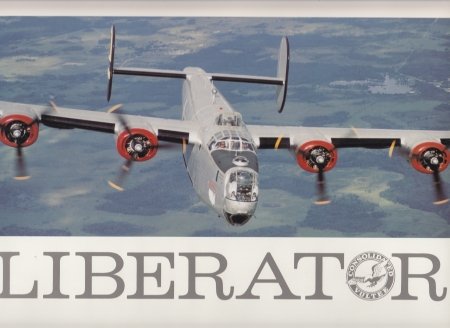
Liberator: Consolidated Vultee. The Need, The Plane, The Crew, The Missions
Anbieter: Visible Voice Books, Cleveland, OH, USA
Verkäuferbewertung 5 von 5 Sternen

Hardcover. Zustand: Very Good. General Dynamics January 1989 Binding: Hardcover.
-

Liberator: Consolidated Vultee. The Need, The Plane, The Crew, The Missions
Verlag: General Dynamics
Anbieter: ThriftBooks-Dallas, Dallas, TX, USA
Verkäuferbewertung 5 von 5 Sternen
Hardcover. Zustand: As New. No Jacket. Pages are clean and are not marred by notes or folds of any kind. ~ ThriftBooks: Read More, Spend Less 1.6.
-
Liberator: Consolidated Vultee. The Need, The Plane, The Crew, The Missions
Anbieter: Wonder Book, Frederick, MD, USA
Verkäuferbewertung 5 von 5 Sternen
Zustand: Very Good. Very Good condition. Good dust jacket. (airplanes. vultee) A copy that may have a few cosmetic defects. May also contain light spine creasing or a few markings such as an owner's name, short gifter's inscription or light stamp. Bundled media such as CDs, DVDs, floppy disks or access codes may not be included.
-
Annual Air Force Office of Scientific Research Astronautics Symposium
Verlag: Pergamon Press, New York, 1958
Anbieter: Ground Zero Books, Ltd., Silver Spring, MD, USA
Verkäuferbewertung 4 von 5 Sternen

Zustand: good, ex-lib. 24 cm, 330, illus., index, usual library markings (some blacked out), bookplate partially removed. Vista in Astronautics, First Annual Symposium.
-
Investigation of Safe-Life/ Fail-Safe Criteria for the Space Shuttle, 18 May 1972. NASA CR-112049
Verlag: NASA, Langley Research Center, Hampton Virginia. Prepared by Convair Aerospace Division, San Diego CA., 1972
Anbieter: Erik Hanson Books and Ephemera, San Diego, CA, USA
Verkäuferbewertung 5 von 5 Sternen
Erstausgabe
Soft cover. Zustand: Very Good. 1st Edition. |Stapled binding, no cover, as issued. 282 page. 8 1/2 x 11 inches. 90 illustration figures and 64 tables. Unmarked copy, light scuffs to front.
-
Schematic Diagram--Master Electrical Armament Control [CONFIDENTIAL]; Reference Diagram B-69900, Sheet number 2, F106A
Verlag: General Dynamics Corp., CONVAIR Division 1957 [?], San Diego, CA, 1957
Anbieter: Ground Zero Books, Ltd., Silver Spring, MD, USA
Verkäuferbewertung 4 von 5 Sternen
Zustand: Good. The format is approximately 39 inches by 11.25 inches. Folded to fit into an 8.5 by 11 inch format. Item has moderate wear and soiling. This is an engineering drawing. This is related to the F-106A. Stamped CONFIDENTIAL. . This has a blueprint like appearance. This is a very large flow diagram. It contains a series of what appear to be electrical circuit drawings. The principal captions are Timer Control, Door Control Time Delay, Door Control, Slavo Ground, Armament Transfer, Air Control Timer and Armament Control Relay Box. The Convair F-106 Delta Dart is an all-weather interceptor aircraft designed and produced by the American aircraft manufacturer Convair. The F-106 was designed in response to the 1954 interceptor program. Envisioned as an imagined "Ultimate Interceptor", it was a development of the F-102 Delta Dagger, and commenced as the F-102B prior to being redesignated by the United States Air Force (USAF). The F-106 was designed without a gun or provision for carrying bombs, instead carrying its AIM-4 Falcon air-to-air missiles within an internal weapons bay, its clean exterior was beneficial to supersonic flight. Major differences from the F-102 included the adoption of the more powerful Pratt & Whitney J75 turbojet engine, heavily redesigned air inlets along with a variable-geometry inlet duct to suit a wide range of supersonic speeds, application of the area rule to the fuselage shaping, and a general increase in size. On 26 December 1956, the first prototype performed its maiden flight. After flight testing demonstrated lesser performance gains than anticipated, the USAF ultimately only ordered 350 of the planned 1,000 F-106s. Becoming operational in June 1959, the F-106 was the primary all-weather interceptor aircraft of the USAF through much of the Cold War era; it ended up being the final specialist interceptor to be used by the service to date. It was never used in combat nor were any export opportunities secured. During the 1960s, a competitive evaluation between the F-106 and the McDonnell Douglas F-4 Phantom II determined the latter to be marginally superior, yet the type continued to be operated for a further two decades due to extensive demand for the F-4 in other roles. Convair proposed various improved models of the F-106, typically focused on the radar, communications, and other avionics, but none of these schemes were pursued. In one high-profile incident over Montana on 2 February 1970, an unmanned F-106 recovered from a flat spin after its pilot had ejected, belly landing relatively intact in a snow-covered field; it was recovered and continued to be flown for numerous years afterwards. The F-106 was gradually withdrawn from USAF service during the 1980s as the arrival of newer air superiority fighters, particularly the McDonnell Douglas F-15 Eagle, had made the role of dedicated interceptors obsolete. Numerous F-106s would be operated for a time by the Air National Guard. Many withdrawn aircraft were promptly converted into target drones and redesignated QF-106 under the Pacer Six program, which were used up in 1998. A handful of F-106s were operated by NASA for experimental purposes, such as the Eclipse Project, through to 1998. Single sheet, printed on one side Contemporary (?) Reprint or copy of this sheet.
-
Schematic Diagram--Master Electrical Armament Control [CONFIDENTIAL]; Reference Diagram B-69600, Sheet number 6, F106A, Form 6-907
Verlag: General Dynamics Corp., CONVAIR Division 1957 [?], San Diego, CA, 1957
Anbieter: Ground Zero Books, Ltd., Silver Spring, MD, USA
Verkäuferbewertung 4 von 5 Sternen
Zustand: Good. The format is approximately 39 inches by 11.25 inches. Folded to fit into an 8.5 by 11 inch format. Item has moderate wear and soiling. This is an engineering drawing. This is related to the F-106A. Stamped CONFIDENTIAL. Security Notice. This has a light blueprint like appearance. This is a very large flow diagram. It contains a series of blocks and flow lines. The principal captions are Armament Control, Launcher, Missile Bay, Misfire Relay, Fwd Launcher Rail, Release Handle, Aft Launcher Rail, Aft Compt Upper Electronic Rack, Reset PWR, MWW Fuse Panel. and Missile Displaced. Modern supersonic fighter and attack aircraft attack a target automatically and accurately. These aircraft are designed and built as a completely integrated weapons system. The weapons subsystems are interconnected and dependent on each other or on other aircraft systems. For example, the bomb release system in some modes of operation depends on the aircraft's flight control system; the missile system is interconnected with the aircraft's radar system for missile guidance. In addition to delivering weapons more accurately, computer-controlled weapons systems provide a higher degree of safety by reducing human error. Single sheet, printed on one side Contemporary (?) Reprint or copy of this sheet.
-
Schematic Diagram--Master Electrical Armament Control [CONFIDENTIAL]; Reference Diagram B-69600, Sheet number 3, ACA B-70190, F106A, Form 6-907
Verlag: General Dynamics Corp., CONVAIR Division 1957 [?], San Diego, CA, 1957
Anbieter: Ground Zero Books, Ltd., Silver Spring, MD, USA
Verkäuferbewertung 4 von 5 Sternen
Zustand: Good. Reprint or copy of this sheet. The format is approximately 39 inches by 11.25 inches. Folded to fit into an 8.5 by 11 inch format. This item is related to the F-106A. Item has moderate wear and soiling. Staple present, This is an engineering drawing. Stamped CONFIDENTIAL. This has a light blueprint like appearance. This is a very large flow diagram. It contains a series of blocks and flow lines. The principal captions are Armament Control, M30 Missile Intervalometer, Aft Cam, Fwd Cam Motor, Clutch, Aft Door Interlock, Fwd Door Interlock, Aft Fire, Fwd Extend, Fwd Fire, and Fwd Sel. One caption states 1. Item No's inside Invervalometer are for Ref Only - not in Item List. Modern supersonic fighter and attack aircraft attack a target automatically and accurately. These aircraft are designed and built as a completely integrated weapons system. The weapons subsystems are interconnected and dependent on each other or on other aircraft systems. For example, the bomb release system in some modes of operation depends on the aircraft's flight control system; the missile system is interconnected with the aircraft's radar system for missile guidance. In addition to delivering weapons more accurately, computer-controlled weapons systems provide a higher degree of safety by reducing human error. Single sheet, printed on one side.
-
Armament System (Missile Bay & Missile Launcher Detail) [Marked CONFIDENTIAL]; Chart No. 15 (4 of 4) 3/30/59
Verlag: United States Air Force, San Diego, CA [?], 1959
Anbieter: Ground Zero Books, Ltd., Silver Spring, MD, USA
Verkäuferbewertung 4 von 5 Sternen
Zustand: Good. Revision B. This very large training chart has been folded multiple times. The format is approximately 42 inches by 10 feet. It has many illustrations and captions. The title of the primary graphic on this training chart is View of Launcher Mechanism in Firing Position. There are a number of component diagrams, with captions. There is in red a notation of Butler Field and a number in red. Convair (Division of General Dynamics Corporation), USAF F-106A Delta Dart related. Training Section - Interceptor, Armament System (Missile Bay & Missile Launcher Detail) [Marked CONFIDENTIAL]; Chart No. 15 (4 of 4) 3/30/59. Convair Division, 1959. Revision B. This very large chart, printed on a .flexible backing material, has been folded, but presents no hard creasing, significant crease/fold wear or. discoloration or tearing. The chart has of a number of captioned illustrations pertaining to the armament system of the USAF F-106A Delta Dart nuclear capable jet interceptor. There is a notation in red of "Butler Field" (perhaps this was what is now Butler-Municipal in Georgia). This chart came from the Estate of Convair engineer, who worked on the Armament Control aspects of the F-106A, in the late '50s and ' 60s. Illustrations include the overall location of the armament system within the F-106A, a cutaway view of the interceptor showing the mounting of the MB-1 rocket and GAR missiles weapons load (this is the primary graphic of the chart, and is labeled "View of Launcher Mechanism in Firing Position"), and a number of close-ups of system details. The F-106 Delta Dart was an all-weather interceptor aircraft designed and produced by the American aircraft manufacturer Convair. The interceptor had no provisions for guns or bombs, instead carrying the MB-1 Special Weapon and AIM-4 Falcon air-to-air missiles within an internal weapons bay, which presented a clean exterior beneficial to supersonic flight. On 26 December 1956, the prototype performed its maiden flight. After flight testing demonstrated lesser performance gains than anticipated, the USAF ultimately only ordered 350 of the planned 1,000 F-106s. Becoming operational in June 1959, the F-106 was the primary all-weather interceptor aircraft of the USAF through much of the Cold War era. The F-106 was gradually withdrawn from USAF service during the 1980s as the arrival of newer air superiority fighters, particularly the McDonnell Douglas F-15 Eagle, had made the role of dedicated interceptors obsolete. The all-missile armament, housed internally in a ventral weapons bay, consisted of a single Douglas MB-1 (AIR-2A or 2B) Genie unguided rocket equipped with a 1.5 kt W25 nuclear warhead, plus four Hughes GAR-3 Falcon radar-homing or GAR-4 infrared-homing air-to-air missiles. The MB-1 was an unguided timer-detonated rocket, relying on its 1.5 kt nuclear warhead to ensure a kill. Launch weight was 822 pounds and maximum velocity was Mach 3.3. Snap-out fins gave the missile stability during flight. Range was about 8 miles, flight time to target was about 12 seconds, and the effective blast radius was about 1000 feet. The Genie rocket was ejected from the weapons bay by gas pressure generated when 5 impulse cartridges fired on the special weapons rack, kicking the rocket down and away from the aircraft. Good. Single sheet, printed on one side. Single sheet, printed on one side.
-
Armament System (Missile Bay & Missile Launcher Detail) [Marked CONFIDENTIAL]; Chart No. 15 (3 of 4) 3/30/59
Verlag: United States Air Force, San Diego, CA [?], 1959
Anbieter: Ground Zero Books, Ltd., Silver Spring, MD, USA
Verkäuferbewertung 4 von 5 Sternen
Zustand: Good. Revision B. RARE SURVIVING COPY. This large training chart has been folded multiple times. The format is approximately 42 inches by 10 feet. It has illustrations and captions. The title of the primary graphic on this training chart is View of Launcher Mechanism in Firing Position. There are a number of component diagrams, with captions. There is in red a notation of Butler Field and a number in red. Convair USAF F-106A Delta Dart related. Training Section - Interceptor, Armament System (Missile Bay & Missile Launcher Detail) [Marked CONFIDENTIAL]; Chart No. 15 (3 of 4) 3/30/59. Convair Division, 1959. Revision B. This very large chart, printed on a strong flexible backing material, has been folded multiple times, but presents no hard creasing, significant crease/fold wear or tearing or discoloration. The chart consists of a number of illustrations, with captions, pertaining to the armament system of the USAF F-106A Delta Dart nuclear capable jet interceptor. The primary graphics of the chart pertain to the Trunnion and the Uplock Mechanism, with a number of close-ups of system details. There is a notation in red of "Butler Field" (perhaps this was what is now Butler-Municipal in Georgia) and a number in red. This chart came from the Estate of Convair engineer, who worked on the Armament Control aspects of the F-106A, in the late '50s and ' 60s. The F-106 Delta Dart was an all-weather interceptor aircraft designed and produced by the American aircraft manufacturer Convair. The interceptor had no provisions for guns or bombs, instead carrying the MB-1 Special Weapon and AIM-4 Falcon air-to-air missiles within an internal weapons bay, which presented a clean exterior beneficial to supersonic flight. On 26 December 1956, the prototype performed its maiden flight. After flight testing demonstrated lesser performance gains than anticipated, the USAF ultimately only ordered 350 of the planned 1,000 F-106s. Becoming operational in June 1959, the F-106 was the primary all-weather interceptor aircraft of the USAF through much of the Cold War era. The F-106 was gradually withdrawn from USAF service during the 1980s as the arrival of newer air superiority fighters, particularly the McDonnell Douglas F-15 Eagle, had made the role of dedicated interceptors obsolete. The all-missile armament, housed internally in a ventral weapons bay, consisted of a single Douglas MB-1 (AIR-2A or 2B) Genie unguided rocket equipped with a 1.5 kt W25 nuclear warhead, plus four Hughes GAR-3 Falcon radar-homing or GAR-4 infrared-homing air-to-air missiles. The MB-1 was an unguided timer-detonated rocket, relying on its 1.5 kt nuclear warhead to ensure a kill. Launch weight was 822 pounds and maximum velocity was Mach 3.3. Snap-out fins gave the missile stability during flight. Range was about 8 miles, flight time to target was about 12 seconds, and the effective blast radius was about 1000 feet. The Genie rocket was ejected from the weapons bay by gas pressure generated when 5 impulse cartridges fired on the special weapons rack, kicking the rocket down and away from the aircraft. Good. Single sheet, printed on one side. Single sheet, printed on one side.
-
System Operational Data [CONFIDENTIAL]; Missile & Special Weapon Launching Subsystems of F-106A Armament System
Verlag: Convair [A Division of General Dynamics Corporation], San Diego, CA, 1958
Anbieter: Ground Zero Books, Ltd., Silver Spring, MD, USA
Verkäuferbewertung 4 von 5 Sternen
Erstausgabe
Three-hole punched, disbound. Zustand: Good. 1, 178 pages. Three-hole punched. Illustrations. Pages 120 and 121 are fold-outs. RARE SURVIVING COPY. The major Table of Contents sections are Description, Major Assemblies and Components, Related Systems, Rigging and Adjustment, Electrical Checkout, Armament System Operational Checkout, Ground Operations and Loading/Unloading of Armament System; Trouble Shooting, Summary of Safety Precautions, and References. F-106A: Improved version of the F-102. Fitted with the MA-1 Integrated Fire Control System with SAGE datalink, J-75 afterburning turbojet, enlarged intake, variable-geometry inlet ramps and shortened intake ducts, refined fuselage shape, modified wings and tailfin; tailpipe fitted to reduce the tendency of the jet exhaust to blow unsecured objects around while taxiing, yet allowing virtually maximum performance at high thrust/afterburner settings. Performance was deemed unsatisfactory and modifications were made. The aircraft was capable of low supersonic speeds without afterburner and had a maximum altitude at least 57,000 ft. Many were fitted with a conically cambered wing for improved takeoff, supersonic and high-altitude flight. The aircraft was fitted with two streamlined external supersonic tanks that still kept the aircraft capable of sustained roll rates of 100 degrees per second. These tanks produced virtually no significant performance degradation were rarely jettisoned and were routinely carried. After 1972, many F-106s were refitted with a new canopy featuring improved visibility, improved optic sights and provision for a gunpack in the center weapons bay. The Convair F-106 Delta Dart is an all-weather interceptor aircraft designed and produced by the American aircraft manufacturer Convair. The F-106 was designed in response to the 1954 interceptor program. Envisioned as an imagined "Ultimate Interceptor", it was a development of the F-102 Delta Dagger, and commenced as the F-102B prior to being redesignated by the United States Air Force (USAF). The F-106 was designed without a gun or provision for carrying bombs, instead carrying its AIM-4 Falcon air-to-air missiles within an internal weapons bay; its clean exterior was beneficial to supersonic flight. Major differences from the F-102 included the adoption of the more powerful Pratt & Whitney J75 turbojet engine, heavily redesigned air inlets along with a variable-geometry inlet duct to suit a wide range of supersonic speeds, and a general increase in size. On 26 December 1956, the first prototype performed its maiden flight. After flight testing demonstrated lesser performance gains than anticipated, the USAF only ordered 350 of the planned 1,000 F-106s. Becoming operational in June 1959, the F-106 was the primary all-weather interceptor aircraft of the USAF through much of the Cold War era; it ended up being the final specialist interceptor to be used by the service to date. It was never used in combat nor were any exported. During the 1960s, a competitive evaluation between the F-106 and the McDonnell Douglas F-4 Phantom II determined the latter to be marginally superior, yet the type continued to be operated for a further two decades due to extensive demand for the F-4 in other roles. Convair proposed various improved models of the F-106, typically focused on the radar, communications, and other avionics, but none of these schemes were pursued. In one incident over Montana on 2 February 1970, an unmanned F-106 recovered from a flat spin after its pilot had ejected, belly landing relatively intact in a snow-covered field; it was recovered and continued to be flown for numerous years afterwards. The F-106 was gradually withdrawn from USAF service during the 1980s as the arrival of newer air superiority fighters, particularly the McDonnell Douglas F-15 Eagle, had made the role of dedicated interceptors obsolete. Numerous F-106s were operated for a time by the Air National Guard. Many withdrawn aircraft were converted into target drones and redesignated QF-106 under the Pacer Six program, which were used up in 1998.[1][2][3] A handful of F-106s were operated by NASA for experimental purposes, such as the Eclipse Project, until 1998. Presumed second revised and rewritten version--Special Weapon Section changed. [Stated], Presumed First printing.


