

Gesamtpreis (1 Artikel Artikel):
Versandziel:

edited mishra (163 Ergebnisse)
Direkt zu den wichtigsten Suchergebnissen
Suchfilter
Produktart
- Alle Product Types
- Bücher (163)
- Magazine & Zeitschriften (Keine weiteren Ergebnisse entsprechen dieser Verfeinerung)
- Comics (Keine weiteren Ergebnisse entsprechen dieser Verfeinerung)
- Noten (Keine weiteren Ergebnisse entsprechen dieser Verfeinerung)
- Kunst, Grafik & Poster (Keine weiteren Ergebnisse entsprechen dieser Verfeinerung)
- Fotografien (Keine weiteren Ergebnisse entsprechen dieser Verfeinerung)
- Karten (Keine weiteren Ergebnisse entsprechen dieser Verfeinerung)
- Manuskripte & Papierantiquitäten (Keine weiteren Ergebnisse entsprechen dieser Verfeinerung)
Zustand Mehr dazu
- Neu (142)
- Wie Neu, Sehr Gut oder Gut Bis Sehr Gut (4)
- Gut oder Befriedigend (Keine weiteren Ergebnisse entsprechen dieser Verfeinerung)
- Ausreichend oder Schlecht (Keine weiteren Ergebnisse entsprechen dieser Verfeinerung)
- Wie beschrieben (17)
Weitere Eigenschaften
- Erstausgabe (38)
- Signiert (Keine weiteren Ergebnisse entsprechen dieser Verfeinerung)
- Schutzumschlag (24)
- Angebotsfoto (8)
Sprache (4)
Gratisversand
- Kostenloser Versand nach USA (Keine weiteren Ergebnisse entsprechen dieser Verfeinerung)
Land des Verkäufers
Verkäuferbewertung
-
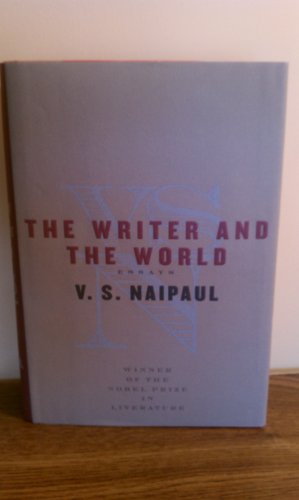
The Writer and the World - Essays
Sprache: Englisch
Verlag: Stated first edition, published by Alfred A. Knopf, New York, 2002., 2002
ISBN 10: 0375407391 ISBN 13: 9780375407390
Erstausgabe
Very good with very good dust jacket. Book has a tiny bump at bottom front edge. Dust jacket is lightly bumped at spine tips and corners and has a two inch light scratch on front panel. 524 pages with index.
-

Ganga - Sanskriti Ka Sanatan Pravah
Anbieter: Majestic Books, Hounslow, Vereinigtes Königreich
Verkäuferbewertung 4 von 5 Sternen

EUR 7,08
EUR 7,51 Versand
Versand von Vereinigtes Königreich nach USAAnzahl: 4 verfügbar
In den WarenkorbZustand: New.
-

Ganga - Sanskriti Ka Sanatan Pravah
Anbieter: Majestic Books, Hounslow, Vereinigtes Königreich
Verkäuferbewertung 4 von 5 Sternen
EUR 7,67
EUR 7,51 Versand
Versand von Vereinigtes Königreich nach USAAnzahl: 4 verfügbar
In den WarenkorbZustand: New.
-

Aatmanirbharta: Revisiting the Idea and Practices
Anbieter: Vedams eBooks (P) Ltd, New Delhi, Indien
Verkäuferbewertung 4 von 5 Sternen
Hardcover. Zustand: New. Contents: 1. Swadeshi Movement/Vandana Mishra and Dhvanit Goswami. 2. Gandhian Idea of Swadeshi and Self-Reliance/Vivek Mishra and Avanish Kumar. 3. Sangh Parivar and Self-Reliance/Anshu Joshi. 4. Western Notions of Self-Reliance/Netaji Abhinandan and Monika Gupta. 5. Waves of Globalization/Pranav Kumar and Ranjana Singh. 6. Market Economy: Institutions, Treaties and Reforms/Menka Singh. 7. Self-Reliance and Anti-Globalization Protests/Varada Sombhus and Pratik Kumar. 8. India s Preparedness for Self-Reliance: An Analysis of Economic Sector/Gaurav Singh and Tripti Singh. 9.Assessing India s Preparedness in the Defence Manufacturing and Technology Sector/Shantesh Singh and Honey Raj. 10. Making Indian Women Aatmanirbhar: A Case Study of SEWA, Amul and Navdanya/Nishant Kumar and Smita Agarwal. 11. Branding Ayurveda: A Case Study of Dabur, Himalaya, Patanjali, MDH/Shri Prakash Singh and Siddhartha Ghosh. 12. Making the Agrarian Sector Aatmanirbhar/Swadesh Singh and Yatan Sharma. 13. The Making of an Aatmanirbhar Bharat: Interventions-Modi Regime/Ashutosh Trivedi and Shruti Joshi. Conclusion: The Way to Destiny Nation, Society, Self. References. The idea of 'Aatmanirbharta' is eternal. It is about the strength of the society and eternity of the nation. Yet the practical aspect of it is not only debatable in the present inter-dependent world order but is also subject to push and pulls, pressures and challenges of resources originating from the decidedly unequal world. Herein, the need of the hour is to understand one's self our needs, our capacity, our strengths, and also our limitations and then move on to improve and excel with a vision of reflecting one's personality in that of society and the nation. The journey of being Aatmanirbhar is all about deciphering the heights that we can scale provided we are grounded enough. This book is an endeavour to understand the journey of idea and practices of Aatmanirbharta.
-

India's Aged: Needs and Vulnerabilities
Anbieter: Vedams eBooks (P) Ltd, New Delhi, Indien
Verkäuferbewertung 4 von 5 Sternen
Erstausgabe
Hardcover. Zustand: New. 1st Edition. Contents: Introduction: Aging: A Global Reality and a Developmental Concern/Udaya S. Mishra and S. Irudaya Rajan. 1. Changing Economic Dependence of the Indian Elderly: Evidence from NSSO: Surveys in 1983 and 2009 10/T. R. Dilip. 2. Dependency in the Elderly in India: Do Circumstances Matter?/Syam Prasad. 3. Population Ageing and Household Health Spending in India/Sanjay K. Mohanty and Akanksha Srivastava. 4. Healthcare Utilisation among the Elderly in India: Does Family Matter?/William Joe. 5. Disability-Free Life Expectancy among the Elderly/S. Irudaya Rajan and Anjana A. 6. Living Arrangements of the Elderly in India: Issues and Implications/S. Siva Raju. 7. Are Elderly Living with Family in Good Health?/Shalini Rudra. 8. Living Arrangements and the Health of the Elderly in India: The Effect of Contextual Level Factors/Tannistha Samanta. 9. Life Satisfaction among the Elderly in Kerala: A Longitudinal Analysis/S. Irudaya Rajan and S. Sunitha. 10. Food and Nutritional Security among the Aged in India/Anil Kumar. Index India s Aged: Needs and Vulnerabilities discusses the most vulnerable aspects of elderly life-health and well-being-under the current conditions of economic and societal change. This volume explores (a) whether the nature of living arrangements has a bearing on the health outcomes of the elderly; (b) whether the real or perceived economic dependence and financial vulnerability of the elderly is conditioned by translation of capabilities into functioning; and (c) the implied healthcare costs, which are defined as based on both actual needs and the elderly people s own perception of their needs. Living arrangements have to be linked with the health and well-being of the elderly, given the absence of universal social security, an inadequate formal system of care, as well as the gradual erosion of the joint family system. While it is obvious that rising healthcare costs are a reality due to rising longevity, this volume shows how population ageing contributes to rising healthcare costs, along with projected healthcare costs in the future. In addition, this volume addresses issues such as access to finance, financial autonomy and financial inclusion of the elderly. Bringing together empirical explorations of prevailing realities and mechanisms that shape the well-being/ill-being of the elderly in India, this volume will be indispensible for students and scholars of economics, development studies and health and wellness studies.
-

Financial Inclusion Inclusive Growth and the Poor
Anbieter: Vedams eBooks (P) Ltd, New Delhi, Indien
Verkäuferbewertung 4 von 5 Sternen
Erstausgabe
Hardcover. Zustand: New. Zustand des Schutzumschlags: New. 1st Edition. Contents: Preface. 1. Financial inclusion inclusive growth and poverty/Padmaja Mishra, Alok Ranjan Behera and Himanshu Sekhar Rout. 2. Financial inclusion in India: an inter-state analysis/Shibalal Meher. 3. Financial inclusion models in India/Dipti Ray and Himanshu Sekhar Rout. 4. Financial inclusion through micro finance/Prakash Kumar Sahoo and Alok Ranjan Behera. 5. Financial inclusion through India post/Mitali Chinara and Santosh Kumar Kamila. 6. Financial inclusion in India: a Kaleidoscopic view/Abhilas Kumar Pradhan. 7. Financial inclusion and the banking sector in Odisha/Reetanjali Dash. 8. Affordable financial services and inclusive growth/Anthony Joseph and Poonam Barla. 9. Role of micro finance institutions (MFIs) in financial inclusion/Biranchi Narayan Swar and Prasant Kumar Sahoo. 10. A policy perspective of financial inclusion in India/Jogeswar Garnaik, P.K. Mishra and B.B. Pradhan. 11. Financial inclusion in rural India/Alekha Chandra Mohanty. 12. Financial inclusion strategy in India/Reenati Mishra. Appendices. Index. The term Financial inclusion means a comprehensive and holistic process of ensuring access to financial services and credit by vulnerable and marginalized groups in the society. Inclusive growth means broad-based benefits to all sections of people. The eleventh Five Year Plan 2007-12 envisioned inclusive growth as a key objective. India s Twelfth Five Year Plan (2012-17) with its focus on Faster, More Inclusive and Sustainable Growth has put the growth debate in the right perspective. Growth is inclusive when it creates economic opportunities along with ensuring equal access to them. The concept inclusion should be seen as a process of including the excluded as agents whose participation is essential in the very design of the development process and not simply as welfare targets of development programs. Indian economy has made rapid strides in the recent past. However a sizeable section of the population continues to remain excluded from even the most basic opportunities and services provided by the financial sector. The present volume contains 12 scholarly papers-authored by experts in the field of finance and development policy which provide deep insights into various aspects of financial inclusion and inclusive growth efforts in India. (jacket).
-
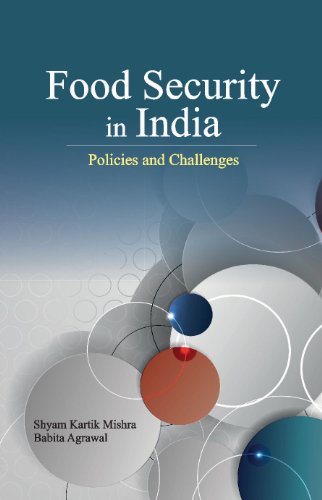
Food Security in India : Policies and Challenges
Anbieter: Vedams eBooks (P) Ltd, New Delhi, Indien
Verkäuferbewertung 4 von 5 Sternen
Erstausgabe
Hardcover. Zustand: New. Zustand des Schutzumschlags: New. 1st Edition. Food security is one of the major components of social security. It consists of ensuring that food is available at all times, that all persons have means of and access to it, that it is nutritionally adequate in terms of quantity, quality and variety, and that it is acceptable within the given culture. There are three elements in this definition, availability, access and suitability. In recent years, nutrition has been considered as part of food security. The National Development Council (NDC) in its 53rd meeting held on May 29, 2007 adopted a resolution to launch a Food Security Missiona comprising rice, wheat and pulsesa to increase the production of rice by 10 million tons, wheat by 8 million tons and pulses by 2 million tons by the end of the Eleventh Five Year Plan (2007-12). Accordingly, a Centrally-sponsored scheme, viz. National Food Security Mission (NFSM) was launched from 2007-08 to operationalize the above mentioned resolution. National Food Security Bill was introduced in the Lok Sabha on December 22, 2011. As per the provisions of the Bill, it is proposed to provide 7 kilograms of foodgrains per person per month belonging to priority households at prices not exceeding 3 per kilogram of rice, 2 per kilogram of wheat and 1 per kilogram of coarse grains and to general households not less than 3 kilogram of foodgrains per person per month at prices not exceeding 50 percent of the minimum support price (MSP) for wheat and coarse grains and derived MSP for rice. The present volume consists of 15 research papers on the subject of food security, contributed by scholars in the field. The issues raised in different papers add constructively to the current debate on this sensitive subject of national importance.
-

Dynamics of Inclusive Classroom: Social Diversity, Inequality and School Education in India
Anbieter: Vedams eBooks (P) Ltd, New Delhi, Indien
Verkäuferbewertung 4 von 5 Sternen
Erstausgabe
Hardcover. Zustand: New. 1st Edition. Contents: Introduction. I. Alignment of Inclusion in Elementary Education: 1. Inclusive Elementary Education in India: The Journey/R. V. Vaidyanatha Ayyar. 2. Social and Regional Inequality in Elementary Education in India: Retrospect and Prospect/Madhumita Bandyopadhyay. II. Social Diversity and Learning Performance Disparity: 3. Education of Equitable Quality: All Children Reading/Dhir Jhingran. 4. Social Diversity and Learning Achievement: Contextualising Policies and Practices for Primary Schools in Rural Bihar/Manoj KumarTiwary and Sanjay Kumar. III. Children in Unconventional Learning Settings: 5. Rights, Mobility and Social (In)Justice: The 2009 RTE Act and Mobile Pastoralist Children s Education Deprivation/Caroline Dyer. 6. Educationally Excluded Street and Working Children: Financial Literacy and Life Skill Based Education as a Way Forward/Shushmita Chatterji Dutt. IV. Learning English in the Labyrinth of Contrasting Technologies: 7. The Technology and Politics of Teaching English/Nita Kumar. 8. The Road to English: The Slow Migration of the EWS Child to Elite India/Peggy Mohan. V. Pedagogy, Teacher Agency and the Operation of Stereotypes: 9. Cultural Marginality and Reproduction of Stereotypes: An Insider s View on Practices of School/Vikas Gupta.10. Becoming a Critical Pedagogue: Teacher Agency and Critical Theory/Smriti Singh. Conclusion: Situating India s Inclusive Education in the Global Episteme of Diversity, Inequality and Democracy/Arvind Kumar Mishra. Index. Dynamics of Inclusive Classroom explores the challenges and possibilities of rendering classrooms more inclusive by contributing to a better understanding of educational needs of socially diverse children in India. The contributors to this volume show how, in a world of rapid social, political, economic and educational changes, social diversity, inequalities and social exclusion/inclusion are subjects of great import. Part of this process is the significant increase in the number of children from socially diverse backgrounds in the classroom. This increase calls for a better understanding of their needs and for processes that render classrooms more inclusive. In India, the increased enrolment of socially diverse students requires us to give special attention to issues of inequality based on caste, class, religion, gender, language and region, which affect children s learning processes and outcomes. This volume is based on a great variety of research, drawn from academic analyses, policy formulation, and classroom practices. Collectively, the contributors argue that, in order to render Indian classrooms inclusive, the country needs to formulate a school education policy that would result in pedagogical preparedness to deal with the increased enrolment of historically marginalised and oppressed children from diverse backgrounds. Through case studies and field examples, the authors also demonstrate the processes and practices through which learning can be made inclusive and democratic in Indian classrooms. This book offers fresh insights into diversity and contemporary educational practices in India and will be of considerable interest to students, scholars, practitioners and policy-makers involved in education, development studies, social work, sociology, history, and public policy. (jacket).
-

Aspects of Indian History
Verlag: Agam Kala Prakashan, Delhi, 1991. xl, 366 pp. Text in English. (Agam Indological Series No. 12 / Prof. Ram Mohan Sinha Commemoration Volume), 1991
Anbieter: Antiquariaat Hortus Conclusus, Bergambacht, Niederlande
Verkäuferbewertung 5 von 5 Sternen

Original cloth with dustjacket. Dustjacket discolored on spine and worn at edges, slight traces of use, else a good copy. Please see description or ask for photos.
-

Science and Technology in Ancient Indian Texts
Anbieter: Vedams eBooks (P) Ltd, New Delhi, Indien
Verkäuferbewertung 4 von 5 Sternen
Hardcover. Zustand: New. Contents: Introduction. Part I: Conceptual. 1. Scientifying the Science: The Art of Making Everything a Science/Bal Ram Singh. 2. Spirituality, Logic and Science in India: A Philosophical Perspective/R.P. Singh. Part II: Physical Sciences. 3. Vaisheshika Insights into Science/Shashiprabha Kumar. 4. Fourfold Description of Sound: A Vedic View/M.G. Prasad. 5. Relevance of Vedic Physics in the Contemporary Society/Sadasiva Biswal. 6. Concept of Agni in the Rigveda in the Light of the Physical Sciences/Soma Basu and R.K. Saha. 7. Mechanics in Hindu Literature/P. Priyadarshi. Part III: Mathematical Sciences. 8. Numbers and Zero in Vedic Suktas Some Applications and China Contacts/Bhu Dev Sharma. 9. An Unpublished Commentary of the Katyayana Shulbasutra/Nabanarayan Bandyopadhyay. Part IV: Chemical Sciences, Environment and Metallurgy/10. Rasashala, the Ancient Indian Pharmacy: A Study on its Construction (Arrangement of Rasashala, List of Required Apparatuses and Koshthiyantras)/Dillip Kumar Kar. 11. High Technology in Ancient Sanskrit Manuscripts/C.S.R. Prabhu. 12. Environmental Science: Vedic Perspective/Shashi Tiwari. 13. Contribution of Ancient India in Production Technology and Mechanical Engineering/Chandrabhan Prajapati. Part V: Yoga and Ayurveda. 14. Personality Traits of People Born in Different Samvatsaras and their Comparison with Modern Psychological Personality Traits: A Study/Melukote K. Sridhar. 15. The Applicative Wonders of Ayurveda: The Mother of All Life Sciences/Vaidyaratnam R. Raghavan. 16. Ayurvedic Medicines: Ancient Roots and Scientific Validation/Yamini Bhushan Tripathi. Part VI: Text and Information Encoding in Human Brain and Computer/17. Unicode Standard for Vaidika Sanskrit: Efforts and Status/Swarn Lata, Manoj Jain. 18. Sanskrit, Whole Brain Learning: And its Importance in the Super Accelerated Learning Theory (SALT)/Pandit Ramadheen Ramsamooj. Index. The volume comprises seminar presentations by experts from India and abroad involved in the study of development of the natural sciences in ancient India. It offers eighteen papers from the seminar that showcase and project the Vedic literature as a treasure trove of vast knowledge that covers various branches of learning. The papers in particular discuss the ancient developments in science and technology: logic, mechanics in Sanskrit literature, Indian mathematics and its application in the Vedas, besides production technology and mechanical engineering, environmental science and roots, applicative wonders and scientific validation of Ayurveda. They involve a deep study of the Vedic understanding and description of sound and speech as para, pashyanti, madhyama and vaikhari. They also deal with the Indian perspective on the spirit and some mahakavyas of Indian philosophy. They scrutinise various theories on matter, causation, metals, dreams and motion, according to the Vaisheshika philosophy and underline the relevance of ancient knowledge to the contemporary world, especially in relation to the Vedic physics, environmental science and Ayurveda. They reiterate in unison the scientific vision of the ancient sages who held the keen eye of a poet-artist even while bringing to light modern and advanced ideas. The papers include references to various commentaries and studies on scientific and mathematical treatises, like Katyayana's Shulbasutra and Vaimanikashastra of Bharadvaja. The book will interest Indologists, particularly concerned with the study of ancient science, technology and mathematics, as they evolved in ancient India.
-

Environment Natural Resources and the Indian Economy
Anbieter: Vedams eBooks (P) Ltd, New Delhi, Indien
Verkäuferbewertung 4 von 5 Sternen
Erstausgabe
Hardcover. Zustand: New. Zustand des Schutzumschlags: New. 1st Edition. Contents: Introduction. 1. Micro foundations of measuring green GDP/M.N. Murty. 2. Environment globalization, trade and sustainability/Sarmila Banerjee. 3. Green outcomes of rural development programmes in India/P.P. Mitra, N.K. Sahu, Mahipal and Mukesh Kumar. 4. Sodic reclamation and economic sustainability/Sanatan Nayak. 5. An economic analysis of cutting edge technology in rice cultivation/Surajit Haldar, Honnaiah, Sowmyashree B.V. and Abhiram Dash. 6. Understanding organic farming: potential and constraints/Jeeban Jyoti Mohanty. 7. Climate change vulnerability and livelihood sustainability in coastal regions of India/Sibananda Senapati and Vijaya Gupta. 8. Community participation in common property resource management/Suman Devi and Nihar Ranjan Mishra. 9. Joint forest management and sustainable rural livelihoods/Raghunath Sahoo and Mamata Swain. 10. Management of non-timber forest produce/K.A. Mohammed Noushad. 11. Managing surface water resources/Ashok Kumar Maurya. 12. Impact of foreign aid on environmental quality in India/Kalpana Sahoo and Narayan Sethi. Index. Environmental pollution is one of the major problems faced by the world community, especially in the cities of the developing countries which have experienced unbridled growth of population, urbanization and industrialisation. Soil, forests, mines, water, air and other natural resources are productive assets of an economy. These natural and environmental resources are the basis of all economic activities. Economic activities, in turn, affect the quantity and quality of natural and environmental resources. Mining, lumbering, manufacturing, fishing and a host of other economic activities change the stock of natural resources which calls for appropriate trade-off between the needs of the present and future generations. India is the second most populous and seventh largest country in the world. Geographically, it accounts for a meagre 2. 4 percent of the worlds total surface area but supports and sustains a whopping 16. 7 percent of the world population. Environmental problems in India can be classified into two broad categories: (A) Those arising from conditions of poverty and under-development and (B) Those arising as negative effects of the very process of development. The present volume contains 12 research papers-authored by experts in the field of environmental economics-which provide deep insights into the linkages between development and environment and suggest remedial measures for environmentally sustainable economic policies. (jacket).
-

A Glance of Soil Science Research in Manipur North East India
Anbieter: Vedams eBooks (P) Ltd, New Delhi, Indien
Verkäuferbewertung 4 von 5 Sternen
Hardcover. Zustand: New. Contents: Foreword. Preface. Introduction. Section A: Nutrient Management in Paddy. 1. Nitrogen transformation in Paddy soil fertilized with organic manures and urea/K Manorama. 2. Integrated nitrogen management of rice and nitrogen status in Paddy fields of Imphal west district, Manipur/Takhellambam S Devi. Section B: Nutrient Management in Rapeseed. 3. Integrated nutrient management in rice-mustard cropping sequence/W. Herojit Meetei. 4. Effect of Zinc on soil properties and yield under rice-rapeseed sequence/Sanjeev Yadav. Section C: Nutrient Management in Legumes. 5. Comparative efficiency of Zinc with and without organic manure in growth and effect of organic amendments in zinc nutrition of chickpea (Cicer arietinum)/T. Vikas Kumar. 6. Comparative efficacy of different manures on chickpea (Cicer arietinum L.)/V Fanai. 7. Nitrogen transformation in soil amended with humic acid derived from organic manures/Geeta Nongmeikapam. 8. Effect of nitrogen and molybdenum on soil properties and yield of pea (Pisum sativum L)/Ch. Karuna Chanu. Section D: Nutrient Management in Vegetables/Citrus Fruits. 9. Effect of integrated nutrient management on soil fertility and productivity in potato in acid soil/Dorjee T Bapu. 10 Influence of boron and Sulphur on soil properties and yield of Broccoli (Brassica oleracea var. Italica)/Rafiya Choudhary. Index. This edited book is an effort to compile the research advances in the field of soil science particularly relevant to Manipur an important North Eastern state of India. It comprises four sections having ten chapters contributed by research scholars who have worked at the ground level and generated first hand information about the different aspects of soil management in this extremely delicate region in terms of climate change challenges and demand for development of strategies to mitigate the deleterious impacts of intensive agriculture practices. It is a novel effort to compile first hand research efforts conducted in the field of soil science research in this region. Editors hope that this book shall be beneficial to all stakeholders in the field of soil science research.
-

Folk Rice Diversity of Eastern India: Hope for the Future Food Security
Sprache: Englisch
Verlag: IP Innovative Publication, 2019
ISBN 10: 9388022122 ISBN 13: 9789388022125
Anbieter: Vedams eBooks (P) Ltd, New Delhi, Indien
Verkäuferbewertung 4 von 5 Sternen
Erstausgabe
Soft cover. Zustand: New. 1st Edition. Contents: Preface. 1. Morphological characterization of folk rice genotypes of West Bengal/Anjan Kumar Sinha. 2. Folk rice of eastern India- a critical review on agro-morphology to socioeconomic aspect/Dipashree Chattopadhyay and Anjan Kumar Sinha. 3. Folk rice of red and lateritic region of West Bengal: valuable tools for sustainable agriculture and livelihood/Partha Pratim Ghosh, Anirban Chakraborty and Goutam Kumar Mallick. 4. Importance of traditional rice landraces as nutraceutical foods/Priyabrata Roy. 5. Yield nutritive value and sustainability of production: a comparative study of folk rice and chemical sensitive HYVs of West Bengal/Abhra Chakrabarti. 6. Importance of folk rice genotypes in sustainable agriculture/Sanjoy Kumar Bordolui, Arpita Das, Prabir Kumar Bhattacharyya, Krishnendu Pramanik, Kalyan Jana and Joydeep Banerjee. 7. Folk rice of eastern India: genetic storehouse for biofortification/Arpita Das, Joydeep Banerjee, Anita Roy (Aich), Durga Dutta Meher, Sukanta Pal, Tarit Baran, Bagchi and Kalyan Jana. 8. By-products of traditional rice and their utilization/Shweta Parida. 9. Folk rice of Eastern India - our valuable treasures/Somdatta Ghosh. 10. Genetics, evolution and molecular biology of the rice plant/Sayan Karmakar. 11. Bio fertilizers and its impact on rice productivity/Ranjana Sinha. 12. Rice landraces for sustainable livelihood/Saloman Behera, Shweta Parida, Nirmalya Kumar Sinha, Moumita Dutta and Disharee Patsa. Rice (Dhan, Chabal) belongs to the genus Oryza (Family- poaceae, 2n=24) is the staple food for more than half of the world's human population. It is consumed as staple food for about 3.5 billion people across the whole world. Genus Oryza consist of two cultivated species O. sativa and O. glaberrima, and 23 wild species. Among the two cultivated speices O. sativa was dominated in Asian as well as Europe, South America region and O. glaberrima was mostly concentrated into the West African countries only. The Asian rice O. sativa was evolved from wild perennial O. rufipogon and wild annual O. nivaraand wild progenitors of O. glaverrima was O. longistaminata and O. breviligulata. According to Normille (2004) Oryza sativa was first domesticated between 8000-15000 years ago in India and China and river valleys of Yangtze, Mekon rice could be the primary Centre of origin of O. sativa while delta of Niger river in Africa is the primary Centre of origin of diversity of O. glaberrima. Among Asian countries rice production as well as consumption is highest whereas in Sub-Saharan Africa, Caribbean and Latin America, rice consumption is steadily increasing. Rice alone provides about 50% of the dietary caloric supply in around 520 million poor people in Asiatic countries. Rice is grown in 160.6 million hectares across the world with the total production of 738.20 million tones having productivity 3424.41 kg/ha (FAO, 2015). India is the Centre of origin of Rice and it is also the second largest producer of rice just after China. Thousands of ecospecies of rice had been evolved in India from the down of crop domestications. The ecospecies of japonica, indica and javanica have been generally recognized in O. sativa. Numerous rice landraces had been evolved due to random mutations and selection by the ancient farmers since centuries of rice domestications. India has a vast agroclimatic environmental conditions which gives suitable platform for tremendous genetic diversity. National Bureau of Plant Genetic Resources (NBPGR) and International rice research institute (IRRI) have been recorded and maintained more than 60,000 rice landraces of Indian subcontinent still now. India is popular for its native wealth of rice genetic resources and among these the large number of indigenous short grained, scented varieties cultivated in different pocket of various states of eastern India. Chhattisgarh popularly known as "Rice Bowl of India" and two other states namely Odisha and West Bengal have a significant amount o.
-

Retail Marketing and Supply Chain Management: Strategy, Implementation and Currents Practices
Anbieter: Vedams eBooks (P) Ltd, New Delhi, Indien
Verkäuferbewertung 4 von 5 Sternen
Erstausgabe
Hardcover. Zustand: New. 1st Edition. The book maintains the simplicity of style. It has been our endeavor to tailor its approach, subject matter and presentation according to the requirement of its users. The language has been kept simple and the entire discussion has been built on logical and coherent outline. Particular care has been taken to explain the complex and intricate points which help to induce a better understanding to the readers. India started its Retail Journey since ancient time. In ancient India there was a concept of weekly HAAT, where all the buyers and sellers gather in a big market for bartering. It takes a pretty long times to and step to shape the modern retail. In between these two concepts (i.e. between ancient retail concept and the modern one there exist modern kirana/mom and pop shops or Baniya ki Dukan. Still it is predominating in India, so the Indian retail industry is divided into two sectors- organized and unorganized. Retailing is one of the pillars of Indian economy and accounts for 14 to 15 percent of its GDP. The Indian retail market is estimated to be US$ 450 billion and one of the top five retail markets in the world by economic value. India is one of the fastest growing retail markets in the world, with 1.2 billion people. India's retailing industry is essentially owner manned small shops. In 2010, larger format convenience stores and supermarkets accounted for about 4 percent of the industry, and these were present only in large urban centers. India's retail and logistics industry employs about 40 million Indians (3.3% of Indian population). The book is divided into Twenty Eight chapters. The chapters redefine the management practices for a better and a prospective India. The various topics covered include Startup India: A tool for Poverty Alleviation, Retailing in Digital India, Rural Retailing: Opportunities and Challenges, E-Commerce and its Future in India etc.
-

Multidisciplinary Perspectives in Retail Marketing and Logistics Management
Anbieter: Vedams eBooks (P) Ltd, New Delhi, Indien
Verkäuferbewertung 4 von 5 Sternen
Erstausgabe
Hardcover. Zustand: New. 1st Edition. The book is divided into Thirty One chapters. The chapters redefine the Retail and Logistics practices for a better and a prospective India. The various topics covered include To Study the Impact of Workplace Commute on Employees Well-being with Special Reference to Public Transport, A Strategic Study of International Logistics Management Process, Environmental Accounting and Reporting: A Study of Select Literatures, The Role of Critical Financial Management in Indian Food Industries, Green Logistics in India, Measuring the Impact of Technology in India: Agriculture and Rural Development, Nanoparticle Production Based on Biological Resources Used for its Better Supply Demand, Current Scenario, Challenges and Future of Pharmaceutical Distribution in India, Milk Production and Marketing: Challenges of farmer, An Effort For Minimizing Food Wastage and Logistics - A Review Report etc.
-

Evolving Dynamics of the Indian Ocean: Prospects and the Way Forward
Anbieter: Vedams eBooks (P) Ltd, New Delhi, Indien
Verkäuferbewertung 4 von 5 Sternen
Erstausgabe
Hardcover. Zustand: New. Zustand des Schutzumschlags: New. 1st Edition. Contents: Foreword. Introduction. 1. Contours of strategic turbulence: view from Northeast Asia/Hideaki Kaneda. 2. Strategic importance of small islands for the Asian drivers/Linganaden Murday. 3. Turbulence and strategic competition in the Indian Ocean/Zhu Cuiping. 4. Beyond the string of pearls: China and the changing balance of power in the Indian Ocean/David Brewster. 5. Causes and effects of maritime strategic competition in the Indian Ocean: a geoeconomic perspective/Nazery Khalid. 6. Implications of the maritime security challenges in the Indian Ocean for Iran's naval strategy and capabilities/Saideh Lotfian. 7. Strategic competition in the Indian Ocean in the long time frame/Kwa Chong Guan. 8. New sources of strategic turbulences in the 21st century/Antoine Beaussant. 9. Roles of major players in the Indian Ocean: a Myanmar perspective/U Win Thein. 10. Strategic competition in the Indian Ocean region: a test case for Sri Lanka/YN Jayarathna. 11. The Indian Ocean nexus and balancing competitive strategic pressures in the Southern oceans: South African perspective/Francis A Kornegay,Jr. 12. Emerging realpolitik in the Indian Ocean/Rear Admiral (Retd.) K Raja Menon. 13. Indian Ocean Rim Association (IORA): an examination of inclusive mechanism of cooperation in the Indian Ocean/Ferdi Syamsir Ishak. 14. Security architecture for the Indian Ocean: the role of confidence building measures/Captain Justin Jones. 15. Securing our future: the importance of maritime security in the successful implementation of 'Blue Economy' Concept/Winslow Waven William. 16. Managing strategic change in the Indo-Pacific/Hemant Krishan Singh. 17. Maritime security challenges and potential opportunities for cooperation in the IndoPacific/Ngo Thanh Tung. 18. Concluding thoughts/Pradeep Kaushiva. Index. The continental-maritime character of the Indian Ocean region presents a fascinating tapestry of history, culture, geography, ethnicity and political structures. The region is also an important oceanic space with political, economic and security imperatives for the global community. The challenges and interests of the stakeholders in this region are unique and their perspectives converge or diverge on different thematic issues. These complexities have and would continue to shape the strategic dynamics in the Indian Ocean. This volume explores the various strategic dimensions of the Indian Ocean with the aim of evolving an inclusive and cooperative architecture that is tailored to the shared needs, aspirations and interests of the stakeholder community.
-

Journey Towards Land Titling in India
Anbieter: Vedams eBooks (P) Ltd, New Delhi, Indien
Verkäuferbewertung 4 von 5 Sternen
Erstausgabe
Hardcover. Zustand: New. 1st Edition. The edited volume is one of the pioneering publications on land titling. Land symbolises wealth, social identity and status, and power. Land title is a security; however, at present it is a 'presumptive title'.With increasing land acquisition and improper land titling, the major issues faced by the administration are land grabbing, corruption, dispute and other land related conflicts.So it is a matter of high importance for the state as well as the society and citizens of India. Some unfinished agenda of Indian state, such as redistribution land, survey and settlement of forest lands, Government lands, use of wastelands, etc. also demand conclusive land titling. How do we move forward towards 'conclusive titling' from 'presumptive title' is a central query of this Volume. Neo-liberal state introduced National Land Record Modernisation Programme (NLRMP) in 2008, which incorporates a component of guaranteeing conclusive land titling. Implementation, outcome and impact of NLRMP are varied across different States of India, which has intensified debate on land titling. Various options are available and need to be debated in the context of conclusive land titling, such as whether enacting a law, expediting implementation of NLRMP, adopting Torrens System and suitable modern technology for Survey/Resurvey, Registration, citizen-centric services, integration between different components, etc. This book covers all possible policy and political issues regarding land titling so that the 'journey towards land titling' is smoothened and strengthened. (jacket).
-

Browse. Love Letters to Bookshops Around the World.
Anbieter: Emile Kerssemakers ILAB, Heerlen, Niederlande
Verkäuferbewertung 5 von 5 Sternen
2016, 253pp. Hardcover, with dust jacket. In very good condition.
-
Sustainable Technology for Better Environment
Sprache: Englisch
Verlag: Bharti Publications, 2018
Anbieter: Vedams eBooks (P) Ltd, New Delhi, Indien
Verkäuferbewertung 4 von 5 Sternen
Erstausgabe
Hardcover. Zustand: New. 1st Edition. Environmental Science is a converging domain. The booming race for bringing advanced technology has brought immense entanglement along with some lethal challenges such as Global Warming. The major problem of concern is that we all are studying about humongous environmental issues and discussing over it. Instead we need to start working upon it straight away from our neighborhood. This book provides scope and relevance of environmental sciences in the modern times. Man has surpassed and failed nature's restorative capabilities. It is due to this not only environmental issues have come forth but also they have magnified on the grounds of impregnable handling of natural resources. Deterioration of natural resources has become a trending topic all across the globe. It is essential to make the masses aware of the formidable outgrowth of environmental degradation. India is facing numerous environmental challenges. It is vital to preach citizens so their actions could be eco-friendly. India has to overcome environmental challenges such as need to grow underground water, agricultural growth, air pollution:-SMOG and many more. We totally need to get our globe out of the woods. This book targets not only on the students for their technical knowledge enrichment but also for the other section of the reader for their general overview about environmental challenges. This book has been written with immense compassion to make the readers realize that it is not only some council's responsibility to save our nature but it is each and every human's core responsibility to save it. We are very grateful to every author for their colossal hard work and insight.
-

Vedanta Without Maya?: A Debate on Saptavidha-Anupapatti
Anbieter: Vedams eBooks (P) Ltd, New Delhi, Indien
Verkäuferbewertung 4 von 5 Sternen
Erstausgabe
Hardcover. Zustand: New. 1st Edition. Saptavidha-anupapatti represents a live-debate in the traditions of Vedanta initiated by Ramanujacarya. The central issue of this debate is to examine whether maya-avidya, postulated by Advaita-vedant, is philosophically sustainable, logically viable, and experientially reliable. While Sankara builds up the superstructure of Advaita on the basis of this concept, Ramanuja vociferously reacts to its philosophical ingenuity. This dispute between the Advaita and Visistadvaita schools with seven objections, which forms the manor theme of this book, has been going on for more than a millennium and is alive even today among Vedanta scholars. The volume contains, besides historical as well as philosophical explorations of the concept of maya-avidya, the arguments and counter arguments, formulation and counter-formulation to accommodate and reject the corresponding philosophical predilections of both the above schools by some of the preeminent philosophical minds of Indian philosophy of our times.
-

Partnering Together for a Secure Maritime Future
Anbieter: Vedams eBooks (P) Ltd, New Delhi, Indien
Verkäuferbewertung 4 von 5 Sternen
Hardcover. Zustand: As New. Contents: Introduction. Section I: Importance of Oceans and Navies in the Global Geostrategic Matrix. 1. No way but the 'Hi' way/Anup Singh. 2. Importance of ocean and navies in the global geostrategic matrix/Dan 'Fig' Leaf. 3. South China sea disputes: perceptions and misperceptions among the players/Ye Hailin. 4. Maritime security and navies: future challenges in the Indian ocean/Antoine Beaussant. 5. Towards a new maritime strategy for medium powers: defining the challenges for the medium power navy/James Goldrick. 6. Maritime cooperation and building bridges between maritime neighbours and partners/Renfrew Christie. Section II: Regional Perceptions and Approaches for Maritime Cooperative Engagements. 7. Japan's security role in the Indo-Pacific region/Eiichi Katahara. 8. Globalisation, International liberalism and the maritime cooperation nexus/K. Raja Menon. 9. Cooperative maritime engagement in the Indo-Pacific region/Geoffrey Till. 10. The Indonesian approach and perspective on Asia's regional maritime cooperative engagements/Amarulla Octavian. 11. Building partnerships in the Bay of Bengal: opportunities and challenges/Ataur Rahman. 12. A tour de horizon/Satish Soni. The 21st Century world order can be categorised as one of strategic flux and uncertainty with strong globalisation impulses and a seamless informational domain. One also witnesses the extant and rising powers announcing grand strategic outreaches, that either aim to retain their relative influence or seek more manoeuvring space in line with the expanding geography of their global linkages. Within this milieu, the 'maritime domain' is finding increasing references in respective national calculus and strategic postures that carry a strong oceanic flavour. While the 'hard' and 'soft' facets of maritime forces naturally coexist, it is the 'low politics' associated with the seas that is finding greater space in contemporary narrative. This book, a compilation of papers and presentations made during the two-day conference at the International Fleet Review (IFR) 2016 hosted by the Indian Navy, examines the diverse perspectives on the larger theme of enhanced cooperative endeavours at sea.
-

Database Management System and Digital Libraries
Anbieter: Vedams eBooks (P) Ltd, New Delhi, Indien
Verkäuferbewertung 4 von 5 Sternen
Contents Preface 1 Database management systems 2 Knowledge management and metadata 3 Academic library and other libraries 4 Human computer interaction 5 Dewey decimal classification and index 6 Encyclopedia Gazetteer and graphic novel 7 Digital library 8 Library catalog and classification 9 MARC standards 10 Authority control and classification system Glossary IndexADBMS is a set of software programs that controls the organization storage management and retrieval of data in a database DBMs are categorized according to their data structures of types The DBMS accepts requests for data from an application program and instructs the operative system to transfer the appropriate data The queries and responses must be submitted and received according to a format that conforms to one or more applicable protocols When a DBMS is used information systems can be changed much more easily as the organizations information requirements change New categories of data can be added to the database without disruption to the existing system This work highlights the application of DBMS in digital libraries 288 pp.
-

International Intervention in Afghanistan : Motives and Approaches
Anbieter: Vedams eBooks (P) Ltd, New Delhi, Indien
Verkäuferbewertung 4 von 5 Sternen
Erstausgabe
Hardcover. Zustand: As New. Zustand des Schutzumschlags: As New. 1st Edition. Did the International intervention in Afghanistan in 2001 lead to the creation of unrealistic expectations on the part of the Afghan peoples? What were the negative effects of the use of force? These are some of the urgent questions that this volume seeks to answer. It questions the rationale for occupation by the intervening power. How and to what extent is this intervention plagued by problems of will and capacity? The issue of humanitarian intervention has the potential to divide international institutions such as the UN and damage their credibility. The volume also questions what kind of scenario is likely to develop, both within Afghanistan and in there region, in the case of withdrawal of international forces. The volume has developed out of an international seminar organised by Maulana Abul Kalam Azad Institute of Asian Studies in collaboration with Indian Council of World Affairs, aiming to bring together the perspectives of academicians, UN officials, journalists and military personnel. (jacket).
-

Multiple Voices and Stories : Narratives of Health and Illness
Anbieter: Vedams eBooks (P) Ltd, New Delhi, Indien
Verkäuferbewertung 4 von 5 Sternen
Erstausgabe
Hardcover. Zustand: New. Zustand des Schutzumschlags: New. 1st Edition. Contents : Introduction. 1. Voices from the Margin: Health Providers and Healers. 2. Doing Health: Stories of Health and Illness. 3. Narrative Approach to Mental Health: Two Contrasting Case Studies. Appendix. Index. In the field of medical sociology/anthropology, narratives of patients are widely used as an approach to understand social reality and lived experiences. As a theoretical and methodological entry point, they contribute towards defining the scope of discipline, point out the limitations of the positivist language of biomedicine, and highlight the role of culture and society in understanding health, illness and suffering in everyday lives. Inspired by the possibilities of narratives, Multiple Voices and Stories is a collection of essays on the narratives of health which goes beyond the patients and their immediate families to include midwives, traditional healers, complementary and alternative medical practitioners, health workers, to name a few. The essays are arranged thematically. The first section captures the voices of the care-providers and healers in different settings. The second section narrates the voices of the self in providing accounts of doing health whether curing an illness episode, living with a chronic illness or engaging in everyday practices of health. The third section goes further by offering two contrasting examples on mental health narratives by showing where and why a narrative approach to medicine works or does not work. The volume also raises important questions like: What functions do these narratives perform? Do they generate evidence? If yes, what kind of evidence? How does such evidence provide an alternative to the evidence in biomedicine? Where do narratives stand in the practices of evidence-based medicine and public health? Bringing together essays by well-known scholars, this volume is an indispensable read for students and scholars of medical sociology/anthropology, sociology/anthropology of health and illness, public health, narrative theory, social work and nursing studies.
-

Literature Culture and Language Education : With Special Reference to North-East India
Sprache: Englisch
Verlag: Lakshi Publishers, 4/22E, Saket Block, Mandawali Fazalpur,New Delhi-110092Cell: 09811268801, 09435558910Tel/Fax: 011-22476989, 2011
ISBN 10: 8190662287 ISBN 13: 9788190662284
Anbieter: Vedams eBooks (P) Ltd, New Delhi, Indien
Verkäuferbewertung 4 von 5 Sternen
Contents Foreword Preface Introduction 1 Problems of teaching Assamese as a second languageAjit Kumar Baishya 2 Teaching vocabulary at the secondary levelI Amenla Changkija 3 Teaching English in secondary schools a case study in Kolasib district of MizoramAndrew Zothankhuma 4 English print media and the curriculum an alternate teachingAsim Ranjan Parhi 5 Context learning general semantics and second language readingAwadesh K Mishra 6 Some aspects of socialist realism a brief reviewBirinchi Kumar Das 7 Reading and vocabularyEshter Lalnunpuii 8 Emile zola et sa langueGulab Jha 9 Importance of dictionaries with reference to tribal languages of ManipurS Imoba 10 The voice of the author a Bakhtinian perspectiveKandarpa Das and Tandra Das 11 Drama and school educationKirti Kapur 12 Issues and challenges of bilingual bicultural programme in deaf education a case of ShillongMelissa G Wallang 13 Insurgency terror and the woman in DJ Borahs the green serpent the politics of knowledge in the classroomNamrata Pathak 14 Pedagogy and the English classroom pragmatics of teachingNeelakshi Goswami 15 Culture in second language teachingNeeti Roy 16 Role of technology in teaching literature and culturePallabi Roy 17 The problems of mother tongue education in Manipur a case study of the tribal languagesPauthang Haokip 18 Akhmatovas early poetry symbolism versus acmeismPranjit Bora 19 Issues and concerns for teaching of tribal language a case study of tribal languages in ManipurCh Sarajubala Devi 20 Language literature and culture a contextual analysisSaryug Yadav 21 Selection and exploitation of literary texts for language teachingSubodh Kumar Jha 22 Incorporating culture in teaching English in Assam Problems and prospectsSurajit Ray The present volume contains twenty two research papers and articles written by language teachers scholars and language educators working in the area of language education at different levels These papers and articles address some of the issues pertaining to teaching of second languages vocabulary reading lexicography mother tongue and tribal language education deaf education pedagogy and second language classroom literature and culture in language education topics in literatures of the secondforeign languages taught in the North East Region and so onThe articles and papers presented in this volume highlight the importance of integrating literature and culture in secondforeign language teaching and discuss some of the problems faced by the second and foreign language teachers This volume can serve as a useful resource book for the secondforeign language teachers teacher educators people who are concerned with the preparation of courses and textbooks for secondforeign language learners researchers and other stakeholders in the area of secondforeign language education in general and in the North East Region in particular jacket 264 pp.
-

Open Source Library Solutions (OSLS)
Anbieter: Vedams eBooks (P) Ltd, New Delhi, Indien
Verkäuferbewertung 4 von 5 Sternen
Contents Preface 1 Open source software DLIS-BHUHN Prasad and Aditya Tripathi 2 Application of Open Source Software OSS in development of libraries and information centersRam Kumar Dangi Santosh Kumar and Major Kumar Verma 3 Open source for libraries and 320 pp.
-

School Education Pluralism and Marginality : Comparative Perspectives
Anbieter: Vedams eBooks (P) Ltd, New Delhi, Indien
Verkäuferbewertung 4 von 5 Sternen
Hardcover. Zustand: New. Contents List of Tables and Figures Publishers Acknowledgements Acknowledgements List of Abbreviations Introduction Part I Marginal Communities Social Exclusion and Schooling 1 Achieving Universal Elementary Education Expanding Access with EquityR Govinda and Madhumita Bandyopadhyay 2 Pedagogic Practice and the Violence against Dalits in SchoolingM Murali Krishna 3 Educational Progress among the Indian Tamil Minority in the Plantations of Sri LankaAngela W Little 4 School Education of the Marginalised A Critical Study of Tharu Tribals Education in West Champaran BiharSubhash Sharma 5 Muslim Educational Backwardness Competing Pressures of Secular and Religious LearningImtiaz Ahmad 6 Dalits and the Modern Education in Colonial IndiaShashi Bhushan Upadhyay Part II Hegemonies Formal Schooling Systems and the Child 7 Caste Race and Class A Marxist Critique of Caste Analysis Critical Race Theory and Equivalence or Parallellist Explanations of Social InequalityDave Hill 8 The Marks Race Indias Dominant Education Regime and New SegmentationManabi Majumdar and Jos Mooij Part III Pluralism Citizenship and School Education 9 The Peripherys Progeny The South African School and its Relationship to Youth Identity in Contemporary South AfricaCrain Soudien 10 Negotiating Difference in the Context of Pluralism Issues in African Schooling and EducationGeorge J Sefa Dei 11 Educating the Roma Towards a Human Rights-Based ApproachLynn Davies 12 Paving the Way to Self-Empowerment through a Rights-based EducationVedrana Spajic-Vrkas Part IV Developing Teaching and Learning Methods The Social Context 13 A Culturally Responsive Pedagogy of RelationsRussell Bishop 14 Language and Marginalisation in Primary Education in IndiaDhir Jhingran 15 N Navigating Cross-Currents of Standards Textbooks and MarginalityChristine Sleeter 16 Growing up in the Ashes Theoretical and Pedagogical Issues Affecting Indigenous EducationRaymond Nichol 17 Alternative Schooling for Children from the Musahar Community An Innovative ExperimentSanjay Kumar and Rafiul Ahmed Contributors Index Education is an enabling factor which facilitates not only economic betterment but also human freedom However for the marginalised- Dalits and tribals in India the Mapuche in Chile the M&257;ori in Aotearoa New Zealand as well as women in most parts of the world-basic education remains a challenge not only due to lack of access but also because the pedagogy of mainstream education alienates the marginalised The editors and contributors of School Education Pluralism and Marginality argue that school education must be conceptualised keeping in mind the material social and life experiences of marginalised groups They strongly argue that pluralism and social inclusion should be the core principles of the pedagogic conceptual framework practices and processes of school education across the worldDivided into four sections this volume brings together international perspectives on education from the USA UK Europe South Africa New Zealand and Sri Lanka among others with a focus on India It probes into the realities of the formal schooling system and the hegemonies that exclude children of the marginalised communities It also explores the relationships between school education labour processes and differential opportunities and their outcomes Importantly the contributions in this volume suggest measures for developing inclusive teaching and learning methods and practices and present models for culturally responsive and inclusive schoolingThis topical volume will be useful for students and scholars of education culture studies gender studies and Dalit studies It will also be of interest to policy-makers and NGOs working in the area of education 500 pp.
-

Air Power and the Strategic Balance: The Indian Ocean and Bay of Bengal
Anbieter: Vedams eBooks (P) Ltd, New Delhi, Indien
Verkäuferbewertung 4 von 5 Sternen
Hardcover. Zustand: New. Contents: Preface. Part-I: Air Power in the Indian Ocean and Bay of Bengal. 1. Air Power Key to Multi-Domain Operations in the Indian Ocean Region/Anil Chopra. 2. PLAAF in the Indian Ocean and Bay of Bengal: Contest for Air Dominance/SP Singh. 3. Strategic Importance of the Bay of Bengal in the Future of the Indo-Pacific/Sreoshi Sinha. 4. Integrated Air Power in the Indian Ocean Region/Swaim Prakash Singh. 5. Air-Sea Battle over the Indian Ocean: Force Ratio Balance/Joshy M. Paul. Part-II: Strategic Importance of the Indian Ocean in the Indo-Pacific. 6. Indian Ocean in the Indo-Pacific Strategy of the US/Vivek Mishra and Rushali Saha. 7. Quad and the Trilaterals in the Indo-Pacific: Air Power an Effective Tool/Dinesh Kumar Pandey. 8. Japanese and Korean Air Power: Counter-Balance to the PLAAF in the Indo-Pacific/Simran Walia. 9. An Assessment of Power Projection Across the Taiwan Strait/Radhey Tambi. 10. AUKUS and the Indo-Pacific Chessboard: Towards an (In)Stable Regional Security Architecture?/Mahima Duggal. Part-III: Military and Economic Influencers of the Indo-Pacific. 11. Impact of South China Sea Dispute on the Security of the Indo-Pacific: Analysis of Some Possible Scenarios/Pooja Bhatt. 12. India-Japan Economic Relations in the Indo-Pacific Region/Anushree Dutta. 13. Powering the Indo-Pacific: A Study of India's Bilateral Nuclear Energy Engagements in the Region/Prachi Lokhande. 14. Supply Chain Resilience in the Indo-Pacific/Neha Mishra. 15. Placing Cyber in the Great-Game of the Indo-Pacific: Challenges and Solutions/Khyati Singh. Index. Over the past decade, Bay of Bengal and the Indian Ocean at large have become critically linked to the future of the Indo-Pacific. They have emerged as centres of global power play with increased strategic significance. The objective of this book is to analyse the rapidly changing dynamics in this vital region, with a particular focus on regional multilateral and minilateral set-ups, including QUAD (Quadrilateral Security Dialogue), Bay of Bengal Initiative for Multi-Sectoral Technical and Economic Cooperation (BIMSTEC), AUKUS (Australia-UK-US), and others. Positioning India at the centre, this book examines the delicate strategic balance of power in the Indian Ocean region, especially looking at air power, capacity building, and air-sea battle operations. It seeks to understand how like-minded Indo-Pacific countries can work together to enhance collaboration in varied domains ranging from nuclear energy to air power and cyber security to economic and supply chain cooperation. Through such collaborations, India and its like-minded partners can work together to reduce the predominance of any single nation, and ensure that they can actively shape a free, open and inclusive Indo-Pacific. In this sense, the legacy multilateral institutions and the new minilaterals emerging within and across the region are aimed at securing a peaceful and stable Indo-Pacific. The book comprehensively covers geostrategic issues in the Indian Ocean and Bay of Bengal, with focus on air power being the fulcrum of strategic balance in the region. With a cross-section of contributions from experienced and emerging scholars, this book is a must-read for practitioners and research analysts in the aforementioned domains.
-

Local Health Traditions : Plurality and Marginality in South Asia
Anbieter: Vedams eBooks (P) Ltd, New Delhi, Indien
Verkäuferbewertung 4 von 5 Sternen
Hardcover. Zustand: New. Contents: Introduction/Arima Mishra.I. Legitimacy and Recognition:1. Authenticity, Alliances and Results: Notions of Legitimacy held by Traditional Healers in South India/Devaki Nambiar, Arima Mishra, Harilal Madhavan, Sarika Kadam, Shrish N. R., Steffy Dhayalan and Pooja Venkatesh.2. Accreditation, Certification and Self-regulation: An Innovative Approach for Strengthening and Reintegrating Traditional Community Health Care Providers/Unnikrishnan Payyappallimana, Hariramamurthi Govindaswamy, Sarin Sasikumar and Debjani Roy.3. Whom do the Rural Poor Consult for Health Care and How Much Do They Spend in India s Pluralistic Health Care Arenas?/Mark Nichter. 4. Medical Pluralism and the Political Economy of Obstetric Care among Bangladeshi Women in Britain/Sultana Mustafa Khanum. II. Documentation and Systematisation of Traditional Knowledge: 5. From Siddha Corpus to Siddha Medicine: Reflection on the Reduction of Siddha Knowledge through Exploration of Manuscripts/Brigitte Sebastia. 6. Family Repositories to Knowledge Commons : The Discourse of Documenting Local Health Traditions in Contemporary Kerala/Harilal Madhavan and Praveen Lal. 7. Documenting Folk Ayurvedic Knowledge in Uttarakhand: Insights from Critical Medical Anthropology/Moe Nakazora. 8. Documentation of Traditional Health Knowledge: To What End?/Arima Mishra and Devaki Nambiar. III. Gender in Healing: 9. Nested Marginalities: Women in Healing in South India/Arima Mishra, Maya Annie Elias, Devaki Nambiar and Rajeev B. R. 10. Ritual Pollution and Women s Blood: Listening to Dais/Janet Chawla. 11. Dais: Transforming the Traditions/Renu Khanna. 12. May the Vital Force be With You: An Indian Homeopathic Doctor s Approach to the Gendered Ills of Our Time/Cecilia Coale Van Hollen. Index. The study of medical pluralism, characterised by the authoritative presence of the State in defining legitimate inclusion and exclusion, has long been studied in medical anthropology. However, recent scholarship has begun to question this statist frame. Local Health Traditions extends this discussion by focusing on the marginal categories of medicine and healing that range from home remedies and herbal medicine to dais, bone-setters and spiritual healers. These different forms of medicine have recently come to be known as local health traditions in the policy texts. Academic scholarship on medical pluralism tends to focus more on systems of medicine , leaving out local health traditions that fall off the radar of systems, science and state . Turning the lens upside down, this book places local health traditions at the centre-stage of discussion to extend the debates on medical pluralism. The contributors critically engage with issues of legitimacy and recognition, documentation of traditional medical knowledge, and gender in healing. The book also studies the recent developments in policy literature: while the State has begun to address the need to revitalise local health traditions, market trends for natural, traditional remedies and products are now imposing another set of demands on these traditional practices. (jacket).
-

Indigenous Historical Knowledge : Kautilya and His Vocabulary : Vol. III
Anbieter: Vedams eBooks (P) Ltd, New Delhi, Indien
Verkäuferbewertung 4 von 5 Sternen
Erstausgabe
Hardcover. Zustand: New. 1st Edition. This book is the third in a series of three volumes on "Kautilya and His Vocabulary" as a part of the "Indigenous Historical Knowledge" project undertaken by the Institute for Defence Studies and Analyses (IDSA), New Delhi. The edited volumes contain select papers presented in a series of workshops, national and international seminars organised by the Institute. The project is an attempt to trace, look into, analyse and relate with the indigenous strategic thinking in India. These volumes aim at initiating the study, internalisation, spread and consolidation of Kautilya`s Arthashastra in the strategic domain. The four focus themes in the three volumes are foreign policy, intelligence, war and internal security as they relate to contemporary times. (jacket).


