

Gesamtpreis (1 Artikel Artikel):
Versandziel:

edited bettina baumer (11 Ergebnisse)
Direkt zu den wichtigsten Suchergebnissen
Suchfilter
Produktart
- Alle Product Types
- Bücher (11)
- Magazine & Zeitschriften (Keine weiteren Ergebnisse entsprechen dieser Verfeinerung)
- Comics (Keine weiteren Ergebnisse entsprechen dieser Verfeinerung)
- Noten (Keine weiteren Ergebnisse entsprechen dieser Verfeinerung)
- Kunst, Grafik & Poster (Keine weiteren Ergebnisse entsprechen dieser Verfeinerung)
- Fotografien (Keine weiteren Ergebnisse entsprechen dieser Verfeinerung)
- Karten (Keine weiteren Ergebnisse entsprechen dieser Verfeinerung)
- Manuskripte & Papierantiquitäten (Keine weiteren Ergebnisse entsprechen dieser Verfeinerung)
Zustand Mehr dazu
- Neu (7)
- Wie Neu, Sehr Gut oder Gut Bis Sehr Gut (2)
- Gut oder Befriedigend (1)
- Ausreichend oder Schlecht (Keine weiteren Ergebnisse entsprechen dieser Verfeinerung)
- Wie beschrieben (1)
Einband
- alle Einbände
- Hardcover (11)
- Softcover (Keine weiteren Ergebnisse entsprechen dieser Verfeinerung)
Weitere Eigenschaften
- Erstausgabe (1)
- Signiert (Keine weiteren Ergebnisse entsprechen dieser Verfeinerung)
- Schutzumschlag (1)
- Angebotsfoto (1)
Sprache (2)
Gratisversand
- Kostenloser Versand nach USA (Keine weiteren Ergebnisse entsprechen dieser Verfeinerung)
Land des Verkäufers
Verkäuferbewertung
-
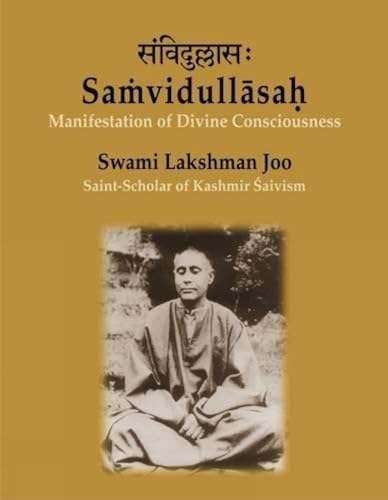
Samvidullasah Manifestation of Divine Consciousness : Swami Lakshman Joo: Saint Scholar of Kashmir Saivism: A Centenary Tribute
Anbieter: Vedams eBooks (P) Ltd, New Delhi, Indien
Verkäuferbewertung 4 von 5 Sternen

Hardcover. Zustand: New. 52 plates (illustrator). Contents PrefacePrabha Devi Key to transliteration IntroductionBettina Baumer 1 Gurustuti Verses in Praise of the MasterAcarya Rameshvar Jha I Life 2 A Yogi of KashmirJaideva Singh 3 The Sage of IshberJankinath Kaul Kamal 4 Sri Guru Isvara Svarupa His way of lifePrabha Devi 5 Guru Parampara three generations of Saiva SaintsRC Raina II The Acarya of Kashmir Saivism 6 Lilian Silburn and Swami Lakshman Joo a fertile relationshipJacqueline Chambron 7 Swami Lakshman Joo and his place in the Kashmirian Saiva traditionAlexis Sanderson 8 Tribute to the sage of KashmirKapila Vatsyayan 9 The power of pure awarenessBettina Baumer III The Enlightening Master 10 The making of a YoginiMohan Lal Sopory 11 The Ascent to the LordSarla Kumar 12 The scientist and the saintSudhir K Sopory 13 My GurudevaMotilal Sopory 14 I saw Siva in HimArunditi Raina 15 In search of MyselfRajan Khosa 16 Sitting under a mighty Chinar treeSharad Chandra IV The Presence Continues 17 A transforming meetingErnst Furlinger 18 The Icon of the DivineBorghild Baldauf 19 Love-song to the MasterAriane Hentsch Cisneros Appendix Published works of Swami Lakshman Joo The contributors Glossary of Sanskrit Terms IndexSwami Lakshman Joo Raina also called Lakshman Brahmacarin and Isvara Svarupa 1907-1991 was one of the greatest saints of 20 century India who was at the same time an extraordinary scholar who relived and revived the almost forgotten tradition of Kashmir Saivism His high spiritual state was matched by his profound knowledge of the Saiva scriptures and of the great thinkers and commentators of the tradition Abhinavagupta Ksemaraja and others Swami Lakshman Joo lived a secluded life in his Ashram in Kashmir but he taught the texts of Kashmir Saivism to Pandits and scholars from different countries besides giving spiritual guidance to a number of seekers and disciplesOn the occasion of his Birth Centenary a volume in his memory is being brought out containing articles by scholar disciples devotees and relatives which throw light on the extraordinary life of this saint and on his contribution to reviving and continuing the tradition of Kashmir Saivism Articles on his life by his close disciple Prabha Devi and his scholar disciples Jaideva Singh and Jankinath Kaul Kamal an exhaustive article on his place in the Kashmirian Saiva tradition by Professor Alexis Sanderson of Oxford to mention only a few provide an insight into his saintly personality and his great qualities as a teacher Even scholars and seekers who have never met him and have been deeply influenced by his spiritual presence have contributed an account of their experienceThis volume is richly illustrated by historical photographs which provide a visual testimony of the life of Swami Lakshman Joo A list of his published works is an important complement 258 pp.
-
Mysticism in Shaivism and Christianity
Anbieter: Vedams eBooks (P) Ltd, New Delhi, Indien
Verkäuferbewertung 4 von 5 Sternen
Hardcover. Zustand: New. 3rd Edition. If mysticism is hard to define, what is it then? Or, why have mystics often spoken about what they have realized - notwithstanding the 'unspeakability' of a spiritual experience? And, yet more significantly, how can a meeting point of different religious traditions be discovered at the mystical level? Focusing on these and other related questions, eminent scholars from varying religious traditions here explore the nature of mystical experience in two of the world's major traditions: Hinduism and Christianity. Neither a comparative study of religious traditions, nor an attempt to develop an overall mystical theology, the book sets out a spiritual dialogue between Saiva and Christian mysticism: a dialogue wherein the participants articulate worldviews of the mystical traditions of Saiva Siddhanta, Kashmir Saivism, Meister Eckhart, Hadewijch, Julian of Norwich, St. Ignatius Loyola, and of the Eastern Christianity. And, without taking any a priori intellectual position, each author here evolves his/her own tradition-specific perspective on mysticism - letting the comparisons, if any, to surface in the dialogue itself. A spiritual dialogue, like the one this multi-author work embodies, holds a key to an insightful understanding between different people, cultures and faiths - more specially in today's world riven, as it is, by fundamentalist forces and endless religious conflicts. The book will be a valuable acquisition for the scholars and spiritually interested readers alike.
-
Void and Fullness in the Buddhist, Hindu and Christian Traditions : Sunya - Purna - Pleroma
Anbieter: Vedams eBooks (P) Ltd, New Delhi, Indien
Verkäuferbewertung 4 von 5 Sternen
Hardcover. Zustand: New. Contents: Preface. Prologue/Bettina Baumer. 1. Opening address/Raimon Panikkar. 2. Sunya and Purna/Samdhong Rinpoche. 3. Concept of fullness or Purnatva in Indian philosophy/Deba Brata Sen Sharma. 4. The Pleroma of God, Jesus Christ and the Christian/Paddy Meagher. 5. Emptiness: philosophy and spirituality/Ngawang Samten. 6. Concept of fullness (Purnata) in Kashmir Saivism/Makhan Lal Kokiloo. 7. The nothingness of God and its explosive metaphors/Alois M. Haas. 8. The Tantric system in Buddhism/Wangchuk Dorje Negi. 9. Attaining the form of the void: Sunya in Vijnana Bhairava/Bettina Baumer. 10. The themes of light and dark in the Greek fathers/John R. Dupuche. 11. Sunyata in the Sahaja practice of Buddhism/Suniti Kumar Pathak. 12. Sunya Sampadana: a mystical concept of Virasaivism/Rama Ghose. 13. Purna-Sunya-Pleroma as communion of beings/Antony Kalliath. 14. Nietzsche's encounter with Buddhism/Johann Figl. 15. Gopinath Kaviraj on Purna/H.N. Chakravarty (Tr.). 16. The silence and the cry/John R. Dupuche. Concluding session: 1. Speech of his holiness the Dalai Lama. 2. Photographs. 3. Panel discussion. Glossary. General index. "Interreligious dialogue is one of the important ways for overcoming cultural and religious differences and mis-understandings, and for contributing to world peace. But such a dialogue has to go beyond the social, institutional and purely academic areas: it has to reach the very depths of the spiritual, philosophical and theological insights of the religious traditions. In Buddhism, Hinduism and Christianity such insights are expressed in the apparently opposite, but in reality complementary concepts of Void (sunya) and fullness (purna, in Greek pleroma). These concepts lead to the respective spiritual experiences and their interpretations in scriptures and philosophies. This volume contains the papers presented at an interreligious seminar at Sarnath, Varanasi, organised by the Abhishiktananda Society, and inspired by the ideas and life of Swami Abhishiktananda (1910-1973). These papers through light on these fundamental concepts from the different traditions, and are an invitation to dialogue. H.H. the Dalai Lama gave the concluding speech on the importance of interreligious dialogue." (jacket).
-
Science and Spirituality: Bridges of Understanding
Anbieter: Vedams eBooks (P) Ltd, New Delhi, Indien
Verkäuferbewertung 4 von 5 Sternen
Hardcover. Zustand: New. A dialogue between science and spirituality is a necessity in our times where both, differences and mutual enrichment of the two great fields of human approach to reality, are taking place. This volume addresses this need from the perspective of different areas of science and spiritual traditions. The starting point is the intention of the founder of the IIAS, Dr S. Radhakrishnan, who saw that both the practice of science and experience of spirituality are intimately related to being human . Although much thought has gone into their relationship, the present volume intends to broaden and deepen the possibility of a harmonious integration, necessary to overcome the present-day crisis of humanity. From the side of science, the contributors come from the fields of physics, plant biology, neuroscience, psychology, ecology and philosophy of science; and from the side of spirituality, following traditions and spiritual masters are represented: Pātañjala Yoga, Trika Śaivism of Kashmir, Vedānta, Buddhism, Christianity, Theosophy, and Rabindranath Tagore, Swami Vivekananda and J. Krishnamurti. The deliberations included topics such as Awareness in plants, Neuroplasticity and Habit, appropriate use of terms such as Consciousness and Energy in different contexts, clarifying several issues concerning the on-going dialogue. The contributing scholars have built bridges of understanding , thus encouraging the reader to proceed further in this quest.
-

Silparatnakosa. A Glossary of Orissan Temple Architecture.
Verlag: Indira Gandhi National Centre for the Arts (New Delhi) and Motilal Banarsidass Publishers (Delhi), 1994. ix, 228 pp text with illustrations in the text and 35 plates in black and white., 1994
Anbieter: Antiquariaat Hortus Conclusus, Bergambacht, Niederlande
Verkäuferbewertung 5 von 5 Sternen

Original cloth with dustjacket. Dustjacket a bit worn at edges, else a (very) good copy. Text in English with parts in Sanskrit. Please see description or ask for photos.
-
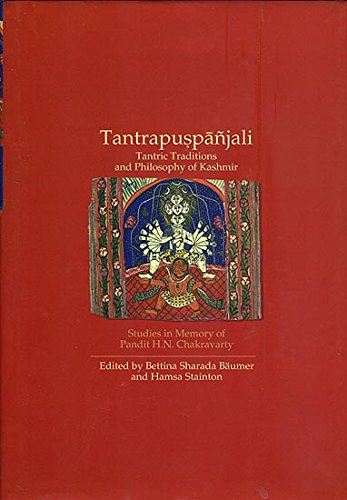
Tantrapuspanjali: Tantric Traditions and Philosophy of Kashmir
Sprache: Englisch
Verlag: Aryan Books International, 2018
ISBN 10: 8173055904 ISBN 13: 9788173055904
Anbieter: Vedams eBooks (P) Ltd, New Delhi, Indien
Verkäuferbewertung 4 von 5 Sternen
Hardcover. Zustand: New. Contents: Foreword/Sachchidanand Joshi. Preface/Advaitavadini Kaul. Introduction.Pandit Hemendra Nath Chakravarty: Scholar, Teacher, Sadhaka/Bettina Sharada Baumer. Mudra Photos. Tantrapuspanjali: Offerings in Memory of a True Pandit/Hamsa Stainton. Section One: Tantra. 1. The Yoga of the Netra Tantra: A Translation of Chapters VII and VIII with Introduction/Bettina Sharada Baumer. 2. Svacchanda Bhairava: Blissful Spontaneous Will of Siva/Advaitavadini Kaul. 3. The Khacakrapancakastotra, Hymn to the Five Spheres of Emptiness: Introduction, Edition and Translation/Mark Dyczkowski. 4. Varahi Worship in the Parasurama-Kalpasutra: A Study of Imagination and Transformation in Kaula Srividya/Annette Wilke. 5. The Wisdom of Excess: Guru, Initiation and Practice in an Extreme Tantric Ritual/John Dupuche. Section Two: Philosophy. 6. The Body and Consciousness in Early Pratyabhijna Philosophy: Amurtatva in Somananda Sivadrsti/John Nemec. 7. A Brief Hermeneutical Note on Consciousness in Utpaladeva Pratyabhijna Texts/Navjivan Rastogi. 8. Ontological Hierarchy in the Tantraloka of Abhinavagupta/Mrinal Kaul. 9. Purnata-pratyabhijna, The Recognition of Fullness of M.M. Acarya Rameshvar Jha: An Introduction/Sadananda Das. 10. Pratyabhijna Philosophy and the Evolution of Consciousness: Religious Metaphysics, Biosemiotics and Cognitive Science/David Peter Lawrence. Section Three: Aesthetics. 11. The Doctrine of Pratibha in Selected Texts of Abhinavagupta/Ernst Furlinger. 12. Smell: The Sense Perception of Recognition/Aleksandra Wenta. 13. Poetry and Ksemaraja Hermeneutics of Non-dualism/Hamsa Stainton. Post-Scripts: 14. Ksana: Its Spiritual Significance/Pt. Hemendra Nath Chakravarty. 15. Posthumous Letter to Panditji Hemendra Nath Chakravarty/Bettina Sharada Baumer. Pandit H.N. Chakravarty (1918-2011) was a traditional scholar of Tantra and Kashmir Saivism in Varanasi who contributed much to the continued teaching of the tradition. The present volume is a tribute to his memory by some of his students and admirers. It contains original articles on important Tantras and Tantric traditions of Kashmir (by Bettina Sharada Baumer, Advaitavadini Kaul, Mark Dyczkowski, Annette Wilke, John Dupuche) and on the philosophy and aesthetics of non-dualist Kashmir Saivism (by John Nemec, Navjivan Rastogi, Mrinal Kaul, Sadananda Das, David Peter Lawrence, Ernst Furlinger, Aleksandra Wenta, Hamsa Stainton). The volume is illustrated with biographical photos and iconographical images.
-
Alice Boner Artist and Scholar
Sprache: Englisch
Verlag: Ratna Printing Works, 1982
Anbieter: siop lyfrau'r hen bost, Blaenau Ffestiniog, Vereinigtes Königreich
Verkäuferbewertung 5 von 5 Sternen
EUR 44,91
EUR 9,18 Versand
Versand von Vereinigtes Königreich nach USAAnzahl: 1 verfügbar
In den WarenkorbHardcover. Zustand: Good. Dust jacket slightly creased and scuffed at the top.
-
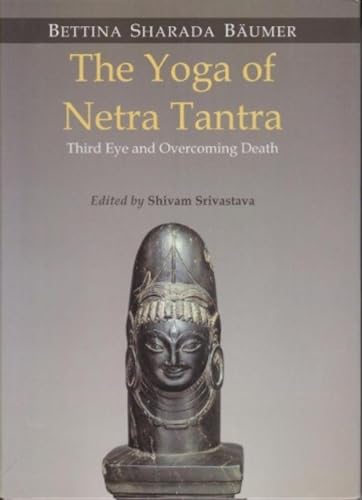
The Yoga of Netra Tantra: Third Eye and Overcoming Death
Anbieter: Vedams eBooks (P) Ltd, New Delhi, Indien
Verkäuferbewertung 4 von 5 Sternen
Erstausgabe
Hardcover. Zustand: New. 1st Edition. Contents: Preface. Facsimile by Swami Lakshman Joo. Mangalaslokas by Ksemaraja. Part I: Introduction and Interpretation: 1. Introduction. 2. The Eye of iva: Chapter I. 3. The Netramantra and its Practice: Chapters II, III, VI. 4. The Subtle Yoga, Skma-dhyna: Chapter VII. 5. The Supreme Yoga, Para-dhyna Chapter VIII. 6. The Role of Yogins in Yoga Chapter XX. 7. The Mantra Unveiled Chapters XXI-XXII. 8. Conclusion. Part II: Text and Translation: 1. Chapters I, VII and VIII: Sanskrit Text. 2. Chapters I, VII and VIII: Transliteration. 3. Chapters I, VII and VIII: Translation. Appendix 1: The Spiritual Eye in the Christian Mystical Traditions: A Cross-cultural Reflection. Appendix 2: Iconography. Bibliography. Index-cum-Glossary. The Netra Tantra Tantra of the (Third) Eye (of Siva) , also called Mrtyujit (Conqueror of Death), is one of the fundamental scriptures of non-dualist Kashmir Saivism or Trika. It is the only Tantra having the Third Eye of Siva as title and theme, and it contains three important chapters on Yoga, relating to three ways of overcoming death. This book, besides giving an introduction to the Tantra, contains an interpretation of the three chapters; Chapter 1 deals with the Eye of Siva, Chapter 7 with subtle Yoga, and Chapter 8 with supreme Yoga. The same texts are presented in Devanagari, transliteration and translation, including the eleventh-century commentary of Ksemaraja, illustrious disciple of Abhinavagupta. The Appendix contains illustrations of the theme of trinetra from different sources, mainly connected with Kashmir, as well as a comparative study on The spiritual eye in the Christian mystical traditions . This book is an important contribution to the studies on non-dualist Saivism or Trika, and especially to its Yoga.
-
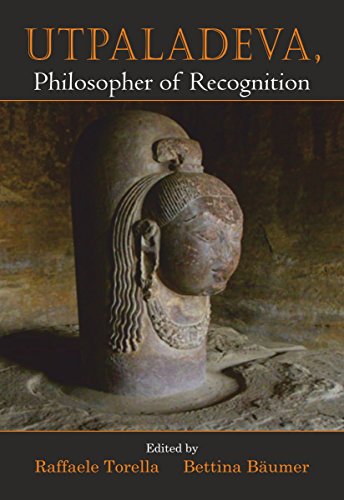
Utpaladeva: Philosopher of Recognition
Anbieter: Vedams eBooks (P) Ltd, New Delhi, Indien
Verkäuferbewertung 4 von 5 Sternen
Hardcover. Zustand: As New. Contents: Preface. 1. Importance of Utpaladeva: An Introduction/Raffaele Torellsa. 2. Visham apy amritayate . . . Paramadvaita in the Mystical Hymns of the Shivastotravali/Bettina Baumer . 3. Detonating or Defusing Desire: From Utpaladeva's Ecstatic Aesthetics to Abhinavagupta's Ecumenical Art Theory/Daniele Cuneo. 4. New Fragments of the Ishvarapratyabhijna-vivriti/Yohei Kawajiri. 5. Utpala's Insights into Aesthetics and His Impact on Abhinavagupta's Aesthetic Speculation/Navjivan Rastogi. 6. Some Hitherto Unknown Fragments of Utpaladeva's Vivriti (I): On the Buddhist Controversy Over the Existence of Other Conscious Streams/Isabelle Ratie. 7. Utpaladeva's Proof of God: On the Purpose of the Ishvarasiddhi/Isabelle Ratie. 8. Alamkaras in the Stotras of Utpaladeva/Radhavallabh Tripathi. 9. The Twelve Kalis and Utpaladeva's Appraisal of the Sensory Experience/Aleksandra Wenta. Appendices. Index The book, which partly derives from the papers offered at the first International Seminar on Utpaladeva (IIAS, Shimla 2013), is the first ever attempt at presenting a comprehensive portrait of one of the most important philosophers of premodern India, so far mainly taken into account as a mere predecessor of the great Abhinavagupta. Recent studies by R. Torella and others have shown the central importance of Utpaladeva in the elaboration of the Pratyabhijna philosophy, and reduced the role of Abhinavagupta to that of his brilliant commentator. The contributors to the present volume have shown the multifarious aspects of Utpaladeva, not only an outstanding metaphysician and epistemologist, engaged in a strenuous critical dialogue above all with the Buddhist logicians, but also one of the most extraordinary mystical poets of India. For the first time his contribution to poetics and aesthetics has been duly highlighted. The book contains two appendices with the critical edition and translation by R. Torella of fragments from Utpaladeva's long commentary (Vivriti) on his Ishvarapratyabhijna-karika and Vritti, one of the most important works of Indian philosophy as a whole, so far deemed to be totally lost. This book should generate great interest among scholars of Sanskrit and philosophy for its uniqueness and should serve the curiosity of each and every scholarly reader of Kashmir Shaivism.
-

Pasyanti: Trika Saivism of Kashmir: Themes and Practices
Verlag: Aryan Books International, 2023
ISBN 10: 8173056862 ISBN 13: 9788173056864
Anbieter: Vedams eBooks (P) Ltd, New Delhi, Indien
Verkäuferbewertung 4 von 5 Sternen
Hardcover. Zustand: New. Contents: Foreword by Kapila Vatsyayan. Introduction. I. Stotras - Hymns to the Absolute. 1. Auspicious Beginnings or Philosophy in a Nutshell An Introduction to Kashmir Saivism through its Mangalaslokas. 2. Surya in a saiva Perspective: The Sambapancasika, a Mystical Hymn of Kashmir and its Commentary by Ksemaraja. 3. Stuti: Praise in a Non-dualist Context. 4. Selected Stotras of Abhinavagupta. II. Non-dual Tradition of Saivism of Kashmir. 5. Vac as Samvada: Dialogue in the Context of Advaita saivagamas. 6. The Play of the Three Worlds: The Trika Concept of Lila. 7. Sun, Consciousness and Time: The Way of Time and the Timeless. 8. Universal Harmony: Samata. 9. Disharmony: The Root of Evil. 10. Mudra: Its Metaphysical Basis. 11. The Space of Breath in the Kashmiri saivagamas. 12. Creative Contemplation: Bhavana in the Vijnana Bhairava Tantra. 13. Attaining the Form of the Void: Sunya in the Vijnana Bhairava. 14. Paramadvaita in the Mystical Hymns of Utpaladeva's sivastotravali. 15. Intensity of Emotions: A Way to Liberation in the Advaita saiva agamas and their Exegetes. 16. Sarvam Sarvatmakam: Abhinavagupta's Interpretation of the Maxim. 17. Swami Lakshman Joo: Saint Scholar of Kashmir. Bibliography. Bibliography of the Works of Bettina Sharada Baumer. Index cum Glossary. Acknowledgments. The present volume contains 17 selected articles of Bettina Sharada Baumer which are the outcome of her study and research in the field of non-dual Trika saivism of Kashmir over the last four decades. They provide insights into essential aspects and themes of the philosophy and spirituality of Trika saivism, as well as elements of the spiritual practice involved in this tradition. Her approach is based on the fundamental texts as well as on the living traditions. The first section titled "Stotras Hymns to the Absolute", contains four articles which focus on the study and translation of some of the important hymns of the non-dual saiva traditions of Kashmir. The articles include an introduction to the philosophy of Kashmir saivism through the benedictory or mangala verses; a translation and study of the mystical hymn "Sambapancasika", in which Sun-worship is discussed in the light of the saiva philosophy of Consciousness; an article on the non-dual nature of praise and finally a translation and commentary on three important hymns of Abhinavagupta, together with two stotra fragments. The second section, "Non-Dual Tradition of saivism of Kashmir" contains 13 significant articles presenting themes and practices of the tradition. The articles are based on fundamental Tantric texts such as Vijnana Bhairava Tantra, Svacchanda Tantra and Netra Tantra. The author discusses some of the important concepts of Kashmir saivism, such as vac, lila, time and timelessness, harmony and disharmony, mudra, the space of breath, sunya and creative contemplation in the Vijnana Bhairava Tantra, the approach of paramadvaita in the mystical hymns of Utpaladeva´s sivastotravali, the intensity of emotions and how it is a path to liberation, the concept of sarvaṃ sarvatmakam, i.e. "everything is related to everything else" or "all is in all". The last article in this section is dedicated to Swami Lakshman Joo, author's spiritual preceptor. Pasyanti offers scholars and students, philosophers and seekers a spiritual voyage into the very heart of Indian spirituality. This volume will be useful not only to students and scholars of Indology but also to lay readers.
-
Sahrdaya : Studies in Indian and South East Asian Art in Honour of Dr. R. Nagaswamy
Verlag: Tamil Arts Academy, 2006
Anbieter: Vedams eBooks (P) Ltd, New Delhi, Indien
Verkäuferbewertung 4 von 5 Sternen
Hardcover. Zustand: As New. Contents: 1. Surya in a Saiva perspective: the Sambapancasika mystical hymn of Kashmir and its commentary by Ksemaraja/Bettina Baumer. 2. A spirituality of the senses in Trika Saivism of Kashmir/Ernst Furlinger. 3. Essence of Kashmir Saivism/Advaitavadini Kaul. 4. A Buddhist Bhairava/Nandana Chutiwongs. 5. Saivism in early Southern Thailand based on archaeological evidence/Phasook Indrawooth. 6. Saivism in Thailand as recorded in inscriptions and old documents from sixth century to early Ayudhya period/Chirapat Prapandvidya. 7. Aesthetics of karuna the thousand armed Avalokitesvara/Sung Min Kim. 8. The Mahabharata epic representation in Cambodia /Kambujadesa/Son Soubert. 9. The Mahabharata and some ancient Janapadas/Devendra Handa. 10. Daiva and Purusakara in the Valmiki Ramayana/Satya Vrat Shastri. 11. An interesting Kharoshti - Brahmi inscription from Mid West Bengal/B.N. Mukherjee. 12. Who's who in the cola festival/Richard H. Davis. 13. The dancing girl ("Devadasi") of South India in actual early photographs/Joachim K. Bautze. 14. Vastu Purusa/M.K. Dhavalikar. 15. Art and architecture of Gopadri region - early phase (seventh to tenth century)/R.N. Mishra. 16. On measuring images: a critical analysis of the theory of Talamana/Isabella Nardi. 17. Terminology of Orissan Silpa Sastras/Sadananda Das. 18. Art without artists? Art history and India/Stephen Inglis. 19. Once more Tamilnadu and Bengal? Iconographic affiliation: Bhiksatanamurti Siva/Gouriswar Bhattacharya. 20. A reclining Gauri image with Pancadikpalas' in the Khulna Museum, Bangladesh/Gerd J.R. Mevissen. 21. A thematic view of Indian civilization/Michel Danino. 22. Saktism and Tantrism : complementary to each other/Haripriya Rangarajan. 23. The second great diffusion of Buddhism in the Trans-Himalayas/Benoy K. Behl. 24. Komala-Kanta Padavali of Gauda Vanga/Mahua Mukherje. 25. Sangam age Chera Silver Coin with a portrait and Roman type Helmet/R. Krishnamurthy. 26. Sirpur excavations 2000-2006/A.K. Sharma. "The volume Sahrdaya, consists of 26 memorable and penetrative, essays on Indian and South East Asian Art and religion, by eminent scholars from Austria, Germany, Italy, France, USA, Canada, Korea, Thailand, Cambodia and Indonesia, besides India. Beginning with an admirable study of Sun as Martanda who is identified with the supreme Siva in the Advaitic Kashmir Saivism, through the text Samba Pancasika and its commentary by Kshemaraja, the book shows that the Kashmir Saiva system integrated the physical senses into spiritual life. The tradition of identifying ruling monarch and consecrating him as Bhairava (Buddhist) and the over 12 feet high stone portrait of Adityavarman of Java is studied. A comprehensive survey of Saivism in Thailand based on archaeological and epigraphical material including the latest finds, form the subject of succeeding essays. Next is a study of the impact of Mahabharata by sage Vyasa on sculptural portrayal of different phases of Cambodian Art, as at of Benteay Srei and Ankhor Vat. The Korean people's faith and adoration of Avalokitesvara (Buddhist) as the embodiment of compassion (Karuna), is outlined. The birth of Siva Sadyojata as the child of Parvati, portrayed in a Pala sculpture of Bangladesh draws our attention. The role of different temple attendants in festivals during the Chola age in 10-13 cent, is a fascinating fresh approach to the study of religion. With rare photographs, the life of Devadasis (dancing girls) in the 18 and 19 cent, is an aspect of Indian life that is presented. The need to study the living artist communities is stressed in another article. Studies in the ancient Indian Janapadas, given in Mahabharata based on numismatic evidence; a critical analysis of Talamana - the theory of measuring images; the evolution of temples of Central India; the diffusion of Bhikshatana iconography; a rare temple to Vastu purusha and many more are other important contributions on art in this valuable volume." (jacket).


