
Daurat (31 Ergebnisse)

- Softcover
Anbieter: Démons & Merveilles, Joinville, FrankreichDémons & Merveilles
Verkäufer/-in kontaktierenVerkäufer/-in mit 5 SternenZustand: Gebraucht - Sehr gut
EUR 6,00
EUR 22,00 VersandVersand von Frankreich nach USAAnzahl: 1 verfügbar
Zustand: Fine. (french edition)- Légères marques de lecture et/ou de stockage mais du reste en très bon état d'ensemble- Envoi rapide et soigné dans une enveloppe à bulle depuis la France. 1989. 79 pages. Fine.

- Softcover
Anbieter: Le Monde de Kamélia, Bruxelles, BelgienLe Monde de Kamélia
Verkäufer/-in kontaktierenVerkäufer/-in mit 5 SternenZustand: Gebraucht - Wie neu
EUR 6,50
EUR 22,00 VersandVersand von Belgien nach USAAnzahl: 7 verfügbar
Zustand: like new. Livraison rapide, bien emballé, service client soigné.Pour tout renseignement complémentaire, n'hésitez pas à nous contacter.

- Softcover
Anbieter: Revaluation Books, Exeter, Vereinigtes KönigreichRevaluation Books
Verkäufer/-in kontaktierenVerkäufer/-in mit 5 SternenZustand: Neu
EUR 22,24
EUR 11,71 VersandVersand von Vereinigtes Königreich nach USAAnzahl: 1 verfügbar
Paperback. Zustand: Brand New. 150 pages. French language. 7.48x4.72x0.34 inches. In Stock.

- Softcover
Anbieter: Revaluation Books, Exeter, Vereinigtes KönigreichRevaluation Books
Verkäufer/-in kontaktierenVerkäufer/-in mit 5 SternenZustand: Neu
EUR 22,24
EUR 11,71 VersandVersand von Vereinigtes Königreich nach USAAnzahl: 1 verfügbar
Paperback. Zustand: Brand New. 154 pages. French language. 7.48x4.72x0.35 inches. In Stock.

Verlag: Hachette. Coll. Génies et réalités.,, Paris,, 1970
- Hardcover
Anbieter: Librairie Christian Chaboud, Bruxelles, BelgienLibrairie Christian Chaboud
Verkäufer/-in kontaktierenVerkäufer/-in mit 5 SternenZustand: Gebraucht
EUR 10,00
EUR 25,00 VersandVersand von Belgien nach USAAnzahl: 1 verfügbar
in-8, relié-jaquette éditeur, 252p. Bon état.
 Weitere Bilder
Verlag: Générique
- Hardcover
Anbieter: JLG_livres anciens et modernes, Saint Maur des Fossés, FrankreichJLG_livres anciens et modernes
Verkäufer/-in kontaktierenVerkäufer/-in mit 5 SternenZustand: Gebraucht - Befriedigend
EUR 30,00
EUR 18,00 VersandVersand von Frankreich nach USAAnzahl: 1 verfügbar
Zustand: Satisfaisant. Nos envois se font avec suivi, pour tout problème n'hésitez pas à nous contacter pour trouver une solution.

Verlag: Cepl, 1969
Anbieter: crealivres, la fontennelle, Frankreichcrealivres
Verkäufer/-in kontaktierenVerkäufer/-in mit 5 SternenZustand: Gebraucht - Gut
EUR 23,00
EUR 14,00 VersandVersand von Frankreich nach USAAnzahl: 1 verfügbar
Zustand: Very Good. Envoi rapide Très Bon Etat intérieur impeccable très bonne tenue. in8. 1969. Reliure editeur. 255 pages. croissance dans la famille - la constellation familiale - l'atmosphère familiale - la société - conclusion. Very Good.

Verlag: Editons du cap Monte-Carlo, 1960
- Softcover
Anbieter: Le-Livre, SABLONS, FrankreichLe-Livre
Verkäufer/-in kontaktierenVerkäufer/-in mit 5 SternenVerbandsmitglied: ILAB
Zustand: Gebraucht - Gut bis sehr gut
EUR 16,95
EUR 42,00 VersandVersand von Frankreich nach USAAnzahl: 1 verfügbar
Couverture souple. Zustand: bon. R110006276: Mai 1960. In-12. Broché. Bon état, Couv. convenable, Dos satisfaisant, Intérieur frais. 95 pages environ illustrées de nombreuses photos et dessins noir et blanc. . . . Classification Dewey : 500-SCIENCES DE LA NATURE ET MATHEMATIQUES.
- Softcover
Anbieter: LiLi - La Liberté des Livres, CANEJAN, FrankreichLiLi - La Liberté des Livres
Verkäufer/-in kontaktierenVerkäufer/-in mit 5 SternenZustand: Gebraucht - Wie neu
EUR 5,99
EUR 65,00 VersandVersand von Frankreich nach USAAnzahl: 1 verfügbar
Zustand: as new. vendeur pro, expedition soignee en 24/48h.
- Softcover
Anbieter: LiLi - La Liberté des Livres, CANEJAN, FrankreichLiLi - La Liberté des Livres
Verkäufer/-in kontaktierenVerkäufer/-in mit 5 SternenZustand: Gebraucht - Wie neu
EUR 5,99
EUR 65,00 VersandVersand von Frankreich nach USAAnzahl: 1 verfügbar
Zustand: as new. vendeur pro, expedition soignee en 24/48h.
- Softcover
Anbieter: LiLi - La Liberté des Livres, CANEJAN, FrankreichLiLi - La Liberté des Livres
Verkäufer/-in kontaktierenVerkäufer/-in mit 5 SternenZustand: Gebraucht - Wie neu
EUR 5,99
EUR 65,00 VersandVersand von Frankreich nach USAAnzahl: 1 verfügbar
Zustand: as new. vendeur pro, expedition soignee en 24/48h.
- Softcover
Anbieter: LiLi - La Liberté des Livres, CANEJAN, FrankreichLiLi - La Liberté des Livres
Verkäufer/-in kontaktierenVerkäufer/-in mit 5 SternenZustand: Gebraucht - Wie neu
EUR 5,99
EUR 65,00 VersandVersand von Frankreich nach USAAnzahl: 1 verfügbar
Zustand: as new. vendeur pro, expedition soignee en 24/48h.
- Softcover
Anbieter: LiLi - La Liberté des Livres, CANEJAN, FrankreichLiLi - La Liberté des Livres
Verkäufer/-in kontaktierenVerkäufer/-in mit 5 SternenZustand: Gebraucht - Wie neu
EUR 5,99
EUR 65,00 VersandVersand von Frankreich nach USAAnzahl: 1 verfügbar
Zustand: as new. vendeur pro, expedition soignee en 24/48h.
- Softcover
Anbieter: LiLi - La Liberté des Livres, CANEJAN, FrankreichLiLi - La Liberté des Livres
Verkäufer/-in kontaktierenVerkäufer/-in mit 5 SternenZustand: Gebraucht - Wie neu
EUR 5,99
EUR 65,00 VersandVersand von Frankreich nach USAAnzahl: 1 verfügbar
Zustand: as new. vendeur pro, expedition soignee en 24/48h.
- Softcover
Anbieter: LiLi - La Liberté des Livres, CANEJAN, FrankreichLiLi - La Liberté des Livres
Verkäufer/-in kontaktierenVerkäufer/-in mit 5 SternenZustand: Gebraucht - Sehr gut
EUR 5,99
EUR 65,00 VersandVersand von Frankreich nach USAAnzahl: 1 verfügbar
Zustand: fine. l'article peut presenter de tres legers signes d'usure, petites rayures ou imperfections esthetiques. vendeur professionnel; envoi soigne en 24/48h.
- Softcover
Anbieter: LiLi - La Liberté des Livres, CANEJAN, FrankreichLiLi - La Liberté des Livres
Verkäufer/-in kontaktierenVerkäufer/-in mit 5 SternenZustand: Gebraucht - Wie neu
EUR 5,99
EUR 65,00 VersandVersand von Frankreich nach USAAnzahl: 1 verfügbar
Zustand: as new. vendeur pro, expedition soignee en 24/48h.
- Softcover
Anbieter: LiLi - La Liberté des Livres, CANEJAN, FrankreichLiLi - La Liberté des Livres
Verkäufer/-in kontaktierenVerkäufer/-in mit 5 SternenZustand: Gebraucht - Wie neu
EUR 5,99
EUR 65,00 VersandVersand von Frankreich nach USAAnzahl: 1 verfügbar
Zustand: as new. vendeur pro, expedition soignee en 24/48h.
- Softcover
Anbieter: LiLi - La Liberté des Livres, CANEJAN, FrankreichLiLi - La Liberté des Livres
Verkäufer/-in kontaktierenVerkäufer/-in mit 5 SternenZustand: Gebraucht - Wie neu
EUR 5,99
EUR 65,00 VersandVersand von Frankreich nach USAAnzahl: 1 verfügbar
Zustand: as new. vendeur pro, expedition soignee en 24/48h.

- Softcover
Anbieter: LiLi - La Liberté des Livres, CANEJAN, FrankreichLiLi - La Liberté des Livres
Verkäufer/-in kontaktierenVerkäufer/-in mit 5 SternenZustand: Gebraucht - Sehr gut
EUR 6,49
EUR 65,00 VersandVersand von Frankreich nach USAAnzahl: 1 verfügbar
Zustand: fine. vendeur pro, expedition soignee en 24/48h.Le livre peut montrer des signes d'usure dus à son utilisation, etre marque ou presenter plusieurs dommages esthetiques mineurs.
- Softcover
Anbieter: RECYCLIVRE, Paris, FrankreichRECYCLIVRE
Verkäufer/-in kontaktierenVerkäufer/-in mit 5 SternenZustand: Gebraucht - Gut bis sehr gut
EUR 9,97
EUR 65,00 VersandVersand von Frankreich nach USAAnzahl: 1 verfügbar
Zustand: Bon. Merci, votre achat aide à financer des programmes de lutte contre l'illettrisme.
- Softcover
Anbieter: RECYCLIVRE, Paris, FrankreichRECYCLIVRE
Verkäufer/-in kontaktierenVerkäufer/-in mit 5 SternenZustand: Gebraucht - Gut bis sehr gut
EUR 10,47
EUR 65,00 VersandVersand von Frankreich nach USAAnzahl: 1 verfügbar
Zustand: Bon. Merci, votre achat aide à financer des programmes de lutte contre l'illettrisme.
Verlag: C.E.P.L., 1969
- Hardcover
Anbieter: LibrairieLaLettre2, Villefranche de Lauragais, FrankreichLibrairieLaLettre2
Verkäufer/-in kontaktierenVerkäufer/-in mit 4 SternenZustand: Gebraucht - Befriedigend
EUR 40,00
EUR 35,00 VersandVersand von Frankreich nach USAAnzahl: 1 verfügbar
Relié. Zustand: Etat satisfaisant. In-8 Description :255 pp. Collection "comprendre-savoir-agir". Cartonnage marron, lettrage or. Exemplaire bibliothèque, couvert, référencé sur dos. Langue : Français Nb de volumes : 1.

Verlag: Direction, rédaction, abonnements, publicité, 1966
- Softcover
- Zeitschrift
Anbieter: Le-Livre, SABLONS, FrankreichLe-Livre
Verkäufer/-in kontaktierenVerkäufer/-in mit 5 SternenVerbandsmitglied: ILAB
Zustand: Gebraucht - Gut bis sehr gut
EUR 45,80
EUR 42,00 VersandVersand von Frankreich nach USAAnzahl: 1 verfügbar
Couverture souple. Zustand: bon. RO30360652: 1966. In-4. Broché. Etat passable, Couv. défraîchie, Manque en coiffe de pied, Papier jauni. 134 pages. Coins frottés. Accrocs au dos, fané. Nombreuses photos et illustrations en noir et blanc, in et hors texte. Ex-dono à l'encre hors texte. . . . Classification Dewey : 70.49-Presse i…llustrée, magazines, revues.
- Hardcover
Anbieter: Studio Bibliografico Marini, ROMA, RM, ItalienStudio Bibliografico Marini
Verkäufer/-in kontaktierenVerkäufer/-in mit 4 SternenZustand: Gebraucht
EUR 100,00
EUR 35,00 VersandVersand von Italien nach USAAnzahl: 1 verfügbar
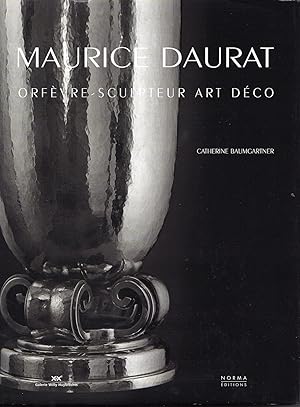
Zustand: Perfetto (Mint). A cura e testo di Catherine Baumgartner. Numerose illustrazioni e tavole a colori e in bianco e nero, con riproduzioni dei manufatti artistici e dei relativi schizzi preparatori. Biografia e Bibliografia . 4to (cm 31x24). pp. 304. . Perfetto (Mint). . . . Ouvrage consacré au travail de Maurice Daurat (1…880-1969), orfèvre de formation très tôt influencé dans son oeuvre par la nature et le japonisme, en découlent des créations d'inspiration Art Nouveau. Au fil du temps, son style s'épure pour tendre à une géométrisation des formes. Daurat s'intéresse à différentes techniques (fonte, ciselure, montage au marteau, sculpture) et différents matériaux dont l'étain, réalisant ainsi des oeuvres exceptionnelles et d'une grande originalité stylistique et technique. Ouvrage comportant de très nombreuses reproductions de pièces et documents, permettant ainsi d'illustrer les propos de l'auteur. En fin d'étude, des documents intéresseront amateurs et collectionneurs : explications sur le travail du métal, les marques et signatures employées par Daurat.Un'opera dedicata al lavoro di Maurice Daurat (1880-1969), un orafo la cui formazione fu molto presto influenzata dalla natura e dal ?giapponismo', creazioni ispirate all'Art Nouveau. Nel corso del tempo, il suo stile viene raffinato per adattarsi a una geometrizzazione delle forme. Daurat è interessato a diverse tecniche (ghisa, scalpellatura, montaggio a martello, scultura) e diversi materiali tra cui lo stagno, ottenendo così opere eccezionali di grande originalità stilistica e tecnica. Molte riproduzioni di documenti, luoghi e oggetti che illustrano gli obbiettivi dell'autore. Alla fine del libro repertorio con spiegazioni sulla lavorazione del metallo, i segni e le firme usati da Daurat. Rilegato, sovracoperta (hard cover, dust jacket). Book.
 Weitere Bilder
- Hardcover
- Manuskript
Anbieter: Wittenborn Art Books, San Francisco, CA, USAWittenborn Art Books
Verkäufer/-in kontaktierenVerkäufer/-in mit 5 SternenZustand: Gebraucht - Befriedigend
EUR 677,56
EUR 8,77 VersandVersand innerhalb von USAAnzahl: 1 verfügbar
Zustand: Good. 4to. 23 x 30.5 cm. Cloth and dust-jacket (corner tear without loss). . Denier de Saint-Pierre304pp. Included are 108 original negatvives for the illustrations in 5.5 x 5.5 cm. format. .Ouvrage consacré au travail de Maurice Daurat (1880-1969), orfèvre de formation très tôt influencé dans son oeuvre par la nature e…t le japonisme, en découlent des créations d'inspiration Art Nouveau. Au fil du temps, son style s'épure pour tendre à une géométrisation des formes. Daurat s'intéresse à différentes techniques (fonte, ciselure, montage au marteau, sculpture) et différents matériaux dont l'étain, réalisant ainsi des oeuvres exceptionnelles et d'une grande originalité stylistique et technique. Ouvrage comportant de très nombreuses reproductions de pièces et documents, permettant ainsi d'illustrer les propos de l'auteur. En fin d'étude, des documents intéresseront amateurs et collectionneurs : explications sur le travail du métal, les marques et signatures employées par Daurat.formé à l'école d'art appliqué Germain-Pilon, créée sous la IIIe République dans le but de réconcilier art et industrie, l'orfèvre Maurice Daurat allie la sensibilité d'un artiste à une simplicité d'artisan. Abandonnant dans les années 1920 la fonte et la ciselure pour le montage au marteau, Maurice Daurat travaille très tôt l'étain, métal alors méprisé, dont il saura exploiter les qualités avec un talent rare pour réaliser des pièces uniques ou en très petites séries, mais aussi des ?uvres monumentales, comme les vases du paquebot Normandie en 1935 ou le vase luminaire d'une hauteur de 3,12 mètres destiné à la rotonde Alma du musée d'Art moderne de la Ville de Paris en 1937.Maurice Daurat (1880-1969) was born in Bordeaux on August 2, 1880. From 1895 to 1898, he was a student at the Ecole Germain Pilon where he received no specialized training. He learned the arts of drawing, painting and especially sculpture, for which he showed taste and skill from his early childhood. In order to make a living, he began by doing decorative work making embroidery patterns and gradually moved towards metalwork. Upon returning from his involvement in the war of 1914-1918, he began exhibiting objects including gold, silver and tin cups and boxes at the Salon d'Automne and des Artistes Décorateurs. But it was not until the Exhibition of 1925 that his personality was first revealed: winning a prestigious award, he went on to take part in all the major events of decorative art in France and abroad: Geneva, San Francisco, Barcelona and Brussels (Grand Prix).He was a member of International Jury at the 1937 Exhibition and became senior vice president of the league of goldsmiths (Grand Prize). Outside his participation in exhibitions, he created the basins and fountains of the Quai d'Orsay gardens, and a monumental fountain for the rotunda of the city of Paris (Palais de Tokyo). In 1935, he served as the gold/silversmith for the legations of Canada, The Hague and Brussels. The French state commissioned him to design a basin with water jets and in 1945 he was commissioned by the city of Paris to make a vase for the flat of the Prefect of the Seine. Many of Maurice Daurat's works belong to private collections, and his tin and silver pieces can be found at the Museum of Decorative Arts in Paris, Cairo and the Metropolitan Museum in New York.Recipient of the Grand Prize of Honor at the Salon des Artistes Décorators in 1949, Maurice Daurat became a knight of the Legion of Honor in 1929 and has been an officer since 1935. Daurat was a sculptor as well as a goldsmith, executing elevated forms with a hammer. He produced entirely hand-made work representative of the age-old tradition of tin pottery. Although he employed gold, silver, and duralumin (all the interior decorating, lighting and objects of worship of the chapel of a large boarding school in Thionville designed by architects Hiriart and Tribout), his metal of choice was tin. With his solid purity of forms that preserved the expressive value of volumes under a play of light, Maurice Daurat restored tin to its original nobility and secured a prominent place for himself in the religious and civil goldsmith trade and in interior decoration. A modest artist, passionate about his craft but virtually incapable, however necessary, of defending his work, Daurat owes his triumph not only to the fundamental virtuosity of his work but to a series of fateful opportunities. Thanks to an important submission to the exhibition of 1925, Daurat was noticed by a man of taste and fortune who was able to provide him with the material resources required to execute his work for some years, until a "crisis abruptly interrupted his generous initiative." Luxuriously installed in avenue Friedland, Daurat had at his disposal the metals with which to realize whatever his imagination conceived. While the adventure only lasted three years starting 1927, by 1930 Daurat's art had taken off and he had made a name for himself.During and after this experience, Daurat was at liberty to express himself in the most diverse areas: luxury and religious goldsmith's art, jewelry, necklaces, rings, belts, bracelets, as well as vases, basins and lamps. Hostile to all decoration, Daurat chose metal as the sole medium of his expression, enhancing its beauty through robust forms structured by harmonious rhythms logically arranged in accordance with the object's purposeProvenance: Estate of Maurice Daurat (1880-1969) and his granddaughter and biographer Catherine Baumgartner.Expertise by Bernard Portheault, 8, rue des Pichots 41500 Mer, France.
 Weitere Bilder
Verlag: Editions du Seuil, Paris, 1956
- Softcover
Anbieter: Librairie Christian Chaboud, Bruxelles, BelgienLibrairie Christian Chaboud
Verkäufer/-in kontaktierenVerkäufer/-in mit 5 SternenZustand: Gebraucht
EUR 90,00
EUR 25,00 VersandVersand von Belgien nach USAAnzahl: 1 verfügbar
in-8, broché, 251p. Petites marques du temps sur la couverture. Intérieur bon. Illustré de photographies NB et hors-texte.
Verlag: ENTRE DEUX MONDES
Anbieter: BOOKIT!, Genève, SchweizBOOKIT!
Verkäufer/-in kontaktierenVerkäufer/-in mit 3 SternenZustand: Gebraucht - Wie neu
EUR 21,20
EUR 53,50 VersandVersand von Schweiz nach USAAnzahl: Mehr als 20 verfügbar
Zustand: Used: Like New. LIVRE A L?ETAT DE NEUF. EXPEDIE SOUS 3 JOURS OUVRES. NUMERO DE SUIVI COMMUNIQUE AVANT ENVOI, EMBALLAGE RENFORCE. EAN:9782919537426.
Verlag: ENTRE DEUX MONDES
Anbieter: BOOKIT!, Genève, SchweizBOOKIT!
Verkäufer/-in kontaktierenVerkäufer/-in mit 3 SternenZustand: Gebraucht - Wie neu
EUR 24,80
EUR 53,50 VersandVersand von Schweiz nach USAAnzahl: 15 verfügbar
Zustand: Used: Like New. LIVRE A L?ETAT DE NEUF. EXPEDIE SOUS 3 JOURS OUVRES. NUMERO DE SUIVI COMMUNIQUE AVANT ENVOI, EMBALLAGE RENFORCE. EAN:9782919537464.

Verlag: SEUIL, 1956
- Softcover
Anbieter: Le-Livre, SABLONS, FrankreichLe-Livre
Verkäufer/-in kontaktierenVerkäufer/-in mit 5 SternenVerbandsmitglied: ILAB
Zustand: Gebraucht - Gut bis sehr gut
EUR 205,00
EUR 42,00 VersandVersand von Frankreich nach USAAnzahl: 1 verfügbar
Couverture souple. Zustand: bon. R200016546: 1956. In-8. Broché. Etat d'usage, Couv. défraîchie, Dos abîmé, Intérieur frais. 251 pages illustrées de nombreuses photos en noir et blanc. . . . Classification Dewey : 800-LITTERATURE (BELLES-LETTRES).
 Weitere Bilder
Documents de Décoration moderne. Trente Planches . First edition.
Benedictus, Edouard; A. Ségaud ; R. Bacard ; Ch. Prenchair; Maurice Daurat ; G. Daigneaux; H. Rioux; A. Roubille; Brandt ; Ad. Peterelle; Habert-Dys ; Henry de Waroquier; René Taurix; R.R.Guyp; G. de Ribaucourt, artists.
Verlag: Paris: Librairie Renouard - H. Laurens, circa 1902-1910, 1910
- Hardcover
Anbieter: Wittenborn Art Books, San Francisco, CA, USAWittenborn Art Books
Verkäufer/-in kontaktierenVerkäufer/-in mit 5 SternenZustand: Gebraucht - Befriedigend
EUR 451,71
EUR 8,77 VersandVersand innerhalb von USAAnzahl: 1 verfügbar
Zustand: Good. Large 4to. 27 x 36cm. Sheets loose as issued in original boards with ties. Plates are continuous tone lithographs and collotypes. Title page and list of plates on one leaf. Front endpaper with crease on fold.OCLC Number / Unique Identifier:37808892 .


