Gesamtpreis (1 Artikel Artikel):
Versandziel:

daniel speckle (9 Ergebnisse)
Direkt zu den wichtigsten Suchergebnissen
Suchfilter
Produktart
- Alle Product Types
- Bücher (9)
- Magazine & Zeitschriften (Keine weiteren Ergebnisse entsprechen dieser Verfeinerung)
- Comics (Keine weiteren Ergebnisse entsprechen dieser Verfeinerung)
- Noten (Keine weiteren Ergebnisse entsprechen dieser Verfeinerung)
- Kunst, Grafik & Poster (Keine weiteren Ergebnisse entsprechen dieser Verfeinerung)
- Fotografien (Keine weiteren Ergebnisse entsprechen dieser Verfeinerung)
- Karten (Keine weiteren Ergebnisse entsprechen dieser Verfeinerung)
- Manuskripte & Papierantiquitäten (Keine weiteren Ergebnisse entsprechen dieser Verfeinerung)
Zustand Mehr dazu
- Neu (2)
- Wie Neu, Sehr Gut oder Gut Bis Sehr Gut (Keine weiteren Ergebnisse entsprechen dieser Verfeinerung)
- Gut oder Befriedigend (1)
- Ausreichend oder Schlecht (Keine weiteren Ergebnisse entsprechen dieser Verfeinerung)
- Wie beschrieben (6)
Einband
Weitere Eigenschaften
- Erstausgabe (Keine weiteren Ergebnisse entsprechen dieser Verfeinerung)
- Signiert (Keine weiteren Ergebnisse entsprechen dieser Verfeinerung)
- Schutzumschlag (Keine weiteren Ergebnisse entsprechen dieser Verfeinerung)
- Angebotsfoto (7)
Sprache (2)
Preis
- Beliebiger Preis
- Weniger als EUR 20 (Keine weiteren Ergebnisse entsprechen dieser Verfeinerung)
- EUR 20 bis EUR 45
- Mehr als EUR 45
Gratisversand
- Kostenloser Versand nach USA (Keine weiteren Ergebnisse entsprechen dieser Verfeinerung)
Land des Verkäufers
Verkäuferbewertung
-

Architectura
Anbieter: buchversandmimpf2000, Emtmannsberg, BAYE, Deutschland
Verkäuferbewertung 5 von 5 Sternen

Taschenbuch. Zustand: Neu. Neuware -Architectura - Von Vestungen ist ein unveränderter, hochwertiger Nachdruck der Originalausgabe aus dem Jahr 1589.Hans Elektronisches Buch ist Herausgeber von Literatur zu unterschiedlichen Themengebieten wie Forschung und Wissenschaft, Reisen und Expeditionen, Kochen und Ernährung, Medizin und weiteren Genres.Der Schwerpunkt des Verlages liegt auf dem Erhalt historischer Literatur.Viele Werke historischer Schriftsteller und Wissenschaftler sind heute nur noch als Antiquitäten erhältlich. Hans Elektronisches Buch verlegt diese Bücher neu und trägt damit zum Erhalt selten gewordener Literatur und historischem Wissen auch für die Zukunft bei.Books on Demand GmbH, Überseering 33, 22297 Hamburg 300 pp. Deutsch.
-

Taschenbuch. Zustand: Neu. Architectura | Von Vestungen | Daniel Speckle | Taschenbuch | 300 S. | Deutsch | 2016 | hansebooks | EAN 9783741178634 | Verantwortliche Person für die EU: Hansebooks GmbH, Trakehner Weg 52, 22844 Norderstedt, gb[at]hansebooks[dot]com | Anbieter: preigu.
-
Architectura von Vestungen an Städten, Schlössern und Claußen, zu Wasser, Land, Berg und Thal.
Verlag: . Dresden, Bodenehr, aufs neue übersehen und verbessert 1705., 1705
Anbieter: Antiquariat H. Carlsen, Kiel, Deutschland
Verkäuferbewertung 5 von 5 Sternen
EUR 2.000,00
EUR 45,00 Versand
Versand von Deutschland nach USAAnzahl: 1 verfügbar
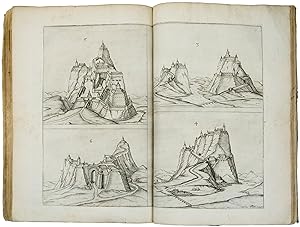
In den WarenkorbMit gestochenem Titel, 44 gefalteten Kupfertafeln und 29 Textkupfern, 5 Blatt, 110 nummerierte Blatt, 2 Blatt, Halblederband der Zeit, 32,5 x 21,5 cm, Einband berieben und bestossen, Deckelbezüge teils stärker berieben, innen etwas gebräunt, die Trägerblätter teils etwas fleckig, die Tafeln handschriftlich nummeriert. Erstmals 1589 erschienenes Standardwerk, nach Dürer das einzig verbreitete des 16. Jh. im deutschsprachigen Raum. "Der erste Traktat in deutscher Sprache, welcher sich intensiv mit der bastionierten Front. auseinandersetzt" (HAB S. 353). Mit Plan u. a. von Valletta und ausführlicher Beschreibung der Festungsanlagen.
-
Architectura von Vestungen. Wie die zu unsern zeiten mögen erbawen werden, an Stätten Schlössern, unnd Clussen, zu Wasser, Land, Berg, unnd Thal, mit jren Bollwerken, Cavalieren, Streichen, Gräben und Leuffen, sampt deren gantzen anhang, und nutzbarkeit, auch wie die Gegenwehr zu gebrauchen, was für geschütz dahin gehörig, und wie es geordnet, unnd gebraucht werden soll, alles auss grund un deren Fundamenten.
Verlag: Strassburg, Bernhardt Jobin, Strassburg, 1589
Anbieter: Govi Rare Books LLC, Woodside, New York City, NY, USA
Verkäuferbewertung 4 von 5 Sternen

Zustand: Molto buono (Very Good). 0. Folio. [8], 112, [i.e. 114: 1-66, (1), 66-112], [1: errata] leaves. Title printed in red and black within an engraved architectural border by Matthias Greuter, woodcut coat of arms of Julius Duke of Brunswig, 21 (20 double-page) engravings (sometimes appearing as two single leaves; one is also signed by Matthias Greuter), and numerous woodcut illustrations in the text. Contemporary limp vellum (a bit smutty), with later added supralibros and spine label, from the library of Walter Hawken Tregellas (1831-1894), an English writer of historical and biographical works and a professional draughtsman (with his presentation label on the pastdown), and from the Royal Engineers Library (gilt stamp on binding, and small ink stamp on title-page and on a few other places). Some very light browning and marginal dampstains, but a very nice genuine copy.RARE FIRST EDITION of this magnificent work on fortification and town-planning, the first important contribution in the German-speaking world on the subject since Dürer's Etliche Underricht zur Befestigung der Stett (1527). It was to become the standard reference work on the construction of fortresses until there was a decisive change in the manner in which wars where fought. Further editions were published in 1599, 1608, 1705 and 1756.''Speckle writes his treatise from a strongly national motivation as is clear from his preface. He wishes to prove that the Germans are not completely without imagination, and that their invention of printing and of a 'grausam Geschütz' ('fearsome artillery') shows them to be the 'the greatest in the world' in these fields. He attacks, above all, the Italian theorists for their academic disputes, declaring their rules to be outmoded and openly ridiculing their approach ('when someone has no Latin, he cannot understand it, and so has no business to talk about it'). He demonstrates the urgency of fortification, as Dürer has done, by reference to the Turkish threat. Speckle claims to be familiar with fifty or sixty types of fortification, but restricts himself to a few only. He writes in German and avoids foreign words, 'so that every German - such as I too have the honour to call myself - can understand' '' (H.-W. Kruft, A History of Architectural Theory from Vitruvius to the Present, London & New York, 1994, p. 115).In addition to Dürer, whose work Speckle considered very important, he had adopted the work of Francesco de Marchi from Bologna, Della architettura militare, thus proving that he kept abreast of the latest trends. But he was no less a pragmatist, who in his teaching methods took into account whether a fortress was located in flat countryside, in hills or in mountainous terrain. Mathematics and geometry, in conjunction with practical skills and a knowledge of mechanical laws were also the art of building fortresses. Some of his retreats and mountain castles appear on the other hand as fantastic visions of a world that had rid itself of enemies. In a copy of the 1608 edition in the Strasbourg library these castles are labeled by hand and identified as based on reality. In the second part of the treatise Speckle presents plans whose forms are dictated by terrain. He describes inter alia, in great detail, the Turkish siege of Malta (1565) and the rebuilding of La Valetta, and in so doing provides us with one of the most detailed plans we have of Francesco Laparelli's project (cf. J. Zimmer, Daniel Speckle Architectura Von Vestungen, in: ''Architectural Theory from the Renaissance to the Present'', B. Evers & C. Thoenes, eds., Köln, 2003, pp. 511-519).The twenty-eighth chapter of the first part of the treatise contains the essence of Speckle's thinking on town planning. He starts with a description of a regular plan with six bastions, of which he gives a perspective view and which reveals the priority he accords to defensive considerations. He then describes in great detail an ideal type of town plan with eight bastions, in which his political an. Book.
-

Neu-herfürgegebene Kriegs-Architectur welchergestalt die Vestungsgebäue auff unterschiedliche wohlpracticirliche Arten zue noch mehrer verstärck .
Verlag: Munich, Johann Jäcklin, 1673, 1673
Anbieter: Hünersdorff Rare Books ABA ILAB, London, Vereinigtes Königreich
Verkäuferbewertung 3 von 5 Sternen

EUR 2.952,68
EUR 25,80 Versand
Versand von Vereinigtes Königreich nach USAAnzahl: 1 verfügbar
In den WarenkorbHardcover. Zustand: Very Good. No Jacket. 2nd Edition. Small folio. Engraved allegorical title signed 'C. G. Amling' + [6] + 39 pages text + 14 folding engraved plates with 68 illustrations. Typographical ornaments. Contemporary half vellum. Enlarged edition, corrected by the author (first published 1664), of this influential German treatise on late baroque military architecture by the Bavarian engineer Heidemann, a follower of Daniel Speckle (1536-89) of Strassburg, one of the first exponents of modern fortification. Heidemann still considered the use of orillons for the protection of the flanks of bastions as essential, a method largely abandoned by that time under the influence of the Dutch systems of fortification. A re-interpretation of his theories was offered by Sturm in his Architectura Militaris hypoth.-eclectico (1702). The beautiful allegorical title by the Bavarian court engraver Carl Gustav von Amling (1651-1702) incorporates a view of Munich in the background. A very fresh copy of this handsome book printed on good quality paper. Jähns 1343; Jordan 1636.
-

Architectura Von Vestungen. Wie die zu unsern zeiten mögen erbawen werden / an Stätten Schlössern . und deren Fundamenten.
Sprache: Deutsch
Verlag: Unterschneidheim, Walter Uhl, 1971
Anbieter: Antiquariat Joachim Lührs, Hamburg, Deutschland
Verkäuferbewertung 4 von 5 Sternen
Kl.-4to. Neuer OLwd. Mit zahlr. Abbildungen und tlw. doppelblattgr. Tafeln. 8 Bll., 112 num Bll., 1 Bl. Reprographischer Nachdruck des Standardwerks (Ausgabe Straßburg, Bernhart Jobin 1589 nach dem Exemplar der Bayerischen Staatsbibliothek München). - Speckle (1536 Straßburg 1589) war als Stadt- und Festungsbaumeister seit 1555 in Wien, 1560 in Antwerpen und seit 1564 in Straßburg tätig. Als Vertreter der Renaissance war auf Befestigungs- und Ingenieurbauten nach niederländischem Vorbild spezialisiert. - Guter Zustand. Sprache: Deutsch Gewicht in Gramm: 0.
-
![Bild des Verkäufers für Architectura von Vestungen [Festungen]. Wie die zu unsern Zeiten mögen erbawen werden / an Stätten Schlössern / von Clussen / zu Wasser / Land / Berg [.]. Samt den Grund Rissen [.]. [Reprint]. zum Verkauf von antiquariat peter petrej - Bibliopolium AG](https://pictures.abebooks.com/inventory/md/md20808592754.jpg)
Architectura von Vestungen [Festungen]. Wie die zu unsern Zeiten mögen erbawen werden / an Stätten Schlössern / von Clussen / zu Wasser / Land / Berg [.]. Samt den Grund Rissen [.]. [Reprint].
Sprache: Deutsch
Verlag: Unterschneidheim, Walter Uhl, 1971
Anbieter: antiquariat peter petrej - Bibliopolium AG, Zürich, ZH, Schweiz
Verkäuferbewertung 5 von 5 Sternen
4°, o. P. (ca. 70 Bl. m. zahlr. Taf.), OLwd., Tadellos. EA dieses Reprints der Ausgabe Strassburg, Jobin 1589. «Daniel Specklin (1536 - 1589) war ein elsässischer Festungsbaumeister, Ingenieur und Kartograph.» 1100 gr. Schlagworte: Architektur - Geschichte, Militaria-allgemein.
-
Architectura Von Vestungen. Wie die zu unsern zeiten mögen erbawen werden / an Stätten Schlössern . und deren Fundamenten. (Einbandtitel: Architektur).
Verlag: Unterschneidheim: Walter Uhl 1971., 1971
Anbieter: Antiquariat Bergische Bücherstube Mewes, Overath, Deutschland
Verbandsmitglied: GIAQ ILAB VDA
Verkäuferbewertung 5 von 5 Sternen
8, 112 Bll., zahlr. s/w Abb. Lex 8° Ln. *sehr gutes, sauberes Expl.* Reprographischer Nachdruck der Ausgabe Straßburg, Bernhart Jobin 1589.
-
Architectura von Vestungen. Wie die zu unsern zeiten, an Stätten, Schlössern vnd Claussen, zu Wasser, Land, Berg und Thal, mit jhren Bollwercken, Caualirn, Streichen, Gräben und Läuffen mögen erbawet werden. Jetzt aber auffs new ubersehen, mit fleiß verbessert, auch vielen anderen Visierungen vermehret.
Sprache: Deutsch
Verlag: Straßburg, Zetzner,, 1599
Anbieter: Matthaeus Truppe Antiquariat, Graz, Österreich
Verkäuferbewertung 5 von 5 Sternen
7 (statt 8 - ohne Titelblatt) nn., 110 num., 2 nn. Bll. mit 3 Textkupfern und einigen Textholzschnitten. 32 (17 doppelblattgr.) Kupfertafeln. Zweite erweiterte Ausgabe dieses erstmals 1589 erschienen Klassikers zum Festungsbau. - VD 16, S 8179. Jähns 822 ff: "Die ausgezeichnetste und originalste Persönlichkeit unter den Fortifikatoren der zweiten Hälfte des 16. Jahrhunderts ist unzweifelhaft Daniel Speckle [er] erläutert seine Ansichten über die Einrichtung der Werke in höchst interessanter Weise durch Beispiele wirklicher Festungsanlagen, deren Grundrisse und Profile er zuweilen auch mitteilt Es handelt sich besonders um Jülich, Comorn und Raab, die Citadelle von Antwerpen, Valetta auf Malta, das steierische Graz, Famagusta auf Cypern, die Clause Asserton (Isserten) obwendig Elsaß im Burgunt, um Ehrenbreitstein, Trey Castel (Trifels) im Wasgau, Hohenstein im Westerrich, Pfirdt in Burgunt, Claus Plaumont in Burgunt, Fleckenstein bei Weißenburg, Salm, das hanauische Lichtenberg, Hohentwyl und Kronenburg in Seeland überall treten in Speckles Werk der unbefangene Blick und die Frische selbständigen Prüfens hervor Eine zweite Auflage (Straßburg 1599) enthält nachgelassene Vermehrungen, sowie das Bildnis [von Johann Theodor de Bry] und eine gereimte Lebensbeschreibung Speckles; sie ist von seinem Schwager hrsg". "Specklin entwickelte frühere Festungssysteme weiter, etwa durch stärkere Strukturierung und breitere Anlage der Bastionsfronten. Sein Fachwissen faßte er in seiner "Architectura von Vestungen" (1589, Nachdrucke 1971 u. 1972) zusammen, dem wohl wichtigsten Lehrbuch des Festungsbaus in dt. Sprache. Das reich mit Kupferstichen von Matthäus Greuter (um 1566-1638) illustrierte Werk behandelt im ersten Teil die Grundlagen (Geländevermessung, Planzeichnen, Grundrißentwurf, Gerätekunde). Der zweite Teil behandelt Sonderfälle wie Höhen- und Hafenfestungen, der dritte Teil Baudetails (Brücken, Tore usw.), Wachdienst und Geschützwesen. Eine revidierte Fassung gab Lazarus Zetzner aus dem Nachlaß heraus (1599, 1608), vier weitere Auflagen erschienen 1705-36 in Dresden. - Der fehlende Titel als Faksimile vorhanden. - Die von Exemplar zu Exemplar abweichende Tafelzahl ergibt sich aus unterschiedlicher Trennung der doppelblattgroßen Tafeln, diese scheinen jedoch in vorliegendem Exemplar komplett vorhanden zu sein. Recht breitrandig, etwas gebräunt, wenig fleckig, letztes Blatt mit kl. Randhinterlegung, die Tafeln teils mit Bleistift bezeichnet. Etw. gebräunt und fleckig. *** *** Copyright: Matthaeus TRUPPE Buchhandlung & Antiquariat - Stubenberggasse 7 - A-8010 Graz - ++43 (0)316 - 829552 *** *** Sprache: Deutsch Gewicht in Gramm: 1200 4°. Spätere Pp. mit Buntpapierbezügen.