

Gesamtpreis (1 Artikel Artikel):
Versandziel:

colonel william allan (9 Ergebnisse)
Direkt zu den wichtigsten Suchergebnissen
Suchfilter
Produktart
- Alle Product Types
- Bücher (8)
- Magazine & Zeitschriften (Keine weiteren Ergebnisse entsprechen dieser Verfeinerung)
- Comics (Keine weiteren Ergebnisse entsprechen dieser Verfeinerung)
- Noten (Keine weiteren Ergebnisse entsprechen dieser Verfeinerung)
- Kunst, Grafik & Poster (Keine weiteren Ergebnisse entsprechen dieser Verfeinerung)
- Fotografien (Keine weiteren Ergebnisse entsprechen dieser Verfeinerung)
- Karten (Keine weiteren Ergebnisse entsprechen dieser Verfeinerung)
- Manuskripte & Papierantiquitäten (1)
Zustand Mehr dazu
- Neu (Keine weiteren Ergebnisse entsprechen dieser Verfeinerung)
- Wie Neu, Sehr Gut oder Gut Bis Sehr Gut (1)
- Gut oder Befriedigend (5)
- Ausreichend oder Schlecht (1)
- Wie beschrieben (2)
Einband
Weitere Eigenschaften
- Erstausgabe (1)
- Signiert (Keine weiteren Ergebnisse entsprechen dieser Verfeinerung)
- Schutzumschlag (Keine weiteren Ergebnisse entsprechen dieser Verfeinerung)
- Angebotsfoto (3)
Sprache (2)
Gratisversand
Land des Verkäufers
Verkäuferbewertung
-
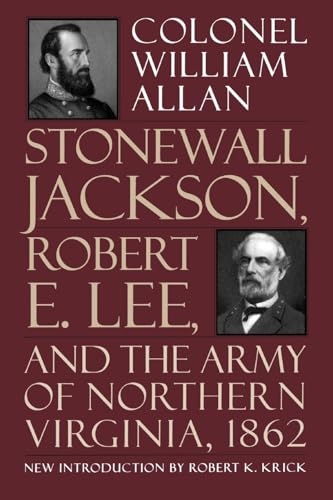
Stonewall Jackson, Robert E. Lee, And The Army Of Northern Virginia, 1862
Anbieter: Wonder Book, Frederick, MD, USA
Verkäuferbewertung 5 von 5 Sternen

Zustand: Good. Good condition. A copy that has been read but remains intact. May contain markings such as bookplates, stamps, limited notes and highlighting, or a few light stains.
-
Stonewall Jackson, Robert E. Lee, And The Army Of Northern Virginia, 1862
Anbieter: Wonder Book, Frederick, MD, USA
Verkäuferbewertung 5 von 5 Sternen
Zustand: Very Good. Very Good condition. New Introduction edition. A copy that may have a few cosmetic defects. May also contain light spine creasing or a few markings such as an owner's name, short gifter's inscription or light stamp.
-

Euripides: "Medea" (Duckworth Companions to Greek & Roman Tragedy)
Anbieter: WeBuyBooks, Rossendale, LANCS, Vereinigtes Königreich
Verkäuferbewertung 5 von 5 Sternen
EUR 1,59
EUR 5,58 Versand
Versand von Vereinigtes Königreich nach USAAnzahl: 1 verfügbar
In den WarenkorbZustand: Like New. Most items will be dispatched the same or the next working day. An apparently unread copy in perfect condition. Dust cover is intact with no nicks or tears. Spine has no signs of creasing. Pages are clean and not marred by notes or folds of any kind.
-

Fact File (Collins Gem)
Anbieter: WorldofBooks, Goring-By-Sea, WS, Vereinigtes Königreich
Verkäuferbewertung 5 von 5 Sternen
EUR 1,07
EUR 6,44 Versand
Versand von Vereinigtes Königreich nach USAAnzahl: 1 verfügbar
In den WarenkorbPaperback. Zustand: Good. The book has been read but remains in clean condition. All pages are intact and the cover is intact. Some minor wear to the spine.
-

Stonewall Jacksons Valley Campaign
Anbieter: ThriftBooks-Atlanta, AUSTELL, GA, USA
Verkäuferbewertung 5 von 5 Sternen
Hardcover. Zustand: Very Good. No Jacket. May have limited writing in cover pages. Pages are unmarked. ~ ThriftBooks: Read More, Spend Less.
-
Stonewall Jacksons Valley Campaign
Anbieter: ThriftBooks-Atlanta, AUSTELL, GA, USA
Verkäuferbewertung 5 von 5 Sternen
Hardcover. Zustand: Fair. No Jacket. Readable copy. Pages may have considerable notes/highlighting. ~ ThriftBooks: Read More, Spend Less.
-

Euripides: "Medea" (Duckworth Companions to Greek & Roman Tragedy)
Sprache: Englisch
Verlag: Gerald Duckworth & Co Ltd., 2002
ISBN 10: 071563187X ISBN 13: 9780715631874
Anbieter: WorldofBooks, Goring-By-Sea, WS, Vereinigtes Königreich
Verkäuferbewertung 5 von 5 Sternen
EUR 1,43
EUR 6,44 Versand
Versand von Vereinigtes Königreich nach USAAnzahl: 3 verfügbar
In den WarenkorbPaperback. Zustand: Very Good. The book has been read, but is in excellent condition. Pages are intact and not marred by notes or highlighting. The spine remains undamaged.
-
The Battle-fields Of Virginia. Chancellorsville: Embracing The Operations Of The Army Of Northern Virginia, From The First Battle Of Fredericksburg To The Death Of Lieutenant-general Jackson.
Verlag: D. Van Nostrand, NY, 1865
Anbieter: poor man's rare books (mrbooks) IOBA NJB, Vineland, NJ, USA
Verbandsmitglied: IOBA
Verkäuferbewertung 4 von 5 Sternen

Erstausgabe
Zustand: Very Good with no dust jacket. First Edition. 8VO; 152 pages; Jedediah Hotchkiss served as a staff officer to Confederate general Thomas J. "Stonewall" Jackson during the American Civil War (18611865). A New York native, Hotchkiss opened a school in 1859 in Augusta County. His specialty, however, was mapmaking, and his topographical skills proved to be crucial to Jackson's success during his famous Shenandoah Valley Campaign of 1862. Thanks to Hotchkiss's maps, Jackson always had ample knowledge of the geographic setting within which he was operating and a good appreciation of the terrain he would put to use against the enemy. Five large folding maps bound in back. Green cloth with blind-stamped rules on the boards and titles stamped in gilt on the front board. Brown endpapers. Scraped remains of book plate on insides of front board. Exceedingly scarce. Hotchkiss's maps were originally commissioned by General Lee shortly after the retreat from the battlefield. A major battle fought between April 30 May 6, 1863 in Spottsylvania Virginia. Joseph Hooker vs Robert E Lee. 30,000 wounded and losses. Bewtween 2 major armies. It was second bloodiest battleof the civil war. Hooker had approximately 70,000 men concentrated in and around Chancellorsville. Owner's name has been clipped off bottom of title page- see photo. All 5 of the large fold-out maps are present and in suprisingly nice condition. Full length portrait frontis of Sonewall Jackson. Hinges are sound and binding is solid.
-
![Bild des Verkäufers für [Sir Francis Chantrey, sculptor, and his secretary Allan Cunningham, poet.] Manuscript Letter, written and signed by Cunningham on behalf of Chantrey, to William Tindal, regarding a monument to Colonel Page, with letter from Tindal to Mrs Page. zum Verkauf von Richard M. Ford Ltd](https://pictures.abebooks.com/inventory/md/md31805133557.jpg)
[Sir Francis Chantrey, sculptor, and his secretary Allan Cunningham, poet.] Manuscript Letter, written and signed by Cunningham on behalf of Chantrey, to William Tindal, regarding a monument to Colonel Page, with letter from Tindal to Mrs Page.
Verlag: Cunningham signing as Chantrey to Tindal: 'Belgrave Place London 7 January '. Tindal to Mrs Page 'Temple 7 Jany 1835', 1836
Anbieter: Richard M. Ford Ltd, London, Vereinigtes Königreich
Verkäuferbewertung 5 von 5 Sternen
Manuskript / Papierantiquität
EUR 414,54
EUR 5,17 Versand
Versand von Vereinigtes Königreich nach USAAnzahl: 1 verfügbar
In den WarenkorbAn excellent document, providing an invaluable view of the practicalities of commissioning and executing public monuments in the Georgian period. See Chantrey's entry in the Oxford DNB, and Cunningham's, which states: 'In 1814 he was engaged by Chantrey as superintendent of his establishment, and gave up writing for newspapers. He lived afterwards at 27 Lower Belgrave Place, Pimlico. He acted as Chantrey's secretary, conducted his correspondence, represented him during his absence, and occasionally offered artistic assistance. He became a favourite of Chantrey's sitters and visitors. This employment lasted until Chantrey's death in 1841 when Cunningham was left an annuity of £100.' Both letters are on the same 4to bifolium, with Cunningham's letter (signing as Chantrey) to Tindal covering the recto of the first leaf, and Tindal's letter to Mrs Page covering the recto of the second leaf and continuing to the reverse, which also carries the address to 'Mrs. Page / Speen / Newbury', and a red wax seal and postmark. ONE: Cunningham (signing as 'F Chantrey') to Tindal, 7 January 1836. Cunningham's hand is distinctive, and there is no question that he has written the letter of nineteen lines, addressed to '- Tindal Esqr.' The first paragraph reads: 'Mr. Cunningham having informed me of the particulars respecting the designs for the monument to Colonel Page I beg to inform you that about forty guineas would be a fair price to pay for any one of them executed in the usual way adopted by marble masons, viz: out of slabs of an inch or an inch and quarter thick and composed of many pieces joined together with cramps of copper. But if the whole be cut out of one entire block of marble about six inches thick and of good quality the cost will be from one hundred to one hundred and twenty pounds. Both these calculations are exclusive of the Inscription which is very long and will be paid for at the rate of one pound to a hundred letters.' The second paragraph is slightly shorter, with the suggestion that the matter be placed 'in the hands of my neighbour Mr. Theakstone of 4 Lower Belgrave Place whom I constantly employ as my best carver'. TWO: 'Wm. Tindal' to 'Mrs Page'. Thirty-eight lines. He begins by reporting that 'Mr Crosby' has seen Theakstone in Chantrey's studio, 'at work there on a statue of Bishop Heber - You may conclude therefore that he is an excellent workman'. He explains that if Theakstone is employed, Chantrey will continue to superintend the project, though Chantrey 'means you to understand that he does not like putting his own name to anything but proper sculpture'. He proceeds to discuss the 'practical point of execution', from whether to use grey or black marble, to the construction of the base.


