
Gesamtpreis (1 Artikel Artikel):
Versandziel:

chennells roger (17 Ergebnisse)
Direkt zu den wichtigsten Suchergebnissen
Suchfilter
Produktart
- Alle Product Types
- Bücher (17)
- Magazine & Zeitschriften (Keine weiteren Ergebnisse entsprechen dieser Verfeinerung)
- Comics (Keine weiteren Ergebnisse entsprechen dieser Verfeinerung)
- Noten (Keine weiteren Ergebnisse entsprechen dieser Verfeinerung)
- Kunst, Grafik & Poster (Keine weiteren Ergebnisse entsprechen dieser Verfeinerung)
- Fotografien (Keine weiteren Ergebnisse entsprechen dieser Verfeinerung)
- Karten (Keine weiteren Ergebnisse entsprechen dieser Verfeinerung)
- Manuskripte & Papierantiquitäten (Keine weiteren Ergebnisse entsprechen dieser Verfeinerung)
Zustand Mehr dazu
- Neu (12)
- Wie Neu, Sehr Gut oder Gut Bis Sehr Gut (1)
- Gut oder Befriedigend (2)
- Ausreichend oder Schlecht (Keine weiteren Ergebnisse entsprechen dieser Verfeinerung)
- Wie beschrieben (2)
Einband
Weitere Eigenschaften
- Erstausgabe (Keine weiteren Ergebnisse entsprechen dieser Verfeinerung)
- Signiert (Keine weiteren Ergebnisse entsprechen dieser Verfeinerung)
- Schutzumschlag (Keine weiteren Ergebnisse entsprechen dieser Verfeinerung)
- Angebotsfoto (7)
Sprache (1)
Gratisversand
- Kostenloser Versand nach USA (Keine weiteren Ergebnisse entsprechen dieser Verfeinerung)
Land des Verkäufers
Verkäuferbewertung
-

Equitable Research Partnerships: A Global Code of Conduct to Counter Ethics Dumping (SpringerBriefs in Research and Innovation Governance)
Buch 5 von 7: SpringerBriefs in Research and Innovation GovernanceAnbieter: AwesomeBooks, Wallingford, Vereinigtes Königreich
Verkäuferbewertung 5 von 5 Sternen

EUR 10,19
EUR 5,73 Versand
Versand von Vereinigtes Königreich nach USAAnzahl: 1 verfügbar
In den Warenkorbpaperback. Zustand: Very Good. Equitable Research Partnerships: A Global Code of Conduct to Counter Ethics Dumping (SpringerBriefs in Research and Innovation Governance) This book is in very good condition and will be shipped within 24 hours of ordering. The cover may have some limited signs of wear but the pages are clean, intact and the spine remains undamaged. This book has clearly been well maintained and looked after thus far. Money back guarantee if you are not satisfied. See all our books here, order more than 1 book and get discounted shipping. .
-
Equitable Research Partnerships: A Global Code of Conduct to Counter Ethics Dumping (SpringerBriefs in Research and Innovation Governance)
Buch 5 von 7: SpringerBriefs in Research and Innovation GovernanceAnbieter: Bahamut Media, Reading, Vereinigtes Königreich
Verkäuferbewertung 4 von 5 Sternen

EUR 10,19
EUR 8,01 Versand
Versand von Vereinigtes Königreich nach USAAnzahl: 1 verfügbar
In den Warenkorbpaperback. Zustand: Very Good. Shipped within 24 hours from our UK warehouse. Clean, undamaged book with no damage to pages and minimal wear to the cover. Spine still tight, in very good condition. Remember if you are not happy, you are covered by our 100% money back guarantee.
-

Equitable Access to Human Biological Resources in Developing Countries. Benefit Sharing Without Undue Inducement.
Anbieter: Universitätsbuchhandlung Herta Hold GmbH, Berlin, Deutschland
Verbandsmitglied: GIAQ ILAB VDA
Verkäuferbewertung 5 von 5 Sternen
XIX, 197 p. Hardcover. Versand aus Deutschland / We dispatch from Germany via Air Mail. Einband bestoßen, daher Mängelexemplar gestempelt, sonst sehr guter Zustand. Imperfect copy due to slightly bumped cover, apart from this in very good condition. Stamped. Sprache: Englisch.
-
Equitable Research Partnerships: A Global Code of Conduct to Counter Ethics Dumping
Buch 5 von 7: SpringerBriefs in Research and Innovation GovernanceAnbieter: Revaluation Books, Exeter, Vereinigtes Königreich
Verkäuferbewertung 5 von 5 Sternen
EUR 35,10
EUR 11,48 Versand
Versand von Vereinigtes Königreich nach USAAnzahl: 2 verfügbar
In den WarenkorbPaperback. Zustand: Brand New. 122 pages. 9.25x6.10x0.39 inches. In Stock.
-

Vulnerability Revisited: Leaving No One Behind in Research
Anbieter: Revaluation Books, Exeter, Vereinigtes Königreich
Verkäuferbewertung 5 von 5 Sternen
EUR 46,39
EUR 11,48 Versand
Versand von Vereinigtes Königreich nach USAAnzahl: 2 verfügbar
In den WarenkorbPaperback. Zustand: Brand New. 164 pages. 9.25x6.10x9.21 inches. In Stock.
-

EUR 39,60
EUR 48,99 Versand
Versand von Deutschland nach USAAnzahl: Mehr als 20 verfügbar
In den WarenkorbZustand: New.
-

Indigenous Peoples, Consent and Benefit Sharing:: Lessons from the San-Hoodia Case
Anbieter: Revaluation Books, Exeter, Vereinigtes Königreich
Verkäuferbewertung 5 von 5 Sternen
EUR 85,99
EUR 14,35 Versand
Versand von Vereinigtes Königreich nach USAAnzahl: 2 verfügbar
In den WarenkorbPaperback. Zustand: Brand New. 1st edition. 363 pages. 9.00x6.00x0.75 inches. In Stock.
-
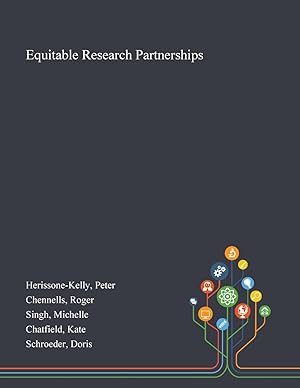
Equitable Research Partnerships
Sprache: Englisch
Verlag: Saint Philip Street Press, 2020
ISBN 10: 1013270886 ISBN 13: 9781013270888
EUR 51,72
EUR 48,99 Versand
Versand von Deutschland nach USAAnzahl: Mehr als 20 verfügbar
In den WarenkorbZustand: New. KlappentextrnrnThis open access book offers insights into the development of the ground-breaking Global Code of Conduct for Research in Resource-Poor Settings (GCC) and the San Code of Research Ethics. Using a new, intuitive moral framework pred.
-

Equitable Research Partnerships
Sprache: Englisch
Verlag: Saint Philip Street Press, 2020
ISBN 10: 1013270894 ISBN 13: 9781013270895
EUR 57,59
EUR 48,99 Versand
Versand von Deutschland nach USAAnzahl: Mehr als 20 verfügbar
In den WarenkorbZustand: New. KlappentextrnrnThis open access book offers insights into the development of the ground-breaking Global Code of Conduct for Research in Resource-Poor Settings (GCC) and the San Code of Research Ethics. Using a new, intuitive moral framework pred.
-

Indigenous Peoples, Consent and Benefit Sharing : Lessons from the San-Hoodia Case
Sprache: Englisch
Verlag: Springer Netherlands, Springer Netherlands, 2009
ISBN 10: 9048131227 ISBN 13: 9789048131228
Anbieter: AHA-BUCH GmbH, Einbeck, Deutschland
Verkäuferbewertung 5 von 5 Sternen
Taschenbuch. Zustand: Neu. Druck auf Anfrage Neuware - Printed after ordering - Indigenous Peoples, Consent and Benefit Sharing is the first in-depth account of the Hoodia bioprospecting case and use of San traditional knowledge, placing it in the global context of indigenous peoples' rights, consent and benefit-sharing. It is unique as the first interdisciplinary analysis of consent and benefit sharing in which philosophers apply their minds to questions of justice in the Convention on Biological Diversity (CBD), lawyers interrogate the use of intellectual property rights to protect traditional knowledge, environmental scientists analyse implications for national policies, anthropologists grapple with the commodification of knowledge and, uniquely, case experts from Asia, Australia and North America bring their collective expertise and experiences to bear on the San-Hoodia case.
-
Equitable Access to Human Biological Resources in Developing Countries : Benefit Sharing Without Undue Inducement
Sprache: Englisch
Verlag: Springer International Publishing, 2015
ISBN 10: 331919724X ISBN 13: 9783319197241
Zustand: Sehr gut. Zustand: Sehr gut | Sprache: Englisch | Produktart: Bücher | The main question explored by the book is: How can cross-border access to human genetic resources, such as blood or DNA samples, be governed in such a way as to achieve equity for vulnerable populations in developing countries? The book situates the field of genomic and genetic research within global health and research frameworks, describing the concerns that have been raised about the potential unfairness in exchanges during recent decades. Access to and sharing in the benefits of human biological resources are aspects not regulated by any international legal framework such as the Convention on Biological Diversity, which applies only to the exchange of plants, animals and microorganisms, as well as to associated traditional knowledge. Examples of genetic research perceived as exploitative are provided in order to illustrate the legal vacuum concerning the global governance of human genetic resources. The main conclusions drawn from the legal and ethical analysis are: ¿ Benefit sharing is crucial in order to avoid the exploitation of developing countries in human genetic research. ¿ With functioning research ethics committees, undue inducement is less of a concern in genetic research than in other areas of medical research (e.g. clinical trials). ¿ Concerns remain over research involving indigenous populations; accordingly, recommendations are provided. In drawing these conclusions, the book addresses in detail a highly pressing topic in global bioethics and international law. In this regard, it combines bioethical arguments with jurisprudence, in particular with reference to thelaw of equity and the legal concepts of duress (coercion), unconscionable dealing, and undue inducement.
-
Equitable Access to Human Biological Resources in Developing Countries : Benefit Sharing Without Undue Inducement
Sprache: Englisch
Verlag: Springer International Publishing, 2015
ISBN 10: 331919724X ISBN 13: 9783319197241
Zustand: Hervorragend. Zustand: Hervorragend | Sprache: Englisch | Produktart: Bücher | The main question explored by the book is: How can cross-border access to human genetic resources, such as blood or DNA samples, be governed in such a way as to achieve equity for vulnerable populations in developing countries? The book situates the field of genomic and genetic research within global health and research frameworks, describing the concerns that have been raised about the potential unfairness in exchanges during recent decades. Access to and sharing in the benefits of human biological resources are aspects not regulated by any international legal framework such as the Convention on Biological Diversity, which applies only to the exchange of plants, animals and microorganisms, as well as to associated traditional knowledge. Examples of genetic research perceived as exploitative are provided in order to illustrate the legal vacuum concerning the global governance of human genetic resources. The main conclusions drawn from the legal and ethical analysis are: ¿ Benefit sharing is crucial in order to avoid the exploitation of developing countries in human genetic research. ¿ With functioning research ethics committees, undue inducement is less of a concern in genetic research than in other areas of medical research (e.g. clinical trials). ¿ Concerns remain over research involving indigenous populations; accordingly, recommendations are provided. In drawing these conclusions, the book addresses in detail a highly pressing topic in global bioethics and international law. In this regard, it combines bioethical arguments with jurisprudence, in particular with reference to thelaw of equity and the legal concepts of duress (coercion), unconscionable dealing, and undue inducement.
-
Equitable Access to Human Biological Resources in Developing Countries: Benefit Sharing Without Undue Inducement
Anbieter: Revaluation Books, Exeter, Vereinigtes Königreich
Verkäuferbewertung 5 von 5 Sternen
EUR 150,95
EUR 11,48 Versand
Versand von Vereinigtes Königreich nach USAAnzahl: 2 verfügbar
In den WarenkorbHardcover. Zustand: Brand New. 220 pages. 9.25x6.25x0.75 inches. In Stock.
-

Equitable Access to Human Biological Resources in Developing Countries
Sprache: Englisch
Verlag: Springer International Publishing, Springer International Publishing Jul 2015, 2015
ISBN 10: 331919724X ISBN 13: 9783319197241
Anbieter: buchversandmimpf2000, Emtmannsberg, BAYE, Deutschland
Verkäuferbewertung 5 von 5 Sternen
Buch. Zustand: Neu. Neuware -The main question explored by the book is: How can cross-border access to human genetic resources, such as blood or DNA samples, be governed in such a way as to achieve equity for vulnerable populations in developing countries The book situates the field of genomic and genetic research within global health and research frameworks, describing the concerns that have been raised about the potential unfairness in exchanges during recent decades. Access to and sharing in the benefits of human biological resources are aspects not regulated by any international legal framework such as the Convention on Biological Diversity, which applies only to the exchange of plants, animals and microorganisms, as well as to associated traditional knowledge. Examples of genetic research perceived as exploitative are provided in order to illustrate the legal vacuum concerning the global governance of human genetic resources. The main conclusions drawn from the legal and ethical analysis are:¿ Benefit sharing is crucial in order to avoid the exploitation of developing countries in human genetic research.¿ With functioning research ethics committees, undue inducement is less of a concern in genetic research than in other areas of medical research (e.g. clinical trials).¿ Concerns remain over research involving indigenous populations; accordingly, recommendations are provided.In drawing these conclusions, the book addresses in detail a highly pressing topic in global bioethics and international law. In this regard, it combines bioethical arguments with jurisprudence, in particular with reference to thelaw of equity and the legal concepts of duress (coercion), unconscionable dealing, and undue inducement.Springer Verlag GmbH, Tiergartenstr. 17, 69121 Heidelberg 220 pp. Englisch.
-
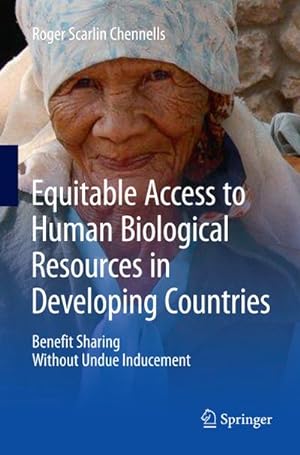
Equitable Access to Human Biological Resources in Developing Countries : Benefit Sharing Without Undue Inducement
Sprache: Englisch
Verlag: Springer International Publishing, 2016
ISBN 10: 3319369741 ISBN 13: 9783319369747
Anbieter: AHA-BUCH GmbH, Einbeck, Deutschland
Verkäuferbewertung 5 von 5 Sternen
Taschenbuch. Zustand: Neu. Druck auf Anfrage Neuware - Printed after ordering - The main question explored by the book is: How can cross-border access to human genetic resources, such as blood or DNA samples, be governed in such a way as to achieve equity for vulnerable populations in developing countries The book situates the field of genomic and genetic research within global health and research frameworks, describing the concerns that have been raised about the potential unfairness in exchanges during recent decades. Access to and sharing in the benefits of human biological resources are aspects not regulated by any international legal framework such as the Convention on Biological Diversity, which applies only to the exchange of plants, animals and microorganisms, as well as to associated traditional knowledge. Examples of genetic research perceived as exploitative are provided in order to illustrate the legal vacuum concerning the global governance of human genetic resources. The main conclusions drawn from the legal and ethical analysis are:- Benefit sharing is crucial in order to avoid the exploitation of developing countries in human genetic research.- With functioning research ethics committees, undue inducement is less of a concern in genetic research than in other areas of medical research (e.g. clinical trials).- Concerns remain over research involving indigenous populations; accordingly, recommendations are provided. In drawing these conclusions, the book addresses in detail a highly pressing topic in global bioethics and international law. In this regard, it combines bioethical arguments with jurisprudence, in particular with reference to thelaw of equity and the legal concepts of duress (coercion), unconscionable dealing, and undue inducement.
-

Equitable Access to Human Biological Resources in Developing Countries : Benefit Sharing Without Undue Inducement
Sprache: Englisch
Verlag: Springer International Publishing, 2015
ISBN 10: 331919724X ISBN 13: 9783319197241
Anbieter: AHA-BUCH GmbH, Einbeck, Deutschland
Verkäuferbewertung 5 von 5 Sternen
Buch. Zustand: Neu. Druck auf Anfrage Neuware - Printed after ordering - The main question explored by the book is: How can cross-border access to human genetic resources, such as blood or DNA samples, be governed in such a way as to achieve equity for vulnerable populations in developing countries The book situates the field of genomic and genetic research within global health and research frameworks, describing the concerns that have been raised about the potential unfairness in exchanges during recent decades. Access to and sharing in the benefits of human biological resources are aspects not regulated by any international legal framework such as the Convention on Biological Diversity, which applies only to the exchange of plants, animals and microorganisms, as well as to associated traditional knowledge. Examples of genetic research perceived as exploitative are provided in order to illustrate the legal vacuum concerning the global governance of human genetic resources. The main conclusions drawn from the legal and ethical analysis are:- Benefit sharing is crucial in order to avoid the exploitation of developing countries in human genetic research.- With functioning research ethics committees, undue inducement is less of a concern in genetic research than in other areas of medical research (e.g. clinical trials).- Concerns remain over research involving indigenous populations; accordingly, recommendations are provided. In drawing these conclusions, the book addresses in detail a highly pressing topic in global bioethics and international law. In this regard, it combines bioethical arguments with jurisprudence, in particular with reference to thelaw of equity and the legal concepts of duress (coercion), unconscionable dealing, and undue inducement.
-

Equitable Access to Human Biological Resources in Developing Countries: Benefit Sharing Without Undue Inducement
Anbieter: Revaluation Books, Exeter, Vereinigtes Königreich
Verkäuferbewertung 5 von 5 Sternen
EUR 148,97
EUR 28,70 Versand
Versand von Vereinigtes Königreich nach USAAnzahl: 2 verfügbar
In den WarenkorbPaperback. Zustand: Brand New. reprint edition. 216 pages. 9.25x6.10x0.50 inches. In Stock.

