
Gesamtpreis (1 Artikel Artikel):
Versandziel:

brodskii iosif (29 Ergebnisse)
Direkt zu den wichtigsten Suchergebnissen
Suchfilter
Produktart
- Alle Product Types
- Bücher (29)
- Magazine & Zeitschriften (Keine weiteren Ergebnisse entsprechen dieser Verfeinerung)
- Comics (Keine weiteren Ergebnisse entsprechen dieser Verfeinerung)
- Noten (Keine weiteren Ergebnisse entsprechen dieser Verfeinerung)
- Kunst, Grafik & Poster (Keine weiteren Ergebnisse entsprechen dieser Verfeinerung)
- Fotografien (Keine weiteren Ergebnisse entsprechen dieser Verfeinerung)
- Karten (Keine weiteren Ergebnisse entsprechen dieser Verfeinerung)
- Manuskripte & Papierantiquitäten (Keine weiteren Ergebnisse entsprechen dieser Verfeinerung)
Zustand Mehr dazu
- Neu (4)
- Wie Neu, Sehr Gut oder Gut Bis Sehr Gut (5)
- Gut oder Befriedigend (13)
- Ausreichend oder Schlecht (Keine weiteren Ergebnisse entsprechen dieser Verfeinerung)
- Wie beschrieben (7)
Einband
Weitere Eigenschaften
- Erstausgabe (2)
- Signiert (1)
- Schutzumschlag (Keine weiteren Ergebnisse entsprechen dieser Verfeinerung)
- Angebotsfoto (11)
Sprache (7)
Gratisversand
Land des Verkäufers
Verkäuferbewertung
-

To Urania: Selected Poems 1965-1985: Selected Poems, 1965-85 (Penguin International Poets S.)
Anbieter: WorldofBooks, Goring-By-Sea, WS, Vereinigtes Königreich
Verkäuferbewertung 5 von 5 Sternen

EUR 1,41
EUR 6,37 für den Versand von Vereinigtes Königreich nach USAAnzahl: 1 verfügbar
In den WarenkorbPaperback. Zustand: Very Good. The book has been read, but is in excellent condition. Pages are intact and not marred by notes or highlighting. The spine remains undamaged.
-

An Age Ago: A Selection of Nineteenth-Century Russian Poetry (Penguin poets)
Anbieter: AwesomeBooks, Wallingford, Vereinigtes Königreich
Verkäuferbewertung 5 von 5 Sternen
EUR 11,70
EUR 5,68 für den Versand von Vereinigtes Königreich nach USAAnzahl: 2 verfügbar
In den WarenkorbZustand: Very Good. This book is in very good condition and will be shipped within 24 hours of ordering. The cover may have some limited signs of wear but the pages are clean, intact and the spine remains undamaged. This book has clearly been well maintained and looked after thus far. Money back guarantee if you are not satisfied. See all our books here, order more than 1 book and get discounted shipping. .
-
To Urania: Selected Poems 1965-1985: Selected Poems, 1965-85 (Penguin International Poets)
Anbieter: AwesomeBooks, Wallingford, Vereinigtes Königreich
Verkäuferbewertung 5 von 5 Sternen
EUR 11,70
EUR 5,68 für den Versand von Vereinigtes Königreich nach USAAnzahl: 2 verfügbar
In den WarenkorbZustand: Very Good. This book is in very good condition and will be shipped within 24 hours of ordering. The cover may have some limited signs of wear but the pages are clean, intact and the spine remains undamaged. This book has clearly been well maintained and looked after thus far. Money back guarantee if you are not satisfied. See all our books here, order more than 1 book and get discounted shipping. .
-
To Urania: Selected Poems, 1965-85 (Penguin International Poets)
Anbieter: Kennys Bookstore, Olney, MD, USA
Verkäuferbewertung 5 von 5 Sternen
Zustand: Very Good. 1988. Paperback. 8vo. good copy in original wrappers.Poetry. . . . . Books ship from the US and Ireland.
-
An Age Ago: A Selection of Nineteenth-Century Russian Poetry (Penguin poets)
Anbieter: Bahamut Media, Reading, Vereinigtes Königreich
Verkäuferbewertung 5 von 5 Sternen
EUR 11,70
EUR 7,94 für den Versand von Vereinigtes Königreich nach USAAnzahl: 2 verfügbar
In den WarenkorbZustand: Very Good. Shipped within 24 hours from our UK warehouse. Clean, undamaged book with no damage to pages and minimal wear to the cover. Spine still tight, in very good condition. Remember if you are not happy, you are covered by our 100% money back guarantee.
-
To Urania: Selected Poems 1965-1985: Selected Poems, 1965-85 (Penguin International Poets)
Anbieter: Bahamut Media, Reading, Vereinigtes Königreich
Verkäuferbewertung 5 von 5 Sternen
EUR 11,70
EUR 7,94 für den Versand von Vereinigtes Königreich nach USAAnzahl: 2 verfügbar
In den WarenkorbZustand: Very Good. Shipped within 24 hours from our UK warehouse. Clean, undamaged book with no damage to pages and minimal wear to the cover. Spine still tight, in very good condition. Remember if you are not happy, you are covered by our 100% money back guarantee.
-
![Beispielbild für A Part of Speech [Oxford Poets]. zum Verkauf von WorldofBooks](https://pictures.abebooks.com/isbn/9780192119391-de-300.jpg)
A Part of Speech [Oxford Poets].
Verlag: Oxford University Press, United Kingdom, Oxford, 1980
ISBN 10: 0192119397 ISBN 13: 9780192119391
Sprache: Russisch
Anbieter: WorldofBooks, Goring-By-Sea, WS, Vereinigtes Königreich
Verkäuferbewertung 5 von 5 Sternen
EUR 2,81
EUR 6,37 für den Versand von Vereinigtes Königreich nach USAAnzahl: 4 verfügbar
In den WarenkorbPaperback. Zustand: Very Good. Winner of the 1987 Nobel Prize for Literature. Joseph Brodsky's second major collection contains poems from the years 1965 to 1978, translated from the Russian. Despite isolation from his native Russian culture and language since becoming an involuntary exile in 1972, Brodsky has inherited the tradition of Mandelstam, Akhmatova, and Pasternak. Restrained, sometimes humorous, sometimes brilliantly epigrammatic, his poems possess the serious, unfrivolous wit of his metaphysical forebears. The book has been read, but is in excellent condition. Pages are intact and not marred by notes or highlighting. The spine remains undamaged.
-
To Urania: Selected Poems, 1965-85 (Penguin International Poets)
Anbieter: Kennys Bookshop and Art Galleries Ltd., Galway, GY, Irland
Verkäuferbewertung 5 von 5 Sternen
Zustand: Very Good. 1988. Paperback. 8vo. good copy in original wrappers.Poetry. . . . .
-
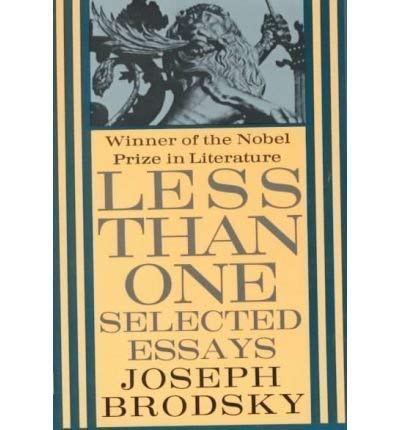
Less Than One: Selected Essays (King Penguin)
Anbieter: AproposBooks&Comics, London, Vereinigtes Königreich
Verkäuferbewertung 4 von 5 Sternen

EUR 6,62
EUR 17,01 für den Versand von Vereinigtes Königreich nach USAAnzahl: 1 verfügbar
In den Warenkorb -

Marbles: A Play in Three Acts (Penguin International Writers)
Verlag: Penguin Books Ltd, London, 1990
ISBN 10: 0140122273 ISBN 13: 9780140122275
Sprache: Englisch
Anbieter: RIVERLEE BOOKS, Waltham Cross, HERTS, Vereinigtes Königreich
Verkäuferbewertung 5 von 5 Sternen
EUR 8,20
EUR 17,70 für den Versand von Vereinigtes Königreich nach USAAnzahl: 1 verfügbar
In den WarenkorbSoft cover. Zustand: Good. Paperback in good condition. 96 pages.
-

So forth : poems
Erstausgabe
First Edition. Fine cloth copy in a near-fine, very slightly edge-nicked and dust-dulled dust-wrapper, now mylar-sleeved. Remains particularly well-preserved overall; tight, bright, clean and strong. Physical description: 131p. ; 24cm. Subjects: English poetry -- 20th century. 1 Kg.
-
Hardcover. Zustand: As New. Leichte Abnutzungen. V nastoyashchem izdanii naryadu s horosho izvestnymi perevodami predstavleno neskolko poeticheskih perevodov Brodskogo, nikogda ranee ne publikovavshihsya.
-
To Urania: Selected Poems, 1965-85 (Penguin International Poets)
Anbieter: Mooney's bookstore, Den Helder, Niederlande
Verkäuferbewertung 4 von 5 Sternen
Zustand: Very good.
-
Hardcover. Zustand: As New. Leichte Abnutzungen. Pro takie knigi, kak eta, obychno govoryat: "Nachnesh chitat i ne otorveshsya do samoi poslednei stranicy.".
-

Zustand: New. Idioma/Language: Inglés. «Oso lasai zegoen dena. Noizbehinka ontzi urri argiztatu gutxi batzuk igarotzen ziren, ontziek beren helizeekin asaldatzen zuten CINZANO neoi handi baten isla, ur azaleko olio geruza beltzean berriro finkatzen saiatzen zena. Hori lortu baino askoz lehenago isiltasuna itzuliko zen». Joseph Brodsky, Ur-marka «Egia da Veneziarekin zerikusia zuten liburu asko irakurriak nituela, baina Brodskyrena bestelakoa zen, oso bestelakoa; ez, noski, gida liburu bat, ez turistak bisitatzen ez dituzten leku bereziak bisitatzea gomendatzen duen horietakoa, ezta bidaia liburua ere. Zalantza egiten dut Venezia bera den liburu honen gai nagusia; Venezia aitzakiatzat harturik, Brodsky, denborari buruz eta urari buruz (sinonimoak berarentzat, azken buruan) hausnarketan aritzean, saiatzen da azaltzen nola denbora eta ura gauzatu diren Venezia deituriko leku batean, edo nola Venezian denbora bera ikusgai bilakatu den, begiratu ahal dugun fenomenoa. Denbora aipatzen denean, iragana, oraina eta geroa datoz, bizitza eta heriotza, arbasoek utzitakoa eta gure huskeria, gure ezereza. Agian begirada da liburu honen gai nagusia, Venezia begiaren paradisua baita Brodskyren ustez». Rikardo Arregi Diaz de Heredia, hitzatzean «Poeta Veneziara egindako lehen bidaian, 1972an, idatzitako Laguna izeneko olerkian dagoeneko agertzen dira, garatu gabe, edo senaz iragarrita, ia hogei urte beranduago Ur-markak saiakera honetan jorratuko diren hainbat irudi eta intuizio. Gauza bera gertatzen da 1982ko Veneziar ahapaldiak poema parearekin. Batek irudipena izan dezake hiriak poetarengan utzitako lehen zirrara haiek baieztatu eta haietan sakontzeko saiakerak baino ez direla hurrengo bisita guztiak, bere buruari (edo bere irakurleei) guztiz argitu arte metafora bakoitzaren atzean zer ezkutatzen den». Angel Erro, hitzatzean *** Nota: Los envíos a España peninsular, Baleares y Canarias se realizan a través de mensajería urgente. No aceptamos pedidos con destino a Ceuta y Melilla.
-

Poemas de Navidad
Anbieter: Revaluation Books, Exeter, Vereinigtes Königreich
Verkäuferbewertung 5 von 5 Sternen
EUR 23,17
EUR 14,22 für den Versand von Vereinigtes Königreich nach USAAnzahl: 1 verfügbar
In den WarenkorbPaperback. Zustand: Brand New. Spanish language. 7.64x4.80x0.39 inches. In Stock.
-
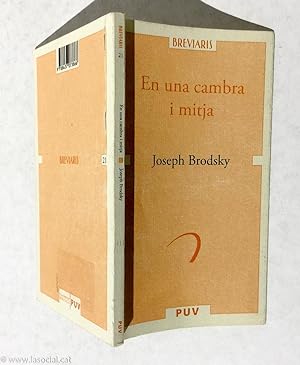
En una cambra i mitja
Verlag: Publicacions de la Universitat de València, 2013
ISBN 10: 8437073863 ISBN 13: 9788437073866
Sprache: Katalanisch
Anbieter: La Social. Galería y Libros, Barcelona, B, Spanien
Verkäuferbewertung 5 von 5 Sternen
Tapa Blanda. Zustand: Excelente. Colección "Brevaris" núm. 21. EXCELENTE ejemplar . 105pp + catálogo.
-
Softcover. Zustand: Fine. Leichte Abnutzungen; Farbveranderung durch Alter/Sonne. Kniga prednaznachena dlya shirokogo kurga chitatelei.
-
To Urania: Selected Poems 1965-1985: Selected Poems, 1965-85 (Penguin International Poets S.) Brodskii, Iosif
Anbieter: Hay-on-Wye Booksellers, Hay-on-Wye, HEREF, Vereinigtes Königreich
Verkäuferbewertung 5 von 5 Sternen
EUR 3,52
EUR 73,97 für den Versand von Vereinigtes Königreich nach USAAnzahl: 1 verfügbar
In den WarenkorbZustand: Good. Edgeworn softcover with marks, light scratches & creases. Tanned textblock, darker at the edges with marks. Content is good & clear.
-

Zustand: Nuevo. «Oso lasai zegoen dena. Noizbehinka ontzi urri argiztatu gutxi batzuk igarotzen ziren, ontziek beren helizeekin asaldatzen zuten CINZANO neoi handi baten isla, ur azaleko olio geruza beltzean berriro finkatzen saiatzen zena. Hori lortu baino askoz lehenago isiltasuna itzuliko zen». Joseph Brodsky, Ur-marka «Egia da Veneziarekin zerikusia zuten liburu asko irakurriak nituela, baina Brodskyrena bestelakoa zen, oso bestelakoa; ez, noski, gida liburu bat, ez turistak bisitatzen ez dituzten leku bereziak bisitatzea gomendatzen duen horietakoa, ezta bidaia liburua ere. Zalantza egiten dut Venezia bera den liburu honen gai nagusia; Venezia aitzakiatzat harturik, Brodsky, denborari buruz eta urari buruz (sinonimoak berarentzat, azken buruan) hausnarketan aritzean, saiatzen da azaltzen nola denbora eta ura gauzatu diren Venezia deituriko leku batean, edo nola Venezian denbora bera ikusgai bilakatu den, begiratu ahal dugun fenomenoa. Denbora aipatzen denean, iragana, oraina eta geroa datoz, bizitza eta heriotza, arbasoek utzitakoa eta gure huskeria, gure ezereza. Agian begirada da liburu honen gai nagusia, Venezia begiaren paradisua baita Brodskyren ustez». Rikardo Arregi Diaz de Heredia, hitzatzean «Poeta Veneziara egindako lehen bidaian, 1972an, idatzitako Laguna izeneko olerkian dagoeneko agertzen dira, garatu gabe, edo senaz iragarrita, ia hogei urte beranduago Ur-markak saiakera honetan jorratuko diren hainbat irudi eta intuizio. Gauza bera gertatzen da 1982ko Veneziar ahapaldiak poema parearekin. Batek irudipena izan dezake hiriak poetarengan utzitako lehen zirrara haiek baieztatu eta haietan sakontzeko saiakerak baino ez direla hurrengo bisita guztiak, bere buruari (edo bere irakurleei) guztiz argitu arte metafora bakoitzaren atzean zer ezkutatzen den». Angel Erro, hitzatzean.
-

Menos que uno
Verlag: Ediciones Versal, S.A., Barcelona, 1987
ISBN 10: 8486717132 ISBN 13: 9788486717131
Sprache: Spanisch
Anbieter: Librería Pérez Galdós, Madrid, M, Spanien
Verkäuferbewertung 5 von 5 Sternen
1. ed. edición. tela sobrec. BUEN ESTADO. 224 p. páginas.
-

Zustand: New.
-
A Stop in a Desert
Verlag: [Ardis, Ann Arbor,, 1972
Anbieter: PY Rare Books, London, Vereinigtes Königreich
Verkäuferbewertung 4 von 5 Sternen
Signiert
EUR 1.113,53
EUR 22,76 für den Versand von Vereinigtes Königreich nach USAAnzahl: 1 verfügbar
In den WarenkorbPoetry on the wall - signed by the poet --- A scarce poetical poster, signed by the future Nobel Prize laureate and "the most popular Russian poet of the second half of the 20th century" (Shubinskii, our translation here and ). A very early US production of the poet and apparently Brodsky's first separate work to be printed by "the most important and legendary foreign publisher of Russian literature, the pinnacle of tamizdat history" (Oborin). Written in early 1966, the poem reflects on the destruction of a Greek church in Leningrad to make way for a concert hall marking the 50th anniversary of the October Revolution. Just a few months earlier, Joseph Brodsky (194096) had returned from exile in a labour camp, where he had been sent for "social parasitism." In 1972, he was forced out of his homeland and settled in the US, where, thanks to his close friends Carl and Ellendea Proffer, he became Poet in Residence at the University of Michigan. In 1971, the Proffers founded a small publishing house named "Ardis" in the basement of their Ann Arbor house, publishing banned Russian literature and, in doing so, "completely changed the map of Russian literature" (Oborin). Thanks to Ardis, works excluded from Soviet publishing became accessible to readers in both the West and the USSR. From 1977 onwards, Ardis published the majority of Brodsky's Russian poetry. After Carl Proffer's death in 1984, Brodsky remarked: "What Proffer did for Russian literature is comparable to Gutenberg's invention, for he brought back the printing press. By publishing in Russian and English works that were not destined to appear in print, he saved many Russian writers and poets from oblivion, distortion, neurosis, and despair. Moreover, he has changed the very climate of our literature" (quoted by Voronina). A very early professional collaboration between Brodsky and Ardis, this broadside-poster was apparently published in 1972, as catalogued by Harvard and other libraries. It features a rare translation by Jamie Fuller (b. 1945), previously printed in Ardis's Russian Literature Triquarterly, (#1, Fall 1971), alongside a handful of her other translations of Brodsky. This translation appears to have been published nowhere else. In his detailed biography of Brodsky, Lev Losev refers to a limited edition of 200 copies of Stop in the Desert in Fuller's translation, misdating it to 1973 and mistakenly describing it as a poetry collection; but we have found no trace of such a collection elsewhere. This broadside is indeed limited to 200 copies, most of them hand-numbered and signed by Brodsky this one being no. 200. The broadside was likely produced for Brodsky's public poetry readings both to promote his work and to help raise funds during his first year in the United States. His first public appearance in America took place on 12 September 1972, at Rackham Hall Auditorium, University of Michigan. Later that autumn, he gave readings in New York, at the Donnell Library and the New School. While copies of the broadside are held in several American university collections, very few have appeared on the market in recent decades: we are aware of only two other copies. From the publication of Selected Poems (Penguin Books, London, and Harper & Row, New York, 1973) onwards, English translations of Brodsky's poetry came to be dominated by George Kline, who played an essential role in establishing Brodsky's reputation in the English-speaking world. Kline's translation "Halt in the Desert" appeared in Selected Poems (1973), and earlier in The Living Mirror: Five Young Poets from Leningrad (Victor Gollancz Ltd., London, 1972). Another translationlikely also by Klinetitled "A Stopping Place in the Wasteland" was published in Unicorn Journal in 1968. Provenance: From the estate of Ellendea Proffer (Ellendea Proffer Teasley (b. 1944), co-founder of Ardis publishing house, writer, translator of Russian literature into English, and Brodsky's lifelong friend; by repute). Physical description:Broadside (63 x 37 cm) on this tan paper. Condition:Edges of the lower half minimally chipped, with a few minor holes and thinning parts, light staining along left edge, but still in lovely condition in spite of the fragile paper. Bibliography:Brodskii, Iosif. "Pamiati Karla Proffera". Per. Olga Voronina // Zvezda, n.4, 2005; Losev, Lev. Iosif Brodskii. Opyt literaturnoi biografii. ZhZL, Moskva, Molodaia gvardiia, 2006; Oborin, Lev. "Ardis byl obshchim delom", Polka academy, 2021; Shubinskii, Valerii. "Proshchaniie s normoi", Polka academy, 2020.
-
Stikhotvoreniia i poemy [Verses and Poems]
Verlag: Inter-Language Literary Associates, Washington, D.C.-New York,, 1965
Anbieter: PY Rare Books, London, Vereinigtes Königreich
Verkäuferbewertung 4 von 5 Sternen
Erstausgabe
EUR 879,10
EUR 22,76 für den Versand von Vereinigtes Königreich nach USAAnzahl: 1 verfügbar
In den WarenkorbA Nobel Prize's first book --- First edition of the first book of "the most popular Russian poet of the second half of the 20th century" (Shubinskii, our translation here and elsewhere). A landmark edition that brought him fame in the West. Unable to publish almost any of his works in the USSR, Joseph Brodsky (1940-96) was well known in samizdat circles as one of the most prominent poets of the time; his works were collected and reproduced by admirers of his poetry since 1962. When his notorious trial for "social parasitism" began in February 1964, the compilation of his typewritten works was sent to Moscow to Aleksandr Ginzburg, the creator of the samizdat magazine Syntaksis, and then by Ginzburg abroad to reach Boris Filippov, the emigré writer and director of the Inter-Language Literary Associates publishing house, and Gleb Struve, professor of Russian literature at the University of California at Berkeley, who in 1963 first published Akhmatova's Requiem. In March 1964, Brodsky was sentenced to five years of hard labour. His trial gained international attention and members of both the Russian and international intelligentsia, including Anna Akhmatova and Jean-Paul Sartre, appealed for his liberation. He returned to his native Leningrad in September 1965 to discover that this first collection of his poetry had been published in the US about half a year earlier. Brodsky was disappointed with the collection because its editors included his "juvenilia" works and overlooked many mistakes. It was however "the first book that, as Akhmatova put it, "made" Brodsky's biography, causing the greatest resonance in the literary circles of the Russian emigration. The history of this book, published without the author's knowledge and consent, shows how the tamizdat industry [.] worked in the first half of the 1960s" (Klots). The collection's preface by Struve (under the pseudonym Georgii Stukov) opens with an excerpt from the trial, "the first human rights document of Samizdat, a model for subsequent documentary materials on political processes" (Zubarev), recorded by Frida Vigdorova. The edition unites five poems and sixty verses from 1957-62 (including the 22 early poems that Brodsky did not publish in his later collections) and from 1964, including some written between different hearings in the trial ("S grustiu i nezhnostiu") and two written already in exile ("Kolesnik umer", "Zagadka angelu"). In 1972, Brodsky was forced to leave Russia and moved to the US; in 1987, he received the Nobel Prize for Literature and is now considered the most important Russian poet of the second half of the 20th century. Provenance: Physical description:Octavo (20 x 14 cm). 236 incl. title, [2] pp. t.o.c. Publisher's printed wrappers. Condition:Spine a bit sunned, spine and lower corner of lower wrapper minimally creased, light staining or soiling to wrappers; light marginal staining to the last several leaves, otherwise very fresh. Bibliography:Okhlopkov Debiuty 34; Losev, Lev, Iosif Brodskii. Opyt literaturnoi biografii. ZhZL, Moskva, Molodaia gvardiia, 2006; Shubinskii, Valerii, "Proshchaniie s normoi", Polka academy, 2020; Zubarev D. I., "Iosif Aleksandrovich Brodskii". Mezhdunarodnyi memorial; Klots, Iakov, "Kak izdavali pervuiu knigu Iosifa Brodskogo", Colta, 2015.
-
Vozdushnye Puti [Airways. Almanach. Vols I-V]
Verlag: New York,, 1960
Anbieter: PY Rare Books, London, Vereinigtes Königreich
Verkäuferbewertung 4 von 5 Sternen
EUR 1.758,20
EUR 22,76 für den Versand von Vereinigtes Königreich nach USAAnzahl: 1 verfügbar
In den WarenkorbThe Pantheon of the Silver Age - a complete set --- Scarce complete set of all five issues of this important almanac, which printed, often for the first time, the works of censored Russian authors. As a result, it includes most of the best Russian authors and poets of the 20th century. Contents include especially: - Vol. I: Akhmatova, Poema bez geroia [Poem Without a Hero]: the first publication of Akhmatova's major work - Vol. II: 57 poems by Mandelshtam, and Nabokov, Two Poems - Vol. III: Akhmatova, Nas chetvero ['Us Four', dedicated to Tsvetaeva), Mandelshtam, Tri epigrammy; Four novellas by Babel - Vol. IV: Pasternak, notes for the fantasy 'Poema o blizhnem'; Akhmatova, essay on Mandelshtam; Brodsky, Poems, Mandelshtam, Poems; with portraits plates of Pasternak, Akhmatova, Vsevolod Meyerhold; Stenograph from the first trial of Iosif Brodsky - Vol. V: Tsvetaeva, Perekop, Posmertny Podarok, Autobiography; Brodsky, poems; Nabokov, poems. Provenance: Robert Eden Martin (b. 1940; American lawyer and noted collector of Russian, British and American literature works). Physical description:Five volumes 8vo., complete with portrait plates. All volumes in original wrappers. Condition:Wrappers a bit stained, spine of vol. 3 sunned and rubbed; all volumes with clean pages. Bibliography:
-
A Part of Speech
Verlag: Oxford : Oxford University Press, 1980
ISBN 10: 0192119397 ISBN 13: 9780192119391
Sprache: Russisch
Zustand: very good. Gut/Very good: Buch bzw. Schutzumschlag mit wenigen Gebrauchsspuren an Einband, Schutzumschlag oder Seiten. / Describes a book or dust jacket that does show some signs of wear on either the binding, dust jacket or pages.
-

Zustand: as new. Wie neu/Like new.
-
Konets prekrasnoi epokhi. Stikhotvoreniia 1964-1971 [with] Chast rechi. Stikhotvoreniia 1972-1976 [The End of a Beautiful Era. Poems 1964-1971 [with] Part of Speech. Poems 1972-1976].
Verlag: Ardis, Ann Arbor,, 1977
Anbieter: PY Rare Books, London, Vereinigtes Königreich
Verkäuferbewertung 4 von 5 Sternen
EUR 9.084,04
EUR 22,76 für den Versand von Vereinigtes Königreich nach USAAnzahl: 1 verfügbar
In den WarenkorbNobel-Prize winning poetry pre- and post-emigration - "avec best pozhelaniiami" --- Two first editions, both volumes inscribed by the future Nobel Prize winner to a Russian woman of letters living in Los Angeles and New York, and an important figure of the Russian community in the USA. This is Brodsky's first collaboration with Ardis, "the most important and legendary foreign publisher of Russian literature, the pinnacle of the history of tamizdat" (Oborin, our translation here and elsewhere). By creating Ardis, the American Slavists Carl and Ellendea Proffer "completely changed the map of Russian literature" (Oborin): thanks to them, works that had no place in Soviet publishing houses became available to readers in the West and the USSR. During one of their trips to the Soviet Union in 1969, the Proffers met Nadezhda Mandelshtam who introduced them to Moscow literary circles and to Joseph Brodsky (1940-96), who was to become the major Russian poet of post-war 20th century and winner of the Nobel Prize for Literature in 1987. These two contacts led the Proffers to the Soviet literary underground and enabled them to collect unpublished works by contemporary authors and rare editions of Russian literature from the early 20th century. Two years later, the couple founded a small publishing house, "Ardis", naming it after the estate from Vladimir Nabokov's novel Ada. The office of this private enterprise was located in the basement of the Proffers' house in Ann Arbor, Michigan. "In the best times it had three or four full-time employees, but often it would be the publishers Carl and Ellendea Proffer themselves who were typing, proof-reading (mostly at night), packing and mailing books. This publishing house acquired almost a mythical status as a refuge for uncensored literature among the Russian intelligentsia" (Lev Losev). Ardis published works and translations of the main Russian authors of the 20th century, including Osip Mandelshtam, Mikhail Bulgakov, Anna Akhmatova, Vladimir Nabokov, Velimir Khlebnikov, Andrei Platonov, Sasha Sokolov, Vasilii Aksenov, Sergei Dovlatov among many others. Brodsky became close friends with the Proffers and when he was forced to leave his homeland in 1972, they helped him emigrate to America and secured a place for him at the University of Michigan. Since 1977, the vast majority of Brodsky's Russian poetry had been published by Ardis. After Karl Proffer died of cancer in 1984, Brodsky stressed in his memorial: "What Proffer did for Russian literature is comparable to Gutenberg's invention, for he brought back the printing press. By publishing in Russian and English works that were not destined to appear in print, he saved many Russian writers and poets from oblivion, distortion, neurosis, and despair. Moreover, he has changed the very climate of our literature. Now the writer whose work is rejected or banned is personally freer, because he knows that he can, after all, send his work to Ardis." When preparing his first post-emigration collection of poetry in the US, Brodsky argued with Karl Proffer about the composition of the book: Brodsky wanted an edition of only new (post-1971) poems, while "Proffer did not want to leave out the other high quality poems that had been written since Brodsky's earlier collection A Stop in a Desert [Ostanovka v pustyne] (1970)". One of the editors of the present edition, Lev (Aleksei) Losev (1937-2009), also a Russian poet, literary critic, essayist and the author of one of the main biographies of Brodsky, remembers that as a result of this argument, Ardis decided to publish two collections of poetry simultaneously: in the first, The End of a Beautiful Era Brodsky's poems written before leaving Russia; in the second, Part of Speech [Chast rechi] poems written in the West. Another editor of both works was the writer Vladimir Maramzin (1934-2021). In 1974, he was arrested for compiling a typewritten collection of Brodsky's works in 5 volumes for samizdat; since 1975 he lived in France. Brodsky himself chose the colour and font for both editions; at his request, Ardis placed on the front covers images of winged lions: from the Bankovskii Bridge in Leningrad for The End of a Beautiful Era and the Venetian lion of St Mark for the Part of Speech. The first collection includes Brodsky's famous "Letter to general Z" ["Pismo generalu Z"] (shockingly relevant today) in which he expressed his reaction to the Soviet invasion of Czechoslovakia, the eponymous poem "The End of a Beautiful Era" and the "Speech over Spilled Milk" ["Rech o prolitom moloke"]. The Part of Speech comprises Brodsky's poems from 1972-76 with four major cycles ("Letters to a Roman Friend" ["Pisma rimskomu drugu"], "Twenty Sonnets to Mary Stuart" ["Dvadtsat sonetov k Marii Stuart"], "Mexican Divertissement" ["Meksikanskii divertisment"] and "Part of Speech"). According to Losev, the publication of Part of Speech was particularly important to Brodsky for his "fear of loosing his creative potency outside his mother tongue was not borne out He was proud of the title of the book. The idea of a person's creation, his "part of speech", being greater than man as a biological individual or social unit, was very dear to Brodsky. He gave the same title to his first representative collection of selected poems published in his homeland in 1990." In his review of both works, the literary scholar Henry Gifford wrote: "Our moment is ironically characterised by the fact that perhaps the best poetry currently created in America is written by this Russian" (quote from Losev). Provenance: Iraida Vandelos-Legkaia (1932-2020; manuscript dedication from the author on the upper flyleaves; a Latvian-born Russian poetess and translator of the second wave of emigration, journalist and radio presenter at the "Voice of America" (1963 1987) in Los Angeles and from the 1970s in New York). Physical description:Two volumes 8vo (21.5 x 13.8 cm). End of a Beautiful Era: Flyleaf with publisher's.
-

Novye stansy k Avguste. Stikhi k M.B., 1962-1982 [New stanzas to Augusta. Poems to M.B., 1962-1982]. [with:] Dvadtsat' sonetov k Marii Stiuart [Twenty sonnets to Maria Stuart].
Verlag: [Soviet Union, c. 1983]. 196?, 1983
Anbieter: Bernard Quaritch Ltd ABA ILAB, London, Vereinigtes Königreich
Verbandsmitglied: ABA ILAB PBFA
Verkäuferbewertung 4 von 5 Sternen
EUR 4.102,47
EUR 28,45 für den Versand von Vereinigtes Königreich nach USAAnzahl: 1 verfügbar
In den Warenkorb8vo (148 x 198 mm), 1-62, 63a, 63-131 leaves; typescript text to rectos only, numbering and occasional Roman alphabet in manuscript; clean and crisp, a fine example, bound in green buckram.A rare samizdat of Joseph Brodsky's poems, prepared in typescript for clandestine circulation in the Soviet Union at a time when his works could not be published or circulated there. The typescript comprises two collections: New stanzas to Augusta, dedicated to Marina Basmanova, with whom Brodsky had a son, Andrei; and Twenty sonnets to Maria Stuart, written by Brodsky in 1974 and published by Ardis in Ann Arbor in 1977 within the collection Chast' rechi [A part of Speech]. The twenty sonnets were published again with New stanzas to Augusta in 1983, presumably the basis for the present samizdat. New stanzas to Augusta was first published in Russia by the Pushkinski Fond in St Petersburg in 2000.Brodsky's love poems to Marina Basmanova 'stand apart for their elliptical evocations of the entire cultural tradition of love poetry. Many of Brodsky's poems engage in philosophical speculation on the nature of human intimacy, and they indulge psychological theories about love's failures. Brodsky's cycle 'Twenty Sonnets to Maria Stuart' (1974) had perhaps the greatest resonance among later poets' (Dobrenko and Balina, The Cambridge Companion to Twentieth-Century Russian Literature, p. 125).Brodsky's name appeared in the preface to the KGB's list of those to be kept under intelligence by GlavLit. Due to the blanket ban on Brodsky's writing, which was being published abroad, his work was only available in samizdat; in a state where the printed text and its circulation were kept tightly regulated, and material printed without the censor's permission number was open to anti-Soviet interpretation, possessing samizdat could make one liable to prosecution under criminal law both for manufacture and distribution of anti-Soviet propaganda. The ban on Brodsky's writing was not lifted until 1988.All works - Blium 89. Language: Russian.


![Bild des Verkäufers für Stikhotvoreniia i poemy [Verses and Poems] zum Verkauf von PY Rare Books](https://pictures.abebooks.com/inventory/md/md32062775850.jpg)
![Bild des Verkäufers für Vozdushnye Puti [Airways. Almanach. Vols I-V] zum Verkauf von PY Rare Books](https://pictures.abebooks.com/inventory/md/md31416742588.jpg)
![Bild des Verkäufers für Konets prekrasnoi epokhi. Stikhotvoreniia 1964-1971 [with] Chast rechi. Stikhotvoreniia 1972-1976 [The End of a Beautiful Era. Poems 1964-1971 [with] Part of Speech. Poems 1972-1976]. zum Verkauf von PY Rare Books](https://pictures.abebooks.com/inventory/md/md32145450685.jpg)
