

Gesamtpreis (1 Artikel Artikel):
Versandziel:

bonner james frederick (7 Ergebnisse)
Direkt zu den wichtigsten Suchergebnissen
Suchfilter
Produktart
- Alle Product Types
- Bücher (7)
- Magazine & Zeitschriften (Keine weiteren Ergebnisse entsprechen dieser Verfeinerung)
- Comics (Keine weiteren Ergebnisse entsprechen dieser Verfeinerung)
- Noten (Keine weiteren Ergebnisse entsprechen dieser Verfeinerung)
- Kunst, Grafik & Poster (Keine weiteren Ergebnisse entsprechen dieser Verfeinerung)
- Fotografien (Keine weiteren Ergebnisse entsprechen dieser Verfeinerung)
- Karten (Keine weiteren Ergebnisse entsprechen dieser Verfeinerung)
- Manuskripte & Papierantiquitäten (Keine weiteren Ergebnisse entsprechen dieser Verfeinerung)
Zustand Mehr dazu
- Neu (Keine weiteren Ergebnisse entsprechen dieser Verfeinerung)
- Wie Neu, Sehr Gut oder Gut Bis Sehr Gut (Keine weiteren Ergebnisse entsprechen dieser Verfeinerung)
- Gut oder Befriedigend (4)
- Ausreichend oder Schlecht (1)
- Wie beschrieben (2)
Einband
Weitere Eigenschaften
- Erstausgabe (1)
- Signiert (Keine weiteren Ergebnisse entsprechen dieser Verfeinerung)
- Schutzumschlag (1)
- Angebotsfoto (2)
Sprache (2)
Preis
- Beliebiger Preis
- Weniger als EUR 20
- EUR 20 bis EUR 45
- Mehr als EUR 45 (Keine weiteren Ergebnisse entsprechen dieser Verfeinerung)
Gratisversand
Land des Verkäufers
Verkäuferbewertung
-
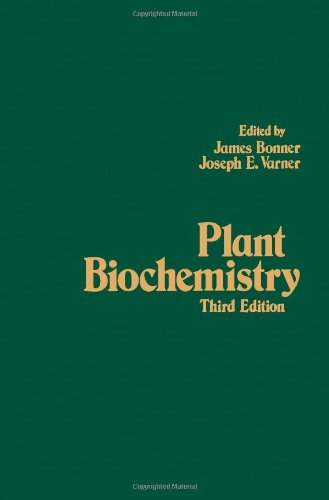
Plant Biochemistry, Third Edition
Anbieter: ThriftBooks-Dallas, Dallas, TX, USA
Verkäuferbewertung 5 von 5 Sternen

Hardcover. Zustand: Good. No Jacket. Former library book; Pages can have notes/highlighting. Spine may show signs of wear. ~ ThriftBooks: Read More, Spend Less.
-
Plant Biochemistry, Third Edition
Anbieter: ThriftBooks-Atlanta, AUSTELL, GA, USA
Verkäuferbewertung 5 von 5 Sternen
Hardcover. Zustand: Very Good. No Jacket. Missing dust jacket; May have limited writing in cover pages. Pages are unmarked. ~ ThriftBooks: Read More, Spend Less.
-
Plant Biochemistry, Third Edition
Anbieter: ThriftBooks-Dallas, Dallas, TX, USA
Verkäuferbewertung 5 von 5 Sternen
Hardcover. Zustand: Good. No Jacket. Pages can have notes/highlighting. Spine may show signs of wear. ~ ThriftBooks: Read More, Spend Less.
-
Plant Biochemistry, Third Edition
Anbieter: ThriftBooks-Dallas, Dallas, TX, USA
Verkäuferbewertung 5 von 5 Sternen
Hardcover. Zustand: Fair. No Jacket. Missing dust jacket; Readable copy. Pages may have considerable notes/highlighting. ~ ThriftBooks: Read More, Spend Less.
-
The Nucleohistones.
Verlag: Holden-Day, 1964., San Francisco:, 1964
Anbieter: Jeff Weber Rare Books, Neuchatel, NEUCH, Schweiz
Verkäuferbewertung 3 von 5 Sternen

Erstausgabe
FIRST EDITION. Tall 8vo. xvii, 398 pp. Articles, photos, figs., index. Blue cloth, dust jacket; jacket extremities slightly rubbed, else fine. Ownership rubber stamp & signature of Norman Horowitz, California Institute of Technology. "In the dawn of molecular biology in the 1960s, his interest turned to gene expression, in particular the regulation of production of RNA from genes. Experiments in his laboratory in collaboration with his postdoctoral fellow Ru Chih C. Huang showed that histone, a protein associated with the genes, shuts off gene activity. If the histone fraction is extracted from isolated chromatin, more RNA is made whereas if histone is added back, the transcription of RNA is greatly decreased. In the course of these experiments, Huang and Bonner discovered DNA-dependent RNA polymerase, but Bonner noted in a biographical article that several other groups discovered the enzyme simultaneously." "Beginning about 1956 (at the urging of a former graduate student and by then postdoctoral fellow, Paul O. P. Ts'o), but with a significant acceleration in 1961, James became interested in protein synthesis, microsomal/chromosomal proteins, histones and chromatin (including non-histone chromosomal proteins) and molecular biology in general (including 3 papers on the molecular biology of memory!), nucleic acids, and the genome. This work encompassed about 190 publications with about 112 coauthors. James made numerous contributions in this area, far too many to discuss in limited space." "Paul O.P. Ts'o, who took his Ph.D. with James and by 1956 was a postdoctoral fellow, convinced James that they should study the most fundamental problem of biologyâ"how chromosomes control cellular metabolism." Frank B. Salisbury, "James Frederick Bonner, September 1, 1910â"September 13, 1996," National Academies of Sciences, Engineering, and Medicine. V. 73, 1998. Biographical Memoirs: Volume 73. Washington, DC: The National Academies Press.
-
Group of 3 offprints. Includes: BONNER, & WILDMAN. "The Proteins of Green Leaves. I. Isolation, Enzymatic Properties and Auxin Content of Spinach Cytoplasmic Proteins." Offprint from: Archives of Biochemistry, vol. 14, no. 3, 1947.
Verlag: Academic Press, 1947., New York:, 1947
Anbieter: Jeff Weber Rare Books, Neuchatel, NEUCH, Schweiz
Verkäuferbewertung 3 von 5 Sternen
8vo. 381-413 pp. Figs., tables. Printed wrappers. Ownership signature of Norman Horowitz. Fine. WITH: BONNER, WILDMAN, & C. C. CHEO. "The Proteins of Green Leaves. III. Evidence of the Formation of Tobacco Mosaic Virus Protein at the Expense of a Main Protein Component in Tobacco Leaf Cytoplasm." Offprint from: Journal of Biological Chemistry, vol. 180, no. 3, 1949. 8vo. 985-1001 pp. Figs., tables. Printed wrappers. Ownership rubber stamp of Horowitz, California Institute of Technology. Fine. / WITH: Frank B. SALISBURY, "James Frederick Bonner, September 1, 1910â"September 13, 1996," National Academies of Sciences, Engineering, and Medicine. V. 73, 1998. Biographical Memoirs: Volume 73. Washington, DC: The National Academies Press. / "After the end of the Second World War, Samuel G. Wildman arrived as a postdoctoral fellow. With Sam, James made a new start with what would today be called cell biology, the isolation of "chloroplasts, mitochondria, cytoplasm, and lots of enzymes!" They ground spinach leaves in a colloid mill, centrifuged the product at 20,000gn and found that the supernatant contained the soluble leaf proteins. Furthermore, over half of the soluble leaf proteins consisted of a single component of molecular mass ca. 500,000, which they called fraction I. Sam found this fraction in many other leaves besides spinach. It was later shown by John Littleton of Palmerston North, New Zealand, a former postdoctoral fellow of James, that fraction I was the main protein in the stroma or fluid part of chloroplasts. He, Paul Ts'o, and others went on to show that fraction I is ribulose-1,5-bisphosphate carboxylase/oxidase, which is now often referred to as rubisco. Rubisco is the enzyme that fixes CO2 in photosynthesis. It is the most abundant protein in the world, and Sam Wildman continued to study it until he retired." See: James Frederick Bonner, September 1, 1910â"September 13, 1996. National Academies of Sciences, Engineering, and Medicine. Biographical Memoirs: Volume 73, 1998. Washington, DC: The National Academies Press.
-
hardcover. Zustand: Gut. 925 Seiten; 9780121148607.3 Gewicht in Gramm: 3.


