

Gesamtpreis (1 Artikel Artikel):
Versandziel:

bingham george caleb (17 Ergebnisse)
Direkt zu den wichtigsten Suchergebnissen
Suchfilter
Produktart
- Alle Product Types
- Bücher (17)
- Magazine & Zeitschriften (Keine weiteren Ergebnisse entsprechen dieser Verfeinerung)
- Comics (Keine weiteren Ergebnisse entsprechen dieser Verfeinerung)
- Noten (Keine weiteren Ergebnisse entsprechen dieser Verfeinerung)
- Kunst, Grafik & Poster (Keine weiteren Ergebnisse entsprechen dieser Verfeinerung)
- Fotografien (Keine weiteren Ergebnisse entsprechen dieser Verfeinerung)
- Karten (Keine weiteren Ergebnisse entsprechen dieser Verfeinerung)
- Manuskripte & Papierantiquitäten (Keine weiteren Ergebnisse entsprechen dieser Verfeinerung)
Zustand Mehr dazu
- Neu (3)
- Wie Neu, Sehr Gut oder Gut Bis Sehr Gut (2)
- Gut oder Befriedigend (5)
- Ausreichend oder Schlecht (Keine weiteren Ergebnisse entsprechen dieser Verfeinerung)
- Wie beschrieben (7)
Einband
Weitere Eigenschaften
- Erstausgabe (3)
- Signiert (Keine weiteren Ergebnisse entsprechen dieser Verfeinerung)
- Schutzumschlag (7)
- Angebotsfoto (6)
Sprache (3)
Gratisversand
Land des Verkäufers
Verkäuferbewertung
-

George Caleb Bingham
Anbieter: AwesomeBooks, Wallingford, Vereinigtes Königreich
Verkäuferbewertung 5 von 5 Sternen

EUR 10,15
EUR 5,70 Versand
Versand von Vereinigtes Königreich nach USAAnzahl: 1 verfügbar
In den WarenkorbPaperback. Zustand: Very Good. George Caleb Bingham This book is in very good condition and will be shipped within 24 hours of ordering. The cover may have some limited signs of wear but the pages are clean, intact and the spine remains undamaged. This book has clearly been well maintained and looked after thus far. Money back guarantee if you are not satisfied. See all our books here, order more than 1 book and get discounted shipping. .
-
George Caleb Bingham
Sprache: Englisch
Verlag: Museum; Abrams 99/n /01 J, 1990
ISBN 10: 0891780335 ISBN 13: 9780891780335
Anbieter: Bahamut Media, Reading, Vereinigtes Königreich
Verkäuferbewertung 5 von 5 Sternen
EUR 10,15
EUR 7,98 Versand
Versand von Vereinigtes Königreich nach USAAnzahl: 1 verfügbar
In den WarenkorbPaperback. Zustand: Very Good. Shipped within 24 hours from our UK warehouse. Clean, undamaged book with no damage to pages and minimal wear to the cover. Spine still tight, in very good condition. Remember if you are not happy, you are covered by our 100% money back guarantee.
-

Paintbox on the Frontier: The Life and Time of George Caleb Bingham
Verlag: Thomas Crowell, New York, 1974
Anbieter: Argosy Book Store, ABAA, ILAB, New York, NY, USA
Verkäuferbewertung 5 von 5 Sternen
hardcover. Zustand: fine. Zustand des Schutzumschlags: fine. George Caleb Bingham (illustrator). First. Illustrated in color & b/w. 193 pages. Slim 8vo, cloth, dust wrapper. New York: Thomas Y. Crowell Co., (1974). First edition. A fine copy in a fine dust wrapper.
-
GEORGE CALEB BINGHAM: RIVER PORTRAITIST.
Verlag: Norman, OK: University of Oklahoma Press, (1959). (1959)., 1959
Anbieter: Blue Mountain Books & Manuscripts, Ltd., Cadyville, NY, USA
Verkäuferbewertung 5 von 5 Sternen
Erstausgabe
Zustand: Very good. - Small quarto [10-1/2 inches high by 7-1/4 inches wide], cloth in a dust wrapper. The corners of the covers are lightly rubbed. The dust jacket is rubbed & lightly chipped & soiled with a small piece out of the top edge of its rear panel. xxviii & 454 pages. Illustrated with reproductions of 112 drawings in crayon by George Caleb Bingham. There is a small area of soiling to the bottom edge. Very good in a good dust wrapper. First edition.
-

George Caleb Bingham: River Portraitist
Sprache: Englisch
Verlag: University of Oklahoma Press, 1959
ISBN 10: 0806104465 ISBN 13: 9780806104461
Anbieter: Powell's Bookstores Chicago, ABAA, Chicago, IL, USA
Verkäuferbewertung 5 von 5 Sternen
Erstausgabe
hardcover. Zustand: Used-Very Good. Bingham, George Caleb (illustrator). First Edition. Cloth, dj. Some shelfwear. Dj in acetate.
-

My Travel Journal (RN Travel Journals)
Anbieter: Revaluation Books, Exeter, Vereinigtes Königreich
Verkäuferbewertung 5 von 5 Sternen
EUR 19,72
EUR 14,29 Versand
Versand von Vereinigtes Königreich nach USAAnzahl: 1 verfügbar
In den WarenkorbPaperback. Zustand: Brand New. Bingham, George Caleb (illustrator). 150 pages. 9.00x6.00x0.34 inches. In Stock.
-

Travel Journal (RN Travel Journals)
Anbieter: Revaluation Books, Exeter, Vereinigtes Königreich
Verkäuferbewertung 5 von 5 Sternen
EUR 19,72
EUR 14,29 Versand
Versand von Vereinigtes Königreich nach USAAnzahl: 1 verfügbar
In den WarenkorbPaperback. Zustand: Brand New. Bingham, George Caleb (illustrator). 200 pages. 9.00x6.00x0.46 inches. In Stock.
-
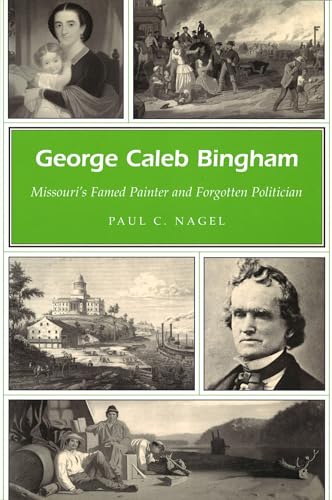
George Caleb Bingham Volume 1 Missouri`s Famed Painter and Forgotten Politician
Anbieter: Revaluation Books, Exeter, Vereinigtes Königreich
Verkäuferbewertung 5 von 5 Sternen
EUR 26,91
EUR 11,43 Versand
Versand von Vereinigtes Königreich nach USAAnzahl: 2 verfügbar
In den WarenkorbPaperback. Zustand: Brand New. 1st edition. 184 pages. 8.75x6.00x0.50 inches. In Stock.
-
George Caleb Bingham.
Anbieter: Vangsgaards Antikvariat Aps, Copenhagen, Dänemark
Verkäuferbewertung 5 von 5 Sternen
Harry N. Abrams, New York 1990. 4to.192 pages. Illustrated in b/w and colour. Orig. cloth in dust wrappers. Fine/fine.
-
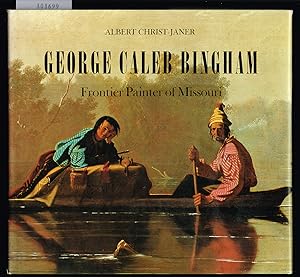
George Caleb Bingham. Frontier painter of Missouri.
Anbieter: Hatt Rare Books ILAB & CINOA, Hägersten, Schweden
Verkäuferbewertung 5 von 5 Sternen
Publisher's cloth, pictorial dustjacket. Very fine. New York, Harry N. Abrams, 1975. Oblong 4to. 184 pp. Richly illustrated, largely in colour. With chronology, bibliography and index. American artist, soldier and politician George Caleb Bingham was known in his lifetime as "the Missouri Artist".
-
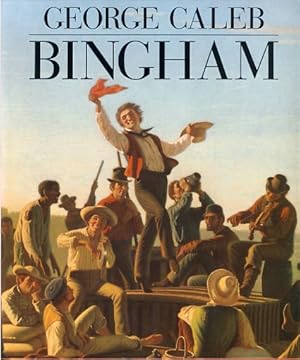
George Caleb Bingham. Catalog of an exhibition held at the Saint Louis Art Museum, Feb. 22-May 13, 1990, and at the National Gallery of Art, June 15-Sept. 30, 1990.
Sprache: Deutsch
Verlag: St. Louis: Saint Louis Art Museum in association with H.N. Abrams, New York, 1990
ISBN 10: 0810931028 ISBN 13: 9780810931022
Anbieter: Fundus-Online GbR Borkert Schwarz Zerfaß, Berlin, Deutschland
Verkäuferbewertung 5 von 5 Sternen
Zustand: Sehr gut. 192 S. Ein gutes und sauberes Exemplar. - The Man and His Times. Paul C. Nagel -- The "Missouri Artist" as Historian. Barbara Groseclose -- The "Missouri Artist" as Artist Elizabeth Johns -- The River Paintings. Michael Edward Shapiro -- Bingham's Geometries and the Shape of America. John Wilmerding. ISBN 9780810931022 Sprache: Deutsch Gewicht in Gramm: 1550 Mit zahlr. auch farb. Abb. Originalleinen mit Schutzumschlag.
-
Hundert Jahre amerikanische Malerei 1800 - 1900
Verlag: Prestel Verlag, München, 1953
Anbieter: Galerie Buchholz OHG (Antiquariat), Köln, Deutschland
Verbandsmitglied: BVDG ILAB VDA
Verkäuferbewertung 5 von 5 Sternen
Softcover. Zustand: Gut. unpag., zahl. s/w Abb., kart., 4°. Einband etw. unfrisch, innen sauber.
-
George Caleb Bingham Frontier Painter of Missouri
Verlag: Harry N. Abrams Inc, New York, 1975
Anbieter: The Old Mill Bookshop, HACKETTSTOWN, NJ, USA
Verkäuferbewertung 4 von 5 Sternen

177 illustrations including 50 in color. With an introduction by Thomas Hart Benton. 1 vols. Oblong 4to. Not in Freitag Cloth. Dust jacket faded at spine, else fine 177 illustrations including 50 in color. With an introduction by Thomas Hart Benton. 1 vols. Oblong 4to.
-
George Caleb Bingham. Frontier Painter of Missouri.
Anbieter: Frans Melk Antiquariaat, HILVERSUM, Niederlande
Verkäuferbewertung 5 von 5 Sternen
New York, Harry N. Abrams, 1975. Oblong. Cloth with dustwrappers. 177 illustr. including 50 plates in full color. 183 pag. - Mint. [Art / international artist [Buitenlandse Kunstenaars] ].
-

Transactions of the American Art-Union for the Year 1846. First edition,.
Verlag: New York: G.F. Nesbitt, 1847
Anbieter: Wittenborn Art Books, San Francisco, CA, USA
Verkäuferbewertung 5 von 5 Sternen
Zustand: Good. 8vo. 13.5 x 21.4cm. Bound in half goatskin and marbled boards by the artisan binder Sasha Mosalov. 80pp.[Two etched frontispieces of "The Jolly Flatboat Men" by George Caleb Bingham and "A Sybil" by Daniel Huntington advertize the subjects of large engravings that the American Art-Union chose in 1846 to have made for distribution to its subscriber-members. Eighty pages of text summarize the proceedings of a recent annual meeting, list 142 paintings distributed to subscribers by lottery in December 1846, and name the organization's officers and honorary secretaries across the United States. Also described are the 1840 Act of Incorporation and 1843 emended Constitution. Both the cover and title page are adorned with a vignette of three young women holding symbols of sculpture, painting and design or architecture, pointing to the Art-Union's mission of encouraging contemporary American art. Met Museum Object Number: 24.66.338.
-

The Jolly Flat Boat Men
Verlag: New York: Printed by Powell & Co., 1847, 1847
Anbieter: Arader Galleries - AraderNYC, New York, NY, USA
Verkäuferbewertung 5 von 5 Sternen
Unbound. The Jolly Flat Boat Men (engraved by Thomas Doney). New York: Printed by Powell & Co., 1847 Hand-colored mezzotint on wove paper (Image: 21 x 24 in.; 53.8 x 60.8 cm. Sheet: 22 3/4 x 26 3/4 in.; 57.8 x 68.0 cm), captioned "From the Original Painting Distributed by the American Art Union 1857 | Published exclusively for the Members of that Year." Matted. Expertly closed four-inch tear at center of bottom margin, just touching three letters in caption and extending to the base of the flat boat, minor tear at center of left margin. (65B2B) Known as "the Missouri Artist" in his lifetime, Bingham was one of the most important painters of genre subjects in the mid-19th century. His early years were spent in Missouri, and he knew at first hand the life of the frontier, especially the comings and goings of the boatmen who ferried cargo on the great rivers of the Midwest. His scenes of life and work on the Missouri and Mississippi Rivers established his reputation and are today recognized as his finest creations. Intended for audiences in eastern cities such as New York and Philadelphia, his paintings portrayed boatmen as the rough-hewn characters who were instrumental in pushing the American frontier ever farther westward. In 1847, the American Art-Union, which had purchased The Jolly Flatboatmen (1846) directly from the artist, produced a large mezzotint of it that was distributed to its members (approximately 10,000) throughout the country, immediately making it one of the best known and treasured icons of American art. It depicts a group of boatmen who, after a day of hard work on the river, are now relaxing and dancing to a lively tune played on a fiddle and an impromptu percussive instrument in the form of a pan. Bingham's attention to detail is everywhere evident: a raccoon pelt hanging from a nail; a coil of rope; a shirt hanging to dry; and a turkey, which pokes its head out between the slats of the crate below the dancing man. The composition is at once dynamic-with the exuberance of the dancing man and the gusto of the musicians-as well as visually concise in the way Bingham arranged the figures to form a well-balanced triangle.Dr. Lester E. Bauer of Detroit, Michigan, (his sale, Parke-Bernet, 27 October 1971, lot 6; Evelyn and Eric P. Newman, of Clayton, Missouri (letters from the First Street Forum, St. Louis, Missouri dated 23 September 1981 and the Mid-America Arts Alliance dated 10 October 1983 regarding the loan of the print for exhibition; and their sale, Leslie Hindman Auctioneers, 12 November 2018, lot 24). EXHIBITED: Bingham on the River, First Street Forum, 1981; Bingham's World, Mid-America Art Alliance, 1983.
-
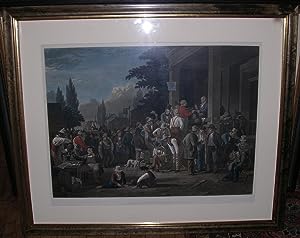
The County Election.
Verlag: Philadelphia: G. C. Bingham, 1854., 1854
Anbieter: Arader Galleries - AraderNYC, New York, NY, USA
Verkäuferbewertung 5 von 5 Sternen
Erstausgabe
"Single sheet, mounted and framed, (24 x 31 inches). Fine engraved print with original hand color in full. First edition. Engraved by Sartain after the 1852 painting by Bingham. One of the leading American genre painters of the mid-nineteenth century, George Caleb Bingham (1811-1879) created some of the most memorable views of American small town life. Bingham was fascinated by the democratic process and by the ways in which it permeated everyday existence in communities far removed from the big cities. "The County Election" was part of a six-painting Election Series; the other paintings were "Stump Orator" (1847), "Country Politician" (1849), "Canvassing for a Vote" (1852), "Stump Speaking" (1853), and "The Verdict of the People" (1854-55). "Forgetting perhaps that Bingham had a strong political bias of a militant Whig campaigner for state office, it would seem that recent students of his epic paintings on the American voting process have overlooked the subtle but incisive element of social criticism lodged in his famous work, 'The County Election.' Bingham, it seems, had serious misgivings about the introduction of universal manhood suffrage, with its equalitarian impact on American life, and he particularly resented it when in 1846 he felt he had been unfairly deprived of office by the gerrymandering activity of a Missouri political rival. On its surface, 'The County Election' appears to celebrate the new political ferment that Americans from Bangor, Maine, to the Western frontier were experiencing at mid-century. However, read more carefully as a document of social history, this canvas suggests that Bingham, like his contemporary, James Fenimore Cooper, saw the stability and integrity of the American milieu staggering under the impact of a too rapidly expanding body politic and the rigors of a laissez-faire economic system" (Westervelt, p. 46). "Intemperance was also associated with corrupt politics. George Caleb Bingham's 'County Election' of 1852 depicts the customary practice of candidates' serving free liquor to woo voters before an electionIn Bingham's painting, voters are enjoying their whiskey, with the result that some are too drunk even to stand, all before a banner hanging overhead that intones, 'The Will of the People, the Supreme Law.' Such scenes, describing a purchased and likely inebriated electorate, delivered a slap to the actual practice of direct democracy" (Barter, ed., p. 111). Robert F. Westervelt, "The Whig Painter of Missouri," The American Art Journal, vol. 2, no. 1, Spring 1970. Judith A. Barter, ed., "Art and Appetite: American Painting, Culture, and Cuisine.".


