
Gesamtpreis (1 Artikel Artikel):
Versandziel:

abraham wald (21 Ergebnisse)
Direkt zu den wichtigsten Suchergebnissen
Suchfilter
Produktart
- Alle Product Types
- Bücher (21)
- Magazine & Zeitschriften (Keine weiteren Ergebnisse entsprechen dieser Verfeinerung)
- Comics (Keine weiteren Ergebnisse entsprechen dieser Verfeinerung)
- Noten (Keine weiteren Ergebnisse entsprechen dieser Verfeinerung)
- Kunst, Grafik & Poster (Keine weiteren Ergebnisse entsprechen dieser Verfeinerung)
- Fotografien (Keine weiteren Ergebnisse entsprechen dieser Verfeinerung)
- Karten (Keine weiteren Ergebnisse entsprechen dieser Verfeinerung)
- Manuskripte & Papierantiquitäten (Keine weiteren Ergebnisse entsprechen dieser Verfeinerung)
Zustand Mehr dazu
Einband
Weitere Eigenschaften
- Erstausgabe (6)
- Signiert (Keine weiteren Ergebnisse entsprechen dieser Verfeinerung)
- Schutzumschlag (2)
- Angebotsfoto (8)
Sprache (3)
Gratisversand
Land des Verkäufers
Verkäuferbewertung
-
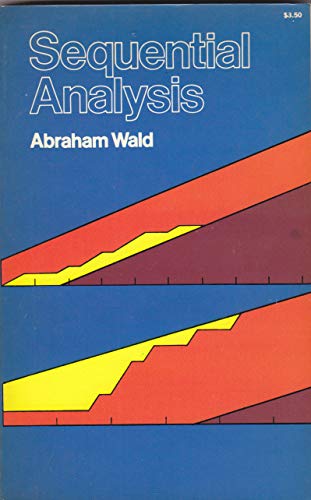
Sequential Analysis
Anbieter: ThriftBooks-Dallas, Dallas, TX, USA
Verkäuferbewertung 5 von 5 Sternen

Paperback. Zustand: Good. No Jacket. Pages can have notes/highlighting. Spine may show signs of wear. ~ ThriftBooks: Read More, Spend Less.
-
Sequential Analysis
Sprache: Englisch
Verlag: Dover Publications, Incorporated, 2013
ISBN 10: 0486615790 ISBN 13: 9780486615790
Anbieter: Better World Books, Mishawaka, IN, USA
Verkäuferbewertung 5 von 5 Sternen
Zustand: Good. Pages intact with minimal writing/highlighting. The binding may be loose and creased. Dust jackets/supplements are not included. Stock photo provided. Product includes identifying sticker. Better World Books: Buy Books. Do Good.
-
Sequential Analysis
Anbieter: ThriftBooks-Dallas, Dallas, TX, USA
Verkäuferbewertung 5 von 5 Sternen
Hardcover. Zustand: Good. No Jacket. Pages can have notes/highlighting. Spine may show signs of wear. ~ ThriftBooks: Read More, Spend Less.
-
Sequential Analysis
Sprache: Englisch
Verlag: Dover Publications, Incorporated, 2013
ISBN 10: 0486615790 ISBN 13: 9780486615790
Anbieter: Majestic Books, Hounslow, Vereinigtes Königreich
Verkäuferbewertung 4 von 5 Sternen

EUR 18,33
EUR 7,50 Versand
Versand von Vereinigtes Königreich nach USAAnzahl: 1 verfügbar
In den WarenkorbZustand: New. pp. 224.
-

The House on Henry Street
Verlag: Henry Holt, 1915
Anbieter: Easy Chair Books, Lexington, MO, USA
Verkäuferbewertung 5 von 5 Sternen
Erstausgabe
Hardcover. Zustand: Fair. Zustand des Schutzumschlags: No Dust Jacket. Phillips, Abraham (illustrator). First Edition. 317 pages. Ex-university library marks, some wear and staining to the covers; pages toned; broken hinges but an intact reading copy still. No jacket. Illustrator: Phillips, Abraham. Quantity Available: 1. Category: American History; Inventory No: 219618.
-

The House on Henry Street
Verlag: Henry Holt, 1915
Anbieter: Books From California, Simi Valley, CA, USA
Verkäuferbewertung 5 von 5 Sternen
Hardcover. Zustand: Good. Ex-library book with stamps and/or stickers.
-
Sequential Analysis
Anbieter: Revaluation Books, Exeter, Vereinigtes Königreich
Verkäuferbewertung 5 von 5 Sternen
EUR 27,88
EUR 11,54 Versand
Versand von Vereinigtes Königreich nach USAAnzahl: 1 verfügbar
In den WarenkorbPaperback. Zustand: Brand New. 224 pages. 8.25x5.25x0.25 inches. In Stock.
-
Sequential Analysis.
Sprache: Englisch
Verlag: New York, Wiley, 1952
Anbieter: Chiemgauer Internet Antiquariat GbR, Altenmarkt, BAY, Deutschland
Verkäuferbewertung 5 von 5 Sternen
Originalpappband. 23cm. Zustand: Sehr gut. Third printing. XII, 212 pages. Index. FRISCHES Exemplar. We offer a lot of books on PHYSICS and MATHEMATICS on stock in EXCELLENT shape) Sprache: Englisch Gewicht in Gramm: 505.
-
Selected Papers in Statistics and Probability. Edited by the Institute of Mathematical Statistics
Anbieter: Zubal-Books, Since 1961, Cleveland, OH, USA
Verkäuferbewertung 5 von 5 Sternen
Zustand: Very Good. *Price HAS BEEN REDUCED by 10% until Monday, Feb. 2 (SALE item)* First edition, first printing, 702 pp., Hardcover, previous owner's name to front pastedown, light wear to spine and cover edges else text clean & binding tight (lacks dust jacket). - If you are reading this, this item is actually (physically) in our stock and ready for shipment once ordered. We are not bookjackers. Buyer is responsible for any additional duties, taxes, or fees required by recipient's country.
-

Sequential Analysis
Verlag: John Wiley & Sons, 1959
Anbieter: Librodifaccia, Alessandria, AL, Italien
Verkäuferbewertung 5 von 5 Sternen
Zustand: Buone. inglese Condizioni dell'esterno: Buone Condizioni dell'interno: Buone.
-
Foundations of a general theory of sequential decision functions.
Sprache: Englisch
Verlag: Chicago, 1947
Anbieter: Antiquariat Gerhard Gruber, Heilbronn, Deutschland
Verkäuferbewertung 5 von 5 Sternen
Erstausgabe
(25 x 17 cm). SS. 279-313. Original-Broschur. (Sonderdruck aus: Econometrica). Erste Ausgabe. "In some previous publications the author has laid the foundations for a general theory of statistical decision functions when the number of observations, on the basis of which a decision is to be made, is determined in advance. The purpose of this paper is to extend this theory to the case where the number of observations required for a decision is not determined in advance, but is made dependent on the outcome of the observations" (Introduction). - Wald (1902-1950), einer der bedeutendsten Statistiker des 20. Jahrhunderts, gilt als Begründer der statistischen Entscheidungstheorie, der auch einen bedeutenden Beitrag zur Wirtschaftswissenschaft geleistet hat. - Umschlag gestempelt, sonst sauber und gut erhalten. - DSB 14, 121.
-

SEQUENTIAL ANALYSIS.
Verlag: JOHN WILEY & SONS INC., 1966
Couverture rigide. Zustand: bon. R240095947: 1966. In-8. Relié. Bon état, Couv. convenable, Dos satisfaisant, Intérieur frais. XII + 212 pages - ouvrage en anglais - quelques figures en noir et blanc dans le texte. . . . Classification Dewey : 420-Langue anglaise. Anglo-saxon.
-
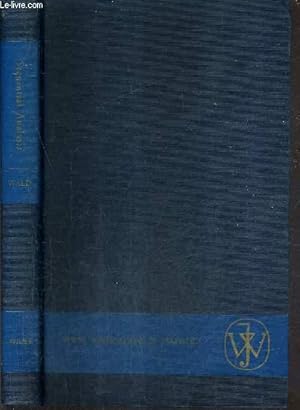
SEQUENTIAL ANLYSIS.
Verlag: JOHN WILEY & SONS INC., 1965
Couverture rigide. Zustand: bon. R240095917: 1965. In-8. Relié. Bon état, Couv. convenable, Dos satisfaisant, Intérieur frais. 212 pages - ouvrage essentiellement en anglais - quelques figures en noir et blanc dans le texte. . . . Classification Dewey : 420-Langue anglaise. Anglo-saxon.
-

Berechnung und Ausschaltung von Saisonschwankungen. Beiträge zur Konjunkturforschung ; 9
Sprache: Deutsch
Verlag: Wien : Springer - [Berlin] : [J. Springer], 1936
Anbieter: books4less (Versandantiquariat Petra Gros GmbH & Co. KG), Welling, Deutschland
Verkäuferbewertung 5 von 5 Sternen
gebundene Ausgabe. Zustand: Gut. 140 Seiten; Das hier angebotene Buch stammt aus einer teilaufgelösten Bibliothek und kann entsprechende Kennzeichnungen aufweisen (Rückenschild, Instituts-Stempel.). Aufgrund des Alters und der häufigen Nutzung können Stabilität, Einband sowie Papierqualität beeinträchtigt sein. Buchrücken instabil. Sprache: Deutsch Gewicht in Gramm: 375.
-
SELECTED PAPERS IN STATISTICS AND PROBABILITY.
Verlag: Stanford University Press, 1957
Anbieter: J. Wyatt Books, Ottawa, ON, Kanada
Verkäuferbewertung 5 von 5 Sternen
Hardcover. Zustand: Near Fine. Zustand des Schutzumschlags: Good-. 2nd Printing. dustjacket worn and torn, previous owners name ffep otherwise unmarked, 702pp, NF/G-. Book.
-

STATISTICAL DECISION FUNCTIONS.
Verlag: New York: John Wiley & Sons, 1950., 1950
Anbieter: Librería Antonio Castro, SEVILLA, SE, Spanien
Verbandsmitglied: AILA ILAB SEVILLA
Verkäuferbewertung 5 von 5 Sternen
4to. 179 pp. Firma. Encuadernación en tela editorial con sobrecubierta plastificada. Buen estado.
-
Selected Papers in Statistics and Probability.
Anbieter: Herman H. J. Lynge & Søn ILAB-ABF, Copenhagen, Dänemark
Verkäuferbewertung 4 von 5 Sternen
Erstausgabe
New York, McGraw-Hill, 1955. Royal 8vo. Original cloth with silver lettering on spine. IX,702 pp. First edition.
-
Statistical Decision Functions.
Anbieter: Herman H. J. Lynge & Søn ILAB-ABF, Copenhagen, Dänemark
Verkäuferbewertung 4 von 5 Sternen
Erstausgabe
New York, John Wiley & Sons, (1950). 8vo. Original cloth with gilt spine. No dust jacket. IX,179 pp. Text illustrated. First edition. Wald is considered the founder of statistical sequential analysis and the theory of decision functions. DSB XIV:121.
-
Sequential Analysis.
Anbieter: Herman H. J. Lynge & Søn ILAB-ABF, Copenhagen, Dänemark
Verkäuferbewertung 4 von 5 Sternen
Erstausgabe
New York, John Wiley & Sons, (1947). Original cloth with gilt spine. No dust jacket. XII,212 pp. Text illustrated. First edition. Wald is considered the founder of statistical sequential analysis and the theory of decision functions. DSB XIV:121.
-
Sequential Analysis of Statistical Data: Theory; [with:] Sequential Tests of Statistical Significance; [with:] Sequential Analysis of Statistical Data: Applications
Verlag: National Defense Research Committee, Washington, 1944
Anbieter: SOPHIA RARE BOOKS, Koebenhavn V, Dänemark
Verkäuferbewertung 5 von 5 Sternen
Erstausgabe
First edition. THE INVENTION OF SEQUENTIAL ANALYSIS - THE ORIGINAL RESTRICTED REPORTS. First edition, very rare, of Wald's seminal invention of 'Sequential analysis', developed while he was in charge of Columbia University's Statistical Research Group in response to the demand for more efficient methods of industrial quality control during World War II. It is here offered in the original 'restricted' reports; it was published four years later in his well-known book of the same title. "Wald's second major achievement in mathematical statistics is sequential analysis. The notion that in some sense it is economical to observe and analyze data sequentially, rather than to observe and analyze a single sample of predetermined fixed size, was not a new one. Intuitive support for this notion is immediate; if the evidence shown in sequentially unfolding data is sharply one-sided, it seems reasonable to believe that the inquiry can be terminated early, with lengthier inquiries reserved for those situations in which the issue at hand appears, via the sequentially unfolding data, to be in greater doubt. This notion and the partial mathematical formulation of it were to be found in the statistical literature; among those who dealt with it before Wald was Walter Bartky of Chicago, and among Wald's contemporaries, George Barnard, working in England. But again it was Wald, in 1943, who first formulated mathematically and solved quite generally the problem of sequential tests of statistical hypotheses. He introduced the particular method of the sequential probability ratio test and, with Wolfowitz (1948), showed its optimal properties. He found operating characteristic and average sample number functions; he introduced, if he did not completely solve, the problem of sequential tests of composite hypotheses (utilizing weight functions); and he began vital discussions of such basic topics as multivalued decisions and optimal sequential estimation. All this, plus many special problems, were gathered together in Sequential Analysis (1947), a book surprisingly easy to read, less formal and more elementary in structure than his work on decision functions" (DSB). No copies listed on ABPC/RBH. "Sequential analysis is the branch of statistics concerned with investigations in which the decision whether or not to stop at any stage depends on the observations previously made. The motivation for most sequential investigations is that when the ends achieved are measured against the costs incurred (including the cost of making observations), sequential designs are typically more efficient than non-sequential designs "The term 'sequential' is occasionally extended to cover also investigations in which various aspects of the design may be changed according to the observations made. For example, preliminary experience in an experiment may suggest changes in the treatments being compared; in a social survey a small pilot survey may lead to modifications in the design of the main investigation In a sequential investigation observations must be examined either one by one as they are collected or at certain stages during collection. A sequential procedure might be desirable for various reasons. The investigator might wish to have an up-to-date record at any stage, either for general information or because the appropriate sample size depends on quantities that he can estimate only from the data themselves. Alternatively, he may have no intrinsic interest in the intermediate results but may be able to achieve economy in sample size by taking them into account. Three examples will illustrate these points: (1) An investigator may wish to estimate to within 10 per cent the mean weekly expenditure on tobacco per household. In order to determine the sample size he would need an estimate of the variability of the expenditure from household to household, and this might be obtainable only from the survey itself. (2) A physician wishing to compare the effects of two drugs in the treatment of some disease may wish to stop the investigation if at some stage a convincing difference can already be demonstrated using the available data. (3) A manufacturer carrying out inspection of batches of some product may be able to pass most of his batches with little inspection but may carryout further inspection of batches of doubtful quality. A given degree of discrimination between good and bad batches could be achieved in various ways, but a sequential scheme will often be more economical than one in which a sample of constant size is taken from each batch "The most appropriate design and method of analysis of a sequential investigation depend on the purpose of the investigation. The statistical formulation of that purpose may take one of a number of forms, usually either estimation of some quantity to a given degree of precision or testing a hypothesis with given size and given power against a given alternative hypothesis. Economy in number of observations is typically important for sequential design" (International Encyclopedia of the Social Sciences). "The problem of sequential analysis arose in the Statistical Research Group of Columbia University in connection with some comments made by Captain G. L. Schuyler of the Bureau of Ordnance, Navy Department. Milton Friedman and W. Allen Wallis recognized the great potentialities and the far-reaching consequences that sequential analysis might have for the further development of theoretical statistics. In particular, they conjectured that a sequential test procedure might be constructed which would control the possible errors committed by wrong decisions exactly to the same extent as the best current procedure based on a predetermined number of observations, and at the same time would require, on the average, a substantially smaller number of observations than the fixed number of observations needed for the current procedure. Friedman and Wallis also exhibited a few examples of sequential modifications of curre.
-
Selected Papers in Statistics and Probability. Stanford UP 1957. gr.8°. 1 portrait. IX, 702 p. OCloth. (edge slightly stained).- DSB XIV,121.- Edited by T.W. Anderson, H. Cramer, H.A. Freeman, J.L. Hodges, E.L. Lehmann, A.M. Mood & C.M. Stein.- Name on flyleaf, few pages with pencil underlinings.
Anbieter: Antiquariat Renner OHG, Albstadt, Deutschland
Verbandsmitglied: BOEV
Verkäuferbewertung 5 von 5 Sternen


![Bild des Verkäufers für Sequential Analysis of Statistical Data: Theory; [with:] Sequential Tests of Statistical Significance; [with:] Sequential Analysis of Statistical Data: Applications zum Verkauf von SOPHIA RARE BOOKS](https://pictures.abebooks.com/inventory/md/md30802726840.jpg)