
Abdulkareem rafid (4 Ergebnisse)
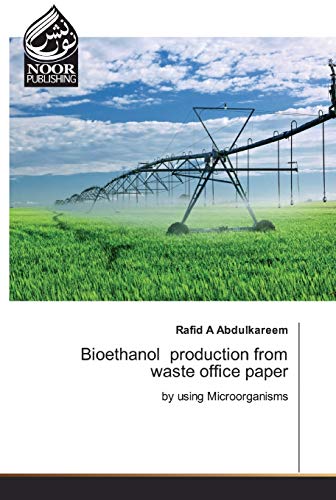
- Softcover
Anbieter: Ria Christie Collections, Uxbridge, Vereinigtes KönigreichRia Christie Collections
Verkäufer/-in kontaktierenVerkäufer/-in mit 5 SternenZustand: Neu
EUR 25,43
EUR 14,05 VersandVersand von Vereinigtes Königreich nach USAAnzahl: Mehr als 20 verfügbar
Zustand: New. In.
 Weitere Bilder
- Softcover
Anbieter: preigu, Osnabrück, Deutschlandpreigu
Verkäufer/-in kontaktierenVerkäufer/-in mit 5 SternenZustand: Neu
EUR 22,50
EUR 70,00 VersandVersand von Deutschland nach USAAnzahl: 5 verfügbar
Taschenbuch. Zustand: Neu. Bioethanol production from waste office paper | by using Microorganisms | Rafid A Abdulkareem | Taschenbuch | 112 S. | Englisch | 2020 | Noor Publishing | EAN 9786202351201 | Verantwortliche Person für die EU: preigu GmbH & Co. KG, Lengericher Landstr. 19, 49078 Osnabrück, mail[at]preigu[dot]de | Anbie…ter: preigu.
- Softcover
Anbieter: Buchpark, Trebbin, DeutschlandBuchpark
Verkäufer/-in kontaktierenVerkäufer/-in mit 5 SternenZustand: Gebraucht - Sehr gut
EUR 22,26
EUR 105,00 VersandVersand von Deutschland nach USAAnzahl: 1 verfügbar
Zustand: Sehr gut. Zustand: Sehr gut | Sprache: Englisch | Produktart: Bücher | Increasing energy costs together with increasing concerns about global warming related to CO2 emissions and the decrease of landfill locations for disposal of solid waste resulted in increasing interest in alternative, low and non-carbon based energy… sources Lignocellulosic are the most abundant biomass available on earth, comprising mainly of cellulose and hemicellulose Among various lignocellulosic, waste paper could be used as an excellent source for bioethanol production; it is abundant, low cost with high amount of cellulose and does not require energy-intense thermophysical or severe strong acid pretreatments prior to enzymatic hydrolysis generally used in hydrolysis of lignocellulose substrates Bioethanol derived from biomass is the only liquid transportation fuel that does not contribute to the greenhouse gas e ffect, it yields zero net CO2 output into the atmosphere because after burning of bioethanol, the released CO2 is recycled back into plant material because plants use CO2 to synthesize cellulose during photosynthesis.
- Softcover
Anbieter: Buchpark, Trebbin, DeutschlandBuchpark
Verkäufer/-in kontaktierenVerkäufer/-in mit 5 SternenZustand: Gebraucht
EUR 22,93
EUR 105,00 VersandVersand von Deutschland nach USAAnzahl: 1 verfügbar
Zustand: Hervorragend. Zustand: Hervorragend | Sprache: Englisch | Produktart: Bücher | Increasing energy costs together with increasing concerns about global warming related to CO2 emissions and the decrease of landfill locations for disposal of solid waste resulted in increasing interest in alternative, low and non-carbon base…d energy sources Lignocellulosic are the most abundant biomass available on earth, comprising mainly of cellulose and hemicellulose Among various lignocellulosic, waste paper could be used as an excellent source for bioethanol production; it is abundant, low cost with high amount of cellulose and does not require energy-intense thermophysical or severe strong acid pretreatments prior to enzymatic hydrolysis generally used in hydrolysis of lignocellulose substrates Bioethanol derived from biomass is the only liquid transportation fuel that does not contribute to the greenhouse gas e ffect, it yields zero net CO2 output into the atmosphere because after burning of bioethanol, the released CO2 is recycled back into plant material because plants use CO2 to synthesize cellulose during photosynthesis.

