Gesamtpreis (1 Artikel Artikel):
Versandziel:

earl buchan (10 Ergebnisse)
Direkt zu den wichtigsten Suchergebnissen
Suchfilter
Produktart
- Alle Product Types
- Bücher (7)
- Magazine & Zeitschriften (Keine weiteren Ergebnisse entsprechen dieser Verfeinerung)
- Comics (Keine weiteren Ergebnisse entsprechen dieser Verfeinerung)
- Noten (Keine weiteren Ergebnisse entsprechen dieser Verfeinerung)
- Kunst, Grafik & Poster (Keine weiteren Ergebnisse entsprechen dieser Verfeinerung)
- Fotografien (Keine weiteren Ergebnisse entsprechen dieser Verfeinerung)
- Karten (Keine weiteren Ergebnisse entsprechen dieser Verfeinerung)
- Manuskripte & Papierantiquitäten (3)
Zustand Mehr dazu
- Neu (2)
- Wie Neu, Sehr Gut oder Gut Bis Sehr Gut (Keine weiteren Ergebnisse entsprechen dieser Verfeinerung)
- Gut oder Befriedigend (1)
- Ausreichend oder Schlecht (Keine weiteren Ergebnisse entsprechen dieser Verfeinerung)
- Wie beschrieben (7)
Einband
Weitere Eigenschaften
- Erstausgabe (1)
- Signiert (Keine weiteren Ergebnisse entsprechen dieser Verfeinerung)
- Schutzumschlag (Keine weiteren Ergebnisse entsprechen dieser Verfeinerung)
- Angebotsfoto (3)
Sprache (2)
Preis
- Beliebiger Preis
- Weniger als EUR 20 (Keine weiteren Ergebnisse entsprechen dieser Verfeinerung)
- EUR 20 bis EUR 45
- Mehr als EUR 45
Gratisversand
- Kostenloser Versand nach USA (Keine weiteren Ergebnisse entsprechen dieser Verfeinerung)
Land des Verkäufers
Verkäuferbewertung
-

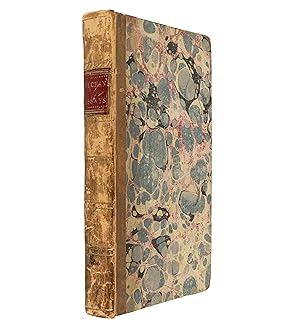
Essays on the Lives and Writings of Fletcher of Saltoun and the Poet Thomson: Biographical, critical, and political. With some pieces of Thomson's never before published
Anbieter: Ria Christie Collections, Uxbridge, Vereinigtes Königreich
Verkäuferbewertung 5 von 5 Sternen

EUR 37,59
EUR 13,87 Versand
Versand von Vereinigtes Königreich nach USAAnzahl: Mehr als 20 verfügbar
In den WarenkorbZustand: New. In.
-

Taschenbuch. Zustand: Neu. Essays on the Lives and Writings of Fletcher of Saltoun and the Poet Thomson | Biographical, critical, and political. With some pieces of Thomson's never before published | David S. E. Earl of Buchan | Taschenbuch | 332 S. | Englisch | 2017 | hansebooks | EAN 9783337012274 | Verantwortliche Person für die EU: Hansebooks GmbH, Trakehner Weg 52, 22844 Norderstedt, gb[at]hansebooks[dot]com | Anbieter: preigu.
-

First leaf of Autograph Letter from the landowner and politician John Sawbridge, supporter of John Wilkes [to David Steuart Erskine, 11th Earl of Buchan].
Verlag: Ollantigh sic. 29 December, 1772
Anbieter: Richard M. Ford Ltd, London, Vereinigtes Königreich
Verkäuferbewertung 5 von 5 Sternen
Manuskript / Papierantiquität
EUR 47,69
EUR 5,21 Versand
Versand von Vereinigtes Königreich nach USAAnzahl: 1 verfügbar
In den Warenkorb2pp., 4to. 31 lines of text. Good, on lightly-aged paper, but the first leaf of the letter only. He writes that he is pleased to receive a letter from Erskine ('your Lordship') after 'so long an interruption'. 'I forebore till I had heard from you to take the liberty of congratulating you upon your Marriage' (Erskine had married the previous October). The second page ends: 'I have never been able to learn whether your Good Mother Lady Buchan was in England or not. Your younger Brother lives in my Neighbourhood I paid a visit to Mrs Ersky but never recievd any in return either from her [.]'.
-
ESSAYS ON THE LIVES AND WRITINGS OF FLETCHER OF SALTOUN AND THE POET THOMSON: BIOGRAPHICAL, CRITICAL, AND POLITICAL.
Verlag: J. Debrett,, London,, 1792
Anbieter: Burwood Books, Wickham Market, Vereinigtes Königreich
Verbandsmitglied: PBFA
Verkäuferbewertung 5 von 5 Sternen
Erstausgabe
EUR 65,58
EUR 26,05 Versand
Versand von Vereinigtes Königreich nach USAAnzahl: 1 verfügbar
In den WarenkorbHardcover. Zustand: Good. First Edition. Hardback. No Dustjacket. 8vo. pp xxxix, 279. Disbound (i.e. lacking covers) but otherwise in decent sound condition with very clean text. Suitable for rebinding or reading and reference.
-
Autograph Letter in the third person to Buchan, regarding 'Mr. Pitt', 'his abilities and fortitude' and 'the dilemma' arising from 'the present situation'.
Verlag: 8 February ; Oxford Street, 1784
Anbieter: Richard M. Ford Ltd, London, Vereinigtes Königreich
Verkäuferbewertung 5 von 5 Sternen
EUR 66,77
EUR 5,21 Versand
Versand von Vereinigtes Königreich nach USAAnzahl: 1 verfügbar
In den Warenkorb4to, 1 p. On piece of watermarked laid paper. Thirteen lines of text. Clear and complete. Good, on aged paper, with thin strip of stub adhering to blank reverse. Docketed at head, in a contemporary hand, '331 | Lord Camelford for fac simile'. Camelford was not at home when Buchan called, but he 'will take care that his Lordship's Letter shall be transmitted to Mr Pitt [his cousin William Pitt the younger?]'. Pitt 'will doubtless feel himself flatter'd with his Lordship's testimony in favour of his abilities and fortitude'. There is 'merit' in 'the particular manner by which his present Situation was produced however unfortunate the dilemma may be which has been the consequence of it.'.
-
Essays on the Lives and Writings of Fletcher of Saltoun and the poet Thomson: biographical, critical, and political. With some pieces of Thomson's never before published.
Verlag: Printed for J. Debrett. 1792, 1792
Anbieter: Jarndyce, The 19th Century Booksellers, London, Vereinigtes Königreich
Verbandsmitglied: ABA ILAB PBFA
Verkäuferbewertung 4 von 5 Sternen

EUR 236,08
EUR 40,52 Versand
Versand von Vereinigtes Königreich nach USAAnzahl: 1 verfügbar
In den Warenkorb[3], vi-viii, xxxix, [1], 280pp, sepia engraved portrait frontispiece of Andrew Fletcher. Without half title. 8vo. Contemporary half calf, marbled boards, gilt banded spine, red morocco label; some light rubbing. Armorial bookplate of Thomas Sneyd Kynnersley, contemporary name Sarah Price Clarke (died 1801) at head of inner front board. The two families had been connected since the 17th century. ESTC T130222. A supporter of the Americans during the Revolution, Erskine considered moving to the United States after the war but instead purchased Dryburgh Abbey, hoping to make it a Scottish cultural centre. In 1803 Erskine sent a copy of this work to Thomas Jefferson: 'considering the state of G.Britain & Europe & what I believed to be the principles and character of Mr Jefferson, I sent to him with a short expressive inscription a copy of my Essay on the life and writings of Fletcher of Saltoun; my intention was to defeat as far as my opinion could the prejudices conceived against Mr J. on both sides of the Atlantic'. Jefferson replied to Erskine at some length on July 10th.
-
![Bild des Verkäufers für [Printed handbill poem by 'B. B.'] On a favourite Dog, interred in the Grounds of Dryburgh Abbey, MDCCCXIV. [With Victorian photograph of a dog.] zum Verkauf von Richard M. Ford Ltd](https://pictures.abebooks.com/inventory/md/md32340146518.jpg)
[Printed handbill poem by 'B. B.'] On a favourite Dog, interred in the Grounds of Dryburgh Abbey, MDCCCXIV. [With Victorian photograph of a dog.]
Verlag: Date and publisher not stated. Scotland circa ?, 1814
Anbieter: Richard M. Ford Ltd, London, Vereinigtes Königreich
Verkäuferbewertung 5 von 5 Sternen
EUR 178,85
EUR 5,21 Versand
Versand von Vereinigtes Königreich nach USAAnzahl: 1 verfügbar
In den WarenkorbPoem: On one side of a piece of 12mo paper. Fair, lightly-aged and a little ruckled, with traces of gum from previous mounting on the blank reverse. The 12-line poem is written in heroic couplets, and begins 'POOR, faithful animal, adieu! - | To Nature's kind affection true, | For fourteen years, thy grateful heart, | Devoted, play'd its humble part.' At the end a contemporary hand has ascribed the poem to 'B. B.', and the same hand gives the date as 'September 3d'. No record of the poem has been discovered, and there is no copy listed on COPAC, or in the catalogue of the National Library of Scotland. It is possible that the poem has been removed from a volume, but it is more likely that it is a handbill production of the private press of the eccentric 11th Earl of Buchan. Photograph: Cut into an oval 4.5 cm wide and 6 cm high. Sepia profile image of a pug dog, seated on its hind legs. Lightly stained.
-
[ Jean Hyacinthe de Magellan, natural philosopher. ] Autograph Letter Signed ('Magellan'), in English, to the Earl of Buchan, on topics including Adair Crawford's 'new theory of heat in general'.
Verlag: London. 21 September, 1780
Anbieter: Richard M. Ford Ltd, London, Vereinigtes Königreich
Verkäuferbewertung 5 von 5 Sternen
Manuskript / Papierantiquität
EUR 298,08
EUR 5,21 Versand
Versand von Vereinigtes Königreich nach USAAnzahl: 1 verfügbar
In den Warenkorb3pp., 4to. Addressed, with black wax seal, on reverse of second leaf to 'The Earl of Buchan at Kerkhill | by Edinburgh'. In fair condition, lightly aged. He is 'hardly relieved' from 'a very distressing ophthalmy withh great head-ackes [sic]', but thanks the Earl for 'sending the pamphlet of Dr. Homes on the Croup, for my friend Monsr. Le Roy, one of ye. Members of ye. Royal Acady. at Paris'. He is sending him the Philosophical Transactions, 'as regularly as they come out, by the indicated way of Mr. Donalson'. The 'Medal of ye late Captn. Cook [.] has not yet been distributed to ye. members', and will be forwarded by Donalson when it is. 'I can not pretend to be better acquainted with ye. literary news, than I can collect by the Letter of yr Lordship. The new theory of heat in general, as amplified, or expanded to a variety of phenomena, as Dr. Crawford has done, seems to be one of ye. most advancing steps towards imrpoving Science'. He has 'given an extract of this in french, to the Public, with some little change in the theory'.
-
[George Dyer, poet and English Jacobin, writes to the Earl of Buchan following a visit to his seat, Dryburgh Abbey, Berwickshire.] Substantial Autograph Letter Signed ('G Dyer'), discussing the preparation of his volume of poems and other topics.
Verlag: Cambridge. Undated but written shortly before the publication of his poems in, 1801
Anbieter: Richard M. Ford Ltd, London, Vereinigtes Königreich
Verkäuferbewertung 5 von 5 Sternen
Manuskript / Papierantiquität
EUR 953,87
EUR 5,21 Versand
Versand von Vereinigtes Königreich nach USAAnzahl: 1 verfügbar
In den Warenkorb3pp., 4to. Bifolium. In good condition, lightly aged, with thin stub from mount neatly adhering. A long, closely written letter of 116 lines, including eight-line postscript at head of first page. Addressed by Dyer on reverse of second leaf: 'To Lord Buchan | Dryburgh Abbey | Berwickshire | Scotland.' Buchan has annotated the reverse of the second leaf: 'George Dyer | Characteristic | while I reasoned with George Dyer in my Library at Dryburgh Abbey on the Economy of Nature and the Providence of God, I said Heaven itself will one day bear witness to my Words. At the instant there was a flash of Lightning so vivid as to deprive us for a moment of Sight | This [.] subject for Poetry' (latter part obscured by stub). Both men have interesting entries in the Oxford DNB. Dyer's entry stresses his eccentricity, of which the present letter is indeed 'Characteristic'. The main topic is Dyer's obsessive belief that his conversation has in some way offended Buchan and 'given, very undesignedly, some offence to my friends in Scotland'. Dyer also discusses the preparation for publication of privately-printed 'Poems' of 1801, whose 'Ode XXXIX' is titled 'After visiting Dryburgh Abbey, in Berwickshire, the Seat of Lord and Lady Buchan'. The poem carries the following footnote: 'This delightful spot, now the residence of Lord and Lady Buchan, was formerly a monastery. In a part of the chapel are now placed the busts of our English poets. Lord Buchan is well known as a man of letters.' The florid opening paragraph of the letter starts: 'Kind Sir, | It is unpleasant to write, and no less unpleasant to read, letters of apology: they move heavily and leave behind nothing worth remembering. The writer feels like a prisoner at the bar, and if conscious of crime, recollection of civilities received he finds painful, and without waiting for the decision of the judge, he confesses himself worthy of punishment.' The second paragraph sets out Dyer's specific concerns: 'I intended writing to you from Berwick, and to acknowlege [sic] your civilities to me when at Kelso: but I thought it expedient afterwards to defer writing till after I had been at Richmond, more particularly as my mind at the time was quite occupied with poetical reveries though I said nothing on the subject to my ingenious and sensible fellow-traveller. On my arrival in London I expecterd to receive letters from Dr. Anderson [the author and editor Dr Robert Anderson (1750-1830), who like Buchan was a member of the American Antiquarian Society] to be conveyed to [sic] me under cover to James Marten: one was to have been a letter to Park from Dr. Anderson, as a kind of introductory letter. From Park I expected to hear every thing relative to the Richmond business: but I waited in vain for letters, and knew nothing concerning the place for solemnizing the birth-day of Thompson. I was extremely puzzled to account for this silence, and was at length unhappy, fearful, that I had given, very undesignedly, some offence to my friends in Scotland: I have however since recd: letters, perfectly satisfactory, from Dr. Anderson, and others: having, however, no letter to Park, and the birth day of Thompson having passed by unnoticed, I was perplexed and knew not what to say to you.' He gives the gist of a speech made by Buchan 'when I had the pleasure of seeing you at Dryburgh', on the subject of acknowledging the giving of pain by ones words, and confesses: 'Now, Sir, I did recollect having made two speeches of this kind, and though probably you may not recollect them, or indeed might not have noticed them at the time, yet the recollection of them gave pain to me.' He explains at length how he 'wished to apologize', but 'knew not what to say or how to begin'. But now Buchan's 'very civil letter' has 'removed my suspicions [that he has given offence], and increased my respect for you.' Again, he had wished to answer immediately, but could not get a frank: 'I had not an opportunity of getting the name.
-
Archaeologia Scotica ; or Transactions of the Society of Antiquaries of Scotland. Volume I (- Volume V) ( all published).
Anbieter: Antiquariaat Wim de Goeij, Kalmthout, ANTW, Belgien
Verbandsmitglied: ILAB
Verkäuferbewertung 5 von 5 Sternen
Edinburgh, Society of Antiquaries of Scotland, 1792 - 1890, bound in 5 large in-4° volumes, 26,8 x 21,2 cm, [Vol.I] (12)nn pp + (III- XXXIV) pp + 570 pp + 7 plates (one folding) . [Vol. II] XVIII pp + 512 pp + 32 pp (appendix) + 19 plates or tables (2 folding). [Vol. III] VII pp + 337 pp ; (9)nn pp + (VI-XXXI) pp + 212 pp + ()(errata) ( appendix) + 11 plates. [Vol. IV] VII pp + (1)(list) + 453 pp + 59 pp (appendix) + (1)(errata) + XXXI plates . [Vol. V] XI pp + 457 pp + 79 pp (list of donations) + 70 plates. (complete set with all ills.). The title pages for vols. I , II , III were published in 1890 ( with the last vol.) and are bound in at the correct places. Set uniformly bound in quarter vellum, with marbled boards and end papers, edges painted red. Spines decorated with gilt and with two labels. From the library of Greenshields-Leadbetter of Stobieside . His ex-libris tipped on to the first fly leaf in every volume. Also a later ex-libris of Mr. Blackwood Greenshields ( on the first paste down). Very fine copy in very handsome bindings. For the sake of completeness we mention as only defect the browning and staining a few plates in vols. 3 & 4. Complete set of the most important archaeological and historical periodical published in Scotland in the 19th c. It started in the 18th century (1792 !) and ran until 1890. In this year it merged with the Society's Proceedings.