Gesamtpreis (1 Artikel Artikel):
Versandziel:

thomas cape (11 Ergebnisse)
Direkt zu den wichtigsten Suchergebnissen
Suchfilter
Produktart
- Alle Product Types
- Bücher (8)
- Magazine & Zeitschriften (Keine weiteren Ergebnisse entsprechen dieser Verfeinerung)
- Comics (Keine weiteren Ergebnisse entsprechen dieser Verfeinerung)
- Noten (Keine weiteren Ergebnisse entsprechen dieser Verfeinerung)
- Kunst, Grafik & Poster (Keine weiteren Ergebnisse entsprechen dieser Verfeinerung)
- Fotografien (Keine weiteren Ergebnisse entsprechen dieser Verfeinerung)
- Karten (Keine weiteren Ergebnisse entsprechen dieser Verfeinerung)
- Manuskripte & Papierantiquitäten (3)
Zustand Mehr dazu
- Neu (2)
- Wie Neu, Sehr Gut oder Gut Bis Sehr Gut (3)
- Gut oder Befriedigend (2)
- Ausreichend oder Schlecht (Keine weiteren Ergebnisse entsprechen dieser Verfeinerung)
- Wie beschrieben (4)
Einband
Weitere Eigenschaften
- Erstausgabe (3)
- Signiert (Keine weiteren Ergebnisse entsprechen dieser Verfeinerung)
- Schutzumschlag (Keine weiteren Ergebnisse entsprechen dieser Verfeinerung)
- Angebotsfoto (6)
Sprache (2)
Gratisversand
Land des Verkäufers
Verkäuferbewertung
-

Reconstructing Eden: A Comprehensive Plan for the Post-War Political and Economic Development of Iraq
Anbieter: ThriftBooks-Dallas, Dallas, TX, USA
Verkäuferbewertung 5 von 5 Sternen

Hardcover. Zustand: Good. No Jacket. Pages can have notes/highlighting. Spine may show signs of wear. ~ ThriftBooks: Read More, Spend Less.
-
The Excavation of Staple Howe | A Palisaded Hilltop Enclosure in Knapton Plantation
Verlag: Published by The East Riding Archaeological Research Committee, Wintringham, Malton, Yorkshire First Edition . 1963., 1963
Anbieter: Little Stour Books PBFA Member, Canterbury, Vereinigtes Königreich
Verbandsmitglied: PBFA
Verkäuferbewertung 5 von 5 Sternen
Erstausgabe
EUR 17,89
EUR 34,74 Versand
Versand von Vereinigtes Königreich nach USAAnzahl: 1 verfügbar
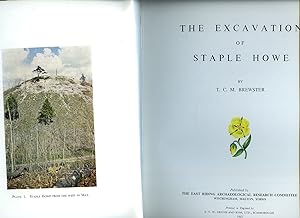
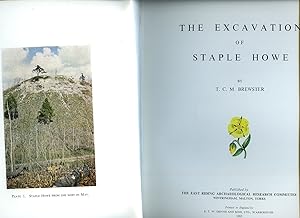
In den WarenkorbFirst edition hard back binding in publisher's original navy buckram covered boards, blocked and lettered gilt back. 8vo. 10'' x 8''. The monument includes a Late Bronze | Early Iron Age palisaded hilltop enclosure situated on a natural chalky knoll half way down the northern scarp of the Wolds in Knapton Plantation. Separated from the main ridge of the Wold by a deep ravine, the steep-sided knoll rises to 115m above sea level and is a naturally defensive spot with commanding views over the Vale of Pickering and the Carrs. The Wolds are known to be rich in prehistoric remains, including Bronze and Iron Age linear earthworks and Early Bronze Age burial mounds. Although the exposed and practically soil-less hilltop bears no visible traces of the prehistoric settlement, the below-ground remains of the palisadedefences and some internal structures were identified during Thomas Cape Mason Brewster's excavations in the 1950s. Subsequent to the excavations, concrete markers were inserted into the backfilled foundation pits of these structures to indicate their position and a footpath was constructed up the west side of the knoll to assist visitors' access. Brewster's excavations revealed that the earliest defences comprised a relatively lightly built stockade near the top of the knoll and with three minor entrances in addition to a main gateway on the south side. This palisade was later replaced with a stronger one, located further down the slope, on a line approximating to the 111m contour. The later defences were remodelled on at least one occasion and comprised a stout timber revetment packed behind with chalk. The southern entrance was maintained throughout the life of the settlement but, presumably to increase the security of the enclosure, only one entrance existed in the later phase. The internal structures included the post-holes, hearths and floor surfaces of three huts, and the foundations of a rectangular timber granary, raised on stilts. Among the finds from the site were bronze razors of the 'Hallstatt C' type, objects of jet, bone and antler, Bronze and Iron Age pottery, clay spindle whorls and loom weights. Fragmentary human remains were also found. Contains colour frontispiece, small colour vignette to title, (iv), 161 pp (+ i) with 39 plates including maps + 95 figures throughout, triptych folding excavation plan to the rear. In Fine condition, no dust wrapper as issued, unused new book. Member of the P.B.F.A. YORKSHIRE (Jórvík).
-
The Excavation of Staple Howe | A Palisaded Hilltop Enclosure in Knapton Plantation
Verlag: Published by The East Riding Archaeological Research Committee, Wintringham, Malton, Yorkshire First Edition . 1963., 1963
Anbieter: Little Stour Books PBFA Member, Canterbury, Vereinigtes Königreich
Verbandsmitglied: PBFA
Verkäuferbewertung 5 von 5 Sternen
Erstausgabe
EUR 17,89
EUR 34,74 Versand
Versand von Vereinigtes Königreich nach USAAnzahl: 1 verfügbar
In den WarenkorbFirst edition hard back binding in publisher's original navy buckram covered boards, blocked and lettered gilt back. 8vo. 10'' x 8''. The monument includes a Late Bronze | Early Iron Age palisaded hilltop enclosure situated on a natural chalky knoll half way down the northern scarp of the Wolds in Knapton Plantation. Separated from the main ridge of the Wold by a deep ravine, the steep-sided knoll rises to 115m above sea level and is a naturally defensive spot with commanding views over the Vale of Pickering and the Carrs. The Wolds are known to be rich in prehistoric remains, including Bronze and Iron Age linear earthworks and Early Bronze Age burial mounds. Although the exposed and practically soil-less hilltop bears no visible traces of the prehistoric settlement, the below-ground remains of the palisadedefences and some internal structures were identified during Thomas Cape Mason Brewster's excavations in the 1950s. Subsequent to the excavations, concrete markers were inserted into the backfilled foundation pits of these structures to indicate their position and a footpath was constructed up the west side of the knoll to assist visitors' access. Brewster's excavations revealed that the earliest defences comprised a relatively lightly built stockade near the top of the knoll and with three minor entrances in addition to a main gateway on the south side. This palisade was later replaced with a stronger one, located further down the slope, on a line approximating to the 111m contour. The later defences were remodelled on at least one occasion and comprised a stout timber revetment packed behind with chalk. The southern entrance was maintained throughout the life of the settlement but, presumably to increase the security of the enclosure, only one entrance existed in the later phase. The internal structures included the post-holes, hearths and floor surfaces of three huts, and the foundations of a rectangular timber granary, raised on stilts. Among the finds from the site were bronze razors of the 'Hallstatt C' type, objects of jet, bone and antler, Bronze and Iron Age pottery, clay spindle whorls and loom weights. Fragmentary human remains were also found. Contains colour frontispiece, small colour vignette to title, (iv), 161 pp (+ i) with 39 plates including maps + 95 figures throughout, triptych folding excavation plan to the rear. In Fine condition, no dust wrapper as issued, unused new book. Member of the P.B.F.A. YORKSHIRE (Jórvík).
-
The Excavation of Staple Howe | A Palisaded Hilltop Enclosure in Knapton Plantation
Verlag: Published by The East Riding Archaeological Research Committee, Wintringham, Malton, Yorkshire First Edition . 1963., 1963
Anbieter: Little Stour Books PBFA Member, Canterbury, Vereinigtes Königreich
Verbandsmitglied: PBFA
Verkäuferbewertung 5 von 5 Sternen
Erstausgabe
EUR 17,89
EUR 34,74 Versand
Versand von Vereinigtes Königreich nach USAAnzahl: 1 verfügbar
In den WarenkorbFirst edition hard back binding in publisher's original navy buckram covered boards, blocked and lettered gilt back. 8vo. 10'' x 8''. The monument includes a Late Bronze | Early Iron Age palisaded hilltop enclosure situated on a natural chalky knoll half way down the northern scarp of the Wolds in Knapton Plantation. Separated from the main ridge of the Wold by a deep ravine, the steep-sided knoll rises to 115m above sea level and is a naturally defensive spot with commanding views over the Vale of Pickering and the Carrs. The Wolds are known to be rich in prehistoric remains, including Bronze and Iron Age linear earthworks and Early Bronze Age burial mounds. Although the exposed and practically soil-less hilltop bears no visible traces of the prehistoric settlement, the below-ground remains of the palisadedefences and some internal structures were identified during Thomas Cape Mason Brewster's excavations in the 1950s. Subsequent to the excavations, concrete markers were inserted into the backfilled foundation pits of these structures to indicate their position and a footpath was constructed up the west side of the knoll to assist visitors' access. Brewster's excavations revealed that the earliest defences comprised a relatively lightly built stockade near the top of the knoll and with three minor entrances in addition to a main gateway on the south side. This palisade was later replaced with a stronger one, located further down the slope, on a line approximating to the 111m contour. The later defences were remodelled on at least one occasion and comprised a stout timber revetment packed behind with chalk. The southern entrance was maintained throughout the life of the settlement but, presumably to increase the security of the enclosure, only one entrance existed in the later phase. The internal structures included the post-holes, hearths and floor surfaces of three huts, and the foundations of a rectangular timber granary, raised on stilts. Among the finds from the site were bronze razors of the 'Hallstatt C' type, objects of jet, bone and antler, Bronze and Iron Age pottery, clay spindle whorls and loom weights. Fragmentary human remains were also found. Contains colour frontispiece, small colour vignette to title, (iv), 161 pp (+ i) with 39 plates including maps + 95 figures throughout, triptych folding excavation plan to the rear. In Fine condition, no dust wrapper as issued, unused new book. Member of the P.B.F.A. YORKSHIRE (Jórvík).
-

Zustand: New. Kylie Thomas is a Senior Lecturer in the School of History and the Radical Humanities Laboratory, University College Cork, Ireland, and a Guest Researcher at NIOD Institute for War, Holocaust and Genocide Studies, the Netherlands.Aft.
-

EUR 187,38
EUR 48,99 Versand
Versand von Deutschland nach USAAnzahl: Mehr als 20 verfügbar
In den WarenkorbZustand: New. Kylie Thomas is a Senior Lecturer in the School of History and the Radical Humanities Laboratory, University College Cork, Ireland, and a Guest Researcher at NIOD Institute for War, Holocaust and Genocide Studies, the Netherlands.Aft.
-

Brief Sketches of Bridlington Quay and Neighbourhood
Verlag: Bridlington Quay:G. Furby, 1871
Anbieter: Scarthin Books ABA, ILAB., Cromford, Vereinigtes Königreich
Verkäuferbewertung 5 von 5 Sternen
EUR 59,63
EUR 34,16 Versand
Versand von Vereinigtes Königreich nach USAAnzahl: 1 verfügbar
In den WarenkorbBook Hardcover. Zustand: Good. No Jacket. 2nd Edition. Bridlington Quay:G. Furby, 1871. 2nd Edition . Good/No Jacket. pp128. Slight wear to top and bottom of spine. Gold lettering on cover still good. Some BW engravings. Originally published in 1868. This is the reissued edition. fep bears a long inscription dated 1908 from the York City and County Bank.
-
Brief Sketches of Bridlington-Quay, and the Most Striking Objects of Interest in the Neighbourhood, with map of the coast and district intended chiefly for visitors.
Verlag: Bridlington-Quay: G. Furby, 1871., 1871
Anbieter: Michael S. Kemp, Bookseller, Sheerness, KENT, Vereinigtes Königreich
Verbandsmitglied: PBFA
Verkäuferbewertung 5 von 5 Sternen
EUR 53,42
EUR 46,31 Versand
Versand von Vereinigtes Königreich nach USAAnzahl: 1 verfügbar
In den Warenkorb2nd Edition. 8vo. pp. 128; illustrations. Original decorated cloth a little rubbed and nicked on the spine. Very Good.
-
[Sir George Thomas Napier, distinguished soldier.] Autograph Letter Signed ('Geo. Napier') to 'Captn. Hamilton', regarding his request for a position, and quoting from a letter from Secretary at War Fox Maule.
Verlag: Geneva. 11 July, 1855
Anbieter: Richard M. Ford Ltd, London, Vereinigtes Königreich
Verkäuferbewertung 5 von 5 Sternen
Manuskript / Papierantiquität
EUR 66,79
EUR 5,21 Versand
Versand von Vereinigtes Königreich nach USAAnzahl: 1 verfügbar
In den WarenkorbThe letter must have been written in 1855, as Fox Maule (later Earl of Dalhousie) was appointed Secretary of State for War on 8 February of that year, and Napier died on 16 September. 4pp, 16mo. Bifolium with black border. Loss to part of second leaf caused by removal from mount, resulting in loss of a few words of text, otherwise in good condition. Begins: 'In consequence of a letter from my Son William of your regt. [i.e. the King's Own Scottish Borderers] stating your wish to be appointed a Paymaster to the Out Pensioners, I wrote to my friend Mr Fox Maule the Secy. at War, & herewith give you the answer which I am sorry to say holds out but little prospect of success'. He proceeds to transcribe Fox Maule's letter, dated 'War Office | 8th. July', adding: 'You had better not depend much upon this, but use all other interest you may have in that quarter, as the more Irons [y]ou have in the fire the [bette]r!' He concludes 'Lady Napier [jo]ins me in best compliments to Mrs. Hamilton'. In a postscript he asks for Hamilton to give the Napiers' best regards to a 'friend', whose name has been torn away, 'at Chatham'. Napier's son Major-General William Craig Emilius Napier (1818-1903) would end his career as Governor of the Royal Military College at Sandhurst.
-
[Lieutenant-General Sir George Thomas Napier.] Autograph Letter Signed ('Geo. Napier') to Daniel Flexney, concerning the loss of some bonds, written with his left hand following the loss of his right arm during the Peninsular War.
Verlag: Upminster Middlesex. 30 July, 1818
Anbieter: Richard M. Ford Ltd, London, Vereinigtes Königreich
Verkäuferbewertung 5 von 5 Sternen
Manuskript / Papierantiquität
EUR 77,52
EUR 5,21 Versand
Versand von Vereinigtes Königreich nach USAAnzahl: 1 verfügbar
In den Warenkorb1p., 4to. Bifolium. In good condition, on aged paper. Addressed on reverse of second leaf to 'Mr. Danl. Flexney | Westborne Place | Bayswater | near London', with two postmarks in red ink, one round and the other oval (the second in two parts), both giving year 1818. Docketed and with the following note above the text of the letter: 'From Lieut Col George Napier | To Mr. Danl. Flexney, written with his left hand after the loss of his right Arm in battle in the Peninsular.' The letter reads: 'Sir, | I take the liberty of asking you if by chance any box or parcel was left at your house, in which papers might be put, as I have lost some Bonds, or mislaid them. I had them before I left Bays Water, but where I put them or what is become of them I am quite ignorant, & merely write in case you may recollect my ever having mentioned them to you; I am glad to hear Mrs. Flexney is better & sincerely wishing her a good recovery I | remain Sir | Your Obedt. Servt. | Geo. Napier'.
-
Autograph Letter Signed from 'W. Taylor' (the Swahili scholar Rev. William Ernest Taylor (1856-1927)?) to Sir Thomas Lynedoch Graham, regarding Sir Gordon Sprigg and the suspension of the Cape constitution.
Verlag: Plumstead. 12 June, 1902
Anbieter: Richard M. Ford Ltd, London, Vereinigtes Königreich
Verkäuferbewertung 5 von 5 Sternen
Manuskript / Papierantiquität
EUR 298,15
EUR 5,21 Versand
Versand von Vereinigtes Königreich nach USAAnzahl: 1 verfügbar
In den Warenkorb2pp., foolscap 8vo. 54 lines of text. Good, on lightly-aged and worn paper. Addressed to 'The Hon. T. L. Graham, M.L.C., Prime Minister's Office, Cape Town.' Taylor begins by thanking Graham for his 'courteous letter' and is pleased to find that he has not been misunderstood. 'While siding with Dr. Smart it was on purely personal grounds that I wrote you. I cannot say that a number of your constituents differ from you; I do not know. What I felt was that loyalty to your Chief - faithfulness to Sir Gordon [Sprigg] in the position he has taken up - had been the loadstone that had kept you in Cabinet assocation with him. Hence my letter.' He can see that Graham holds 'very strong opinions of your own upon the question at issue. I cannot help holding different views. I have been all along against even a temporary suspension of the constitution against any tinkering whatever with the sacred right of every honest man to be represented in the Parliament (the legislature) of his country - looking upon the very idea of such a movement as a sign of weakness and surrender in the face of the enemy (the Rebel element in the Colony), but arguments, based upon facts, and he recent action of the bulk of the Progressive Party in the House, have conquered my misgivings, and I am now firmly convinced that it will be utterly impossible for Sir Gordon Sprigg and his loyal friends to successfully carry on the government of the Colony to the end that all may prosper on purely British lines, and the Cape eventually take up its proper position in the general scheme of S. A. Federation that must ere long be brought about. To my humble thinking Sir Gordon has "played his cards badly". He should have consolidated his Party and gone with them where he could not lead. Very soon he would have come out "top dog".' The letter continues with references to Lord Milner and the Afrikander Party, before concluding: 'I know a few of the Dutch constituencies up country, and the effect of rebel disfranchisement is potent. But all this, and the loud desire on the part of the wealthy amongs Dutch traders and farmers throughout the Colony in favour of peaceful progress on non-racial lines, the majority of the voting population in all Dutch constituencies will be lead by the wire-pullers of the Bond and deceitful Afrikander Parter, still and ever sor while life lasts at the cause they had at heart being so hopelessly crushed.' Six-line postscript, concluding: 'If anyone is to save the situation for Sir Gordon it is yourself. If you fail - then?' The context of the letter is explained in Sprigg's entry in the Oxford DNB: 'In 1898 Sprigg attempted to carry a redistribution bill reducing the advantage enjoyed by the Afrikaner Bond rural constituencies as against the Progressive towns, but was defeated on a motion of no confidence and appealed to the country virtually on the issue of British or Transvaal supremacy. He was defeated and had to resign. On the fall of William Philip Schreiner's ministry in June 1900, Sprigg became premier for the fourth time and governed for two years without parliamentary sanction. He was inclined to approve of a suspension of the Cape constitution as the best means of furthering the federation of South Africa. However, after Rhodes's death, in 1902, he became resolute and at the premiers' conference which took place in London that year he followed Sir Wilfrid Laurier in crushing the scheme.'.