Gesamtpreis (1 Artikel Artikel):
Versandziel:

mason march (7 Ergebnisse)
Direkt zu den wichtigsten Suchergebnissen
Suchfilter
Produktart
- Alle Product Types
- Bücher (6)
- Magazine & Zeitschriften (Keine weiteren Ergebnisse entsprechen dieser Verfeinerung)
- Comics (Keine weiteren Ergebnisse entsprechen dieser Verfeinerung)
- Noten (Keine weiteren Ergebnisse entsprechen dieser Verfeinerung)
- Kunst, Grafik & Poster (Keine weiteren Ergebnisse entsprechen dieser Verfeinerung)
- Fotografien (Keine weiteren Ergebnisse entsprechen dieser Verfeinerung)
- Karten (Keine weiteren Ergebnisse entsprechen dieser Verfeinerung)
- Manuskripte & Papierantiquitäten (1)
Zustand Mehr dazu
- Neu (Keine weiteren Ergebnisse entsprechen dieser Verfeinerung)
- Wie Neu, Sehr Gut oder Gut Bis Sehr Gut (4)
- Gut oder Befriedigend (2)
- Ausreichend oder Schlecht (Keine weiteren Ergebnisse entsprechen dieser Verfeinerung)
- Wie beschrieben (1)
Einband
Weitere Eigenschaften
- Erstausgabe (5)
- Signiert (Keine weiteren Ergebnisse entsprechen dieser Verfeinerung)
- Schutzumschlag (2)
- Angebotsfoto (7)
Sprache (1)
Gratisversand
- Kostenloser Versand nach USA (Keine weiteren Ergebnisse entsprechen dieser Verfeinerung)
Land des Verkäufers
Verkäuferbewertung
-
The Excavation of Staple Howe | A Palisaded Hilltop Enclosure in Knapton Plantation
Verlag: Published by The East Riding Archaeological Research Committee, Wintringham, Malton, Yorkshire First Edition . 1963., 1963
Anbieter: Little Stour Books PBFA Member, Canterbury, Vereinigtes Königreich
Verbandsmitglied: PBFA
Verkäuferbewertung 5 von 5 Sternen

Erstausgabe
EUR 17,70
EUR 34,37 Versand
Versand von Vereinigtes Königreich nach USAAnzahl: 1 verfügbar
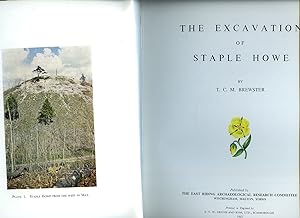
In den WarenkorbFirst edition hard back binding in publisher's original navy buckram covered boards, blocked and lettered gilt back. 8vo. 10'' x 8''. The monument includes a Late Bronze | Early Iron Age palisaded hilltop enclosure situated on a natural chalky knoll half way down the northern scarp of the Wolds in Knapton Plantation. Separated from the main ridge of the Wold by a deep ravine, the steep-sided knoll rises to 115m above sea level and is a naturally defensive spot with commanding views over the Vale of Pickering and the Carrs. The Wolds are known to be rich in prehistoric remains, including Bronze and Iron Age linear earthworks and Early Bronze Age burial mounds. Although the exposed and practically soil-less hilltop bears no visible traces of the prehistoric settlement, the below-ground remains of the palisadedefences and some internal structures were identified during Thomas Cape Mason Brewster's excavations in the 1950s. Subsequent to the excavations, concrete markers were inserted into the backfilled foundation pits of these structures to indicate their position and a footpath was constructed up the west side of the knoll to assist visitors' access. Brewster's excavations revealed that the earliest defences comprised a relatively lightly built stockade near the top of the knoll and with three minor entrances in addition to a main gateway on the south side. This palisade was later replaced with a stronger one, located further down the slope, on a line approximating to the 111m contour. The later defences were remodelled on at least one occasion and comprised a stout timber revetment packed behind with chalk. The southern entrance was maintained throughout the life of the settlement but, presumably to increase the security of the enclosure, only one entrance existed in the later phase. The internal structures included the post-holes, hearths and floor surfaces of three huts, and the foundations of a rectangular timber granary, raised on stilts. Among the finds from the site were bronze razors of the 'Hallstatt C' type, objects of jet, bone and antler, Bronze and Iron Age pottery, clay spindle whorls and loom weights. Fragmentary human remains were also found. Contains colour frontispiece, small colour vignette to title, (iv), 161 pp (+ i) with 39 plates including maps + 95 figures throughout, triptych folding excavation plan to the rear. In Fine condition, no dust wrapper as issued, unused new book. Member of the P.B.F.A. YORKSHIRE (Jórvík).
-
The Excavation of Staple Howe | A Palisaded Hilltop Enclosure in Knapton Plantation
Verlag: Published by The East Riding Archaeological Research Committee, Wintringham, Malton, Yorkshire First Edition . 1963., 1963
Anbieter: Little Stour Books PBFA Member, Canterbury, Vereinigtes Königreich
Verbandsmitglied: PBFA
Verkäuferbewertung 5 von 5 Sternen
Erstausgabe
EUR 17,70
EUR 34,37 Versand
Versand von Vereinigtes Königreich nach USAAnzahl: 1 verfügbar
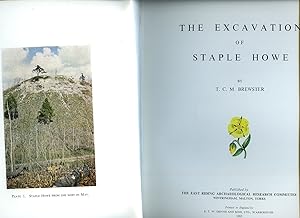
In den WarenkorbFirst edition hard back binding in publisher's original navy buckram covered boards, blocked and lettered gilt back. 8vo. 10'' x 8''. The monument includes a Late Bronze | Early Iron Age palisaded hilltop enclosure situated on a natural chalky knoll half way down the northern scarp of the Wolds in Knapton Plantation. Separated from the main ridge of the Wold by a deep ravine, the steep-sided knoll rises to 115m above sea level and is a naturally defensive spot with commanding views over the Vale of Pickering and the Carrs. The Wolds are known to be rich in prehistoric remains, including Bronze and Iron Age linear earthworks and Early Bronze Age burial mounds. Although the exposed and practically soil-less hilltop bears no visible traces of the prehistoric settlement, the below-ground remains of the palisadedefences and some internal structures were identified during Thomas Cape Mason Brewster's excavations in the 1950s. Subsequent to the excavations, concrete markers were inserted into the backfilled foundation pits of these structures to indicate their position and a footpath was constructed up the west side of the knoll to assist visitors' access. Brewster's excavations revealed that the earliest defences comprised a relatively lightly built stockade near the top of the knoll and with three minor entrances in addition to a main gateway on the south side. This palisade was later replaced with a stronger one, located further down the slope, on a line approximating to the 111m contour. The later defences were remodelled on at least one occasion and comprised a stout timber revetment packed behind with chalk. The southern entrance was maintained throughout the life of the settlement but, presumably to increase the security of the enclosure, only one entrance existed in the later phase. The internal structures included the post-holes, hearths and floor surfaces of three huts, and the foundations of a rectangular timber granary, raised on stilts. Among the finds from the site were bronze razors of the 'Hallstatt C' type, objects of jet, bone and antler, Bronze and Iron Age pottery, clay spindle whorls and loom weights. Fragmentary human remains were also found. Contains colour frontispiece, small colour vignette to title, (iv), 161 pp (+ i) with 39 plates including maps + 95 figures throughout, triptych folding excavation plan to the rear. In Fine condition, no dust wrapper as issued, unused new book. Member of the P.B.F.A. YORKSHIRE (Jórvík).
-
The Excavation of Staple Howe | A Palisaded Hilltop Enclosure in Knapton Plantation
Verlag: Published by The East Riding Archaeological Research Committee, Wintringham, Malton, Yorkshire First Edition . 1963., 1963
Anbieter: Little Stour Books PBFA Member, Canterbury, Vereinigtes Königreich
Verbandsmitglied: PBFA
Verkäuferbewertung 5 von 5 Sternen
Erstausgabe
EUR 17,70
EUR 34,37 Versand
Versand von Vereinigtes Königreich nach USAAnzahl: 1 verfügbar
In den WarenkorbFirst edition hard back binding in publisher's original navy buckram covered boards, blocked and lettered gilt back. 8vo. 10'' x 8''. The monument includes a Late Bronze | Early Iron Age palisaded hilltop enclosure situated on a natural chalky knoll half way down the northern scarp of the Wolds in Knapton Plantation. Separated from the main ridge of the Wold by a deep ravine, the steep-sided knoll rises to 115m above sea level and is a naturally defensive spot with commanding views over the Vale of Pickering and the Carrs. The Wolds are known to be rich in prehistoric remains, including Bronze and Iron Age linear earthworks and Early Bronze Age burial mounds. Although the exposed and practically soil-less hilltop bears no visible traces of the prehistoric settlement, the below-ground remains of the palisadedefences and some internal structures were identified during Thomas Cape Mason Brewster's excavations in the 1950s. Subsequent to the excavations, concrete markers were inserted into the backfilled foundation pits of these structures to indicate their position and a footpath was constructed up the west side of the knoll to assist visitors' access. Brewster's excavations revealed that the earliest defences comprised a relatively lightly built stockade near the top of the knoll and with three minor entrances in addition to a main gateway on the south side. This palisade was later replaced with a stronger one, located further down the slope, on a line approximating to the 111m contour. The later defences were remodelled on at least one occasion and comprised a stout timber revetment packed behind with chalk. The southern entrance was maintained throughout the life of the settlement but, presumably to increase the security of the enclosure, only one entrance existed in the later phase. The internal structures included the post-holes, hearths and floor surfaces of three huts, and the foundations of a rectangular timber granary, raised on stilts. Among the finds from the site were bronze razors of the 'Hallstatt C' type, objects of jet, bone and antler, Bronze and Iron Age pottery, clay spindle whorls and loom weights. Fragmentary human remains were also found. Contains colour frontispiece, small colour vignette to title, (iv), 161 pp (+ i) with 39 plates including maps + 95 figures throughout, triptych folding excavation plan to the rear. In Fine condition, no dust wrapper as issued, unused new book. Member of the P.B.F.A. YORKSHIRE (Jórvík).
-

The D. A. Calls it Murder
Verlag: Published by The Franklin Library, Franklin Center, Pennsylvania, First Edition Thus . 1989., 1989
Anbieter: Little Stour Books PBFA Member, Canterbury, Vereinigtes Königreich
Verbandsmitglied: PBFA
Verkäuferbewertung 5 von 5 Sternen
Erstausgabe
EUR 47,20
EUR 34,37 Versand
Versand von Vereinigtes Königreich nach USAAnzahl: 1 verfügbar
In den WarenkorbFirst edition thus hard back binding in publisher's original faux black leather covers, the spine divided into three panels, lettered in the second, and third, tools to the other, gilt stamped design to the front and rear boards, all page edges gilt, grey and white end paper design. 8vo. 8½'' x 5½''. Produced on acid free paper. Contains frontispiece artwork by David Tamura specially commissioned for this edition, 243 + i pp. In Fine condition. Member of the P.B.F.A. DETECTIVE | CRIME FICTION.
-
The D. A. Calls it Murder
Verlag: Published by Cassell and Company, Ltd., London reprinted edition 1942., 1942
Anbieter: Little Stour Books PBFA Member, Canterbury, Vereinigtes Königreich
Verbandsmitglied: PBFA
Verkäuferbewertung 5 von 5 Sternen
EUR 147,50
EUR 34,37 Versand
Versand von Vereinigtes Königreich nach USAAnzahl: 1 verfügbar
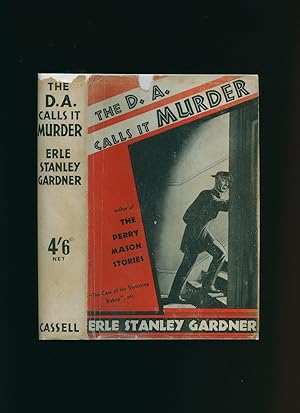
In den WarenkorbHard back turquoise cloth covers with black title block. 251 pp. Small ink message to free front end paper, dusty page tops, light spotting to rear end paper in Very Good dust wrapper with 5 mm chip to top of upper panel and spine tip [titles not affected], rubs to fore edge, two faint crease lines to upper panel. White spine 8/10 with crisp black titles and 4/6, great period art work front cover. Dust wrapper protected. Member of the P.B.F.A. DETECTIVE | CRIME FICTION.
-
Over The Hump | Death Rides a Box Car
Verlag: Published by Gordon Martin Publishing Co. Ltd., 8 Breams Buildings, London First UK Edition . 1945., 1945
Anbieter: Little Stour Books PBFA Member, Canterbury, Vereinigtes Königreich
Verbandsmitglied: PBFA
Verkäuferbewertung 5 von 5 Sternen
Erstausgabe
EUR 649,01
EUR 34,37 Versand
Versand von Vereinigtes Königreich nach USAAnzahl: 1 verfügbar
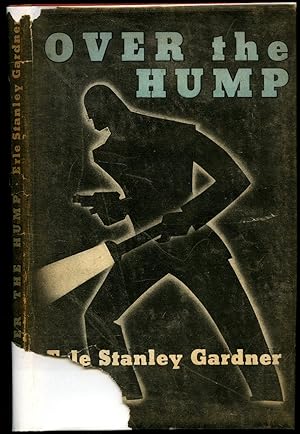
In den WarenkorbFirst British edition hard back binding in publisher's original crimson cloth covers, black title and author lettering to the spine. 8vo. 9'' x 5½''. Contains 92 printed pages of text. The American title 'Death Rides a Box Car' appeared in 'The American Magazine' which was first published in January 1945. Near Fine condition book in near Very Good condition dust wrapper with 40 mm piece of paper missing across the bottom of the front cover, a little age tanning of the white paper to the rear cover, not price clipped 5/-. Dust wrapper supplied in archive acetate film protection, it does not adhere to the book or to the dust wrapper. We currently hold in stock 15 other books by this author. Member of the P.B.F.A. DETECTIVE | CRIME FICTION.
-

Casanova de Seingalt, Giacomo Girolamo (1725-98). Libertine, adventurer, spy & autobiographer
Anbieter: Hünersdorff Rare Books ABA ILAB, London, Vereinigtes Königreich
Verkäuferbewertung 3 von 5 Sternen

Manuskript / Papierantiquität
EUR 23.010,38
EUR 25,78 Versand
Versand von Vereinigtes Königreich nach USAAnzahl: 1 verfügbar
In den WarenkorbNo Binding. Zustand: Very Good. Casanova de Seingalt, Giacomo Girolamo (1725-98). Libertine, adventurer, spy & autobiographer. Autograph letter in ink, signed 'G.Casanova' addressed to Count Ottaviano Antonio di Collalto, his benefactor & fellow freemason, Dated: Dux, 2 March 1789, (reply received 9 March 1789). 3 pages in 4to. Writing 2 months before the outbreak of the French Revolution from his home at Dux in Bohemia, Casanova warmly thanks an aristocratic benefactor for his letter of 14 February, addressing him as 'Excellenza mio adorato Padrone' (Excellency my adored master) Your gentle and generous heart dictates to your happy pen everything that can be read in your writing, by which you can only notice sentiments of truth and of virtue May God repay you for the kindness you have shown me, and preserve your good health for a long time as for the advantage of your illustrious family and also to give me, in case of need, new token of your grace and of your protection . He refers to Collalto s sad news that prince Karl von Li[e] chtenstein(1) was dying, but it was also welcomed because over here he was thought dead, and [instead] as long as there is breath there is hope ; Casanova comments on social events Now the Carnival is over and so are the balls and the nice court assemblies, to which Your Excellency deservingly took part A correspondent of mine from Venice tells me that the Doge(2) is dying, and that according to the public opinion the ducal horn will be appointed to His Excellency the Procurator Memmo (3) , but the same [correspondent] also tells me that he has no money, and that he is quarrelling with the Martinenghis, who claim from him 145.000 ducati for works carried out in the palace at S. Marmola which he gave as a dowry to his daughter I am told that in Vienna the Venetian minister will be a patrician with a noble title, but I do not know who he will be. The last paragraph contains an extended reference to [Lorenzo] da Ponte, Mozart s librettist : I was told that the Italian music was dismissed. I am wondering if the abbé da Ponte4 will stay. He doesn t write to me anymore. He is angry with me because I didn t praise his poems. He who flatters is not a friend (1) Karl Joseph Prince of Liechtenstein (1730-89) , Austrian general; (2) Doge Paolo Renier (1779-89) was actually succeeded by Ludovico Manin (1789-97), the last doge; (3) Andrea Memmo (1729-93) Proculator of St Mark s, architectural theorist, was in financial difficulties when he left his palace to his daughter as a dowry to the Martinenghi family; (4) Lorenzo da Ponte (1749-1838), born as Emanuele Conigliano, a converted Venetian Jew, was a gifted opera librettist, poet and priest, who wrote the libretti for Mozart s three most famous operas :Don Giovanni, The Marriage of Figaro & Cosi fan tutte; he made his career as librettist to the Italian opera in Vienna under the patronage of the Emperor Joseph II, but lost his post under the new Emperor Leopold; he had met Casanova in October 1787; both men had been expelled from Venice and had a tempestuous relationship (da Ponte was critical of Casanova in his memoirs); after a spell in London, da Ponte emigrated to New York, where he produced the first full performance of Don Giovanni, and founded the New York Opera Company in 1836, the predecessor of the New York Metropolitan Opera House. Traces of ink oxidization throughout, otherwise in very good condition. Autograph letters by Casanova of this length and interest are rarely offered for sale.