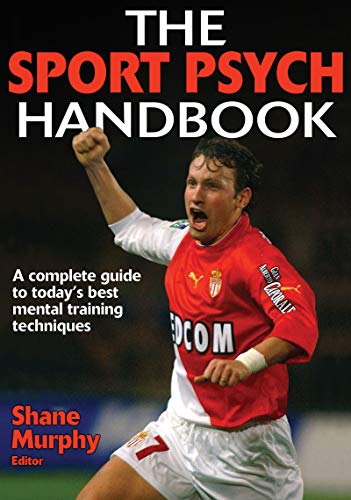
Shane Murphy, PhD, is one of the nation's leading sport psychologists, with expertise in performance excellence, competitiveness, and teamwork. He is currently assistant professor at Western Connecticut State University. Murphy served as a sport psychologist to the U.S. Olympic team at the 1988 Summer Games in Seoul, the U.S. Olympic team at the 1992 Winter Games in Albertville, and the 1996 U.S. slalom canoe and kayak teams in Atlanta. In addition, he was sport psychology consultant to the U.S. snowboard team from 1999 to 2002. For seven years he worked for the United States Olympic Committee (USOC) as head of its sport psychology department and later as the associate director of its sport science and technology division.
Murphy is a popular speaker and author of the best-selling book The Achievement Zone: An 8-Step Guide to Peak Performance in All Arenas of Life. He has appeared on many television and radio programs on ABC, CBS, MSNBC, CNN, and NPR. He also has had articles containing or referring to his work in USA Today, The Washington Post, The New York Times, Newsweek, and other major publications. He is a former president of the division of sport and exercise psychology of the American Psychological Association (APA) and is a fellow of the Association for the Advancement of Applied Sport Psychology (AAASP).
Murphy lives in Trumbull, Connecticut, with his wife, Annemarie, and two children, Bryan and Theresa.
ABOUT THE CONTRIBUTORS
John F. Eliot, PhD, is the director of sport psychology in the department of kinesiology at Rice University in Houston, Texas. His areas of specialization include performance enhancement, management consulting, and rehabilitation. Eliot has worked with a wide range of sports teams, including the Houston Astros, Philadelphia Eagles, San Antonio Spurs, and Chicago White Sox, along with numerous health care and business clients.
Chris Harwood, PhD, is a lecturer in applied sport psychology at Loughborough University, United Kingdom. He is a BASES-accredited and BOA- registered sport psychologist whose research focuses on achievement motivation in sport, social psychology of elite youth sport, and performance-enhancement interventions. Harwood has served as a consultant to the Nottingham Forest Soccer Club, Lawn Tennis Association, English Cricket Board, the Football Association, and the Youth Sport Trust, plus a variety of other national governing bodies in UK sport.
Cal Botterill, PhD, is a health and performance psychology professor at the University of Winnipeg, Canada. He has served as a consultant to seven Canadian Olympic teams, five NHL Hockey hockey teams—including the 1994 Stanley Cup champion the New York Rangers—and numerous corporations such as Coca-Cola and Great-West Life Assurance Company. Cal has authored hundreds of articles, books, videos, and international presentations.
Bruce D. Hale, PhD, is an associate professor of kinesiology at Penn State University, Berks-Lehigh Valley College in Reading, Pennsylvania. His areas of specialization include sport and exercise psychology and educational sport psychology. He is a fellow of the Association for the Advancement of Applied Sport Psychology (AAASP) and has been a performance-enhancement consultant to hundreds of college, professional, and elite national teams. Hale has worked with USA Wrestling, the British Biathlon, USRowing, TAC, and USA Rugby.
Mitch Abrams, PsyD, is president and founder of Learned Excellence for Athletes, a sport psychology consulting company; an adjunct faculty member of Fairleigh Dickinson University; and director of inpatient psychology at Northern State Prison in Newark, New Jersey. He specializes in developing programs for athletes to improve performance through emotion management. Abrams is a member of the American Psychological Association's (APA) division of exercise andd sport psychology and the Association for the Advancement of Applied Sport Psychology (AAASP).
Jim Loehr, EdD, is chairman and CEO of LGE Performance Systems, a training company specializing in performance enhancement for professionals and athletes. He is a member of the American Psychological Association (APA), the Association for the Advancement of Applied Sport Psychology (AAASP), and the American College of Sports Medicine (ACSM). Loehr has worked with a wide range of teams—the United States Tennis Association (USTA), Women's Tennis Association (WTA), International Tennis Federation (ITF), and Intercollegiate Tennis Association (ITA)—as well as professional athletes from the NBA, NFL, NHL, PGA, and LPGA, wrote 13 books, received numerous awards for his contributions in sport psychology, and contributes regularly to a wide variety of sports and business publications.
Tracy L. Veach, EdD, is a professor of Psychiatry and Behavioral Sciences and Internal Medicine at the University of Nevada School of Medicine. He works with individual athletes and teams in performance enhancement and integrative health. He has consulted with a wide range of athletes at high school, collegiate, and national team levels in football, basketball, swimming, track and field, and equestrian sports. Veach also served as a sport consultant to a world-record-setting U.S. sports parachute team.
Charles H. Brown, PhD, is director of FPS Performance, a Charlotte, North Carolina-based company specializing in performance enhancement of athletes, performing artists, and business professionals. He has worked with athletes at every level, specializing in the contextual factors that impact performance, athletes' relationships, and work-life balance of elite performers. Brown is a consultant certified by the Association for the Advancement of Applied Sport Psychology (AAASP), a member of the United States Olympic Committee (USOC) sport psychology registry, and a member of the National Register of Health Service Providers in Psychology.
Sean C. McCann, PhD, is the head of the United States Olympic Committee (USOC) sport psychology department. He works directly with teams and coaches at the U.S. Olympic Training Center and has traveled with the last five Olympic teams as a sport psychologist. McCann writes extensively about sport psychology in several outlets, including refereed journals, book chapters, columns, brochures, and workbooks for Olympic athletes and coaches.
Bradley Hack, PhD, is the director of sport psychology for the department of athletics at the University of North Carolina at Chapel Hill. He is an executive committee member of the American Psychological Association's (APA) division of exercise and sport psychology. In 2003 he was appointed chairman of the division's Presidential Task Force to establish national standards for sport psychology training, education, and experience for sport psychologists.
Mark B. Andersen, PhD, is an associate professor at the School of Human Movement, Recreation, and Performance at Victoria University in Melbourne, Australia. He specializes in supervision, injury, exercise, quality of life, and chronic disease. Andersen has worked with athletes from a wide range of sports, including the Arizona State University Intercollegiate Athletics, Victorian Diving Association, and various other diving, swimming, track and field, wrestling, and golf teams. Andersen has been on the editorial boards of The Sport Psychologist, Journal of Applied Sport Psychology, and the Journal of Sport & Exercise Psychology.
David Tod is a PhD candidate at Victoria University in Melbourne, Australia, specializing in professional practice and performance enhancement. Tod has worked with the Northern Institute of the New Zealand Academy of Sport and with professional rugby unions and rugby league teams. He hhas also worked with athletes in numerous sports including international track and field, swimming, cricket, triathlon, cycling, and powerlifting.
Kirsten Peterson, PhD, is a member of the United States Olympic Committee's (USOC) sport psychology staff, providing counseling and performance enhancement services to athletes and coaches of numerous Olympic, Paralympic, and Pan American sports. She has traveled as part of the USOC sport psychology staff for three Olympic teams. Peterson is a licensed psychologist, a member of the American Psychological Association (APA), and is a certified consultant through the Association for the Advancement of Applied Sport Psychology (AAASP).
Jerry R. May, PhD, is a professor of Psychiatry and Behavioral Sciences at the University of Nevada School of Medicine. He developed and implemented the first official sport psychology program for the United States Olympic Committee (USOC) and has worked with such teams as the U.S. Alpine ski team (1980-92), U.S. national soccer team (1997-98), and the U.S. sailing team (1992-present), and athletes in sports ranging from soccer, golf, tennis, and basketball to skiing, sailing, biathlon, and powerlifting.
Clark Perry, PhD, is senior consultant psychologist at the Australian Institute of Sport in Canberra and managing director of PST Systems, a performance enhancement and training company. He is a world leader in sport psychology, leadership, and team development, having worked closely with some of the world's best athletes as a member of four Olympic Games, three Commonwealth Games, eight World Championships, five Pan Pacific Swimming Championships, and three Super 12 Rugby Finals. Perry has served as senior psychologist to the Australian Olympic Swim Team, Australian Cycling, Triathlon Australia, Australian Baseball, ACT Brumbies, and the Australian Wallabies.
Mark Anshel, PhD, is a professor at Middle Tennessee State University in the department of health, physical education, and recreation. His areas of research and writing have included coping with stressful events in sport and the use of steroids and other banned drugs among competitive athletes. He is a certified consultant for the Association for the Advancement of Applied Sport Psychology (AAASP).
Gloria Balague, PhD, directs the sport psychology services at the University of Illinois at Chicago Sports Medicine Center and Human Performance Lab. An internationally acclaimed sport psychology consultant and speaker, she most recently addressed the Sydney Olympic Scientific Congress in Australia. Balague is a member of the executive committee and president of the sport psychology division of the International Association of Applied Psychology.
Charles J. Hardy, PhD, is the acting dean of the Jack N. Averitt College of Graduate Studies and a professor in the Juann-Ping Hsu School of Public Health at Georgia Southern University. He is a past president of the Association for the Advancement of Applied Sport Psychology (AAASP). His primary area of research has been in social influence processes in exercise and sport. He has extensive consulting experience at the youth sport, high school, university, Olympic, and professional levels.
Karen D. Cogan, PhD, is a psychologist and assistant professor at the University of North Texas (UNT). She has been a consultant to the U.S. ski team at the Olympics, a staff psychologist with the Counseling and Testing Center at UNT, a faculty member of the Center for Sport Psychology, and author or coauthor of several publications, including Sport Psychology Library: Gymnastics. Cogan is a member of the Association for the Advancement of Applied Sport Psychology (AAASP) and the American Psychological Association (APA).
Kevin L. Burke, PhD, is an associate professor in the Jiann-Ping Hsu School of Public Health at Georgia Southern University. As a ceertified sport psychology consultant of the Association for the Advancement of Applied Sport Psychology (AAASP), Burke has advised professional, college, high school, and recreational athletes from various sports. He has also coauthored Sport Psychology Library: Basketball and Tennis and actively served on numerous editorial boards for journals and research committees within the field.
R. Kelly Crace, PhD, is director of the counseling center and adjunct associate professor in psychology at the College of William & Mary. He is a licensed psychologist and a certified sport psychology consultant. Crace is co-developer of the Life Values Inventory, an empirically-based values clarification survey. His research and consultation focus on values and transition as applied to both individual and organizational development.
Shane Murphy, PhD, is one of the nation's leading sport psychologists, with expertise in performance excellence, competitiveness, and teamwork. He is currently assistant professor at Western Connecticut State University. Murphy served as a sport psychologist to the U.S. Olympic team at the 1988 Summer Games in Seoul, the U.S. Olympic team at the 1992 Winter Games in Albertville, and the 1996 U.S. slalom canoe and kayak teams in Atlanta. In addition, he was sport psychology consultant to the U.S. snowboard team from 1999 to 2002. For seven years he worked for the United States Olympic Committee (USOC) as head of its sport psychology department and later as the associate director of its sport science and technology division.
Murphy is a popular speaker and author of the best-selling book The Achievement Zone: An 8-Step Guide to Peak Performance in All Arenas of Life. He has appeared on many television and radio programs on ABC, CBS, MSNBC, CNN, and NPR. He also has had articles containing or referring to his work in USA Today, The Washington Post, The New York Times, Newsweek, and other major publications. He is a former president of the division of sport and exercise psychology of the American Psychological Association (APA) and is a fellow of the Association for the Advancement of Applied Sport Psychology (AAASP).
Murphy lives in Trumbull, Connecticut, with his wife, Annemarie, and two children, Bryan and Theresa.
ABOUT THE CONTRIBUTORS
John F. Eliot, PhD, is the director of sport psychology in the department of kinesiology at Rice University in Houston, Texas. His areas of specialization include performance enhancement, management consulting, and rehabilitation. Eliot has worked with a wide range of sports teams, including the Houston Astros, Philadelphia Eagles, San Antonio Spurs, and Chicago White Sox, along with numerous health care and business clients.
Chris Harwood, PhD, is a lecturer in applied sport psychology at Loughborough University, United Kingdom. He is a BASES-accredited and BOA- registered sport psychologist whose research focuses on achievement motivation in sport, social psychology of elite youth sport, and performance-enhancement interventions. Harwood has served as a consultant to the Nottingham Forest Soccer Club, Lawn Tennis Association, English Cricket Board, the Football Association, and the Youth Sport Trust, plus a variety of other national governing bodies in UK sport.
Cal Botterill, PhD, is a health and performance psychology professor at the University of Winnipeg, Canada. He has served as a consultant to seven Canadian Olympic teams, five NHL Hockey hockey teams'including the 1994 Stanley Cup champion the New York Rangers'and numerous corporations such as Coca-Cola and Great-West Life Assurance Company. Cal has authored hundreds of articles, books, videos, and international presentations.
Bruce D. Hale, PhD, is an associate professor of kinesiology at Penn State University, Berks-Lehigh Valley College in Reading, Pennsylvania. His areas of specialization include sport and exercise psychology and educational sport psychology. He is a fellow of the Association for the Advancement of Applied Sport Psychology (AAASP) and has been a performance-enhancement consultant to hundreds of college, professional, and elite national teams. Hale has worked with USA Wrestling, the British Biathlon, USRowing, TAC, and USA Rugby.
Mitch Abrams, PsyD, is president and founder of Learned Excellence for Athletes, a sport psychology consulting company; an adjunct faculty member of Fairleigh Dickinson University; and director of inpatient psychology at Northern State Prison in Newark, New Jersey. He specializes in developing programs for athletes to improve performance through emotion management. Abrams is a member of the American Psychological Association's (APA) division of exercise andd sport psychology and the Association for the Advancement of Applied Sport Psychology (AAASP).
Jim Loehr, EdD, is chairman and CEO of LGE Performance Systems, a training company specializing in performance enhancement for professionals and athletes. He is a member of the American Psychological Association (APA), the Association for the Advancement of Applied Sport Psychology (AAASP), and the American College of Sports Medicine (ACSM). Loehr has worked with a wide range of teams'the United States Tennis Association (USTA), Women's Tennis Association (WTA), International Tennis Federation (ITF), and Intercollegiate Tennis Association (ITA)'as well as professional athletes from the NBA, NFL, NHL, PGA, and LPGA, wrote 13 books, received numerous awards for his contributions in sport psychology, and contributes regularly to a wide variety of sports and business publications.
Tracy L. Veach, EdD, is a professor of Psychiatry and Behavioral Sciences and Internal Medicine at the University of Nevada School of Medicine. He works with individual athletes and teams in performance enhancement and integrative health. He has consulted with a wide range of athletes at high school, collegiate, and national team levels in football, basketball, swimming, track and field, and equestrian sports. Veach also served as a sport consultant to a world-record-setting U.S. sports parachute team.
Charles H. Brown, PhD, is director of FPS Performance, a Charlotte, North Carolina-based company specializing in performance enhancement of athletes, performing artists, and business professionals. He has worked with athletes at every level, specializing in the contextual factors that impact performance, athletes' relationships, and work-life balance of elite performers. Brown is a consultant certified by the Association for the Advancement of Applied Sport Psychology (AAASP), a member of the United States Olympic Committee (USOC) sport psychology registry, and a member of the National Register of Health Service Providers in Psychology.
Sean C. McCann, PhD, is the head of the United States Olympic Committee (USOC) sport psychology department. He works directly with teams and coaches at the U.S. Olympic Training Center and has traveled with the last five Olympic teams as a sport psychologist. McCann writes extensively about sport psychology in several outlets, including refereed journals, book chapters, columns, brochures, and workbooks for Olympic athletes and coaches.
Bradley Hack, PhD, is the director of sport psychology for the department of athletics at the University of North Carolina at Chapel Hill. He is an executive committee member of the American Psychological Association's (APA) division of exercise and sport psychology. In 2003 he was appointed chairman of the division's Presidential Task Force to establish national standards for sport psychology training, education, and experience for sport psychologists.
Mark B. Andersen, PhD, is an associate professor at the School of Human Movement, Recreation, and Performance at Victoria University in Melbourne, Australia. He specializes in supervision, injury, exercise, quality of life, and chronic disease. Andersen has worked with athletes from a wide range of sports, including the Arizona State University Intercollegiate Athletics, Victorian Diving Association, and various other diving, swimming, track and field, wrestling, and golf teams. Andersen has been on the editorial boards of The Sport Psychologist, Journal of Applied Sport Psychology, and the Journal of Sport & Exercise Psychology.
David Tod is a PhD candidate at Victoria University in Melbourne, Australia, specializing in professional practice and performance enhancement. Tod has worked with the Northern Institute of the New Zealand Academy of Sport and with professional rugby unions and rugby league teams. He hhas also worked with athletes in numerous sports including international track and field, swimming, cricket, triathlon, cycling, and powerlifting.
Kirsten Peterson, PhD, is a member of the United States Olympic Committee's (USOC) sport psychology staff, providing counseling and performance enhancement services to athletes and coaches of numerous Olympic, Paralympic, and Pan American sports. She has traveled as part of the USOC sport psychology staff for three Olympic teams. Peterson is a licensed psychologist, a member of the American Psychological Association (APA), and is a certified consultant through the Association for the Advancement of Applied Sport Psychology (AAASP).
Jerry R. May, PhD, is a professor of Psychiatry and Behavioral Sciences at the University of Nevada School of Medicine. He developed and implemented the first official sport psychology program for the United States Olympic Committee (USOC) and has worked with such teams as the U.S. Alpine ski team (1980-92), U.S. national soccer team (1997-98), and the U.S. sailing team (1992-present), and athletes in sports ranging from soccer, golf, tennis, and basketball to skiing, sailing, biathlon, and powerlifting.
Clark Perry, PhD, is senior consultant psychologist at the Australian Institute of Sport in Canberra and managing director of PST Systems, a performance enhancement and training company. He is a world leader in sport psychology, leadership, and team development, having worked closely with some of the world's best athletes as a member of four Olympic Games, three Commonwealth Games, eight World Championships, five Pan Pacific Swimming Championships, and three Super 12 Rugby Finals. Perry has served as senior psychologist to the Australian Olympic Swim Team, Australian Cycling, Triathlon Australia, Australian Baseball, ACT Brumbies, and the Australian Wallabies.
Mark Anshel, PhD, is a professor at Middle Tennessee State University in the department of health, physical education, and recreation. His areas of research and writing have included coping with stressful events in sport and the use of steroids and other banned drugs among competitive athletes. He is a certified consultant for the Association for the Advancement of Applied Sport Psychology (AAASP).
Gloria Balague, PhD, directs the sport psychology services at the University of Illinois at Chicago Sports Medicine Center and Human Performance Lab. An internationally acclaimed sport psychology consultant and speaker, she most recently addressed the Sydney Olympic Scientific Congress in Australia. Balague is a member of the executive committee and president of the sport psychology division of the International Association of Applied Psychology.
Charles J. Hardy, PhD, is the acting dean of the Jack N. Averitt College of Graduate Studies and a professor in the Juann-Ping Hsu School of Public Health at Georgia Southern University. He is a past president of the Association for the Advancement of Applied Sport Psychology (AAASP). His primary area of research has been in social influence processes in exercise and sport. He has extensive consulting experience at the youth sport, high school, university, Olympic, and professional levels.
Karen D. Cogan, PhD, is a psychologist and assistant professor at the University of North Texas (UNT). She has been a consultant to the U.S. ski team at the Olympics, a staff psychologist with the Counseling and Testing Center at UNT, a faculty member of the Center for Sport Psychology, and author or coauthor of several publications, including Sport Psychology Library: Gymnastics. Cogan is a member of the Association for the Advancement of Applied Sport Psychology (AAASP) and the American Psychological Association (APA).
Kevin L. Burke, PhD, is an associate professor in the Jiann-Ping Hsu School of Public Health at Georgia Southern University. As a ceertified sport psychology consultant of the Association for the Advancement of Applied Sport Psychology (AAASP), Burke has advised professional, college, high school, and recreational athletes from various sports. He has also coauthored Sport Psychology Library: Basketball and Tennis and actively served on numerous editorial boards for journals and research committees within the field.
R. Kelly Crace, PhD, is director of the counseling center and adjunct associate professor in psychology at the College of William & Mary. He is a licensed psychologist and a certified sport psychology consultant. Crace is co-developer of the Life Values Inventory, an empirically-based values clarification survey. His research and consultation focus on values and transition as applied to both individual and organizational development.