
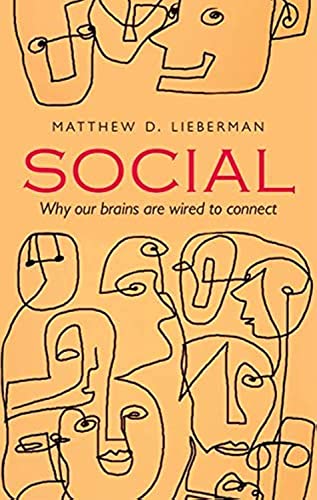
Social: Why our brains are wired to connect
Lieberman, Matthew D.
ISBN 10: 0198743815 ISBN 13: 9780198743811
Verlag: OUP Oxford (edition ), 2015
Gebraucht
Paperback
Verkäufer
BooksRun, Philadelphia, PA, USA
Verkäuferbewertung 5 von 5 Sternen

AbeBooks-Verkäufer seit 2. Februar 2016
Dieser Artikel ist nicht mehr verfügbar.
Beschreibung
Beschreibung:
It's a well-cared-for item that has seen limited use. The item may show minor signs of wear. All the text is legible, with all pages included. It may have slight markings and/or highlighting. Bestandsnummer des Verkäufers 0198743815-11-1
Inhaltsangabe:
Why are we influenced by the behaviour of complete strangers? Why does the brain register similar pleasure when I perceive something as 'fair' or when I eat chocolate? Why can we be so profoundly hurt by bereavement? What are the evolutionary benefits of these traits? The young discipline of 'social cognitive neuroscience' has been exploring this fascinating interface between brain science and human behaviour since the late 1990s. Now one of its founding pioneers, Matthew D. Lieberman, presents the discoveries that he and fellow researchers have made. Using fMRI scanning and a range of other techniques, they have been able to see that the brain responds to social pain and pleasure the same way as physical pain and pleasure; and that unbeknown to ourselves, we are constantly 'mindreading' other people so that we can fit in with them. It is clear that our brains are designed respond to and be influenced by others. For good evolutionary reasons, he argues, we are wired to be social. The implications are numerous and profound. Do we have to rethink what we understand by identity, and free will? How can managers improve the way their teams relate and perform? Could we organize large social institutions in ways that would work far better? And could there be whole new methods of education?
Über die Autorin bzw. den Autor: Matthew D. Lieberman is Professor at the Social Cognitive Neuroscience Laboratory at the University of California, Los Angeles.
„Über diesen Titel“ kann sich auf eine andere Ausgabe dieses Titels beziehen.
Bibliografische Details
Titel: Social: Why our brains are wired to connect
Verlag: OUP Oxford (edition )
Erscheinungsdatum: 2015
Einband: Paperback
Zustand: Very Good