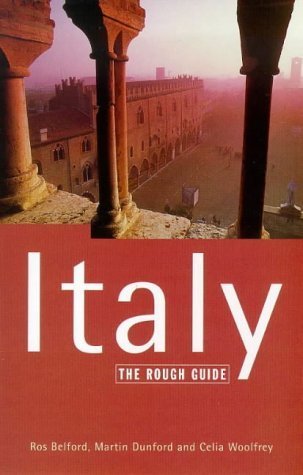
This comprehensive guide to Italy features information on areas including Florence and the Amalfi coast. It provides details on transport, restaurants, and accommodation, as well as information on activities ranging from hiking in the Dolomites to attending an Italian football match.
Where to go
The North is "discovered" Italy. The regions of Piemonte and Lombardy, in the northwest, make up the richest and most cosmopolitan part of the country, and the two main centres, Turin and Milan, are its wealthiest large cities. In their southern reaches, these regions are flat and scenically dull, especially Lombardy, but in the north the presence of the Alps shapes the character of each: skiing and hiking are prime activities, and the lakes and mountains of Lombardy are time-honoured tourist territory. Liguria, the small coastal province to the south, has long been known as the "Italian Riviera" and is accordingly crowded with sun-seeking holiday-makers for much of the summer season. Nonetheless it's a beautiful stretch of coast, and its capital, Genoa, is a bustling port with a long seafaring tradition.
Much of the most dramatic mountain scenery lies within the smaller northern regions. In the far northwest, the tiny bilingual region of Valle d'Aosta is home to some of the country's most frequented ski resorts, and is bordered by the tallest of the Alps - the Matterhorn and Mont Blanc. Moving east, Trentino-Alto Adige, another bilingual region, and one in which the national boundary is especially blurred, marks the beginning of the Dolomites mountain range, where Italy's largest national park, the Stelvio, lies amid some of the country's most memorable landscapes.
The Dolomites stretch into the northeastern regions of the Veneto and Friuli-Venezia Giulia. However here the main focus of interest is, of course, Venice; a unique city, and every bit as beautiful as its reputation would suggest (although this means you won't be alone in appreciating it). If the crowds are too much, there's also the arc of historic towns outside the city - Verona, Padua and Vicenza, all centres of interest in their own right, although rather overshadowed by their illustrious neighbour. To the south, the region of Emilia-Romagna has been at the heart of Italy's postwar industrial boom and has a standard of living on a par with Piemonte and Lombardy, although it's also a traditional stronghold of the Italian Left. Its coast is popular among Italians, and Rimini is about Italy's brashest, tackiest (and trendiest) seaside resort, with a high reputation on the clubbing scene. You may do better to ignore the beaches altogether, however, and concentrate on the ancient centres of Ravenna, Ferrara, Parma and the regional capital of Bologna, one of Italy's liveliest, most historic but least appreciated cities.
Central Italy represents perhaps the most commonly perceived image of the country, and Tuscany, with its classic rolling countryside and the art-packed towns of Florence, Pisa and Siena, to name only the three best-known centres, is one of its most visited regions. Neighbouring Umbria is similar in all but its tourist numbers, though it gets busier every year, as visitors flock into towns such as Perugia, Spoleto and Assisi. Further east still, Marche may in time go the same way, but for the moment is comparatively untouched, its highlights being the ancient towns of Urbino and çscoli Piceno. South of Marche, the hills begin to pucker into mountains in the twin regions of Abruzzo and Molise, Italy's first really remote area if you're travelling north to south, centring on the country's highest peak - the Gran Sasso d'Italia. Molise, particularly, is a taster of the South, as is Lazio to the west, in part a poor and sometimes desolate region whose often rugged landscapes contrast with the more manicured beauty of the other central regions. Lazio's real focal point, though, is Rome, Italy's capital and the one city in the country which owes allegiance neither to the North or South, its people proudly aloof from the rest of the country's squabbles. There's nowhere quite like Rome: it's a tremendous city just to be, and in terms of historical sights outstrips everywhere else in the country by a long way.
The South proper begins south of Rome, with the region of Campania, which is as far as many tourists get. Naples is a petulant, unforgettable city, the spiritual heart of the Italian South, and on hand nearby are some of Italy's finest ancient sites in Pompeii and Herculaneum, not to mention the country's most spectacular stretch of coast around Amalfi. Basilicata and Calabria, which make up the instep and toe of Italy's boot, are harder territory but still rewarding, the emphasis less on art, more on the landscape and quiet, unspoilt coastlines. Puglia, also in the "heel" of Italy, has underrated pleasures, notably the landscape of its Gargano peninsula, the souk-like quality of its capital Bari, and the Baroque glories of Lecce in the far south. As regards Sicily, the island is really a law unto itself, a wide mixture of attractions ranging from some of the finest preserved Hellenistic treasures in Europe, to a couple of Italy's fanciest beach resorts in Taormina and Cefal , not to mention some gorgeous upland scenery. Come this far south and you're closer to Africa than Milan, and it shows, in the climate, the architecture, and the cooking - with couscous featuring on many menus in the west of the island. Sardinia, too, feels far removed from the Italian mainland, especially in its relatively undiscovered interior, although you may be content to explore its fine beaches, which are among Italy's best.