
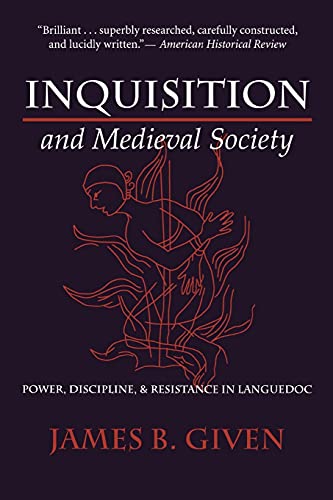
Inquisition and Medieval Society: Power, Discipline, and Resistance in Languedoc
Given, James B.
ISBN 10: 0801487595 ISBN 13: 9780801487590
Verlag: Cornell University Press, 2001
Gebraucht
Paperback
Verkäufer
WorldofBooks, Goring-By-Sea, WS, Vereinigtes Königreich
Verkäuferbewertung 5 von 5 Sternen

AbeBooks-Verkäufer seit 16. März 2007
Dieser Artikel ist nicht mehr verfügbar.
Beschreibung
Beschreibung:
The book has been read, but is in excellent condition. Pages are intact and not marred by notes or highlighting. The spine remains undamaged. Bestandsnummer des Verkäufers GOR008661466
Inhaltsangabe:
James B. Given analyzes the inquisition in one French region in order to develop a sociology of medieval politics. Established in the early thirteenth century to combat widespread popular heresy, inquisitorial tribunals identified, prosecuted, and punished heretics and their supporters. The inquisition in Languedoc was the best documented of these tribunals because the inquisitors aggressively used the developing techniques of writing and record keeping to build cases and extract confessions.
Using a Marxist and Foucauldian approach, Given focuses on three inquiries: what techniques of investigation, interrogation, and punishment the inquisitors worked out in the course of their struggle against heresy; how the people of Languedoc responded to the activities of the inquisitors; and what aspects of social organization in Languedoc either facilitated or constrained the work of the inquisitors. Punishments not only inflicted suffering and humiliation on those condemned, he argues, but also served as theatrical instruction for the rest of society about the terrible price of transgression. Through a careful pursuit of these inquires, Given elucidates medieval society's contribution to the modern apparatus of power.
James B. Given analyzes the inquisition in one French region in order to develop a sociology of medieval politics. Established in the early thirteenth century to combat widespread popular heresy, inquisitorial tribunals identified, prosecuted, and punished heretics and their supporters. The inquisition in Languedoc was the best documented of these tribunals because the inquisitors aggressively used the developing techniques of writing and record keeping to build cases and extract confessions.Using a Marxist and Foucauldian approach, Given focuses on three inquiries: what techniques of investigation, interrogation, and punishment the inquisitors worked out in the course of their struggle against heresy; how the people of Languedoc responded to the activities of the inquisitors; and what aspects of social organization in Languedoc either facilitated or constrained the work of the inquisitors. Punishments not only inflicted suffering and humiliation on those condemned, he argues, but also served as theatrical instruction for the rest of society about the terrible price of transgression. Through a careful pursuit of these inquires, Given elucidates medieval society's contribution to the modern apparatus of power.
Über die Autorin bzw. den Autor:
James B. Given is Professor of History at the University of California at Irvine. He is the author of State and Society in Medieval Europe, also from Cornell, and Society and Homicide in Thirteenth-Century England.
„Über diesen Titel“ kann sich auf eine andere Ausgabe dieses Titels beziehen.
Bibliografische Details
Titel: Inquisition and Medieval Society: Power, ...
Verlag: Cornell University Press
Erscheinungsdatum: 2001
Einband: Paperback
Zustand: Very Good