
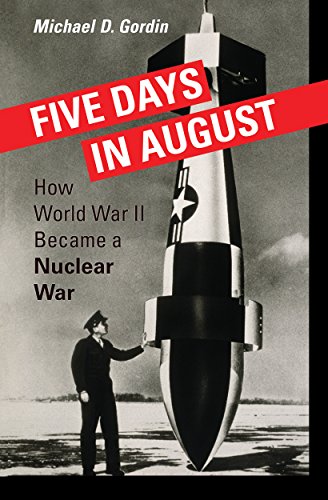
Five Days in August: How World War II Became a Nuclear War
Gordin, Michael D.
ISBN 10: 0691128189 ISBN 13: 9780691128184
Verlag: Princeton University Press, 2007
Gebraucht
Hardcover
Verkäufer
ThriftBooks-Dallas, Dallas, TX, USA
Verkäuferbewertung 5 von 5 Sternen

AbeBooks-Verkäufer seit 2. Juli 2009
Dieser Artikel ist nicht mehr verfügbar.
Beschreibung
Beschreibung:
Pages can have notes/highlighting. Spine may show signs of wear. ~ ThriftBooks: Read More, Spend Less. Bestandsnummer des Verkäufers G0691128189I3N00
Inhaltsangabe:
Most Americans believe that the Second World War ended because the two atomic bombs dropped on Japan forced it to surrender. Five Days in August boldly presents a different interpretation: that the military did not clearly understand the atomic bomb's revolutionary strategic potential, that the Allies were almost as stunned by the surrender as the Japanese were by the attack, and that not only had experts planned and fully anticipated the need for a third bomb, they were skeptical about whether the atomic bomb would work at all. With these ideas, Michael Gordin reorients the historical and contemporary conversation about the A-bomb and World War II.
Five Days in August explores these and countless other legacies of the atomic bomb in a glaring new light. Daring and iconoclastic, it will result in far-reaching discussions about the significance of the A-bomb, about World War II, and about the moral issues they have spawned.
Über die Autorin bzw. den Autor: Michael D. Gordin is professor of the history of science at Princeton University. He is the author or editor of several books, including Red Cloud at Dawn: Truman, Stalin, and the End of the Atomic Monopoly.
„Über diesen Titel“ kann sich auf eine andere Ausgabe dieses Titels beziehen.
Bibliografische Details
Titel: Five Days in August: How World War II Became...
Verlag: Princeton University Press
Erscheinungsdatum: 2007
Einband: Hardcover
Zustand: Good
Zustand des Schutzumschlags: No Jacket