Inhaltsangabe
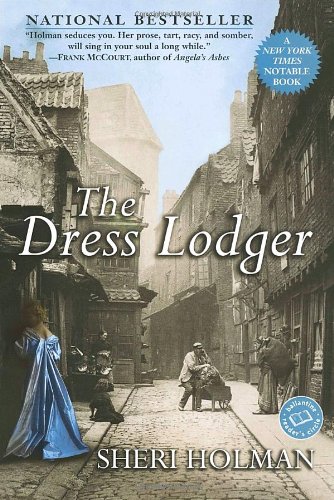
In Sunderland, England, a city quarantined by the cholera epidemic of 1831, a defiant, fifteen-teen-year old beauty in an elegant blue dress makes her way between shadow and lamp light. A potter's assistant by day and dress lodger by night, Gustine sells herself for necessity in a rented gown, scrimping to feed and protect her only love: her fragile baby boy. She holds a glimmer of hope after meeting Dr. Henry Chiver, a prisoner of his own dark past. But in a world where suspicion of medicine runs rampant like a fever, these two lost souls will become irrevocably linked, as each crosses lines between rich and destitute, decorum and abandon, damnation and salvation. By turns tender and horrifying, The Dress Lodger is a captivating historical thriller charged with a distinctly modern voice. . . .
Auszug. © Genehmigter Nachdruck. Alle Rechte vorbehalten.
THE DRESS LODGER
(Excerpt)
The boys down on the Low Quay know a hundred ways to sell bad fish.
They'll mingle four dead eels with every one alive knowing full well the average man can't tell which is tangled inside a cloudy tub. They'll polish up a stinking mackerel with a bit of turpentine and buff it with their shirttails until it gleams. Beneath the wharves late in the day, you can catch them blowing air into the bellies of cod to make their underweight catch look fat and succulent. Poor hungry family, to puncture those flatulent fish and find them more air than meat. But a boy's got to make a living, and when he is forced to feel around in the mud at low tide, scrambling after sprats dropped overboard from a trawler, he may have to take a little advantage to earn his daily wage.
You notice it most on Saturday nights when the markets are set up along Low Street. The orange sellers have secretly boiled their fruit to plump it up, though the practice causes it to turn black within a day; the cherry vendors have weighted their prepacked boxes with cabbage leaves to tip the scales. Not everyone is dishonest, but nearly every merchant prefers to sell his wares after dark when their imperfections are softened by candlelight and men's eyes are less discerning after a full day's work. Most workers are paid on Saturday night here in Sunderland, so they have money in their pockets for meat pies and jacket potatoes kept warm in barrel ovens; they buy two pennies' worth of greasy herring and a roll to go with it. The young sons of public houses owners crisscross the market delivering trays of ale to wives who've ordered it for their family dinners, and are stopped along the way by so many thirsty men, they have to run back for more. On Saturday when the streets are extravagant with stacked purple cabbages, ruby apples, bright green leeks fringing stalls iridescent with oyster shells, everyone feels rich. There will be meat on Sunday, and when a favorite customer comes to buy his chops the expansive butcher holds out a newly slaughtered pig's hear like a present.
It is Saturday night; work is another two days away. Sunday, you may play cards or walk out on the town moor or, if you are feeling guilty about something, wash your face and go to church. Perhaps you'll just want to sleep, which is what happens most Sundays, when you take your tea on the stool by the fire and realize how good it feels just to sit and stare until your head drops down upon the chest and your cup slips from your fingers. But Saturday night you are alive and want some entertainment. Two new shows have come to town. One is about that disease everyone keeps talking about, the cholera morbus, but the second one sounds far more promising. The Spectacle Unique Les Chats Savants: Signior Capelli's celebrated menagery of Sagacious Cats, well known in the principal cities of Europe, Whose Docility and Intelligence Never Fail to Astonish. You could certainly stand to be delightfully astonished, since the astonishment you'll receive tomorrow when you learn half the plums you brought tonight are rotted through will be decidedly less pleasant. You push your way between the stalls along Low Street headed toward the theatre on Sans. On your right, the River Wear makes a snaking black ribbon between Sunderland proper and well-lit Monkwearmouth on the opposite shore. There are fewer ships on the river because of the Quarantine, you think, and it is killing everyone, from the keelmen who load Newcastle coal to the potteries that need imported Dorset clay. Your back room matchstick factory is safe, at least, no matter what happens. For ten years you've painted phosphorus tips on little wooden splinters and you've never, for a day, done without supplies. The phosphorus is slowly rotting your jawbone and turning you into a freakish mess, you can't bear to look in the glass, but tonight, Saturday night, you want only to see some sagacious cats, and not think about how your hands and face glow in the dark.
Outside the cheap theatre, where children and domestics get in half price—as if life weren't easy enough for them anyway—you come upon a stampede. Housemaids leap squealing into coachmen; little boys stomp, stomp, stomp like Indians in a rain dance. It's those damn frogs. They've come up from the riverbed, where they've been fucking and spawning, fucking and spawning all this wet, warm autumn until they've overflowed the steep banks and invaded the town. Merchants along Low Street have found moist green frogs suffocated in their flour, the pastor of Trinity Church found them floating in the Communion wine. Just last night, your landlord cursed the chorus of frogs yowling in his basement and sent down his ferret to rip through them. They are advancing on Bishopwearmouth, the third and by far the most affluent section of Sunderland, built on higher ground to the south. Good, you think. Let a little of the river bottom come up in the world. Let a lawyer or two lie awake and worry, like you have on too many nights, that the Lord had sent a modern plague of Egypt to destroy this town.
How those dainty domestics and little children carry on, jabbing their umbrellas at flailing rubbery legs, frightening the frogs far more than they themselves are frightened! You roll your eyes and dig into your pocket for the 5 d. they extort from you at the box office, reach across to hand the rouged ticket vendor your money—but if you please, wait just a moment . . . .
Before you duck inside, dear matchstick painter, and disappear from view for what will be at least two hours, we beg leave to ask what might at first seem a frivolous question, but which will eventually make sense: if you were to compose your own story—forgetting for a moment the small fact that you cannot exactly write—would you choose this Saturday night, outside of this cheap theatre, through this veil of frogs in which to introduce your heroine? If you might have at your command the entire globe, any moment of historic confluence, if you might in the writing of a humble book bring back to life a Queen of Sheba or an Empress Josephine, would you strew her path with frogs here in dirty Sunderland when you might pluck from your imagination green emeralds to scatter before her in Zanzibar? No, we thought not. You are a personage of refined taste. Left up to you, who is to say this book might not evolve into a tender tale of a matchstick painter whose matches so delight the King of Sicily that he dedicates his palace to her private use, festoons it with pearls and causes the British royal family to hold her quartz and lapis phosphorus pots? If the story were in your hands, we might expect no unpleasantness, no murder or blackest betrayal, for you are not of a punishing nature. And yet, dear matchstick painter, your growing suspicions are correct—this is not your story. This is ours, and you have been summoned, led through the marketplace, encouraged to see this entertainment over the tedious play on cholera morbus down the street for solely that purpose: to provide us with an introduction to our true heroine, who, if you'll turn around, is walking down Sans Street toward you, carefully picking her way across the unctuous carpet of frogs.
Don't be upset, dear friend; we can't all of us be heroes. Though we met you first, we shouldn't feel compelled to follow your tiresome life. From the factory. Home. To the public house for a warm beer every third night—the whole process repeating itself ad nauseam. You have a purpose in the machinery of this book, and though it is not large, it is necessary. We have brought you here to describe her to us, we being too far away in time and space to form a clear impression. Please, dear friend, keep us in suspense no longer. Is she lovely? Plain? Young? Old? First impressions are difficult to...
„Über diesen Titel“ kann sich auf eine andere Ausgabe dieses Titels beziehen.