
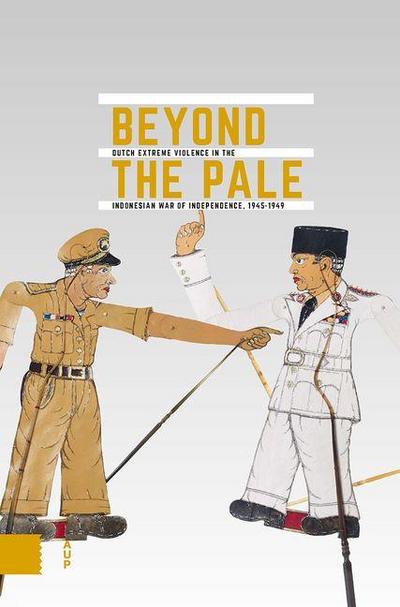

Beyond the Pale : Dutch Extreme Violence in the Indonesian War of Independence, 1945-1949
Frank van Vree
ISBN 10: 9463726489 ISBN 13: 9789463726481
Verlag: Amsterdam University Press Feb 2022, 2022
Neu
Buch
Verkäufer
AHA-BUCH GmbH, Einbeck, Deutschland
Verkäuferbewertung 5 von 5 Sternen

AbeBooks-Verkäufer seit 14. August 2006
Dieser Artikel ist nicht mehr verfügbar.
Beschreibung
Beschreibung:
Neuware - Dutch Edition/Nederlandse editie: Over de grens On 17 August 1945, two days after the Japanese surrender that also brought an end to the Second World War in Asia, Indonesia declared its independence. The declaration was not recognized by the Netherlands, which resorted to force in its attempt to take control of the inevitable process of decolonization. This led to four years of difficult negotiations and bitter warfare. In 2005, the Dutch government declared that the Netherlands should never have waged the war. The government's 1969 position on the violence used by the Dutch armed forces during the war remained unchanged, however: although there had been 'excesses', on the whole the armed forces had behaved 'correctly'. As the indications of Dutch extreme violence mounted, this official position proved increasingly difficult to maintain. In 2016, the Dutch government therefore decided to fund a broad study on the dynamics of the violence. The most important conclusions of that research programme are summarized in this book. The authors show that the Dutch armed forces used extreme violence on a structural basis, and that this was concealed both at the time and for many years after the war by the Dutch government and by society more broadly. All of this - like the entire colonial history - is at odds with the rose-tinted self-image of the Netherlands.|Summarizes the main results of the research into the nature, explanation and aftermath of the extreme violence used by the Dutch armed forces. Bestandsnummer des Verkäufers 9789463726481
Inhaltsangabe:
- Summarizes the main results of the research into the nature, explanation and aftermath of the extreme violence used by the Dutch armed forces. - ... Dutch Edition/Nederlandse editie: Over de grens
On 17 August 1945, two days after the Japanese surrender that also brought an end to the Second World War in Asia, Indonesia declared its independence. The declaration was not recognized by the Netherlands, which resorted to force in its attempt to take control of the inevitable process of decolonization. This led to four years of difficult negotiations and bitter warfare.
In 2005, the Dutch government declared that the Netherlands should never have waged the war. The government’s 1969 position on the violence used by the Dutch armed forces during the war remained unchanged, however: although there had been ‘excesses’, on the whole the armed forces had behaved ‘correctly’. As the indications of Dutch extreme violence mounted, this official position proved increasingly difficult to maintain. In 2016, the Dutch government therefore decided to fund a broad study on the dynamics of the violence. The most important conclusions of that research programme are summarized in this book. The authors show that the Dutch armed forces used extreme violence on a structural basis, and that this was concealed both at the time and for many years after the war by the Dutch government and by society more broadly. All of this – like the entire colonial history – is at odds with the rose-tinted self-image of the Netherlands.
Über die Autorinnen und Autoren:
All of the authors – Gert Oostindie, Thijs Brocades Zaalberg, Eveline Buchheim, Esther Captain, Martijn Eickhoff, Roel Frakking, Azarja Harmanny, Meindert van der Kaaij, Jeroen Kemperman, Rémy Limpach, Bart Luttikhuis, Remco Raben, Peter Romijn, Onno Sinke, Fridus Steijlen, Stephanie Welvaart and Esther Zwinkels – are or were affiliated with the Royal Netherlands Institute of Southeast Asian and Caribbean Studies (kitlv), the Netherlands Institute for Military History (nimh), or the niod Institute for War, Holocaust and Genocide Studies. The editorial team consisted of Gert Oostindie, Ben Schoenmaker and Frank van Vree. The Indonesian historian Hilmar Farid wrote the epilogue.
During the research, the authors – Gert Oostindie, Thijs Brocades Zaalberg, Eveline Buchheim, Esther Captain, Martijn Eickhoff, Roel Frakking, Azarja Harmanny, Meindert van der Kaaij, Jeroen Kemperman, Rémy Limpach, Bart Luttikhuis, Remco Raben, Peter Romijn, Onno Sinke, Fridus Steijlen, Stephanie Welvaart, and Esther Zwinkels – were all affiliated with the Royal Netherlands Institute of Southeast Asian and Caribbean Studies (KITLV), the Netherlands Institute for Military History (NIMH) or the NIOD Institute for War, Holocaust and Genocide Studies. The Indonesian historian Hilmar Farid wrote the epilogue.During the research the authors – Thijs Brocades Zaalberg Azarja Harmanny Rémy Limpach and Esther Zwinkels – were all affiliated with the Netherlands Institute for Military History (NIMH). Thijs Brocades Zaalberg now is affiliated with Leiden University and The Netherlands Defense Academy.During the research, the authors – Eveline Buchheim, Martijn Eickhoff, Jeroen Kemperman, Remco Raben, Peter Romijn and Stephanie Welvaart – were all affiliated with the NIOD Institute for War, Holocaust and Genocide Studies.
„Über diesen Titel“ kann sich auf eine andere Ausgabe dieses Titels beziehen.
Bibliografische Details
Titel: Beyond the Pale : Dutch Extreme Violence in ...
Verlag: Amsterdam University Press Feb 2022
Erscheinungsdatum: 2022
Einband: Buch
Zustand: Neu