
Verwandte Artikel zu Political Science and Changing Politics
Inhaltsangabe
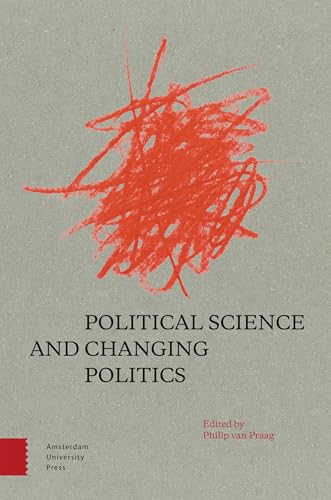
This introduction to political science provides a good basis for understanding the major changes in contemporary politics. New political currents, movements and ideas are playing an increasingly important role while traditional centres of political power are crumbling and new powers are on the rise. We can understand some of the changes with the insights and theories we have, but now and again we need to modify our theories in the light of the latest developments. An important feature of Political Science and Changing Politics is that it looks at these political developments from a strongly comparative, and also a historical, perspective. The first part deals with a number of important current issues; it addresses topics such as political inequality, the growing importance of collective identity and nationalist sentiment, the future of the welfare state, and the Dutch consensus democracy. The second part deals with the role that citizens, groups and organisations play in contemporary politics. It looks at, among other things, the political views and behavior of citizens and at their changing party preferences, but also at the ways in which political parties cope with this. It considers the growing importance of interest groups, as well as the power of the media in politics today.
Die Inhaltsangabe kann sich auf eine andere Ausgabe dieses Titels beziehen.
Über die Autorinnen und Autoren
Philip van Praag is Senior Lecturer Political Science at the Department of Political Science at the University of Amsterdam.
Philip van Praag is Senior Lecturer Political Science at the Department of Political Science at the University of Amsterdam.
Von der hinteren Coverseite
This book is an introduction to political science. What is it that political scientists are actually studying? Or, to put it another way: What do we mean when we talk about politics?
Politics is about conflict, struggle, decision-making, power and influence. But not every conflict and not every situation in which power is exercised is widely regarded as politics. A football coach who decides to leave a player on the bench because he has given him a bit of lip, is exerting power, and there is conflict here, too. However, few people would consider this a political issue. The same applies to a mother who quarrels with her adolescent daughter about going to a house party, a schoolteacher who gives a student detention, and so on. But if we were to limit our understanding of politics to official decisions that are taken by governments, in parliaments or on municipal councils, we would fail to recognise the political meaning of trade unions, lobbyists, protest groups, corporations and other more-or-less organised groups that influence collective decision-making.
Aus dem Klappentext
Politics is about conflict, struggle, decision-making, power and influence. But not every conflict and not every situation in which power is exercised is widely regarded as politics. A football coach who decides to leave a player on the bench because he has given him a bit of lip, is exerting power, and there is conflict here, too. However, few people would consider this a political issue. The same applies to a mother who quarrels with her adolescent daughter about going to a house party, a schoolteacher who gives a student detention, and so on. But if we were to limit our understanding of politics to official decisions that are taken by governments, in parliaments or on municipal councils, we would fail to recognise the political meaning of trade unions, lobbyists, protest groups, corporations and other more-or-less organised groups that influence collective decision-making.
„Über diesen Titel“ kann sich auf eine andere Ausgabe dieses Titels beziehen.
Suchergebnisse für Political Science and Changing Politics

Beispielbild für diese ISBN
English translation of [Politicologie en de veranderende politiek
Anbieter: Revaluation Books, Exeter, Vereinigtes Königreich
Verkäuferbewertung 5 von 5 Sternen

Paperback. Zustand: Brand New. 0 edition. 310 pages. 9.00x6.00x0.70 inches. In Stock. Artikel-Nr. __9462987483
Neu kaufen
EUR 30,46
EUR 11,94 Versand
Versand von Vereinigtes Königreich nach USA
Versand von Vereinigtes Königreich nach USA
Anzahl: 1 verfügbar
Beispielbild für diese ISBN
Political Science and Changing Politics
Anbieter: Majestic Books, Hounslow, Vereinigtes Königreich
Verkäuferbewertung 4 von 5 Sternen

Zustand: New. pp. 232. Artikel-Nr. 379974886
Neu kaufen
EUR 34,64
EUR 7,76 Versand
Versand von Vereinigtes Königreich nach USA
Versand von Vereinigtes Königreich nach USA
Anzahl: 3 verfügbar
Beispielbild für diese ISBN
Political Science and Changing Politics
Verlag:
Amsterdam University Press, 2017
ISBN 10: 9462987483
ISBN 13: 9789462987487
Gebraucht
Softcover
Anbieter: Mooney's bookstore, Den Helder, Niederlande
Verkäuferbewertung 4 von 5 Sternen
Zustand: Very Good. Artikel-Nr. AB20BC70EEC51BD
Gebraucht kaufen
EUR 48,61
EUR 14,95 Versand
Versand von Niederlande nach USA
Versand von Niederlande nach USA
Anzahl: 1 verfügbar
Foto des Verkäufers
Political Science and Changing Politics
Verlag:
Amsterdam University Press Okt 2017, 2017
ISBN 10: 9462987483
ISBN 13: 9789462987487
Neu
Taschenbuch
Anbieter: AHA-BUCH GmbH, Einbeck, Deutschland
Verkäuferbewertung 5 von 5 Sternen
Taschenbuch. Zustand: Neu. Neuware - Politics is about conflict, struggle, decision-making, power and influence. But not every conflict and not every situation in which power is exercised is widely regarded as politics. A football coach who decides to leave a player on the bench because he has given him a bit of lip, is exerting power, and there is conflict here, too. However, few people would consider this a political issue. The same applies to a mother who quarrels with her adolescent daughter about going to a house party, a schoolteacher who gives a student detention, and so on. But if we were to limit our understanding of politics to official decisions that are taken by governments, in parliaments or on municipal councils, we would fail to recognise the political meaning of trade unions, lobbyists, protest groups, corporations and other more-or-less organised groups that influence collective decision-making.|This book is an introduction to political science. What is it that political scientists are actually studying Or, to put it another way: What do we mean when we talk about politics. Artikel-Nr. 9789462987487
Neu kaufen
EUR 51,19
EUR 35,00 Versand
Versand von Deutschland nach USA
Versand von Deutschland nach USA
Anzahl: 2 verfügbar
Foto des Verkäufers
Political Science and Changing Politics
Anbieter: moluna, Greven, Deutschland
Verkäuferbewertung 5 von 5 Sternen
Zustand: New. Philip van Praag is Senior Lecturer Political Science at the Department of Political Science at the University of Amsterdam.Politics is about conflict, struggle, decision-making, power and influence. But not every conflict and not every situation in . Artikel-Nr. 260265285
Neu kaufen
EUR 38,36
EUR 48,99 Versand
Versand von Deutschland nach USA
Versand von Deutschland nach USA
Anzahl: Mehr als 20 verfügbar