
Verwandte Artikel zu The Role of Technology in Science: Philosophical Perspective...
The Role of Technology in Science: Philosophical Perspectives (Philosophy of Engineering and Technology, 18, Band 18) - Hardcover
Buch 20 von 42: Philosophy of Engineering and Technology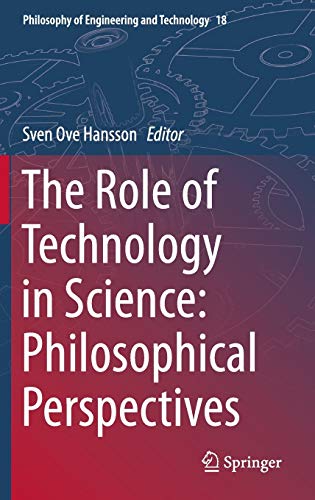
Inhaltsangabe
This edited volume explores the interplay between philosophies in a wide-ranging analysis of how technological applications in science inform our systems of thought. Beginning with a historical background, the volume moves on to explore a host of topics, such as the uses of technology in scientific observations and experiments, the salient relationship between technology and mechanistic notions in science and the ways in which today’s vast and increasing computing power helps scientists achieve results that were previously unattainable.
Technology allows today’s researchers to gather, in a matter of hours, data that would previously have taken weeks or months to assemble. It also acts as a kind of metaphor bank, providing biologists in particular with analogies (the heart as a ‘pump’, the nervous system as a ‘computer network’) that have become common linguistic currency. This book also examines the fundamental epistemological distinctions between technology and science and assesses their continued relevance. Given the increasing amalgamation of the philosophies of science and technology, this fresh addition to the literature features pioneering work in a promising new field that will appeal both to philosophers and scientific historiographers.
Die Inhaltsangabe kann sich auf eine andere Ausgabe dieses Titels beziehen.
Von der hinteren Coverseite
This edited volume explores the interplay between philosophies in a wide-ranging analysis of how technological applications in science inform our systems of thought. Beginning with a historical background, the volume moves on to explore a host of topics, such as the uses of technology in scientific observations and experiments, the salient relationship between technology and mechanistic notions in science, and the ways in which today’s vast and increasing computing power helps scientists achieve results that were previously unattainable.
Technology allows today’s researchers to gather, in a matter of hours, data that would previously have taken weeks or months to assemble. It also acts as a kind of metaphor bank, providing biologists in particular with analogies (the heart as a ‘pump’, the nervous system as a ‘computer network’) that have become common linguistic currency. This book also examines the fundamental epistemological distinctions between technology and science and assesses their continued relevance. Given the increasing amalgamation of the philosophies of science and technology, this fresh addition to the literature features pioneering work in a promising new field that will appeal both to philosophers and scientific historiographers.
„Über diesen Titel“ kann sich auf eine andere Ausgabe dieses Titels beziehen.
Suchergebnisse für The Role of Technology in Science: Philosophical Perspective...

Beispielbild für diese ISBN
The Role of Technology in Science: Philosophical Perspectives (Philosophy of Engineering and Technology, 18)
Anbieter: Ria Christie Collections, Uxbridge, Vereinigtes Königreich
Verkäuferbewertung 5 von 5 Sternen

Zustand: New. In English. Artikel-Nr. ria9789401797610_new
Neu kaufen
EUR 61,01
EUR 13,17 Versand
Versand von Vereinigtes Königreich nach USA
Versand von Vereinigtes Königreich nach USA
Anzahl: Mehr als 20 verfügbar
Foto des Verkäufers
The Role of Technology in Science: Philosophical Perspectives (Philosophy of Engineering and Technology, 18, Band 18)
Anbieter: Borkert, Schwarz und Zerfaß GbR, Berlin, Deutschland
Verkäuferbewertung 5 von 5 Sternen
, Hardcover/Pappeinband. Zustand: Sehr gut. Auflage: 2015. 270 Seiten Fresh and clean copy in good condition. Hardcover. Contents: Contributors - Part I Introductory - 1 Preview - 1 The Technological Origins of Science - 2 Modern Technology Shapes Modern Science - 3 Reflections on a Complex Relationship - 2 Science and Technology: What They Are and Why Their Relation Matters - 1 Introduction - 2 Knowledge Classification - 3 The Mechanical Arts - 4 The Modern Term ''Science'' - 5 The Modern Term ''Technology'' - 6 Interrelations Between Science and Technology - Part II The Technological Origins of Science - 3 Technological Thinking in Science - 1 Introduction - 2 Ancient and Medieval Periods - 2.1 Ancient Science and Technology - 2.2 Medieval Science and Technology The Mechanical Clock - 3 The Scientific Revolution - 3.1 The Mechanical Philosophy - 3.2 The Experimental Philosophy - 3.3 A Technological Ideology in Science - 4 The Eighteenth and Nineteenth Centuries - 4.1 The Engineering Sciences - 4.2 Thermodynamics - 4.3 Electromagnetism - 4.4 From Science-Based Industry to Industry-Based Science - 5 The Twentieth Century - 5.1 Technoscience - 5.2 The Military-Industrial-Academic Complex - 5.3 Big Science - 6 Conclusions - 4 The Scientific Use of Technological Instruments - 1 Introduction - 2 Positivistic Philosophy of Science - 3 New Experimentalism - 4 Theory-Ladeness of Observation - 4.1 'Experiments Have a Life of Their Own' - 4.2 'Data' Versus 'Meaning of Data' - 4.3 'Representing' Versus 'Intervening' - 5 Underdetermination of Theory by Empirical Data - 5.1 The Self-Vindication of the Laboratory Sciences - 5.2 Epistemology of Experiments and Instruments - 5.3 Error and the Growth of Experimental Knowledge: Learning from Error - 6 Theory-Ladeness of Instruments - 6.1 Do We See Through a Microscope? - 6.2 Theory-Ladeness of Measurements - 6.3 Nomological Machines - 6.4 Other Types of Theory-Ladeness of Instruments - 7 A Phenomenon-Oriented Perspective: The Material Role of Instruments in Science - 7.1 Epistemic Functions of Instruments - 7.2 Epistemic Things and Tools - 7.3 Theoretical Concepts and Technological Instruments - 8 Conclusions - 5 Experiments Before Science. What Science Learned from Technological Experiments - 1 Introduction - 2 What Is an Experiment? - 3 Two Types of Experimental Inquiry - 4 The Early History of Experimentation - 4.1 Agricultural Experiments - 4.2 Craftspeople's Experiments - 4.3 Early Medical Experiments - 5 The Justification of Directly Action-Guiding Experiments - 5.1 A Very Direct Justification - 5.2 The Unwelcomeness of Theory-Independent Information - 6 The Justification of Epistemic Experiments - 6.1 Two Notions of Causality - 6.2 Experiment and Causation - 7 Problems, Limitations, and Remedies - 7.1 Control Experiments 7.2 Parameter Variation - 7.3 Outcome Measurement - 7.4 Blinding - 7.5 Randomization - 7.6 Statistical Evaluation - 7.7 Summary - 8 Conclusion - References - Part III Modern Technology Shapes Modern Science - 6 Iteration Unleashed. Computer Technology in Science - 1 Introduction - 2 Representing and Intervening - 3 Computational Modeling - 3.1 Iteration - 3.2 Grappling with Exploration - 3.3 From Bracketed to Exploratory Iteration - 4 Epistemic Ramifications - 5 Infrastructure - 6 Conclusion - References - 7 Computer Simulations: A New Mode of Scientific Inquiry? 1 Introduction - 2 Hybrid Practice - 3 The 'Materiality' Debate - 4 Measurements - 5 Internal Validity (Verification) - 6 External Validity (Validation) - 6.1 Duhemian Problem - 6.2 The Perils of Accidental Empirical Adequacy - 6.3 Plasticity and Path Dependency - 7 Modal Knowledge - 8 Shaping the Aims of Science: Tentative Concluding Remarks - References - 8 Adopting a Technological Stance Toward the Living World. Promises, Pitfalls and Perils - 1 Introduction - 2 Part 1: The Conceptual and Theoretical Foundations of Biological Design - 2.1 That Mystery of Mysteries - 2.2 Design Without a Designer - 2.3 The Cognitive Foundations of Biological Design Attributions - 2.4 The Logical Foundations of Biological Design Attributions - 3 Part 2: Technological Thinking in Biology: The Promise - 3.1 Organisms as Artifacts: The Case of Darwin's Moth - 3.2 Two Worlds of Design - 3.3 Biological Value of the Technological Stance - 4 Part 3: Technological Thinking in Biology: The Pitfalls - 4.1 Organisms as Machines - 4.2 Encouraging Unwarranted Inferences of Intelligent Design - 5 Part 4: Technological Thinking in Biology: The Perils - 5.1 Technology Made Human - 5.2 Ethical Implications of the Technological Stance - 5.3 Does Nature Deserve Respect? - 6 Conclusion - References - Part IV Reflections on a Complex Relationship - 9 Goal Rationality in Science and Technology. An Epistemological Perspective - 1 Introduction - 2 Goal Rationality in Technology - 3 Goal Rationality in Science - 4 Peirce on Belief as the Goal of Inquiry - 5 Rorty on Justification as the Goal of Inquiry - 6 Kaplan on the Irrelevance of Knowledge in Inquiry - 7 Sartwell on Knowledge as Mere True Belief - 8 Conclusion - References - 10 Reflections on Rational Goals in Science and Technology; A Comment on Olsson - 1 Introduction - 2 A Critique of Knowledge as the Goal of Technology - 3 The Context Dependency of the Goal of Technology - 4 What Kind of Rationality? - 5 Conclusion: Rationality and Motivating Goals - References - 11 The Naturalness of the Naturalistic Fallacy and the Ethics of Nanotechnology - 1 Introduction - 2 Some Paradigmatic Examples of Appeals to Nature as a Source of Ethical Norms - 3 The Natural Entanglement of the Natural with the Ethical - 4 External vs. Internal Machines: Is It Still an Important Distinction? - References - 12 Human Well-Being, Nature and Technology.A Comment on Dorato - 1 Introduction - 2 Preliminary Remarks - 3 The Argument from Adaptation - 4 Human Flourishing - 5 Human Well-Being - 6 Implantable Microchips - References - 13 Philosophy of Science and Philosophy of Technology: One or Two Philosophies of One or Two Objects - 1 Intro. Artikel-Nr. 1268441
Gebraucht kaufen
EUR 50,00
EUR 40,00 Versand
Versand von Deutschland nach USA
Versand von Deutschland nach USA
Anzahl: 1 verfügbar
Beispielbild für diese ISBN
The Role of Technology in Science: Philosophical Perspectives
Anbieter: Revaluation Books, Exeter, Vereinigtes Königreich
Verkäuferbewertung 5 von 5 Sternen
Hardcover. Zustand: Brand New. 2015 edition. 272 pages. 9.25x6.25x0.75 inches. In Stock. Artikel-Nr. x-9401797617
Neu kaufen
EUR 81,33
EUR 14,58 Versand
Versand von Vereinigtes Königreich nach USA
Versand von Vereinigtes Königreich nach USA
Anzahl: 2 verfügbar
Foto des Verkäufers
The Role of Technology in Science: Philosophical Perspectives
Anbieter: moluna, Greven, Deutschland
Verkäuferbewertung 5 von 5 Sternen
Zustand: New. Artikel-Nr. 26456147
Neu kaufen
EUR 48,37
EUR 48,99 Versand
Versand von Deutschland nach USA
Versand von Deutschland nach USA
Anzahl: Mehr als 20 verfügbar
Foto des Verkäufers
The Role of Technology in Science: Philosophical Perspectives
Anbieter: AHA-BUCH GmbH, Einbeck, Deutschland
Verkäuferbewertung 5 von 5 Sternen
Buch. Zustand: Neu. Druck auf Anfrage Neuware - Printed after ordering - This edited volume explores the interplay between philosophies in a wide-ranging analysis of how technological applications in science inform our systems of thought. Beginning with a historical background, the volume moves on to explore a host of topics, such as the uses of technology in scientific observations and experiments, the salient relationship between technology and mechanistic notions in science and the ways in which today's vast and increasing computing power helps scientists achieve results that were previously unattainable.Technology allows today's researchers to gather, in a matter of hours, data that would previously have taken weeks or months to assemble. It also acts as a kind of metaphor bank, providing biologists in particular with analogies (the heart as a 'pump', the nervous system as a 'computer network') that have become common linguistic currency. This book also examines the fundamental epistemological distinctions between technology and science and assesses their continued relevance. Given the increasing amalgamation of the philosophies of science and technology, this fresh addition to the literature features pioneering work in a promising new field that will appeal both to philosophers and scientific historiographers. Artikel-Nr. 9789401797610
Neu kaufen
EUR 78,76
EUR 30,50 Versand
Versand von Deutschland nach USA
Versand von Deutschland nach USA
Anzahl: 1 verfügbar