
Verwandte Artikel zu Ethical Principles and Economic Transformation - A...
Ethical Principles and Economic Transformation - A Buddhist Approach (Issues in Business Ethics, Band 33) - Softcover
Buch 18 von 54: Issues in Business Ethics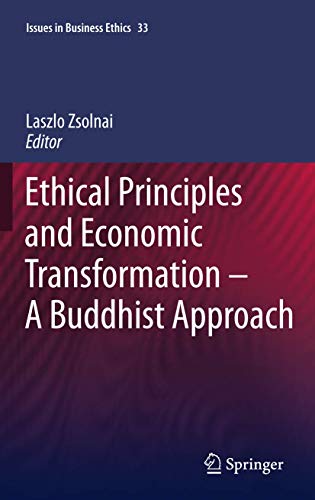
Inhaltsangabe
Buddhism points out that emphasizing individuality and promoting the greatest fulfillment of the desires of the individual conjointly lead to destruction. The book promotes the basic value-choices of Buddhism, namely happiness, peace and permanence.
Happiness research convincingly shows that not material wealth but the richness of personal relationships determines happiness. Not things, but people make people happy. Western economics tries to provide people with happiness by supplying enormous quantities of things and today’s dominating business models are based on and cultivates narrow self-centeredness.But what people need are caring relationships and generosity. Buddhist economics makes these values accessible by direct provision. Peace can be achieved in nonviolent ways. Wanting less can substantially contribute to this endeavor and make it happen more easily. Permanence, or ecological sustainability, requires a drastic cutback in the present level of consumption and production globally. This reduction should not be an inconvenient exercise of self-sacrifice. In the noble ethos of reducing suffering it can be a positive development path for humanity.
Die Inhaltsangabe kann sich auf eine andere Ausgabe dieses Titels beziehen.
Von der hinteren Coverseite
Buddhism points out that emphasizing individuality and promoting the greatest fulfillment of the desires of the individual conjointly lead to destruction. The book promotes the basic value-choices of Buddhism, namely happiness, peace and permanence.
Happiness research convincingly shows that not material wealth but the richness of personal relationships determines happiness. Not things, but people make people happy. Western economics tries to provide people with happiness by supplying enormous quantities of things and today’s dominating business models are based on and cultivates narrow self-centeredness.But what people need are caring relationships and generosity. Buddhist economics makes these values accessible by direct provision. Peace can be achieved in nonviolent ways. Wanting less can substantially contribute to this endeavor and make it happen more easily. Permanence, or ecological sustainability, requires a drastic cutback in the present level of consumption and production globally. This reduction should not be an inconvenient exercise of self-sacrifice. In the noble ethos of reducing suffering it can be a positive development path for humanity.
„Über diesen Titel“ kann sich auf eine andere Ausgabe dieses Titels beziehen.
Suchergebnisse für Ethical Principles and Economic Transformation - A...

Beispielbild für diese ISBN
Ethical Principles and Economic Transformation - A Buddhist Approach (Issues in Business Ethics, 33)
Anbieter: Ria Christie Collections, Uxbridge, Vereinigtes Königreich
Verkäuferbewertung 5 von 5 Sternen

Zustand: New. In English. Artikel-Nr. ria9789400736153_new
Neu kaufen
EUR 128,05
EUR 10,92 Versand
Versand von Vereinigtes Königreich nach USA
Versand von Vereinigtes Königreich nach USA
Anzahl: Mehr als 20 verfügbar
Beispielbild für diese ISBN
Ethical Principles and Economic Transformation - A Buddhist Approach
Anbieter: Revaluation Books, Exeter, Vereinigtes Königreich
Verkäuferbewertung 5 von 5 Sternen
Paperback. Zustand: Brand New. 2011 edition. 200 pages. 9.21x6.14x0.48 inches. In Stock. Artikel-Nr. x-9400736150
Neu kaufen
EUR 153,21
EUR 11,66 Versand
Versand von Vereinigtes Königreich nach USA
Versand von Vereinigtes Königreich nach USA
Anzahl: 2 verfügbar
Foto des Verkäufers
Ethical Principles and Economic Transformation - A Buddhist Approach
Anbieter: preigu, Osnabrück, Deutschland
Verkäuferbewertung 5 von 5 Sternen
Taschenbuch. Zustand: Neu. Ethical Principles and Economic Transformation - A Buddhist Approach | Laszlo Zsolnai | Taschenbuch | Issues in Business Ethics | xii | Englisch | 2013 | Springer | EAN 9789400736153 | Verantwortliche Person für die EU: Springer Verlag GmbH, Tiergartenstr. 17, 69121 Heidelberg, juergen[dot]hartmann[at]springer[dot]com | Anbieter: preigu. Artikel-Nr. 105735407
Neu kaufen
EUR 95,25
EUR 70,00 Versand
Versand von Deutschland nach USA
Versand von Deutschland nach USA
Anzahl: 5 verfügbar
Foto des Verkäufers
Ethical Principles and Economic Transformation - A Buddhist Approach
Anbieter: AHA-BUCH GmbH, Einbeck, Deutschland
Verkäuferbewertung 5 von 5 Sternen
Taschenbuch. Zustand: Neu. Druck auf Anfrage Neuware - Printed after ordering - Buddhism points out that emphasizing individuality and promoting the greatest fulfillment of the desires of the individual conjointly lead to destruction. The book promotes the basic value-choices of Buddhism, namely happiness, peace and permanence. Happiness research convincingly shows that not material wealth but the richness of personal relationships determines happiness. Not things, but people make people happy. Western economics tries to provide people with happiness by supplying enormous quantities of things and today's dominating business models are based on and cultivates narrow self-centeredness.But what people need are caring relationships and generosity. Buddhist economics makes these values accessible by direct provision. Peace can be achieved in nonviolent ways. Wanting less can substantially contribute to this endeavor and make it happen more easily. Permanence, or ecological sustainability, requires a drastic cutback in the present level of consumption and production globally. This reduction should not be an inconvenient exercise of self-sacrifice. In the noble ethos of reducing suffering it can be a positive development path for humanity. Artikel-Nr. 9789400736153
Neu kaufen
EUR 150,10
EUR 35,00 Versand
Versand von Deutschland nach USA
Versand von Deutschland nach USA
Anzahl: 1 verfügbar