
Verwandte Artikel zu Crisis and Migration: Implications of the Eurozone...
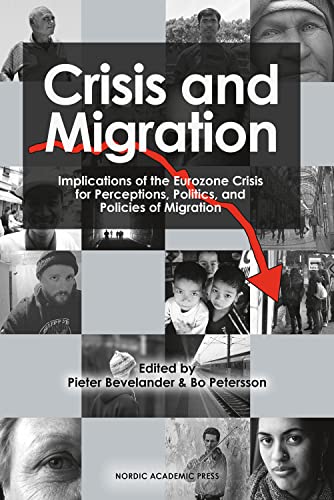
Crisis and Migration: Implications of the Eurozone Crisis for Perceptions, Politics, and Policies of Migration - Hardcover
Inhaltsangabe
The seemingly perennial Eurozone crisis has been front-page news for several years now, but some aspects do not make the media coverage. In Crisis and Migration attention is geared away from the crisis as a protracted but acute phenomenon that will eventually come to pass. Instead, the contributors pose the possibility that the crisis may be a symptom of a long-term, chronic decline of the European Union in relation to other parts of the world. The authors analyze the current economic situation and its effects and implications on migration and migration policy. Alongside the more senior authors, the book features a number of contributors who represent a new generation of scholars likely to be prominent in the field of migration studies in years to come.
Die Inhaltsangabe kann sich auf eine andere Ausgabe dieses Titels beziehen.
Über die Autorin bzw. den Autor
Pieter Bevelander is a professor at and the director of the Malmö Institute for Studies of Migration, Diversity, and Welfare at Malmö University in Sweden. Bo Petersson is a professor of political science at International Migration and Ethnic Relations and the vice dean for research at the faculty of culture and society, both at Malmö University.Auszug. © Genehmigter Nachdruck. Alle Rechte vorbehalten.
Crisis and Migration
Implications of the Eurozone Crisis for Perceptions, Politics, and Policies of Migration
By Pieter Bevelander, Bo PeterssonNordic Academic Press
Copyright © 2014 Nordic Academic Press and the Authors
All rights reserved.
ISBN: 978-91-87351-30-3All rights reserved.
Contents
Preface,
1. 'Crisis, Oh That Crisis!' The Financial Crisis and its Impacts on Migration in Europe Pieter Bevelander and Bo Petersson,
2. The Slump and Immigration Policy in Europe Timothy J. Hatton,
3. A Crisis Nexus The European Union, Security, and Articulations of Irregular Migration Post-Arab Spring Linus Kullving,
4. The Dutch Policy Response to Undocumented Migrants A Clash of Securitisations? Hortense Jongen,
5. Mainstream Political Discourse and its Implications The Case of Greece Eleni Tampakoglou,
6. Narratives' Normativity and Local Policy-making Constructions and Practices of Migrant Integration Policies in Malmö Sarah Scuzzarello,
7. Echo Chambers of 'Eurabia' Representations of Unaccompanied Minors in Extremist Online Environments Katrina Hirvonen,
8. Cultural Culprits Police Apprehensions of Pickpockets in Copenhagen David Sausdal,
List of Abbreviations,
About the Authors,
CHAPTER 1
'Crisis, Oh That Crisis!'
The Financial Crisis and its Impacts on Migration in Europe
Pieter Bevelander & Bo Petersson
The seemingly perennial Eurozone crisis has been front-page news for several years now, and it shows only scant signs of settling any time soon. The crisis is discussed everywhere, and in all conference settings dealing with Europe its reverberations have come to be a natural topic for discussion and analysis. To devote yet another edited volume to the manifestations of the crisis might, therefore, seem to be a redundant thing to do, but we feel there are aspects that are not really caught by the daily media angle on the theme. In much of the daily coverage, attention is geared towards addressing the crisis as a protracted but acute phenomenon that will eventually come to pass; the harsh truth is that it may not necessarily come to pass. Rather, the crisis may be a symptom of a long-term, chronic decline of the European Union in relation to other parts of the world, most notably the BRICS countries (Brazil, Russia, India, China and South Africa). If decline is still regarded as too strong a word — a reaction that we have often encountered — then it may at least be apt to talk about 'diffusion, defusion, dilution, fragmentation' or 'mutation' into something more adapted to the changing circumstances (Walker 2013: 10). It is imperative to address the long-term consequences of these occurring shifts, and it is a responsibility of scholars to engage in critical discussion about them.
Starting in 2008, as the severe financial crisis first hit the United States and then spread to other parts of the globe, the protracted downturn in world economic growth has been especially notable in the Eurozone. However, variation between countries in the zone should be acknowledged. In Figure 1 and Table 1, the economic development (in GDP) for a number of countries over the last ten years is described. In Figure 1, the GDP development in the Eurozone is compared to the corresponding development in the US, Japan and three BRICS countries (China, India and Russia).
The financial crisis hit all regions of the globe, especially in 2008 and 2009. The US development begins a somewhat longer downward trend that emerged from 2004 onwards, with – like the EU, Russia and Japan – negative growth for 2009. Japan's GDP shows significant ups and downs over the second half of the period. Moreover, compared to the Eurozone countries, China and India displayed fewer negative effects of the crisis and still had positive growth rates even during the crisis years of 2008 and 2009. Finally, whereas the BRICS countries show substantially higher economic growth during the pre-recession years, Russia's GDP development since 2008 is in line with that of the Eurozone, Japan and the US. Its plunge was remarkably deep in 2009, but its recovery has been quick in the years since.
After 2010, both China and India show lower growth rates compared to the period before the recession. These indications add to the gravity of the problem, as it cannot be automatically assumed that China and the other BRICS will be able to come to the financial rescue of the West. No quick fixes seem to be on offer; moreover, although to an extent that rescue by the hands of the rising economic powers among the BRICS has finally been somewhat grudgingly accepted by the elites and the public in the US and the EU, this kind of help may simply not be available for very long. To put it another way: the cavalry might not necessarily be coming when needed.
Complementing Figure 1, Table 1 shows the percentage change in GDP split by period and country. Comparing GDP developments over time, all countries experienced positive GDP growth rates during 2003–2007. In particular, many former Soviet-bloc countries — as well as Turkey, Iceland, Ireland and the other BRICSs — showed high growth rates during this period. In contrast, the crisis period 2008–2012 shows many countries with average, negative or very low positive GDP growth. Exceptions are Poland, Turkey and, to a lesser extent, Slovakia and the Former Yugoslav Republic of Macedonia, with growth rates over two per cent per year. Other countries that have been comparatively less affected by the recession are Germany, Sweden, Switzerland, Malta, Montenegro and, again, the BRICS. The third column of Table 1, where we show the average GDP for each country in the years 2008 and 2009, offers a more detailed view of the GDP development during the crisis years.
'We will not come back to the old normal'
In his State of the Union address to the European Parliament on 11 September 2013, the President of the European Commission, José Manuel Barroso, seemed confident that economic recovery was finally in sight. Given his role and position, this is what could be expected: his task is to encourage and to try to inspire joint efforts and hard work, not to sow the seeds of despair. Yet, in his address, he cautioned that there was no room for complacency, and, in a rhetorical twist, he urged that 'it is not time to throw in the towel, it is time to roll up our sleeves.' So, according to the President of the Commission, hard work was still required of all member states in order to reach the recovery that could be glimpsed around the corner. Yet, there was one interesting nuance offered in his speech which is relevant to our thesis that the economic downturn might be more than a temporary and transient phenomenon:
These are challenging times, a real stress test for the EU. The path of permanent and profound reform is as demanding as it is unavoidable. Let's make no mistake: there is no way back to business as usual. Some people believe that after this everything will come back as it was before. They are wrong. This crisis is different. This is not a cyclical crisis, but a structural one. We will not come back to the old normal. We have to shape a new normal. We are in a transformative period of history. We have to understand that, and not just say it. But we have to draw all the consequences from that, including in our state of mind, and how we react to the problems. (Barroso 2013)
Assessing global trends of recent decades, the EU seems, as...
„Über diesen Titel“ kann sich auf eine andere Ausgabe dieses Titels beziehen.
Suchergebnisse für Crisis and Migration: Implications of the Eurozone...

Beispielbild für diese ISBN
Crisis & Migration: Implications of the Eurozone Crisis for Perceptions, Politics & Policies of Migration
Anbieter: WorldofBooks, Goring-By-Sea, WS, Vereinigtes Königreich
Verkäuferbewertung 5 von 5 Sternen

Paperback. Zustand: Very Good. The book has been read, but is in excellent condition. Pages are intact and not marred by notes or highlighting. The spine remains undamaged. Artikel-Nr. GOR012596142
Gebraucht kaufen
EUR 7,92
EUR 6,69 Versand
Versand von Vereinigtes Königreich nach USA
Versand von Vereinigtes Königreich nach USA
Anzahl: 1 verfügbar
Beispielbild für diese ISBN
Crisis and Migration: Implications of the Eurozone Crisis for Perceptions, Politics, and Policies of Migration
Anbieter: Revaluation Books, Exeter, Vereinigtes Königreich
Verkäuferbewertung 5 von 5 Sternen
Hardcover. Zustand: Brand New. 224 pages. 11.90x9.10x2.30 inches. In Stock. Artikel-Nr. __9187351307
Neu kaufen
EUR 65,71
EUR 14,93 Versand
Versand von Vereinigtes Königreich nach USA
Versand von Vereinigtes Königreich nach USA
Anzahl: 2 verfügbar
Beispielbild für diese ISBN
Crisis and Migration
Anbieter: BUCHSERVICE / ANTIQUARIAT Lars Lutzer, Wahlstedt, Deutschland
Verkäuferbewertung 5 von 5 Sternen
Hardcover. Zustand: gut. 2014. Crisis and Migration In deutscher Sprache. pages. Artikel-Nr. BN356367
Gebraucht kaufen
EUR 249,90
EUR 39,95 Versand
Versand von Deutschland nach USA
Versand von Deutschland nach USA
Anzahl: 1 verfügbar