
Verwandte Artikel zu Flogging Others: Corporal Punishment and Cultural Identity...
Flogging Others: Corporal Punishment and Cultural Identity from Antiquity to the Present - Softcover
Inhaltsangabe
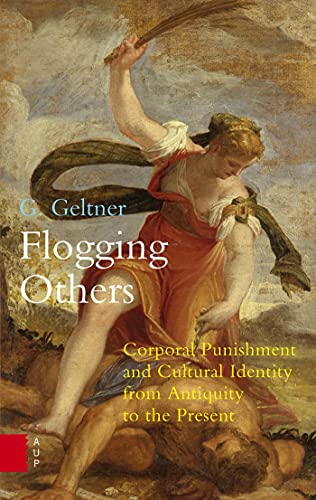
Corporal punishment is often considered a relic of the Western past, a set of thinly veiled barbaric practices largely abandoned in the process of civilization. As G. Geltner argues, however, the infliction of bodily pain was not necessarily typical for earlier societies, nor has it vanished from modern penal theory, policy, and practice. To the contrary, corporal punishment still thrives today thanks to its capacity to define otherness efficiently and unambiguously. Challenging a number of common myths and misconceptions about physical punishment’s importance over the centuries, Flogging Others offers a new perspective on modernization and Western identity.
Die Inhaltsangabe kann sich auf eine andere Ausgabe dieses Titels beziehen.
Über die Autorinnen und Autoren
G. Geltner is Professor of Medieval History at the University of Amsterdam. His main focus is on Western Europe in the 13th and 14th centuries.
G. Geltner is professor of medieval history at the University of Amsterdam, where he focuses on Western Europe in the thirteenth and fourteenth centuries.
G. Geltner is Professor of Medieval History at the University of Amsterdam. His main focus is on Western Europe in the 13th and 14th centuries.
Von der hinteren Coverseite
Corporal punishment is often seen as a litmus test for a society's degree of civilization. Its licit use purports to separate modernity from premodernity, enlightened from barbaric cultures. As Geltner argues, however, neither did the infliction of bodily pain typify earlier societies nor did it vanish from penal theory, policy, or practice. Far from displaying a steady decline that accelerated with the Enlightenment, physical punishment was contested throughout Antiquity and the Middle Ages, its application expanding and contracting under diverse pressures. Moreover, despite the integration of penal incarceration into criminal justice systems since the nineteenth century, modern nation states and colonial regimes increased rather than limited the use of corporal punishment. Flogging Others thus challenges a common understanding of modernization and Western identity and underscores earlier civilizations' nuanced approaches to punishment, deviance, and the human body. Today as in the past, corporal punishment thrives due to its capacity to define otherness efficiently and unambiguously, either as a measure acting upon a deviant's body or as a practice that epitomizes - in the eyes of external observers - a culture's backwardness.
Aus dem Klappentext
Corporal punishment is often seen as a litmus test for a society's degree of civilization. Its licit use purports to separate modernity from premodernity, enlightened from barbaric cultures. As Geltner argues, however, neither did the infliction of bodily pain typify earlier societies nor did it vanish from penal theory, policy, or practice. Far from displaying a steady decline that accelerated with the Enlightenment, physical punishment was contested throughout Antiquity and the Middle Ages, its application expanding and contracting under diverse pressures. Moreover, despite the integration of penal incarceration into criminal justice systems since the nineteenth century, modern nation states and colonial regimes increased rather than limited the use of corporal punishment. Flogging Others thus challenges a common understanding of modernization and Western identity and underscores earlier civilizations' nuanced approaches to punishment, deviance, and the human body. Today as in the past, corporal punishment thrives due to its capacity to define otherness efficiently and unambiguously, either as a measure acting upon a deviant's body or as a practice that epitomizes - in the eyes of external observers - a culture's backwardness.
„Über diesen Titel“ kann sich auf eine andere Ausgabe dieses Titels beziehen.
Suchergebnisse für Flogging Others: Corporal Punishment and Cultural Identity...

Beispielbild für diese ISBN
Flogging Others: Corporal Punishment and Cultural Identity from Antiquity to the Present
Verlag:
Amsterdam University Press, 2014
ISBN 10: 9089647864
ISBN 13: 9789089647863
Gebraucht
Softcover
Anbieter: World of Books (was SecondSale), Montgomery, IL, USA
Verkäuferbewertung 5 von 5 Sternen

Zustand: Good. Item in good condition. Textbooks may not include supplemental items i.e. CDs, access codes etc. Artikel-Nr. 00105250573
Gebraucht kaufen
EUR 4,45
Versand gratis
Versand innerhalb von USA
Versand innerhalb von USA
Anzahl: 1 verfügbar
Beispielbild für diese ISBN
Flogging Others: Corporal Punishment and Cultural Identity from Antiquity to the Present
Verlag:
Amsterdam University Press, 2014
ISBN 10: 9089647864
ISBN 13: 9789089647863
Gebraucht
Paperback
Anbieter: WorldofBooks, Goring-By-Sea, WS, Vereinigtes Königreich
Verkäuferbewertung 5 von 5 Sternen
Paperback. Zustand: Very Good. The book has been read, but is in excellent condition. Pages are intact and not marred by notes or highlighting. The spine remains undamaged. Artikel-Nr. GOR011086192
Gebraucht kaufen
EUR 20,34
EUR 6,50 Versand
Versand von Vereinigtes Königreich nach USA
Versand von Vereinigtes Königreich nach USA
Anzahl: 1 verfügbar
Beispielbild für diese ISBN
Flogging Others Corporal Punishment and Cultural Identity from Antiquity to the Present
Anbieter: Revaluation Books, Exeter, Vereinigtes Königreich
Verkäuferbewertung 5 von 5 Sternen
Paperback. Zustand: Brand New. 0 edition. 112 pages. 8.25x5.25x0.25 inches. In Stock. Artikel-Nr. __9089647864
Neu kaufen
EUR 28,65
EUR 11,61 Versand
Versand von Vereinigtes Königreich nach USA
Versand von Vereinigtes Königreich nach USA
Anzahl: 1 verfügbar
Beispielbild für diese ISBN
Flogging Others: Corporal Punishment and Cultural Identity.
Anbieter: Majestic Books, Hounslow, Vereinigtes Königreich
Verkäuferbewertung 4 von 5 Sternen

Zustand: New. Artikel-Nr. 353466453
Neu kaufen
EUR 38,04
EUR 7,55 Versand
Versand von Vereinigtes Königreich nach USA
Versand von Vereinigtes Königreich nach USA
Anzahl: 3 verfügbar
Beispielbild für diese ISBN
Flogging Others Corporal Punishment and Cultural Identity from Antiquity to the Present
Anbieter: Revaluation Books, Exeter, Vereinigtes Königreich
Verkäuferbewertung 5 von 5 Sternen
Paperback. Zustand: Brand New. 0 edition. 112 pages. 8.25x5.25x0.25 inches. In Stock. Artikel-Nr. zk9089647864
Neu kaufen
EUR 49,17
EUR 11,61 Versand
Versand von Vereinigtes Königreich nach USA
Versand von Vereinigtes Königreich nach USA
Anzahl: 1 verfügbar
Foto des Verkäufers
Flogging Others
Verlag:
INGRAM INTERNATIONAL INC Nov 2014, 2014
ISBN 10: 9089647864
ISBN 13: 9789089647863
Neu
Taschenbuch
Anbieter: AHA-BUCH GmbH, Einbeck, Deutschland
Verkäuferbewertung 5 von 5 Sternen
Taschenbuch. Zustand: Neu. Neuware - Nederlandse editie leverbaar: De gesel en de ander (ISBN 978 90 8964 787 0).Corporal punishment is often seen as a litmus test for a society's degree of civilization. Its licit use purports to separate modernity from premodernity, enlightened from barbaric cultures. As Geltner argues, however, neither did the infliction of bodily pain typify earlier societies nor did it vanish from penal theory, policy, or practice. Far from displaying a steady decline that accelerated with the Enlightenment, physical punishment was contested throughout Antiquity and the Middle Ages, its application expanding and contracting under diverse pressures. Moreover, despite the integration of penal incarceration into criminal justice systems since the nineteenth century, modern nation states and colonial regimes increased rather than limited the use of corporal punishment. Flogging Others thus challenges a common understanding of modernization and Western identity and underscores earlier civilizations' nuanced approaches to punishment, deviance, and the human body. Today as in the past, corporal punishment thrives due to its capacity to define otherness efficiently and unambiguously, either as a measure acting upon a deviant's body or as a practice that epitomizes - in the eyes of external observers - a culture'sbackwardness. Artikel-Nr. 9789089647863
Neu kaufen
EUR 50,62
EUR 35,00 Versand
Versand von Deutschland nach USA
Versand von Deutschland nach USA
Anzahl: 2 verfügbar
Foto des Verkäufers
Flogging Others - Corporal Punishment and Cultural Identity from Antiquity to the Present
Verlag:
Amsterdam University Press, 2014
ISBN 10: 9089647864
ISBN 13: 9789089647863
Neu
Kartoniert / Broschiert
Anbieter: moluna, Greven, Deutschland
Verkäuferbewertung 5 von 5 Sternen
Kartoniert / Broschiert. Zustand: New. G. Geltner is Professor of Medieval History at the University of Amsterdam. His main focus is on Western Europe in the 13th and 14th centuries.Corporal punishment is often seen as a litmus test for a society s degree of civilization. Its licit use pu. Artikel-Nr. 747022949
Neu kaufen
EUR 39,46
EUR 48,99 Versand
Versand von Deutschland nach USA
Versand von Deutschland nach USA
Anzahl: Mehr als 20 verfügbar