
Verwandte Artikel zu Le « Canada inuit » / "Inuit Canada": Pour une approche...
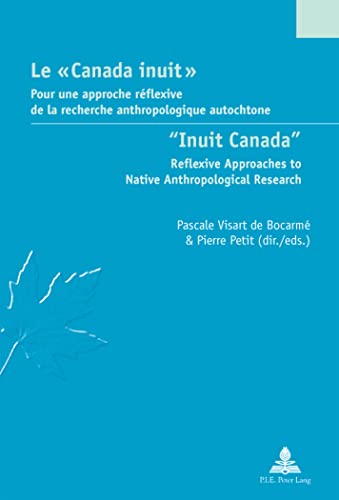
Le « Canada inuit » / "Inuit Canada": Pour une approche réflexive de la recherche anthropologique autochtone / Reflexive Approaches to Native ... canadiennes – Canadian Studies, Band 15) - Softcover
Inhaltsangabe
Après les bouleversements liés à la sédentarisation des années 1950 et suite à leur lutte politique, les sociétés inuit accèdent à présent à des formes d’autonomie territoriale : au Nunavut et ailleurs, l’heure est au partenariat, et le gouvernement compte sur les anthropologues pour participer au renouveau culturel, les « traditions » étant sollicitées pour faire face aux défis du présent. Que signifie ce partenariat et quels sont ses fondements idéologiques ? Comment les anthropologues réagissent-ils à la multiplication des procédures d’accès au terrain et autres contraintes déontologiques ? Que penser du statut des « elders », devenus interlocuteurs privilégiés des nouveaux projets pédagogiques et d’une anthropologie souvent tournée vers l’idée de sauvetage culturel ? Quelle place pour l’anthropologie de la jeunesse et comment aborder les rapports interculturels entre les Inuit et la société eurocanadienne ? Le présent ouvrage aborde ces interrogations épistémologiques sensibles et engage à une pratique prononcée de la réflexivité dans ce contexte en constante évolution, où l’implication citoyenne du chercheur est hautement valorisée. In the wake of the upheavals caused by the shift to a sedentary lifestyle in the 1950s, and after a long political struggle, Inuit societies are now obtaining forms of territorial autonomy. In Nunavut, and other places, a new partnership is being formed, and the government is counting on anthropologists to participate in this cultural renewal which draws on ‘traditions’ in order to face the challenges of the present. What is the significance of this partnership, and what is its ideological grounding? How have anthropologists reacted to the emergence of new procedures for access to the field and other deontological constraints? What of the status of elders, who have become central agents in pedagogical projects, as well as in an anthropology often geared to the idea of cultural salvage? What place can be made for an anthropology of youth, and how are the relationships between Inuit communities and Euro-Canadian society to be approached? This volume tackles these sensitive theoretical questions, and urges a distinctly reflexive practice in this constantly evolving context, one in which the scholar’s civic engagement is highly valued.
Die Inhaltsangabe kann sich auf eine andere Ausgabe dieses Titels beziehen.
Über die Autorin bzw. den Autor
Les responsables de la publication : Pascale Visart de Bocarmé est assistante et doctorante en anthropologie à l’Université libre de Bruxelles (ULB). Ses recherches portent sur la production artistique des Inuit de l’Arctique canadien, envisagée dans une approche socioculturelle. Elle mène ses études de terrain dans les communautés inuit de type urbain dont celle de Rankin Inlet. Pierre Petit est chercheur qualifié au Fonds national belge de la recherche scientifique et professeur scientifique et professeur à l’ULB. Après des recherches sur les sociétés rurales de l’Afrique centrale, il a fondé un Observatoire du changement urbain à Lubumbashi. Il a récemment commencé de nouvelles recherches ethnographiques dans un village de migrants montagnards au Laos. The Editors: Pascale Visart de Bocarmé is a Ph.D. student and assistant in anthropology at the Free University of Brussels (ULB). Her research concerns the Inuit artistic production in the Canadian Artic leading in a socio-cultural perspective. She conducts her fieldwork in urban communities mainly in Kangiqliniq/Rankin Inlet. Pierre Petit is Research Associate at the Belgian National Funds for Scientific Research (FNRS) and professor of anthropology at the Université libre de Bruxelles. After his Ph. D. researches among the Luba-Katanga in rural Congo, he set up an interdisciplinary Observatory of Urban Change in Lubumbashi. He presently conducts a new fieldwork about the resettlement of mountainous populations into a village located in central Laos.
„Über diesen Titel“ kann sich auf eine andere Ausgabe dieses Titels beziehen.
Suchergebnisse für Le « Canada inuit » / "Inuit Canada": Pour une approche...

Foto des Verkäufers
"Inuit Canada". Reflexive Approaches to Native Anthropological Research. [Le "Canada inuit". Pour une approche réflexive de la recherche anthropologique autochtone].
Verlag:
Bruxelles, Lang, 2008
ISBN 10: 9052014272
ISBN 13: 9789052014272
Gebraucht
Softcover/Paperback
Anbieter: Antiquariat Thomas Haker GmbH & Co. KG, Berlin, Deutschland
Verkäuferbewertung 5 von 5 Sternen

Softcover/Paperback. Zustand: Sehr gut. 195 p., Ill., Kt., 22 cm Very good. Shrink wrapped. / Sehr guter Zustand. In Folie verschweißt. Sprache: Englisch Gewicht in Gramm: 338. Artikel-Nr. 821411
Gebraucht kaufen
EUR 12,70
EUR 15,00 Versand
Versand von Deutschland nach USA
Versand von Deutschland nach USA
Anzahl: 1 verfügbar
Beispielbild für diese ISBN
Le Canada Inuit/Inuit Canada (French Edition)
Anbieter: Zubal-Books, Since 1961, Cleveland, OH, USA
Verkäuferbewertung 5 von 5 Sternen
Zustand: Fine. 195 pp., Paperback, LIKE NEW. - If you are reading this, this item is actually (physically) in our stock and ready for shipment once ordered. We are not bookjackers. Buyer is responsible for any additional duties, taxes, or fees required by recipient's country. Artikel-Nr. ZB798839
Gebraucht kaufen
EUR 58,96
EUR 4,02 Versand
Versand innerhalb von USA
Versand innerhalb von USA
Anzahl: 1 verfügbar
Foto des Verkäufers
"Le Canada inuit Inuit Canada\"\" : Pour une approche réflexive de la recherche anthropologique autochtone Reflexive Ap"
Anbieter: AHA-BUCH GmbH, Einbeck, Deutschland
Verkäuferbewertung 5 von 5 Sternen
Taschenbuch. Zustand: Neu. Druck auf Anfrage Neuware - Printed after ordering - Après les bouleversements liés à la sédentarisation des années 1950 et suite à leur lutte politique, les sociétés inuit accèdent à présent à des formes d'autonomie territoriale : au Nunavut et ailleurs, l'heure est au partenariat, et le gouvernement compte sur les anthropologues pour participer au renouveau culturel, les « traditions » étant sollicitées pour faire face aux défis du présent. Que signifie ce partenariat et quels sont ses fondements idéologiques Comment les anthropologues réagissent-ils à la multiplication des procédures d'accès au terrain et autres contraintes déontologiques Que penser du statut des « elders », devenus interlocuteurs privilégiés des nouveaux projets pédagogiques et d'une anthropologie souvent tournée vers l'idée de sauvetage culturel Quelle place pour l'anthropologie de la jeunesse et comment aborder les rapports interculturels entre les Inuit et la société eurocanadienne Le présent ouvrage aborde ces interrogations épistémologiques sensibles et engage à une pratique prononcée de la réflexivité dans ce contexte en constante évolution, où l'implication citoyenne du chercheur est hautement valorisée. In the wake of the upheavals caused by the shift to a sedentary lifestyle in the 1950s, and after a long political struggle, Inuit societies are now obtaining forms of territorial autonomy. In Nunavut, and other places, a new partnership is being formed, and the government is counting on anthropologists to participate in this cultural renewal which draws on 'traditions' in order to face the challenges of the present. What is the significance of this partnership, and what is its ideological grounding How have anthropologists reacted to the emergence of new procedures for access to the field and other deontological constraints What of the status of elders, who have become central agents in pedagogical projects, as well as in an anthropology often geared to the idea of cultural salvage What place can be made for an anthropology of youth, and how are the relationships between Inuit communities and Euro-Canadian society to be approached This volume tackles these sensitive theoretical questions, and urges a distinctly reflexive practice in this constantly evolving context, one in which the scholar's civic engagement is highly valued.; Après les bouleversements liés à la sédentarisation des années 1950 et suite à leur lutte politique, les sociétés inuit accèdent à présent à des formes d'autonomie territoriale : au Nunavut et ailleurs, l'heure est au partenariat, et le gouvernement compte sur les anthropologues pour participer au renouveau culturel, les ' traditions ' étant sollicitées pour faire face aux défis du présent.Que signifie ce partenariat et quels sont ses fondements idéologiques Comment les anthropologues réagissent-ils à la multiplication des procédures d'accès au terrain et autres contraintes déontologiques Que penser du statut des ' elders ', devenus interlocuteurs privilégiés des nouveaux projets pédagogiques et d'une anthropologie souvent tournée vers l'idée de sauvetage culturel Quelle place pour l'anthropologie de la jeunesse et comment aborder les rapports interculturels entre les Inuit et la société eurocanadienne Le présent ouvrage aborde ces interrogations épistémologiques sensibles et engage à une pratique prononcée de la réflexivité dans ce contexte en constante évolution, où l'implication citoyenne du chercheur est hautement valorisée.In the wake of the upheavals caused by the shift to a sedentary lifestyle in the 1950s, and after a long political struggle, Inuit societies are now obtaining forms of territorial autonomy. In Nunavut, and other places, a new partnership is being formed, and the government is counting on anthropologists to participate in this cultural renewal which draws on 'traditions' in order to face the challenges of the present.What is the significance of this partnership, and what is its ideological grounding How have anthropologists reacted to the emergence of new procedures for access to the field and other deontological constraints What of the status of elders, who have become central agents in pedagogical projects, as well as in an anthropology often geared to the idea of cultural salvage What place can be made for an anthropology of youth, and how are the relationships between Inuit communities and Euro-Canadian society to be approached This volume tackles these sensitive theoretical questions, and urges a distinctly reflexive practice in this constantly evolving context, one in which the scholar's civic engagement is highly valued. Artikel-Nr. 9789052014272
Neu kaufen
EUR 49,00
EUR 35,00 Versand
Versand von Deutschland nach USA
Versand von Deutschland nach USA
Anzahl: 2 verfügbar
Foto des Verkäufers
Le Canada inuit . Inuit Canada
Anbieter: moluna, Greven, Deutschland
Verkäuferbewertung 5 von 5 Sternen
Zustand: New. Artikel-Nr. 121771250
Neu kaufen
EUR 66,95
EUR 48,99 Versand
Versand von Deutschland nach USA
Versand von Deutschland nach USA
Anzahl: Mehr als 20 verfügbar
Foto des Verkäufers
Le Canada inuit Inuit Canada"" | Pour une approche réflexive de la recherche anthropologique autochtone Reflexive Ap
Anbieter: preigu, Osnabrück, Deutschland
Verkäuferbewertung 5 von 5 Sternen
Taschenbuch. Zustand: Neu. Le Canada inuit Inuit Canada"" | Pour une approche réflexive de la recherche anthropologique autochtone Reflexive Ap | Pascale Visart de Bocarmé | Taschenbuch | Kartoniert / Broschiert | Französisch | 2018 | Peter Lang Publishing | EAN 9789052014272 | Verantwortliche Person für die EU: Kolibri 360 GmbH, Ettore-Bugatti-Str. 6-14, 51149 Köln, produktsicherheit[at]kolibri360[dot]de | Anbieter: preigu. Artikel-Nr. 104164072
Neu kaufen
EUR 49,00
EUR 70,00 Versand
Versand von Deutschland nach USA
Versand von Deutschland nach USA
Anzahl: 5 verfügbar