
Verwandte Artikel zu Production Practices and Quality Assessment of Food...
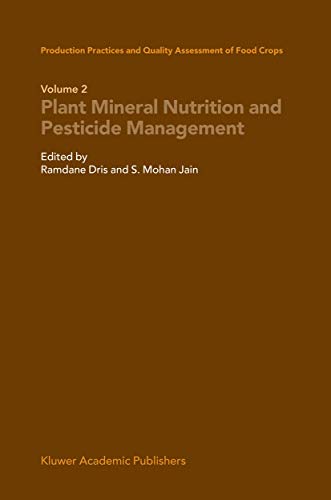
Production Practices and Quality Assessment of Food Crops: Plant Mineral Nutrition and Pesticide Management - Softcover
Inhaltsangabe
Plants require nutrients in order to grow, develop and complete their life cycle. Mineral fertilizers, and hence the fertilizer industry, constitute one of the most imp- tant keys to the world food supplies. There is growing concern about the safety and quality of food. Carbon, hydrogen and oxygen, which, together with nitrogen, form the structural matter in plants, are freely available from air and water. Nitrogen, phosphorus and potassium, on the other hand, may not be present in quantities or forms sufficient to support plant growth. In this case, the absence of these nut- ents constitutes a limiting factor. The supply of nutrients to the plants should be balanced in order to maximise the efficiency of the individual nutrients so that these meet the needs of the particular crop and soil type. For example, it should be noted that EU-wide regulations are not designed to govern the specific details of mineral fertilizer use. Although plants receive a natural supply of nitrogen, phosphorus and potassium from organic matter and soil minerals, this is not usually sufficient to satisfy the demands of crop plants. The supply of nutrients must therefore be supplemented with fertilizers, both to meet the requirements of crops during periods of plant growth and to replenish soil reserves after the crop has been harvested. Pesticides are important in modern farming and will remain indispensable for the foreseeable future.
Die Inhaltsangabe kann sich auf eine andere Ausgabe dieses Titels beziehen.
Von der hinteren Coverseite
Plants require nutrients in order to grow, develop and complete their life cycle. Mineral fertilizers, and hence the fertilizer industry, constitute one of the most imp- tant keys to the world food supplies. There is growing concern about the safety and quality of food. Carbon, hydrogen and oxygen, which, together with nitrogen, form the structural matter in plants, are freely available from air and water. Nitrogen, phosphorus and potassium, on the other hand, may not be present in quantities or forms sufficient to support plant growth. In this case, the absence of these nut- ents constitutes a limiting factor. The supply of nutrients to the plants should be balanced in order to maximise the efficiency of the individual nutrients so that these meet the needs of the particular crop and soil type. For example, it should be noted that EU-wide regulations are not designed to govern the specific details of mineral fertilizer use. Although plants receive a natural supply of nitrogen, phosphorus and potassium from organic matter and soil minerals, this is not usually sufficient to satisfy the demands of crop plants. The supply of nutrients must therefore be supplemented with fertilizers, both to meet the requirements of crops during periods of plant growth and to replenish soil reserves after the crop has been harvested. Pesticides are important in modern farming and will remain indispensable for the foreseeable future.
„Über diesen Titel“ kann sich auf eine andere Ausgabe dieses Titels beziehen.
Suchergebnisse für Production Practices and Quality Assessment of Food...

Beispielbild für diese ISBN
Production Practices and Quality Assessment of Food Crops
Anbieter: PBShop.store US, Wood Dale, IL, USA
Verkäuferbewertung 5 von 5 Sternen

PAP. Zustand: New. New Book. Shipped from UK. Established seller since 2000. Artikel-Nr. GB-9789048164592
Beispielbild für diese ISBN
Production Practices and Quality Assessment of Food Crops
Anbieter: PBShop.store UK, Fairford, GLOS, Vereinigtes Königreich
Verkäuferbewertung 5 von 5 Sternen
PAP. Zustand: New. New Book. Shipped from UK. Established seller since 2000. Artikel-Nr. GB-9789048164592
Neu kaufen
EUR 96,17
EUR 6,03 Versand
Versand von Vereinigtes Königreich nach USA
Versand von Vereinigtes Königreich nach USA
Anzahl: 1 verfügbar
Foto des Verkäufers
Production Practices and Quality Assessment of Food Crops : Plant Mineral Nutrition and Pesticide Management
Anbieter: GreatBookPricesUK, Woodford Green, Vereinigtes Königreich
Verkäuferbewertung 5 von 5 Sternen
Zustand: New. Artikel-Nr. 11866707-n
Neu kaufen
EUR 94,50
EUR 18,02 Versand
Versand von Vereinigtes Königreich nach USA
Versand von Vereinigtes Königreich nach USA
Anzahl: 1 verfügbar
Beispielbild für diese ISBN
Production Practices and Quality Assessment of Food Crops: Plant Mineral Nutrition and Pesticide Management
Anbieter: Ria Christie Collections, Uxbridge, Vereinigtes Königreich
Verkäuferbewertung 5 von 5 Sternen
Zustand: New. In English. Artikel-Nr. ria9789048164592_new
Neu kaufen
EUR 116,32
EUR 13,47 Versand
Versand von Vereinigtes Königreich nach USA
Versand von Vereinigtes Königreich nach USA
Anzahl: Mehr als 20 verfügbar
Foto des Verkäufers
Production Practices and Quality Assessment of Food Crops
Anbieter: Rarewaves.com USA, London, LONDO, Vereinigtes Königreich
Verkäuferbewertung 5 von 5 Sternen
Paperback. Zustand: New. 1st ed. Softcover of orig. ed. 2004. Plants require nutrients in order to grow, develop and complete their life cycle. Mineral fertilizers, and hence the fertilizer industry, constitute one of the most imp- tant keys to the world food supplies. There is growing concern about the safety and quality of food. Carbon, hydrogen and oxygen, which, together with nitrogen, form the structural matter in plants, are freely available from air and water. Nitrogen, phosphorus and potassium, on the other hand, may not be present in quantities or forms sufficient to support plant growth. In this case, the absence of these nut- ents constitutes a limiting factor. The supply of nutrients to the plants should be balanced in order to maximise the efficiency of the individual nutrients so that these meet the needs of the particular crop and soil type. For example, it should be noted that EU-wide regulations are not designed to govern the specific details of mineral fertilizer use. Although plants receive a natural supply of nitrogen, phosphorus and potassium from organic matter and soil minerals, this is not usually sufficient to satisfy the demands of crop plants. The supply of nutrients must therefore be supplemented with fertilizers, both to meet the requirements of crops during periods of plant growth and to replenish soil reserves after the crop has been harvested. Pesticides are important in modern farming and will remain indispensable for the foreseeable future. Artikel-Nr. LU-9789048164592
Neu kaufen
EUR 133,82
Versand gratis
Versand von Vereinigtes Königreich nach USA
Versand von Vereinigtes Königreich nach USA
Anzahl: 1 verfügbar
Beispielbild für diese ISBN
PRODUCTION PRACTICES AND QUALITY ASSESSM
Anbieter: Speedyhen, Hertfordshire, Vereinigtes Königreich
Verkäuferbewertung 5 von 5 Sternen
Zustand: NEW. Artikel-Nr. NW9789048164592
Neu kaufen
EUR 86,16
EUR 49,25 Versand
Versand von Vereinigtes Königreich nach USA
Versand von Vereinigtes Königreich nach USA
Anzahl: 1 verfügbar
Foto des Verkäufers
Production Practices and Quality Assessment of Food Crops
Anbieter: moluna, Greven, Deutschland
Verkäuferbewertung 5 von 5 Sternen
Zustand: New. Plants require nutrients in order to grow, develop and complete their life cycle. Mineral fertilizers, and hence the fertilizer industry, constitute one of the most imp- tant keys to the world food supplies. There is growing concern about the safety and qua. Artikel-Nr. 5820309
Neu kaufen
EUR 106,47
EUR 48,99 Versand
Versand von Deutschland nach USA
Versand von Deutschland nach USA
Anzahl: 1 verfügbar
Foto des Verkäufers
Production Practices and Quality Assessment of Food Crops : Plant Mineral Nutrition and Pesticide Management
Anbieter: AHA-BUCH GmbH, Einbeck, Deutschland
Verkäuferbewertung 5 von 5 Sternen
Taschenbuch. Zustand: Neu. Druck auf Anfrage Neuware - Printed after ordering - Plants require nutrients in order to grow, develop and complete their life cycle. Mineral fertilizers, and hence the fertilizer industry, constitute one of the most imp- tant keys to the world food supplies. There is growing concern about the safety and quality of food. Carbon, hydrogen and oxygen, which, together with nitrogen, form the structural matter in plants, are freely available from air and water. Nitrogen, phosphorus and potassium, on the other hand, may not be present in quantities or forms sufficient to support plant growth. In this case, the absence of these nut- ents constitutes a limiting factor. The supply of nutrients to the plants should be balanced in order to maximise the efficiency of the individual nutrients so that these meet the needs of the particular crop and soil type. For example, it should be noted that EU-wide regulations are not designed to govern the specific details of mineral fertilizer use. Although plants receive a natural supply of nitrogen, phosphorus and potassium from organic matter and soil minerals, this is not usually sufficient to satisfy the demands of crop plants. The supply of nutrients must therefore be supplemented with fertilizers, both to meet the requirements of crops during periods of plant growth and to replenish soil reserves after the crop has been harvested. Pesticides are important in modern farming and will remain indispensable for the foreseeable future. Artikel-Nr. 9789048164592
Neu kaufen
EUR 125,69
EUR 35,00 Versand
Versand von Deutschland nach USA
Versand von Deutschland nach USA
Anzahl: 1 verfügbar
Beispielbild für diese ISBN
Production Practices and Quality Assessment of Food Crops: Plant Mineral Nutrition and Pesticide Management: Vol 2
Anbieter: Revaluation Books, Exeter, Vereinigtes Königreich
Verkäuferbewertung 5 von 5 Sternen
Paperback. Zustand: Brand New. 288 pages. 9.20x6.00x0.66 inches. In Stock. Artikel-Nr. x-9048164591
Neu kaufen
EUR 160,84
EUR 12,01 Versand
Versand von Vereinigtes Königreich nach USA
Versand von Vereinigtes Königreich nach USA
Anzahl: 2 verfügbar
Foto des Verkäufers
Production Practices and Quality Assessment of Food Crops
Anbieter: Rarewaves.com UK, London, Vereinigtes Königreich
Verkäuferbewertung 5 von 5 Sternen
Paperback. Zustand: New. 1st ed. Softcover of orig. ed. 2004. Plants require nutrients in order to grow, develop and complete their life cycle. Mineral fertilizers, and hence the fertilizer industry, constitute one of the most imp- tant keys to the world food supplies. There is growing concern about the safety and quality of food. Carbon, hydrogen and oxygen, which, together with nitrogen, form the structural matter in plants, are freely available from air and water. Nitrogen, phosphorus and potassium, on the other hand, may not be present in quantities or forms sufficient to support plant growth. In this case, the absence of these nut- ents constitutes a limiting factor. The supply of nutrients to the plants should be balanced in order to maximise the efficiency of the individual nutrients so that these meet the needs of the particular crop and soil type. For example, it should be noted that EU-wide regulations are not designed to govern the specific details of mineral fertilizer use. Although plants receive a natural supply of nitrogen, phosphorus and potassium from organic matter and soil minerals, this is not usually sufficient to satisfy the demands of crop plants. The supply of nutrients must therefore be supplemented with fertilizers, both to meet the requirements of crops during periods of plant growth and to replenish soil reserves after the crop has been harvested. Pesticides are important in modern farming and will remain indispensable for the foreseeable future. Artikel-Nr. LU-9789048164592
Neu kaufen
EUR 129,07
EUR 78,08 Versand
Versand von Vereinigtes Königreich nach USA
Versand von Vereinigtes Königreich nach USA
Anzahl: 1 verfügbar