
Verwandte Artikel zu Shaping Medieval Markets: The Organisation of Commodity...
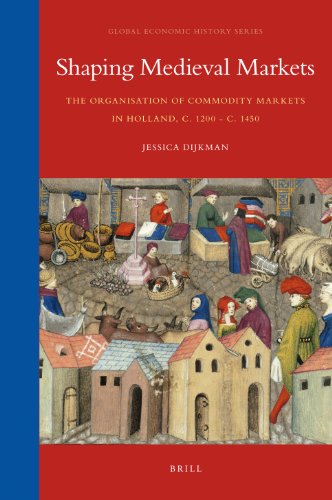
Shaping Medieval Markets: The Organisation of Commodity Markets in Holland, C. 1200 - C. 1450 (Global Economic History, Band 8) - Hardcover
Inhaltsangabe
The late Middle Ages witnessed the transformation of the county of Holland from a peripheral agrarian region to a highly commercialised and urbanised one. This book examines how the organisation of commodity markets contributed to this remarkable development. Comparing Holland to England and Flanders, the book shows that Holland's specific history of reclamation and settlement had given rise to a favourable balance of powers between state, nobility, towns and rural communities that reduced opportunities for rent-seeking and favoured the rise of efficient markets. This allowed burghers, peasants and fishermen to take full advantage of new opportunities presented by changing economic and ecological circumstances in the late fourteenth and early fifteenth centuries.
Die Inhaltsangabe kann sich auf eine andere Ausgabe dieses Titels beziehen.
Über die Autorin bzw. den Autor
Jessica Dijkman, Ph.D. (2010) in History, Utrecht University, is a postdoc researcher at the department of Economic and Social History in Utrecht. She publishes on institutions regulating trade and production in the Middle Ages.
„Über diesen Titel“ kann sich auf eine andere Ausgabe dieses Titels beziehen.
Suchergebnisse für Shaping Medieval Markets: The Organisation of Commodity...

Foto des Verkäufers
Shaping Medieval Markets: The Organisation of Commodity Markets in Holland, C. 1200 - C. 1450
Anbieter: moluna, Greven, Deutschland
Verkäuferbewertung 5 von 5 Sternen

Hardcover. Zustand: New. Über den AutorJessica Dijkman, Ph.D. (2010) in History, Utrecht University, is a postdoc researcher at the department of Economic and Social History in Utrecht. She publishes on institutions regulating trade and production in the Mi. Artikel-Nr. 909457602
Neu kaufen
EUR 253,70
EUR 48,99 Versand
Versand von Deutschland nach USA
Versand von Deutschland nach USA
Anzahl: Mehr als 20 verfügbar
Beispielbild für diese ISBN
Shaping Medieval Markets : The Organisation of Commodity Markets in Holland, C. 1200 - C. 1450
Anbieter: AHA-BUCH GmbH, Einbeck, Deutschland
Verkäuferbewertung 5 von 5 Sternen
Buch. Zustand: Neu. Neuware - The late Middle Ages witnessed the transformation of the county of Holland from a peripheral agrarian region to a highly commercialised and urbanised one. This book examines how the organisation of commodity markets contributed to this remarkable development. Comparing Holland to England and Flanders, the book shows that Holland's specific history of reclamation and settlement had given rise to a favourable balance of powers between state, nobility, towns and rural communities that reduced opportunities for rent-seeking and favoured the rise of efficient markets. This allowed burghers, peasants and fishermen to take full advantage of new opportunities presented by changing economic and ecological circumstances in the late fourteenth and early fifteenth centuries. Artikel-Nr. 9789004201484
Neu kaufen
EUR 356,22
EUR 35,00 Versand
Versand von Deutschland nach USA
Versand von Deutschland nach USA
Anzahl: 2 verfügbar