
Verwandte Artikel zu Infrastructure Development and Financing in India
Inhaltsangabe
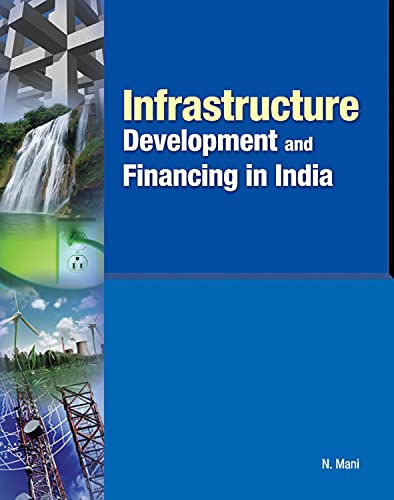
The availability of adequate, efficient, and affordable infrastructural facilities - power, transportation, communications, irrigation, and others - constitutes the core of development strategy and efforts in India. Unfortunately, infrastructural bottlenecks remain the biggest stumbling block of industrial progress. By their very nature, infrastructure projects involve huge initial investments, long gestation periods, and high risk. Various initiatives have been taken for the development of infrastructure in India, after the initiation of economic reforms in the early 1990s. This book provides an analytical account of the various facets of infrastructure development in India, with chapters categorized as the following: Infrastructure and Economic Development * Energy Needs, Sources, and Management * Transport Services * Telecommunications, Information Technology, Postal Services, and Broadcasting * Special Economic Zones * Water Resources and Irrigation * Rural Infrastructure and Services * Urban Infrastructure and Services
Die Inhaltsangabe kann sich auf eine andere Ausgabe dieses Titels beziehen.
Über die Autorin bzw. den Autor
Dr. N. Mani is presently Head of the Postgraduate and Research Department of Economics, Erode Arts and Science College, Erode, Tamil Nadu. He holds M.A., M.Phil. and Ph.D. degrees from Bharathiar University, Coimbatore. Specializing in development economics, he has 30 years of teaching experience to postgraduate and undergraduate classes. He successfully completed 2 major research projects sponsored by the University Grants Commission (UGC), New Delhi. He is currently engaged in a research project sponsored by Indian Council of Social Science Research (ICSSR), New Delhi. Dr. Mani has published 11 books and written several papers on varied subjects in reputed journals and dailies. He is also the former President of Tamil Nadu Science Forum and was organizing secretary of the National Children Science Congress, 2006. He has also organised more than 10 state, national and international level seminars, conferences and workshops. He has successfully guided and supervised the works of 6 Ph.D. and 14 M.Phil. scholars. He is a member of various academic bodies including Indian Society of Labour Economics and Indian Society of Agricultural Economics.
„Über diesen Titel“ kann sich auf eine andere Ausgabe dieses Titels beziehen.
Suchergebnisse für Infrastructure Development and Financing in India

Beispielbild für diese ISBN
Infrastructure Development and Financing in India
Anbieter: Majestic Books, Hounslow, Vereinigtes Königreich
Verkäuferbewertung 4 von 5 Sternen

Zustand: New. pp. xxxviii + 590. Artikel-Nr. 25074375
Neu kaufen
EUR 34,80
EUR 7,58 Versand
Versand von Vereinigtes Königreich nach USA
Versand von Vereinigtes Königreich nach USA
Anzahl: 4 verfügbar
Beispielbild für diese ISBN
Infrastructure Development and Financing in India
Verlag:
New Century Publications, 2012
ISBN 10: 8177083090
ISBN 13: 9788177083095
Neu
Hardcover
Erstausgabe
Anbieter: Vedams eBooks (P) Ltd, New Delhi, Indien
Verkäuferbewertung 4 von 5 Sternen
Hardcover. Zustand: New. Zustand des Schutzumschlags: As New. 1st Edition. Contents: Part I: Infrastructure and Economic Development: 1. Infrastructure Development: Issues and Strategies. 2. Infrastructure Upgradation Policy in India. Part II: Energy Needs, Sources and Management: 3. Energy Needs: Challenges, Strategies and Institutional Arrangements. 4. Electricity: Progress, Problems and Reforms. 5. Coal Resources and Utilization. 6. Petroleum and Natural Gas. 7. Renewable Energy Sources. 8. Atomic Power for Civil Use. 9. Energy Conservation and Environment. Part III: Transport Services: 10. Importance of an Efficient and Integrated Transport System. 11. Indian Railways. 12. Roads and Road Transport. 13. Shipping and Ports. 14. Civil Aviation. Part IV: Telecommunications, Information Technology (IT), Postal Services, and Broadcasting: 15. Telecommunications. 16. IT and IT-enabled Services. 17. Postal Services. 18. Broadcasting Services. Part V: Special Economic Zones (SEZs): 19. Economics of Special Economic Zones (SEZs). 20. Special Economic Zones (SEZs) in India. Part VI: Water Resources and Irrigation: 21. Water Resources: Potential and Requirements. 22. Irrigation Schemes. Part VII: Rural Infrastructure and Services: 23. Rural Housing. 24. Rural Electrification. 25. Rural Transport and Communications. 26. Rural Water Supply. 27. Rural Sanitation and Cleanliness. Part VIII: Urban Infrastructure and Services: 28. Approach to Urban Development. 29. Urban Housing and Slum Clearance/Development. 30. Urban Transport Services. 31. Urban Water Supply. 32. Urban Sanitation, Sewerage and Solid Waste Management. Appendices. Bibliography. Index. Availability of adequate, efficient and affordable infrastructural facilities-power, transport, communications, irrigation and others-constitutes the core of development strategy and efforts. Unfortunately, infrastructural bottlenecks remain the biggest stumbling block of industrial progress in India. By their very nature, infrastructure projects involve huge initial investments, long gestation periods and high risk. Various initiatives have been taken for the development of infrastructure in India after the initiation of economic reforms in the early 1990s. India Infrastructure Finance Company Limited (IIFCL) was incorporated on January 5, 2006 to lend funds, of longer term maturity, directly to the eligible projects to supplement other loans from banks and financial institutions. Broad guidelines were issued on September 23, 2011 for setting up Infrastructure Debt Funds (IDFs) to facilitate flow of funds into infrastructure projects. Electricity Act, 2003 recognizes trading of power as a distinct activity and permits State Electricity Regulatory Commissions (SERCs) to allow open access in distribution of electricity in phases that would ultimately encourage efficiency and competition. Rajiv Gandhi Grameen Vidyutikaran Yojana (RGGVY) was launched by the Prime Minister on April 4, 2005. This scheme is for rural electricity infrastructure and household electrification. The National Highways Development Project (NHDP)the largest highway project ever undertaken by the country is being implemented by the National Highways Authority of India (NHAI). National Telecom Policy, 2011 seeks to maximize public good by making available affordable, reliable and secure telecommunication and broadband services across the entire country. Special Economic Zones Act, 2005 seeks to promote value addition component in exports, generate employment and mobilize foreign exchange. (jacket). Artikel-Nr. 109143
Neu kaufen
EUR 60,53
EUR 17,50 Versand
Versand von Indien nach USA
Versand von Indien nach USA
Anzahl: 5 verfügbar