
Verwandte Artikel zu Meditation: Science and Practice
Inhaltsangabe
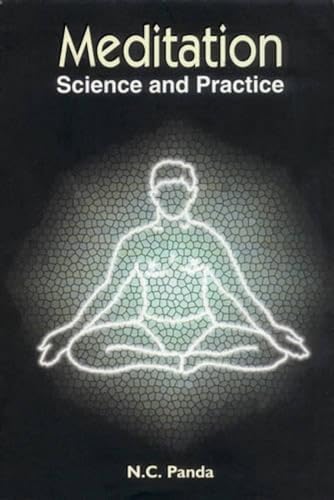
Yoga, contrary to the popular perception, is not merely a system of physical culture. It is, in fact, a uniquely Indian discipline aiming to bring about the ‘union’ of an individual spirit with the Universal Spirit: the Cosmic Consciousness — through what in Yoga is known as samadhi, a state of profound meditation. Patanjali’s Yoga-sutram, written sometime around the second century bc, is the first, systematic, at once authoritative presentation of Yoga: in both its theoretical and practical aspects. Professor N. C. Panda, who has had a lifetime involvement with the science and practice of Yoga, here outlines the eight limbs of Patanjala Yoga, with added emphasis on meditation — in all its three stages: dharana, dhyana, and samadhi; and how this ancient system of bodily and mental control is found to have a strong scientific basis. Offered in three parts, his book focuses, in Part 1, on the practice of meditation, with detailed guidelines concerning the relevant yogic postures, yogic breathing and breath-control. Part 2 presents Patanjali’s classical yogic theories, showing how these are validated: both theoretically and experimentally, by modern science. In Part 3, the author explains, in pure scientific terms, the physical, psychic, therapeutic and spiritual benefits surfacing from the practice of meditation. Though based on the principles of classical yoga, Professor Panda’s book is truly a brilliant effort to treat Yoga as an advanced science. Including a comprehensive glossary of Sanskrit technical terms and numerous illustrations, it is invaluable to medical scientists/researchers/anyone interested in Yogic Meditation and how it can give a holistic, healthy and creative life.
Die Inhaltsangabe kann sich auf eine andere Ausgabe dieses Titels beziehen.
Suchergebnisse für Meditation: Science and Practice

Beispielbild für diese ISBN
Meditation
Anbieter: Majestic Books, Hounslow, Vereinigtes Königreich
Verkäuferbewertung 4 von 5 Sternen

Zustand: New. pp. xvi + 336 30 Figures. Artikel-Nr. 7737912
Neu kaufen
EUR 14,31
EUR 7,68 Versand
Versand von Vereinigtes Königreich nach USA
Versand von Vereinigtes Königreich nach USA
Anzahl: 4 verfügbar
Beispielbild für diese ISBN
Meditation : Science and Practice
Verlag:
D K Printworld, New Delhi, 2008
ISBN 10: 8124602115
ISBN 13: 9788124602119
Gebraucht
Hardcover
Anbieter: Vedams eBooks (P) Ltd, New Delhi, Indien
Verkäuferbewertung 4 von 5 Sternen
Hardbound. Zustand: As New. Reprint. Contents Preface. Acknowledgements. List of abbreviations. I. Practice of meditation 1. Preparation of meditation. 2. Asanas for meditation. 3. Mudras and Bandhas for Pranayama Pratyahara and meditation. 4. Pranayama before meditation. 5. Pratyahara preparatory to meditation. 6. The practice of meditation. II. Theory of meditation 1. What is meditation. 2. The four fold existence of the self. 3. Tanha unquenched thirst. 4. The six fold enemy. 5. Yama the five great vows. 6. Niyama the performance of five prescriptive duties. 7. Vitalisation and withdrawal. 8. The tripod of meditation. 9. Equanimity contradictions dissolved. 10. Universal love. 11. A dedicated life is Yoga. 12. A Yogi's vision all in one one in all. 13. The root of evil. 14. A flame without flicker. 15. Yoga for peace. 16. A middle path in Yoga. III. Benefits from meditation 1. Psychosomatic and somatopsychic effects. 2. Physiopathology of stress disorders. 3. Meditation on psychophysiology and psychopathology. 4. Meditation and psychoimmunology. 5. Meditation on specific organs and functions. 6. Meditation for the retardation of geriatric process. 7. Meditation for the promotion of mental and spiritual health. Glossary. Bibliography. Index. Yoga contrary to the popular perception is not merely a system of physical culture. It is in fact a uniquely Indian discipline aiming to bring about the union of an individual spirit with the universal spirit the cosmic consciousness through what in Yoga is known as samadhi a state of profound meditation. Patanjali's Yoga sutram written sometime around the second century BC is the first systematic at once authoritative presentation of Yoga in both its theoretical and practical aspects. Prof. N.C. Panda who has had a lifetime involvement with the science and practice of Yoga outlines the eight limbs of Patanjala Yoga with added emphasis on meditation in all its three stages dharana dhyana and samadhi and how this ancient system of bodily and mental control is found to have a strong scientific basis. Offered in three parts the book focuses in Part 1 one the practice of meditation with detailed guidelines concerning the relevant Yogic postures Yogic breathing and breath control. Part 2 presents Patanjali's classical Yogic theories showing how these are validated by modern science. In part 3 the author explains in pure scientific terms the physical psychic therapeutic and spiritual benefits surfacing from the practice of meditation. Comprising comprehensive glossary of Sanskrit technical terms and numerous illustrations it is invaluable to medical scientist/researchers/anyone interested in Yogic meditation and leading to a holistic healthy and creative life. 336 pp. Artikel-Nr. 68719
Gebraucht kaufen
EUR 21,38
EUR 17,50 Versand
Versand von Indien nach USA
Versand von Indien nach USA
Anzahl: 1 verfügbar