
Verwandte Artikel zu The Mahabodhi Temple at Bodh Gaya
Inhaltsangabe
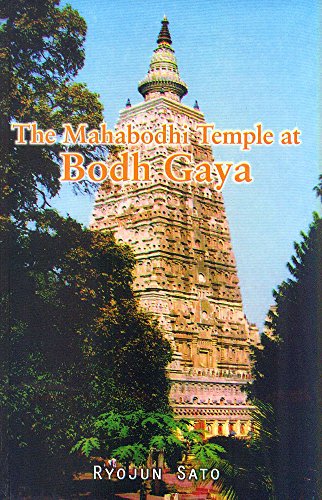
Das Mahabodhi Mahavihara, das majestätisch den Ort der Erleuchtung des Buddhas steht, ist nicht nur eine künstlerische Gerichte, sondern auch ein Ort der Anbetung, an dem Menschen und Praktiker immensen Glauben und Glauben haben und auch ein kulturelles Wahrzeichen, das sich mit der Botschaft des Meisters mit Liebe und Mitgefühl, Gleichmäßigkeit und Opfer identifiziert. Bruderschaft Menschen, Glauben, Praktiker und Angler kommen alle bei Bodh Gaya, um ihre Verehrungen nicht nur dem heiligen Bodhi-Baum oder dem Vajrasana oder dem Tempel selbst zu bieten, sondern kommen hier für Meditation und Suche nach dem illusvollen Frieden und Ruhe, wie der Buddha selbst seine Treuen beraten sollte, dass man mindestens einmal in ihrem Leben auf einen Pilger gehen sollte. Alter bis zu den vier Höhlen Orte, die mit dem Leben des Buddhas verbunden sind, sind Lumbini, wo Prinz Sidhartha Gautama geboren wurde, Bodh Gaya, wo Siddhartha Gautama Erleuchtung erlangt hat, um den Buddha zu werden, Sarnath, wo der Buddha zum ersten Mal den Dhammacakkapavattana Sutra oder das Drehen des Rades von Dhamma und Kusinagagaga gepredigte. Ader, wo der Buddha eintritt in Maha-Parinibbana. Prof. Rev. Ryojun Sato, hat eine wertvolle Aufgabe getan, indem er zu diesem Thema schreibt. Dieses Buch wird sowohl den Lesern als auch den Forschern und Wissenschaftlern nützlich sein, um mehr über die Mahabodhi Mahavihara und Bodh Gaya als Ganzes zu erfahren. Der gegenwärtige Mahabodhi-Tempel wurde im 2. Jahrhundert v. Chr. gebaut und über den ursprünglichen Stupa von König Asoka. Während der Gupta-Herrschaft wurde der prächtige Tempel im 7. Jahrhundert v. Chr. vollendet. Die Ehrfurcht erzeugende vergoldete Statue, die wir im Schreinerzimmer sehen, wurde einige Zeit im Jahr 380 n. Chr. hergestellt. Er ist aus schwarzem Stein gefertigt und mit Gold bemalt, was der jüngsten Praxis ist
Die Inhaltsangabe kann sich auf eine andere Ausgabe dieses Titels beziehen.
Suchergebnisse für The Mahabodhi Temple at Bodh Gaya

Beispielbild für diese ISBN
The Mahabodhi Temple at Bodh Gaya
Anbieter: Vedams eBooks (P) Ltd, New Delhi, Indien
Verkäuferbewertung 4 von 5 Sternen

Hardcover. Zustand: New. 2nd Edition. The Mahabodhi Mahavihara which stands majestically identifying the spot of the Buddha's Enlightenment is not only an artistic edifice but is also a place of worship where people and practitioners have immense faith and belief and is also a cultural landmark which identifies itself with the message of the master with that of love and compassion, equanimity and sacrifice, unity and brotherhood. People, belivers, practitioners and adherers all come at Bodh Gaya to offer their venerations not only to the sacred Bodhi Tree or the Vajrasana or the Temple itself but come here for meditation and seeking that illusive peace and tranquillity as the Buddha Himself advised His faithfuls that at least once in their lifetime one should go on a pilgrimage to the four holy places connected with the life of the Buddha which are Lumbini-where Prince Sidhartha Gautama was born, Bodh Gaya-where Siddhartha Gautama attained Enlightenment to become the Buddha, Sarnath-where the Buddha for the first time preached the Dhammacakkapavattana Sutra or Turning of the Wheel of Dhamma and Kusinagar-where the Buddha entered into maha-parinibbana. Prof. Rev. Ryojun Sato, has done a commendable job by writing on this topic. This book will prove useful to the readers as well as the researchers and scholars to know more about the Mahabodhi Mahavihara and Bodh Gaya as a whole. The present Mahabodhi Temple was built in the 2nd century AD and built over the original stupa constructed by King Asoka. It was during the Gupta reign that the magnificent Temple was completed in around 7th century AD. The awe generating gilded statue that we see inside the shrine room was made some time in the year 380 AD. It is made of black stone and painted in gold which is of recent practice. Such was the awe generated from the sublimity of the Buddha stature that when the Noble Laureate Rabindranath Tagore visited the Mahabodhi Temple it was the first time in his life that he felt like bowing his head in front of a statue. (jacket). Artikel-Nr. 129066
Neu kaufen
EUR 24,03
EUR 17,50 Versand
Versand von Indien nach USA
Versand von Indien nach USA
Anzahl: 1 verfügbar