
Verwandte Artikel zu Sustainable Living with Environmental Risks
Inhaltsangabe
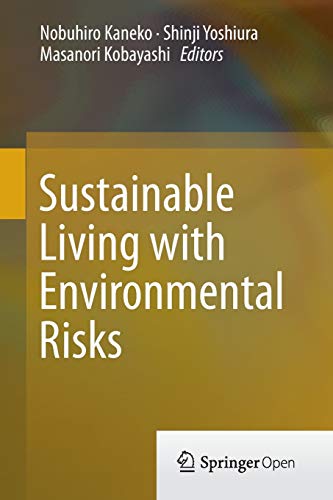
This book details practical technologies for coping with environmental risks in Asia and Africa. It offers solutions to maintain harmony between economic development and environmental preservation.
Die Inhaltsangabe kann sich auf eine andere Ausgabe dieses Titels beziehen.
Von der hinteren Coverseite
We are not free from environmental risks that accompany the development of human societies. Modern economic development has accelerated environmental pollution, caused loss of natural habitats, and modified landscapes. These environmental changes have impacted natural systems: water and heat circulation, nutrient cycling, and biodiversity. These changes in natural systems degrade ecosystem services and subsequently increase environmental risks for humans. Environmental risks, therefore, are not only human health risks by pollution, climatic anomalies, and natural disasters, but also degradation of ecosystem services on which most people are relying for their lives. We cannot entirely eliminate the risks, because it is not possible to attain zero impact on the environment, but we need to find a mechanism that minimizes environmental risks for human sustainably. This is the idea of the interdisciplinary framework of “environmental risk management” theory, which advocates harmony betweeneconomic development and environmental conservation. Based on this theory, the Sustainable Living with Environmental Risk (SLER) programme, adopted by the Japanese Ministry of Education (MEXT) as one of its strategic programmes, has been training graduate students at the Yokohama National University, Japan, from 2009 to 2013 to become future environmental leaders who will take the initiative in reducing the level of environmental risks and in protecting natural resources in the developing nations of Asia and Africa. This book provides students and teachers of this new academic field with a comprehensive coverage of case studies of environmental risks and their practical management technologies not only in Japan but also in developing nations in Asia and Africa.
„Über diesen Titel“ kann sich auf eine andere Ausgabe dieses Titels beziehen.
Suchergebnisse für Sustainable Living with Environmental Risks

Beispielbild für diese ISBN
Sustainable Living With Environmental Risks
Anbieter: Romtrade Corp., STERLING HEIGHTS, MI, USA
Verkäuferbewertung 5 von 5 Sternen

Zustand: New. This is a Brand-new US Edition. This Item may be shipped from US or any other country as we have multiple locations worldwide. Artikel-Nr. ABBB-161192
Beispielbild für diese ISBN
Sustainable Living with Environmental Risks
Anbieter: Phatpocket Limited, Waltham Abbey, HERTS, Vereinigtes Königreich
Verkäuferbewertung 5 von 5 Sternen
Zustand: Good. Your purchase helps support Sri Lankan Children's Charity 'The Rainbow Centre'. Ex-library, so some stamps and wear, but in good overall condition. Our donations to The Rainbow Centre have helped provide an education and a safe haven to hundreds of children who live in appalling conditions. Artikel-Nr. Z1-C-084-04488
Gebraucht kaufen
EUR 37,70
EUR 12,41 Versand
Versand von Vereinigtes Königreich nach USA
Versand von Vereinigtes Königreich nach USA
Anzahl: 1 verfügbar
Beispielbild für diese ISBN
Sustainable Living with Environmental Risks
Anbieter: Ria Christie Collections, Uxbridge, Vereinigtes Königreich
Verkäuferbewertung 5 von 5 Sternen
Zustand: New. In. Artikel-Nr. ria9784431548034_new
Neu kaufen
EUR 61,04
EUR 13,17 Versand
Versand von Vereinigtes Königreich nach USA
Versand von Vereinigtes Königreich nach USA
Anzahl: Mehr als 20 verfügbar
Foto des Verkäufers
Sustainable Living with Environmental Risks
Anbieter: AHA-BUCH GmbH, Einbeck, Deutschland
Verkäuferbewertung 5 von 5 Sternen
Taschenbuch. Zustand: Neu. Druck auf Anfrage Neuware - Printed after ordering - We are not free from environmental risks that accompany the development of human societies. Modern economic development has accelerated environmental pollution, caused loss of natural habitats, and modified landscapes. These environmental changes have impacted natural systems: water and heat circulation, nutrient cycling, and biodiversity. These changes in natural systems degrade ecosystem services and subsequently increase environmental risks for humans. Environmental risks, therefore, are not only human health risks by pollution, climatic anomalies and natural disasters, but also degradation of ecosystem services on which most people are relying for their lives. We cannot entirely eliminate the risks, because it is not possible to attain zero impact on the environment, but we need to find a mechanism that minimizes environmental risks for human sustainably. This is the idea of the interdisciplinary framework of environmental risk management theory, which advocates harmony between economic development and environmental conservation. Based on this theory, the Sustainable Living with Environmental Risk (SLER) programme, adopted by the Japanese Ministry of Education (MEXT) as one of its strategic programmes, has been training graduate students at the Yokohama National University, Japan, from 2009 to 2013 to become future environmental leaders who will take the initiative in reducing the level of environmental risks and in protecting natural resources in the developing nations of Asia and Africa. This book provides students and teachers of this new academic field with a comprehensive coverage of case studies of environmental risks and their practical management technologies not only in Japan but also in developing nations in Asia and Africa. Artikel-Nr. 9784431548034
Neu kaufen
EUR 78,76
EUR 30,50 Versand
Versand von Deutschland nach USA
Versand von Deutschland nach USA
Anzahl: 1 verfügbar
Beispielbild für diese ISBN
Sustainable Living With Environmental Risks
Anbieter: Revaluation Books, Exeter, Vereinigtes Königreich
Verkäuferbewertung 5 von 5 Sternen
Paperback. Zustand: Brand New. 2014 edition. 286 pages. 9.25x6.25x0.75 inches. In Stock. Artikel-Nr. x-4431548033
Neu kaufen
EUR 100,65
EUR 14,58 Versand
Versand von Vereinigtes Königreich nach USA
Versand von Vereinigtes Königreich nach USA
Anzahl: 2 verfügbar
Foto des Verkäufers
Sustainable Living with Environmental Risks
Anbieter: preigu, Osnabrück, Deutschland
Verkäuferbewertung 5 von 5 Sternen
Taschenbuch. Zustand: Neu. Sustainable Living with Environmental Risks | Nobuhiro Kaneko (u. a.) | Taschenbuch | xv | Englisch | 2014 | Springer | EAN 9784431548034 | Verantwortliche Person für die EU: Springer Verlag GmbH, Tiergartenstr. 17, 69121 Heidelberg, juergen[dot]hartmann[at]springer[dot]com | Anbieter: preigu. Artikel-Nr. 105539589
Neu kaufen
EUR 45,95
EUR 70,00 Versand
Versand von Deutschland nach USA
Versand von Deutschland nach USA
Anzahl: 5 verfügbar
Beispielbild für diese ISBN
Sustainable Living with Environmental Risks
Anbieter: Buchpark, Trebbin, Deutschland
Verkäuferbewertung 5 von 5 Sternen
Zustand: Sehr gut. Zustand: Sehr gut | Seiten: 304 | Sprache: Englisch | Produktart: Bücher | We are not free from environmental risks that accompany the development of human societies. Modern economic development has accelerated environmental pollution, caused loss of natural habitats, and modified landscapes. These environmental changes have impacted natural systems: water and heat circulation, nutrient cycling, and biodiversity. These changes in natural systems degrade ecosystem services and subsequently increase environmental risks for humans. Environmental risks, therefore, are not only human health risks by pollution, climatic anomalies and natural disasters, but also degradation of ecosystem services on which most people are relying for their lives. We cannot entirely eliminate the risks, because it is not possible to attain zero impact on the environment, but we need to find a mechanism that minimizes environmental risks for human sustainably. This is the idea of the interdisciplinary framework of ¿environmental risk management¿ theory, which advocates harmony between economic development and environmental conservation. Based on this theory, the Sustainable Living with Environmental Risk (SLER) programme, adopted by the Japanese Ministry of Education (MEXT) as one of its strategic programmes, has been training graduate students at the Yokohama National University, Japan, from 2009 to 2013 to become future environmental leaders who will take the initiative in reducing the level of environmental risks and in protecting natural resources in the developing nations of Asia and Africa. This book provides students and teachers of this new academic field with a comprehensive coverage of case studies of environmental risks and their practical management technologies not only in Japan but also in developing nations in Asia and Africa. Artikel-Nr. 24372435/12
Gebraucht kaufen
EUR 38,81
EUR 105,00 Versand
Versand von Deutschland nach USA
Versand von Deutschland nach USA
Anzahl: 1 verfügbar