
Verwandte Artikel zu Alex Hoda: Work in Progress (Zeitgenössische Kunst)
Inhaltsangabe
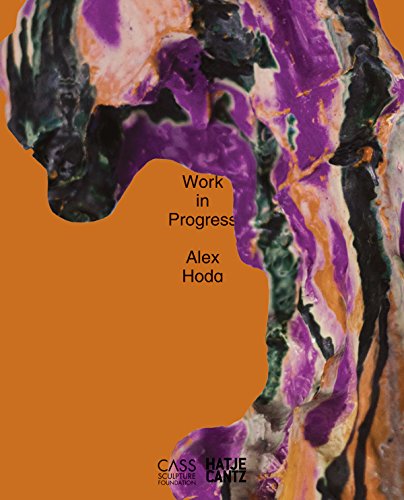
Die künstlerische Praxis von Alex Hoda (*1980 in Canterbury) hat sich seit seinen ersten Figurengruppen aus missgestalteten, postapokalyptischen Kreaturen, mit ihren für sein frühes Werk kennzeichnenden Überzügen aus Latex und Gummi, bedeutend weiterentwickelt. Hodas spätere Arbeiten spielen mit unserer Neigung, auf der Basis von vermeintlich Gesehenem voreilig falsche Schlüsse zu ziehen. Die sich windenden metallischen Formen ebenso suggestiv wie schwer einzuordnen machen bewusst, wie leicht wir auf vorgefertigte Lesarten zurückgreifen, um eine abstrakte Skulptur zu interpretieren. Für seine jüngsten Werke nutzt Hoda die künstlerische Methode des Automatismus, um die übliche Herangehensweise an gegenständliche Skulpturen in Frage zu stellen. Er sich dabei auf das surrealistische Vorfahren, das im Sinne Max Ernsts den Betrachter zum Zeugen der Entstehung des Kunstwerks macht, sein Unterbewusstsein bestimmt die Interpretation der Skulptur.
Die Inhaltsangabe kann sich auf eine andere Ausgabe dieses Titels beziehen.
Über die Autorin bzw. den Autor
Flavia Frigeri is an art historian and curator, and Teaching Fellow at University College, London. She co-curated the internationally acclaimed exhibition ‘The World Goes Pop’ at Tate Modern in 2015. Frigeri is the author of several books, including Pop Art and Women Artists, both in Thames & Hudson's Art Essentials series.
Von der hinteren Coverseite
The practice of London-based artist Alex Hoda (*1980 in Canterbury) has evolved significantly from his initial figurative groupings of deformed, post-apocalyptic creatures, finished in his signature materials of latex and rubber. His most recent sculpture refers to our ability to arrive at a false premise by misinterpreting what is in front of us. Hoda's writhing metal forms, at once suggestive and impenetrable, ask us to consider whether a biased or predetermined reading occurs when interpreting abstract sculpture. In his current practice, he also uses a technique of automatism to challenge the viewer's approach to figurative sculpture. These works recall a surrealist agenda, one that is summed up by Max Ernst's desire for "the viewer to witness the emergence of the work"; what the viewer's sub-conscious brings to the sculpture ultimately determines its reading.
„Über diesen Titel“ kann sich auf eine andere Ausgabe dieses Titels beziehen.
Suchergebnisse für Alex Hoda: Work in Progress (Zeitgenössische Kunst)

Beispielbild für diese ISBN
Alex Hoda: Work in Progress
Anbieter: Sell Books, Elland, YORKS, Vereinigtes Königreich
Verkäuferbewertung 5 von 5 Sternen

hardcover. Zustand: Very Good. Most of our very good books have only minor imperfections such as shelf wear consistent with a new book that's sat on a bookshop shelf for a year or two. Occasionally we may miss other minor imperfections as we have to grade books at speed. Our books are dispatched from a Yorkshire former cotton mill. We list via barcode/ISBN so please note that the images are stock images and may not be the exact copy you receive, furthermore the details about edition and year might not be accurate as many publishers reuse the same ISBN for multiple editions and as we simply scan a barcode or enter an ISBN we do not check the validity of the edition data when listing. If you're looking for an exact edition please don't order (at least not without checking with us first, although we don't always have time to check). We aim to dispatch prompty, the service used will depend on order value and book size. We can ship to most countries, see our shipping policies. Payment is via Abe only. Artikel-Nr. SBAB-L-BKL01603-RAG-20250724-VG
Gebraucht kaufen
EUR 18,89
EUR 9,17 Versand
Versand von Vereinigtes Königreich nach USA
Versand von Vereinigtes Königreich nach USA
Anzahl: 1 verfügbar
Beispielbild für diese ISBN
Work in progress. Alex Hoda. Jelena Seng.
Verlag:
Ostfildern. Hatje Cantz. ., 2015
ISBN 10: 3775739742
ISBN 13: 9783775739740
Gebraucht
Hardcover
Anbieter: Antiquariat & Verlag Jenior, Kassel, HE, Deutschland
Verkäuferbewertung 4 von 5 Sternen

112 S. Hardcover mit Leinenrücken. 4°. Sauberes Exemplar ohne Stempel und Anstreichungen. Zahlreiche Abbildungen und Tafeln. Sehr gut erhalten. Sprache: eng. Artikel-Nr. KUN62828
Gebraucht kaufen
EUR 13,50
EUR 19,00 Versand
Versand von Deutschland nach USA
Versand von Deutschland nach USA
Anzahl: 1 verfügbar
Beispielbild für diese ISBN
Work in progress - Alex Hoda. Cass Sculpture Foundation. [Texts by: Flavia Frigeri . Ed.: Claire Shea. Transl.: Paddy Butler ; Jelena Seng]
Verlag:
Ostfildern, Germany : Hatje Cantz,, 2015
ISBN 10: 3775739742
ISBN 13: 9783775739740
Gebraucht
Hardcover
Anbieter: Wanda Schwörer, Engelsbrand, Deutschland
Verkäuferbewertung 5 von 5 Sternen
HLn. Zustand: Gut. 112 S. : überw. Ill. ; 30 cm gutes Exemplar Sprache: Englisch Gewicht in Gramm: 711. Artikel-Nr. 32804
Gebraucht kaufen
EUR 11,00
EUR 52,50 Versand
Versand von Deutschland nach USA
Versand von Deutschland nach USA
Anzahl: 1 verfügbar
Beispielbild für diese ISBN
Alex Hoda
Verlag:
Hatje Cantz Verlag GmbH, 2015
ISBN 10: 3775739742
ISBN 13: 9783775739740
Gebraucht
Hardcover
Anbieter: Buchpark, Trebbin, Deutschland
Verkäuferbewertung 5 von 5 Sternen
Zustand: Sehr gut. Zustand: Sehr gut | Sprache: Englisch | Produktart: Bücher | Keine Beschreibung verfügbar. Artikel-Nr. 25118155/12
Gebraucht kaufen
EUR 9,00
EUR 105,00 Versand
Versand von Deutschland nach USA
Versand von Deutschland nach USA
Anzahl: 1 verfügbar