
Verwandte Artikel zu Structuring Design: Graphic Grids in Theory and Practice
Inhaltsangabe
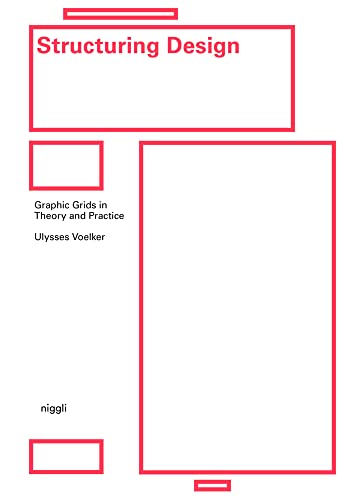
In der visuellen Kommunikation werden Inhalte angeordnet, systematisiert und inszeniert. Gestalterische Gesetzmäßigkeiten und Prinzipien, die jedem Medium innewohnen, sorgen dafür, dass ein Roman aussieht wie ein Roman, ein Kunstkatalog wie ein Kunstkatalog und ein Magazin wie ein Magazin. Diese Publikation bietet einen kompakten Mix aus Erklärungen, praktischen Tipps und Hintergrundinformationen. Im Zentrum steht als die wichtigste Grundlage der Raster, dessen Funktion und Anwendung umfassend thematisiert wird. Dieser gewährleistet eine planerische Geschlossenheit in einer gestalterischen Ordnung, sodass nicht nur einfacher gelesen, sondern Informationen auch besser verstanden werden können. In einem zweiten Teil widmet sich der Autor dem Entwurfsprozess selber, mit Antworten auf grundsätzliche Fragen, wie worauf beim Gestalten zu achten ist und welche Schritte aufeinander folgen. In einem weiteren Kapitel werden relevante theoretische Aspekte thematisiert, wie beispielsweise Methode und Intuition sich zueinander verhalten. Abgeschlossen wird das Werk mit einem umfangreichen Glossar. _ Einführung in die gestalterische Praxis für Grafikdesigner _ Hintergrundinformationen, Erklärungen und praktische Tipps _ Schwerpunkt auf Funktion und Anwendung des typografischen Rasters _ Mit zahlreichen Beispielen
Die Inhaltsangabe kann sich auf eine andere Ausgabe dieses Titels beziehen.
Über die Autorin bzw. den Autor
Ulysses Voelker joined the University of Applied Sciences in Mainz in the year 2000 as a professor for typography and editorial design and co-founder of the research institute Designlabor Gutenberg. After graduating from the HfK Bremen, he initially worked as an art director before establishing his own companies. He received several awards for his work.
Von der hinteren Coverseite
In visual communication, contents are arranged, organized, and presented. Design laws and principles that are inherent to every medium ensure that from a distance a novel looks like a novel, an art catalog like an art catalog, and a magazine like a magazine. This publication offers a compact mix of explanations, practical tips, and background information on the topic. At its center is the grid as the most important design principle, whose function and application are thoroughly discussed.
The grid allows a consolidated approach to a structured design like a blueprint that supports not only faster and easier reading but also better comprehension of information. In a second part, the author discusses the design process itself with answers to seemingly simple questions of what to observe when designing and the sequence of steps. Another chapter focuses on relevant theoretical aspects such as how method and intuition are correlated. The final section contains an extensive glossary.
„Über diesen Titel“ kann sich auf eine andere Ausgabe dieses Titels beziehen.
Suchergebnisse für Structuring Design: Graphic Grids in Theory and Practice

Beispielbild für diese ISBN
Structuring Design: Graphic Grids in Theory and Practice
Anbieter: Better World Books Ltd, Dunfermline, Vereinigtes Königreich
Verkäuferbewertung 5 von 5 Sternen

Zustand: Good. Former library copy. Pages intact with minimal writing/highlighting. The binding may be loose and creased. Dust jackets/supplements are not included. Includes library markings. Stock photo provided. Product includes identifying sticker. Better World Books: Buy Books. Do Good. Artikel-Nr. 57085732-20
Gebraucht kaufen
EUR 17,90
EUR 5,83 Versand
Versand von Vereinigtes Königreich nach USA
Versand von Vereinigtes Königreich nach USA
Anzahl: 1 verfügbar
Beispielbild für diese ISBN
Structuring Design
Anbieter: PBShop.store UK, Fairford, GLOS, Vereinigtes Königreich
Verkäuferbewertung 5 von 5 Sternen
HRD. Zustand: New. New Book. Shipped from UK. Established seller since 2000. Artikel-Nr. HU-9783721209945
Neu kaufen
EUR 27,59
EUR 5,86 Versand
Versand von Vereinigtes Königreich nach USA
Versand von Vereinigtes Königreich nach USA
Anzahl: 15 verfügbar
Beispielbild für diese ISBN
STRUCTURING DESIGN: GRAPHIC GRIDS IN THEORY AND PR
Anbieter: Majestic Books, Hounslow, Vereinigtes Königreich
Verkäuferbewertung 4 von 5 Sternen

Zustand: New. Artikel-Nr. 385866919
Neu kaufen
EUR 33,01
EUR 7,58 Versand
Versand von Vereinigtes Königreich nach USA
Versand von Vereinigtes Königreich nach USA
Anzahl: 3 verfügbar
Beispielbild für diese ISBN
Structuring Design: Graphic Grids in Theory and Practice
Anbieter: medimops, Berlin, Deutschland
Verkäuferbewertung 5 von 5 Sternen
Zustand: as new. Wie neu/Like new. Artikel-Nr. M0372120994X-N
Gebraucht kaufen
EUR 32,20
EUR 10,00 Versand
Versand von Deutschland nach USA
Versand von Deutschland nach USA
Anzahl: 1 verfügbar
Beispielbild für diese ISBN
Structuring Design: Graphic Grids in Theory and Practice
Anbieter: Ria Christie Collections, Uxbridge, Vereinigtes Königreich
Verkäuferbewertung 5 von 5 Sternen
Zustand: New. In English. Artikel-Nr. ria9783721209945_new
Neu kaufen
EUR 31,01
EUR 13,17 Versand
Versand von Vereinigtes Königreich nach USA
Versand von Vereinigtes Königreich nach USA
Anzahl: 7 verfügbar
Beispielbild für diese ISBN
Structuring Design: Graphic Grids in Theory and Practice
Anbieter: Revaluation Books, Exeter, Vereinigtes Königreich
Verkäuferbewertung 5 von 5 Sternen
Hardcover. Zustand: Brand New. 01 edition. 173 pages. 10.00x7.20x0.70 inches. In Stock. Artikel-Nr. __372120994X
Neu kaufen
EUR 34,48
EUR 14,58 Versand
Versand von Vereinigtes Königreich nach USA
Versand von Vereinigtes Königreich nach USA
Anzahl: 2 verfügbar
Beispielbild für diese ISBN
Structuring Design: Graphic Grids in Theory and Practice
Anbieter: Gallix, Gif sur Yvette, Frankreich
Verkäuferbewertung 5 von 5 Sternen
Zustand: Neuf. Artikel-Nr. 9783721209945
Neu kaufen
EUR 35,00
EUR 19,85 Versand
Versand von Frankreich nach USA
Versand von Frankreich nach USA
Anzahl: 1 verfügbar
Beispielbild für diese ISBN
Structuring Design: Graphic Grids in Theory and Practice
Anbieter: Kennys Bookstore, Olney, MD, USA
Verkäuferbewertung 5 von 5 Sternen
Zustand: New. 2019. Hardcover. . . . . . Books ship from the US and Ireland. Artikel-Nr. V9783721209945
Neu kaufen
EUR 46,61
EUR 9,06 Versand
Versand innerhalb von USA
Versand innerhalb von USA
Anzahl: 7 verfügbar
Beispielbild für diese ISBN
STRUCTURING DESIGN
Anbieter: Speedyhen, Hertfordshire, Vereinigtes Königreich
Verkäuferbewertung 5 von 5 Sternen
Zustand: NEW. Artikel-Nr. NW9783721209945
Neu kaufen
EUR 25,98
EUR 47,83 Versand
Versand von Vereinigtes Königreich nach USA
Versand von Vereinigtes Königreich nach USA
Anzahl: 7 verfügbar
Foto des Verkäufers
Structuring Design
Anbieter: moluna, Greven, Deutschland
Verkäuferbewertung 5 von 5 Sternen
Zustand: New. In der visuellen Kommunikation werden Inhalte angeordnet, systematisiert und inszeniert. Gestalterische Gesetzmaessigkeiten und Prinzipien, die jedem Medium innewohnen, sorgen dafuer, dass ein Roman aussieht wie ein Roman, ein Kunstkatalog wie ein Kunstkatalog. Artikel-Nr. 246602254
Neu kaufen
EUR 35,00
EUR 48,99 Versand
Versand von Deutschland nach USA
Versand von Deutschland nach USA
Anzahl: 1 verfügbar