
Verwandte Artikel zu Functional Fractional Calculus for System Identification...
Inhaltsangabe
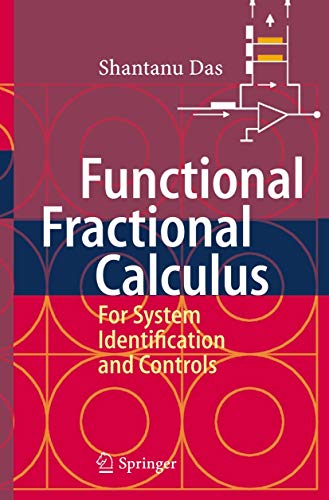
This work is inspired by thought to have an overall fuel-ef?cient nuclear plant control system. I picked up the topic in 2002 while deriving the reactor control laws, which aimed at fuel ef?ciency. Controlling the nuclear reactor close to its natural behavior by concept of exponent shape governor, ratio control and use of logarithmic logic, aims at the fuel ef?ciency. The power-maneuvering trajectory is obtained by shaped-normalized-period function, and this de?nes the road map on which the reactor should be governed. The experience of this concept governing the Atomic Power Plant of Tarapur Atomic Power Station gives lesser overall gains compared to the older plants, where conventional proportional integral and deri- tive type (PID) scheme is employed. Therefore, this motivation led to design the scheme for control system than the conventional schemes to aim at overall plant ef?ciency. Thus, I felt the need to look beyondPID and obtained the answer in fr- tional order control system, requiring fractional calculus (a 300-year-old subject). This work is taken from a large number of studies on fractional calculus and here it is aimed at giving an application-orientedtreatment, to understandthis beautiful old new subject. The contribution in having fractional divergence concept to describe neutron ?ux pro?le in nuclear reactors and to make ef?cient controllers based on fractional calculus is a minor contribution in this vast (hidden) area of science.
Die Inhaltsangabe kann sich auf eine andere Ausgabe dieses Titels beziehen.
Von der hinteren Coverseite
When a new extraordinary and outstanding theory is stated, it has to face criticism and skepticism, because it is beyond the usual concept. The fractional calculus though not new, was not discussed or developed for a long time, particularly for lack of its applications to real life problems. It is extraordinary because it does not deal with ‘ordinary’ differential calculus. It is outstanding because it can now be applied to situations where existing theories fail to give satisfactory results. In this book not only mathematical abstractions are discussed in a lucid manner, but also several practical applications are given particularly for system identification, description and then efficient controls.
Historically, Sir Issac Newton and Gottfried Wihelm Leibniz independently discovered calculus in the middle of the 17 th century. In recognition to this remarkable discovery, J. Von. Neumann remarked, "…the calculus was the first achievement of modern mathematics and it is difficult to overestimate its importance. I think it defines more equivocally than anything else the inception of modern mathematical analysis which is logical development, still constitute the greatest technical advance in exact thinking."
The XXI century will thus have ‘exact thinking’ for advancement in technology by growing application of fractional calculus, and this century will speak the language which nature understand the best.
„Über diesen Titel“ kann sich auf eine andere Ausgabe dieses Titels beziehen.
Suchergebnisse für Functional Fractional Calculus for System Identification...

Foto des Verkäufers
Functional Fractional Calculus for System Identification and Controls
Anbieter: AHA-BUCH GmbH, Einbeck, Deutschland
Verkäuferbewertung 5 von 5 Sternen

Taschenbuch. Zustand: Neu. Druck auf Anfrage Neuware - Printed after ordering - This work is inspired by thought to have an overall fuel-ef cient nuclear plant control system. I picked up the topic in 2002 while deriving the reactor control laws, which aimed at fuel ef ciency. Controlling the nuclear reactor close to its natural behavior by concept of exponent shape governor, ratio control and use of logarithmic logic, aims at the fuel ef ciency. The power-maneuvering trajectory is obtained by shaped-normalized-period function, and this de nes the road map on which the reactor should be governed. The experience of this concept governing the Atomic Power Plant of Tarapur Atomic Power Station gives lesser overall gains compared to the older plants, where conventional proportional integral and deri- tive type (PID) scheme is employed. Therefore, this motivation led to design the scheme for control system than the conventional schemes to aim at overall plant ef ciency. Thus, I felt the need to look beyondPID and obtained the answer in fr- tional order control system, requiring fractional calculus (a 300-year-old subject). This work is taken from a large number of studies on fractional calculus and here it is aimed at giving an application-orientedtreatment, to understandthis beautiful old new subject. The contribution in having fractional divergence concept to describe neutron ux pro le in nuclear reactors and to make ef cient controllers based on fractional calculus is a minor contribution in this vast (hidden) area of science. Artikel-Nr. 9783642091780
Neu kaufen
EUR 171,93
EUR 30,50 Versand
Versand von Deutschland nach USA
Versand von Deutschland nach USA
Anzahl: 1 verfügbar