
Verwandte Artikel zu Hybrid Intelligent Systems for Pattern Recognition...
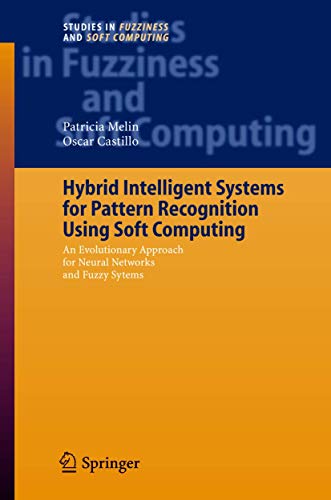
Hybrid Intelligent Systems for Pattern Recognition Using Soft Computing: An Evolutionary Approach for Neural Networks and Fuzzy Systems (Studies in Fuzziness and Soft Computing, Band 172) - Softcover
Inhaltsangabe
This monograph describes new methods for intelligent pattern recognition using soft computing techniques including neural networks, fuzzy logic, and genetic algorithms. Hybrid intelligent systems that combine several soft computing techniques are needed due to the complexity of pattern recognition problems. Hybrid intelligent systems can have different architectures, which have an impact on the efficiency and accuracy of pattern recognition systems, to achieve the ultimate goal of pattern recognition. This book also shows results of the application of hybrid intelligent systems to real-world problems of face, fingerprint, and voice recognition. This monograph is intended to be a major reference for scientists and engineers applying new computational and mathematical tools to intelligent pattern recognition and can be also used as a textbook for graduate courses in soft computing, intelligent pattern recognition, computer vision, or applied artificial intelligence.
Die Inhaltsangabe kann sich auf eine andere Ausgabe dieses Titels beziehen.
Über die Autorin bzw. den Autor
Oscar Castillo holds the Doctor in Science degree (Doctor Habilitatus) in Computer Science from the Polish Academy of Sciences (with the Dissertation "Soft Computing and Fractal Theory for Intelligent Manufacturing"). He is a Professor of Computer Science in the Graduate Division, Tijuana Institute of Technology, Tijuana, Mexico. In addition, he is serving as Research Director of Computer Science and head of the research group on Hybrid Fuzzy Intelligent Systems. Currently, he is President of HAFSA (Hispanic American Fuzzy Systems Association) and Past President of IFSA (International Fuzzy Systems Association). Prof. Castillo is also Chair of the Mexican Chapter of the Computational Intelligence Society (IEEE). He also belongs to the Technical Committee on Fuzzy Systems of IEEE and to the Task Force on "Extensions to Type-1 Fuzzy Systems". He is also a member of NAFIPS, IFSA and IEEE. He belongs to the Mexican Research System (SNI Level 3). His research interests are in Type-2 Fuzzy Logic, Fuzzy Control, Neuro-Fuzzy and Genetic-Fuzzy hybrid approaches. He has published over 300 journal papers, 20 authored books, 100 edited books, 200 papers in conference proceedings, and more than 300 chapters in edited books, in total more than 1160 publications with h index of 93. He has been Guest Editor of several successful Special Issues in the past, like in the following journals: Applied Soft Computing, Intelligent Systems, Information Sciences, Soft Computing, Non-Linear Studies, Fuzzy Sets and Systems, JAMRIS and Engineering Letters. He is currently Associate Editor of the Information Sciences Journal, Applied Soft Computing Journal, Journal of Engineering Applications on Artificial Intelligence, Granular Computing Journal and the International Journal of Fuzzy Systems. He has been elected IFSA Fellow and MICAI Fellow member last year. Finally, he recently received the Recognition as Highly Cited Researcher in 2017 and 2018 by Clarivate Analytics and Web of Science. Patricia Melin holds the Doctor in Science degree (Doctor Habilitatus D.Sc.) in Computer Science from the Polish Academy of Sciences (with the Dissertation "Hybrid Intelligent Systems for Pattern Recognition using Soft Computing"). She is a Professor of Computer Science in the Graduate Division, Tijuana Institute of Technology, Tijuana, Mexico, since 1998. In addition, she is serving as Director of Graduate Studies in Computer Science and head of the research group on Hybrid Neural Intelligent Systems (2000-present). Currently, she is President of NAFIPS (North American Fuzzy Information Processing Society). Prof. Melin is the founding Chair of the Mexican Chapter of the IEEE Computational Intelligence Society. She is member of the IEEE Neural Network Technical Committee (2007 to present), the IEEE Fuzzy System Technical Committee (2014 to present) and in Chair of the Task Force on Hybrid Intelligent Systems (2007 to present) and she is currently Associate Editor of the Journal of Information Sciences and IEEE Transactions on Fuzzy Systems. She is member of NAFIPS, IFSA, and IEEE. She belongs to the Mexican Research System with level III. Her research interests are in Modular Neural Networks, Type-2 Fuzzy Logic, Pattern Recognition, Fuzzy Control, Neuro-Fuzzy and Genetic-Fuzzy hybrid approaches. She has published over 220 journal papers, 20 authored books, 80 edited books, and more than 300 papers in conference proceedings with h-index of 82. She has served as Guest Editor of several Special Issues in the past, in journals like: Applied Soft Computing, Intelligent Systems, Information Sciences, Non-Linear Studies, JAMRIS, Fuzzy Sets and Systems, and Engineering Letters. Finally, he recently received the Recognition as Highly Cited Researcher in 2017 and 2018 by Clarivate Analytics and Web of Science.
Von der hinteren Coverseite
This monograph describes new methods for intelligent pattern recognition using soft computing techniques including neural networks, fuzzy logic, and genetic algorithms. Hybrid intelligent systems that combine several soft computing techniques are needed due to the complexity of pattern recognition problems. Hybrid intelligent systems can have different architectures, which have an impact on the efficiency and accuracy of pattern recognition systems, to achieve the ultimate goal of pattern recognition. This book also shows results of the application of hybrid intelligent systems to real-world problems of face, fingerprint, and voice recognition. This monograph is intended to be a major reference for scientists and engineers applying new computational and mathematical tools to intelligent pattern recognition and can be also used as a textbook for graduate courses in soft computing, intelligent pattern recognition, computer vision, or applied artificial intelligence.
„Über diesen Titel“ kann sich auf eine andere Ausgabe dieses Titels beziehen.
Suchergebnisse für Hybrid Intelligent Systems for Pattern Recognition...

Foto des Verkäufers
Hybrid Intelligent Systems for Pattern Recognition Using Soft Computing : An Evolutionary Approach for Neural Networks and Fuzzy Systems
Anbieter: AHA-BUCH GmbH, Einbeck, Deutschland
Verkäuferbewertung 5 von 5 Sternen

Taschenbuch. Zustand: Neu. Druck auf Anfrage Neuware - Printed after ordering - This monograph describes new methods for intelligent pattern recognition using soft computing techniques including neural networks, fuzzy logic, and genetic algorithms. Hybrid intelligent systems that combine several soft computing techniques are needed due to the complexity of pattern recognition problems. Hybrid intelligent systems can have different architectures, which have an impact on the efficiency and accuracy of pattern recognition systems, to achieve the ultimate goal of pattern recognition. This book also shows results of the application of hybrid intelligent systems to real-world problems of face, fingerprint, and voice recognition. This monograph is intended to be a major reference for scientists and engineers applying new computational and mathematical tools to intelligent pattern recognition and can be also used as a textbook for graduate courses in soft computing, intelligent pattern recognition, computer vision, or applied artificial intelligence. Artikel-Nr. 9783642063251
Neu kaufen
EUR 124,85
EUR 35,00 Versand
Versand von Deutschland nach USA
Versand von Deutschland nach USA
Anzahl: 1 verfügbar
Foto des Verkäufers
Hybrid Intelligent Systems for Pattern Recognition Using Soft Computing | An Evolutionary Approach for Neural Networks and Fuzzy Systems
Anbieter: preigu, Osnabrück, Deutschland
Verkäuferbewertung 5 von 5 Sternen
Taschenbuch. Zustand: Neu. Hybrid Intelligent Systems for Pattern Recognition Using Soft Computing | An Evolutionary Approach for Neural Networks and Fuzzy Systems | Patricia Melin (u. a.) | Taschenbuch | Studies in Fuzziness and Soft Computing | xiv | Englisch | 2010 | Springer | EAN 9783642063251 | Verantwortliche Person für die EU: Springer Verlag GmbH, Tiergartenstr. 17, 69121 Heidelberg, juergen[dot]hartmann[at]springer[dot]com | Anbieter: preigu. Artikel-Nr. 107175790
Neu kaufen
EUR 95,25
EUR 70,00 Versand
Versand von Deutschland nach USA
Versand von Deutschland nach USA
Anzahl: 5 verfügbar
Beispielbild für diese ISBN
Hybrid Intelligent Systems for Pattern Recognition Using Soft Computing: An Evolutionary Approach for Neural Networks and Fuzzy Systems (Studies in Fuzziness and Soft Computing)
Anbieter: Revaluation Books, Exeter, Vereinigtes Königreich
Verkäuferbewertung 5 von 5 Sternen
Paperback. Zustand: Brand New. 286 pages. 9.50x6.00x0.65 inches. In Stock. Artikel-Nr. x-364206325X
Neu kaufen
EUR 157,82
EUR 11,94 Versand
Versand von Vereinigtes Königreich nach USA
Versand von Vereinigtes Königreich nach USA
Anzahl: 2 verfügbar
Beispielbild für diese ISBN
Hybrid Intelligent Systems for Pattern Recognition Using Soft Computing: An Evolutionary Approach for Neural Networks and Fuzzy Systems (Studies in Fuzziness and Soft Computing, 172)
Anbieter: Ria Christie Collections, Uxbridge, Vereinigtes Königreich
Verkäuferbewertung 5 von 5 Sternen
Zustand: New. In English. Artikel-Nr. ria9783642063251_new
Neu kaufen
EUR 193,75
EUR 13,49 Versand
Versand von Vereinigtes Königreich nach USA
Versand von Vereinigtes Königreich nach USA
Anzahl: Mehr als 20 verfügbar